BSPE Legal Marketing Podcast

BSPE Legal Marketing Podcast

por Viktoria Altman
Temporada 4

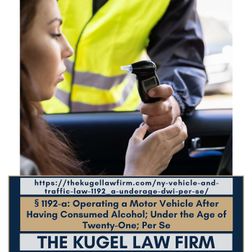
§ 1192-a: Operating a Motor Vehicle After Having Consumed Alcohol; Under the Age of Twenty-One; Per Se - Rachel Kugel

From The Kugel Law Firm – § 1192-a: Operating a Motor Vehicle After Having Consumed Alcohol; Under the Age of Twenty-One; Per Se dives deep into New York’s Zero Tolerance Law and how it affects drivers under the age of 21. This episode explores the administrative penalties young drivers face for having a blood alcohol content (BAC) between 0.02% and 0.07%, even when there are no signs of impairment. Listeners will gain a clearer understanding of how a single drink can lead to serious legal consequences, and why it’s critical to respond quickly and knowledgeably if charged. We break down the legal thresholds set by Vehicle and Traffic Law § 1192-a, explaining the difference between administrative violations and criminal DWI or DWAI charges. The podcast walks you through the enforcement process—from lawful traffic stops and roadside breath tests to DMV administrative hearings. You’ll also learn what underage drivers can expect in terms of license suspension, civil penalties, and the impact of repeat offenses, including license revocation and reapplication requirements. In addition to the legal landscape, the episode discusses viable defense strategies available to young drivers, including challenging the legitimacy of the traffic stop, questioning the accuracy of BAC testing, and exposing procedural errors. These options may help avoid penalties or reduce the severity of consequences at a DMV hearing. The discussion emphasizes that while VTL § 1192-a is not a criminal charge, the repercussions are still serious and far-reaching, potentially affecting school, work, and future opportunities. Finally, The Kugel Law Firm offers insight into how legal representation can protect your rights throughout the DMV hearing process. The firm highlights the importance of experienced legal guidance, particularly in navigating administrative law and restoring driving privileges. Whether it’s a first-time charge or a more complicated case, this episode will help young drivers and their families understand the stakes and find a path toward resolution with confidence. The Kugel Law Firm 111 E 125th St 2nd Fl, New York, NY 10035, United States (212) 372-7218 https://www.google.com/maps?cid=17189431107850367088
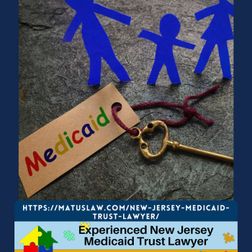
Experienced New Jersey Medicaid Trust Lawyer- Christine Matus

From Matus Law Group – Experienced New Jersey Medicaid Trust Lawyer explores the crucial world of Medicaid trust planning and asset protection for families and individuals in New Jersey. With insights from the article, this episode delves into how a Medicaid asset protection trust (MAPT) can help safeguard hard-earned assets while still preserving eligibility for public benefits — touching on topics like the five-year look-back period, qualified income trusts, and the rules governing transfers and trust setup. Listeners will learn how setting up the right trust structure can offer both protection and peace of mind. We break down what a MAPT is, how it works, and why simply giving assets away without proper legal planning can trigger penalties under the New Jersey Division of Medical Assistance and Health Services rules (such as the 5-year look-back). The podcast also explains critical concepts like choosing a settlor, trustee, and beneficiary; the role of a qualified income trust (QIT); and the importance of understanding monthly income thresholds and resource limits. We feature stories of families confronting long-term care decisions, facing rising nursing-facility costs, and weighing the option of long-term-care insurance versus trust-based planning. Plus we highlight how proactive planning through the team at Matus Law Group can help people protect their legacy, avoid costly mistakes, and navigate ever-changing New Jersey eligibility rules and statistics. Finally, the episode offers practical next steps: how to evaluate your financial situation, when to contact a Medicaid planning lawyer, what to expect in an initial consultation, and how to implement trust-based strategies while maintaining flexibility for your heirs and loved ones. Whether you’re planning ahead or already in elder-care mode, this conversation empowers you with knowledge to make informed decisions and act with confidence. Matus Law Group 81 E Water St #2C, Toms River, NJ 08753, United States (732) 281-0060 https://www.google.com/maps?cid=6876392708092026946

Is It Illegal to Drive After Using Marijuana in New Jersey? - Rachel Kugel

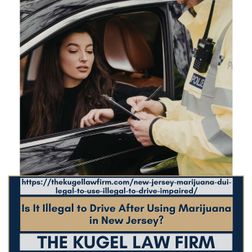
From The Kugel Law Firm - Is It Illegal to Drive After Using Marijuana in New Jersey? explains how New Jersey allows adult cannabis use while still prohibiting driving under the influence of marijuana. This episode explores how N.J.S.A. 39:4-50 applies to marijuana DUI cases, why New Jersey has no legal THC limit for drivers, and how prosecutors may rely on officer observations, field sobriety testing, Drug Recognition Expert evaluations, and chemical test results to prove impairment. Listeners will hear how marijuana DUI penalties in NJ can affect first, second, and third offenses, including fines, jail exposure, IDRC requirements, MVC surcharges, license forfeiture or loss, and Ignition Interlock Device requirements. The episode also discusses why a medical marijuana card does not protect a driver from a DUI charge and why a positive THC test does not automatically prove impairment at the time of driving. Attorney Rachel Kugel of The Kugel Law Firm breaks down key rights and defense issues in New Jersey marijuana DUI cases, including traffic stops, the limits of odor evidence after cannabis legalization, N.J.S.A. 39:4-51a restrictions on consuming cannabis in a vehicle, and how New Jersey’s implied consent law under N.J.S.A. 39:4-50.2 applies differently to alcohol breath tests than to marijuana-related blood or urine testing. The discussion also covers Fourth Amendment concerns, warrants, voluntary consent, and challenges to DRE opinions, SFST performance, and THC testing. Based in Newark at 1 Gateway Ctr, Suite 2600, The Kugel Law Firm serves clients throughout New Jersey, including Jersey City and Hudson County, in DUI and DWI defense matters. Rachel Kugel, Esq. has practiced law since 2005, is a member of the National College for DUI Defense and the DUI Defense Lawyers Association, and has appeared as a legal analyst or commentator on CNN, FOX News, CourtTV, MSNBC, and HLN. For listeners facing a marijuana-related DUI arrest, the episode highlights the importance of understanding the evidence, license consequences, driving record impact, and available defense options. The Kugel Law Firm 1 Gateway Ctr SUITE 2600, Newark, NJ 07102, United States (973) 854-0098 https://www.google.com/maps?cid=3822170752710866861

Little Rock Car Accident Lawyer - Joseph Gates

From Gates Law Firm PLLC – Little Rock Car Accident Lawyer explores what it means to seek justice and financial recovery after a devastating crash in Arkansas. This episode highlights the rising dangers on local roads, the struggles families face in the aftermath of an accident, and the determination it takes to secure fair compensation when injuries, medical bills, and lost wages change lives forever. Listeners will learn how Joseph Gates and his team approach every case with care, from gathering crash reports and witness statements to challenging tough insurance tactics designed to minimize payouts. We dive into Arkansas’s modified comparative fault law, showing why having a strong advocate matters when your recovery depends on proving what really happened and protecting your right to full compensation. The conversation also unpacks the leading causes of wrecks in Little Rock – distracted driving, impaired drivers, speeding on I-30 or Highway 10, and dangerous intersections like Asher Avenue and University. With real stories of clients across Pulaski County, this discussion brings to life how Gates Law Firm PLLC investigates the causes of collisions, works with accident reconstructionists, and partners with medical professionals to present the strongest case possible. Finally, the episode addresses the question everyone asks: what is your car accident case worth? From documenting medical costs and lost income to capturing the impact of pain, suffering, and permanent injuries, Joseph Gates explains how every detail influences the value of a claim. Whether it’s a head-on collision, rear-end accident, hit-and-run, or claim against an uninsured driver, this podcast shows how Gates Law Firm PLLC helps people across Arkansas move forward with clarity, dignity, and the compensation they deserve. Gates Law Firm PLLC 2725 Cantrell Rd # 105, Little Rock, AR 72202, United States (501) 779-8091 https://www.google.com/maps?cid=4114337096292287489

How New York Medicaid Looks at Your “Homestead” - Davies Law Firm

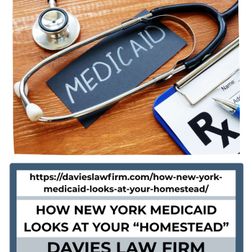
From Davies Law Firm – How New York Medicaid Looks at Your “Homestead” breaks down the complex legal framework that governs how your primary residence is treated when applying for long-term care through New York’s Medicaid Chronic Care program. This episode sheds light on one of the most misunderstood parts of Medicaid planning: whether your home will be taken if a loved one needs nursing home care. Spoiler alert — it won’t, if you plan ahead. We’ll explore what qualifies as a homestead under New York Medicaid, the 2025 equity cap of $1,097,000, and how exemptions work for spouses, disabled children, and caregiving family members. You’ll learn how the state values your home, what triggers a lien, and what it means to have an “intent to return.” This episode also explains penalty-free transfers — including to a caretaker child or sibling with equity — and how those exceptions can protect your home from estate recovery. Listeners will get an inside look at planning strategies that safeguard both eligibility and legacy. Tools like irrevocable trusts, life estate interests, and properly timed gifts can make a major difference when structured under New York’s Medicaid rules. We'll also walk through key 2025 financial limits — from resource caps to monthly income rules — and what they mean for single applicants and married couples seeking community or institutional care. Finally, we highlight how the team at Davies Law Firm, led by Frederick P. Davies and William P. Davies, supports families in Central New York with personalized, lawful planning solutions. Whether it’s confirming homestead equity, documenting intent to return, or using pooled income trusts to handle income overages, this episode shows how clarity, planning, and the right legal tools can help preserve both your home and your peace of mind. Davies Law Firm 210 E Fayette St, Syracuse, NY 13202, United States (315) 472-6511 https://www.google.com/maps?cid=11885144913064493862

What is New York’s Zero Tolerance Law? - Rachel Kugel

From The Kugel Law Firm – What is New York’s Zero Tolerance Law? dives into how New York enforces under-21 alcohol and driving laws under its Zero Tolerance framework. In this episode, we’ll explore the threshold blood alcohol concentrations (BAC) that trigger administrative action versus criminal charges, and illustrate how even a small BAC reading can dramatically alter a young driver’s future. We’ll walk through the tiered BAC levels that the state uses: the 0.02% to about 0.04% range covered by the Zero Tolerance law, the 0.05% to 0.07% zone where a young driver might face a DWAI charge, and the 0.08%-and-above range which triggers a full DWI — even for someone under 21. We’ll discuss the role of the DMV administrative hearing process, the difference in consequences for under-age drivers, and how the rules for young drivers differ from adult offenders. The conversation will also cover how field sobriety tests, breathalyzers, and chemical testing play into the enforcement of New York’s Zero Tolerance law. We’ll examine how procedural protections — such as the requirement of proper administration of the test and the driver’s rights at the DMV hearing — can impact outcomes. Plus, we’ll look at the mandatory programs like the Impaired Driver Program (IDP) and the impact of license suspension or revocation on insurance, records and future opportunities. Finally, we’ll share practical takeaways: what under-21 drivers and their families should know about New York’s policy on alcohol and driving, how early intervention works, and how the law balances deterrence with education. Whether you’re a young driver, a parent, or simply interested in how administrative hearings differ from criminal prosecutions, this episode will give you a clear understanding of the stakes under the Zero Tolerance law and the resources available. The Kugel Law Firm 111 E 125th St 2nd Fl, New York, NY 10035, United States (212) 372-7218 https://www.google.com/maps?cid=17189431107850367088
The 2021 New York Statutory Power of Attorney - Davies Law Firm

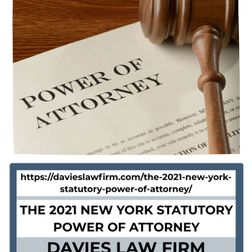
From Davies Law Firm – The 2021 New York Statutory Power of Attorney dives into the sweeping changes introduced by the law governing powers of attorney in New York, offering essential insight for anyone involved in estate planning or managing another person’s affairs. In this episode, we explore how the law took effect on June 13, 2021, and what that means for both principals and agents under the statute.We’ll break down what a power of attorney (POA) really is in the context of New York — distinguishing between a statutory POA and a non-statutory POA, and why following the new statutory form matters. We also talk through the concept of validity versus proper exercise of authority, unpacking scenarios where an agent may have a valid POA but still act beyond the powers granted — creating risk for both parties.Next, we explore key updates under the new law: the end of the exact language requirement; new rules around agent authority, including health-care finances and gift giving; changed execution requirements, such as two disinterested witnesses plus notarization; and stronger protections for third parties who accept a POA in good faith. These changes raise both opportunity and caution: for example, the previous Statutory Gifts Rider has been repealed, shifting gifting authority into the modifications section of the statutory POA.Finally, we outline practical tips and next steps: what principals should consider when drafting or updating their POA, especially if signed before June 2021; what agents need to know about presenting their authority to third parties; and what third parties, like banks or institutions, should keep in mind when asked to accept an agent’s authority. Whether you’re planning ahead, acting as someone’s agent, or representing an institution, this discussion provides the roadmap to navigate the new statutory landscape. Davies Law Firm 210 E Fayette St, Syracuse, NY 13202, United States (315) 472-6511 https://www.google.com/maps?cid=11885144913064493862

Preventable Amputations Due to Medical Negligence - Luxenberg Garbett Kelly & George P.C.

From Luxenberg Garbett Kelly & George P.C. – Preventable Amputations Due to Medical Negligence uncovers the devastating reality behind avoidable limb loss and the legal options available to those affected by substandard medical care. This episode dives into how seemingly minor oversights—such as missed diagnoses, mismanaged vascular disease, or inadequate post-operative care—can cascade into life-altering consequences. The article discusses how a preventable amputation transforms from a medical outcome into a legal matter when professional standards are violated. Listeners will gain insight into Pennsylvania’s specific legal framework for medical malpractice, including the “standard of care,” the four pillars of a malpractice claim (duty, breach, causation, and damages), and the state’s Certificate of Merit requirement. Through this lens, we explore the difference between an unavoidable tragedy and actionable negligence—where timely intervention could have changed the outcome. Key examples include misdiagnosed infections, improperly managed diabetic complications, and overlooked symptoms of peripheral artery disease or acute limb ischemia. We also shine a light on the broader systemic issues that often lead to wrongful amputations, from hospital understaffing and surgical “never events” to negligent practices in nursing homes. The article highlights how failures in basic safety protocols, like site-marking in surgery or pressure sore management in long-term care, can have catastrophic results. Luxenberg Garbett Kelly & George P.C. brings decades of experience in confronting these complex cases, as detailed through the credentials of attorneys Lawrence M. Kelly and Joseph A. George. Finally, the episode addresses the financial and emotional toll of preventable amputations, outlining the types of damages available under Pennsylvania law—from lifetime medical expenses to non-economic losses such as phantom limb pain, PTSD, and loss of life’s pleasures. Listeners will also learn about the Discovery Rule and the recent elimination of the statute of repose, crucial legal timelines that can impact a victim’s ability to seek justice. If you or a loved one has suffered due to medical negligence, this episode will empower you with knowledge and direction. Luxenberg Garbett Kelly & George P.C. 315 N Mercer St, New Castle, PA 16101, United States (724) 658-8535 https://www.google.com/maps?cid=1349618312503922919

What is a 1031 Exchange in New Jersey? - Christine Matus

From Matus Law Group – What is a 1031 Exchange in New Jersey? explores how real estate investors in New Jersey can leverage the power of Section 1031 of the Internal Revenue Code to defer taxes and build long-term wealth. Our host, Christine Matus, guides listeners through the key rules and timelines that can make or break a successful 1031 exchange, ensuring you’re not blindsided by state or federal requirements. In this episode, we break down the core principle: that a 1031 exchange is tax deferral—not tax free—and how the “like-kind” real property rule offers flexibility to trade, for example, a rental house in Summit, New Jersey for a commercial warehouse in Newark, New Jersey. We also cover lesser-known tools like Delaware Statutory Trusts (DSTs) and Tenant-in-Common (TIC) interests, and what the Internal Revenue Service requires when you use a Qualified Intermediary (QI) to facilitate your transaction. Then we turn our attention to New Jersey’s unique framework: the so-called “Exit Tax”, and the GIT/REP-3 and GIT/REP-1 tax forms that nonresident and resident sellers must understand. Christine Matus draws from her decades of experience at Matus Law Group, and her work with the American Bar Association and Asian Pacific American Lawyers Association, to clarify when the state’s withholding rules apply and how they interact with federal tax deferral. Whether you’re a seasoned investor or heading into your first exchange, this podcast gives you a toolkit for identifying eligible property, meeting the 45- and 180-day deadlines, and navigating both IRS and New Jersey requirements with confidence. Join us and make your next move count. The Matus Law Group 125 Half Mile Rd #201A, Red Bank, NJ 07701, United States (732) 785-4453 https://www.google.com/maps?cid=3241702663730814860

International Real Estate Transactions - Natalia A. Sishodia

From Sishodia PLLC – International Real Estate Transactions explores how international investors can confidently navigate the U.S. real estate market while protecting their financial and legal interests. The article highlights how attorney Natalia Sishodia and her team guide everything from FIRPTA withholding rules to structuring cross-border real estate deals. Listeners will gain insight into the legal and tax implications of investing in New York City and beyond, along with practical steps to reduce risks and achieve smooth closings. The discussion looks at both the opportunities and challenges faced by foreign buyers. With U.S. laws varying across states and intersecting with home-country regulations, understanding due diligence, disclosure requirements, and compliance with FinCEN’s Geographic Targeting Orders becomes critical. Natalia Sishodia’s work with international clients—from Russia, Switzerland, Japan, Canada, the UK, UAE, India, Turkey, China, South Korea, Italy, and more—demonstrates the value of clear, multilingual guidance that ensures investors understand every stage of their transaction. This podcast also unpacks key issues such as obtaining financing without a local credit history, property tax lien complications, and the heightened FIRPTA withholding rate. It highlights how foreign investors can plan for U.S. estate taxes, manage joint ventures, and structure ownership through LLCs, corporations, or trusts to reduce exposure. By addressing complex rules on repatriation of profits, capital gains, and reporting obligations, Natalia Sishodia shows how strategic planning can save significant costs. Ultimately, Experienced Foreign Investment Attorney offers international buyers a roadmap for investing successfully in American real estate. From luxury condos and co-ops to large commercial transactions, Sishodia PLLC combines legal precision with practical solutions, helping clients avoid common pitfalls and safeguard their long-term wealth. This episode will leave listeners better equipped to understand New York’s evolving regulations, anticipate financial obligations, and make informed decisions in one of the world’s most competitive real estate markets. Sishodia PLLC 600 3rd Ave 2nd floor, New York, NY 10016, United States (833) 616-4646 https://www.google.com/maps?cid=12450537318741950980
62 de 178