BSPE Legal Marketing Podcast

BSPE Legal Marketing Podcast

por Viktoria Altman
Temporada 5

Pennsylvania Uninsured/Underinsured Motorist (UM/UIM) Claims - Luxenberg Garbett Kelly & George P.C.

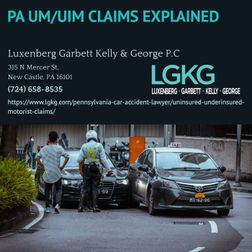
From Luxenberg Garbett Kelly & George P.C. - Pennsylvania Uninsured/Underinsured Motorist (UM/UIM) Claims examines what happens when a crash leaves someone facing mounting medical bills and lost wages because the at-fault driver lacks insurance or carries only Pennsylvania's minimum liability coverage. The discussion covers how uninsured and underinsured motorist coverage pays the difference between the at-fault driver's limits and the true value of an injury claim, and explains that pursuing this type of claim involves seeking compensation directly from one's own insurance company and enforcing a contract against the carrier. The conversation walks through the distinctions between uninsured motorist coverage, which applies when an at-fault driver has no bodily injury liability insurance, and underinsured motorist coverage, which applies when that driver's insurance is insufficient to cover the full extent of the losses. It also addresses how stacked and unstacked policies affect payouts, the notice deadlines that apply after a hit-and-run or phantom vehicle incident, and the common mistakes that can compromise a claim, such as settling with the at-fault driver before obtaining the underinsured motorist carrier's written consent. Listeners will also hear about the process of filing a claim, including gathering policy documents, documenting injuries and losses, and pursuing arbitration or litigation when a carrier denies a claim or offers an inadequate settlement. The episode touches on the filing deadlines involved, including the two-year statute of limitations for claims against a negligent driver and the four-year statute of limitations for contract claims against an insurer. Lawrence M. Kelly of Luxenberg Garbett Kelly & George P.C. helps lead the firm's work on these first-party disputes, applying decades of combined personal injury litigation experience to hold carriers accountable to their written contracts. Listeners seeking a free consultation about a Pennsylvania UM/UIM claim can call Luxenberg Garbett Kelly & George P.C. at (724) 658-8535. Luxenberg Garbett Kelly & George P.C. 315 N Mercer St, New Castle, PA 16101 (724) 658-8535 https://www.google.com/maps?cid=1349618312503922919

Ocean County Estate Planning Attorney - Christine Matus

From The Matus Law Group - Ocean County Estate Planning Attorney explores how New Jersey families can prepare for the future through wills, trusts, and other essential planning tools. This episode covers key documents such as a Last Will and Testament, powers of attorney, and advance healthcare directives, explaining how the Revised Durable Power of Attorney Act and the New Jersey Advance Directive for Health Care Act help ensure finances and medical care are handled by trusted individuals when someone cannot make decisions themselves. The discussion also examines living trusts and revocable trusts in New Jersey, including how a properly funded trust can avoid probate through the Ocean County Surrogate's Court, and who should consider a revocable trust in NJ. Listeners will learn about Medicaid Asset Protection Trusts, how a MAPT may help shelter assets from Medicaid's spend-down requirements, and why timing matters given New Jersey Medicaid and NJ FamilyCare eligibility rules, including the community spouse resource allowance, or CSRA. The episode further breaks down special needs planning, comparing first-party and third-party special needs trusts and what these trusts can and cannot pay for while preserving eligibility for SSI and Medicaid. Christine Matus of Matus Law Group brings her experience guiding Ocean County families through these estate planning, elder law, and asset protection strategies. Whether you're creating a first estate plan or updating an existing one, this conversation from Matus Law Group offers guidance on protecting loved ones and preparing for the future. Call Matus Law Group to schedule a consultation and learn more about the planning tools discussed in this episode. Matus Law Group 81 E Water St #2C, Toms River, NJ 08753 (732) 281-0060 https://www.google.com/maps?cid=6876392708092026946

Living Will vs Advance Healthcare Directive: What's the Difference in New Jersey? - Christine Matus

From The Matus Law Group - Living Will vs Advance Healthcare Directive: What's the Difference in New Jersey? explains how these two planning tools work together to protect your medical wishes when you cannot speak for yourself. Listeners will learn that in New Jersey, an advance directive serves as the umbrella term covering both a living will and a healthcare proxy, and that most people benefit from having both documents in place. The episode walks through what a living will covers, including terminal illness, permanent unconsciousness, and life-sustaining treatment preferences, as well as what a healthcare proxy does in naming a trusted healthcare representative to make decisions on your behalf. The discussion draws on guidance from The Matus Law Group, where Christine Matus of The Matus Law Group has helped families throughout Monmouth County and New Jersey prepare advance directives. Listeners will hear about the requirements under New Jersey law for executing these documents, including the need for two adult witnesses or notarization, and how the documents become effective only when a physician determines a person lacks the capacity to make healthcare decisions. The episode also touches on related topics such as who cannot serve as a healthcare representative and how these documents can be changed or revoked over time. Christine Matus is a Monmouth County estate planning attorney who has practiced estate planning and real estate law in New Jersey for many years. She graduated from Douglass College at Rutgers University and received her Juris Doctor from Touro College Jacob D. Fuchsberg Law Center, and she is a member of the New Jersey State Bar Association and the Asian Pacific American Lawyers Association. Her background and experience inform the practical advice shared throughout the episode about healthcare planning documents. Listeners in Red Bank and throughout Monmouth County and New Jersey will come away with a clearer understanding of how a living will and a healthcare proxy differ, when each applies, and why having both offers the most complete protection. The episode closes with an invitation to reach out to The Matus Law Group to schedule a consultation and begin the process of putting these important documents in place. The Matus Law Group 125 Half Mile Rd #201A, Red Bank, NJ 07701 (732) 785-4453 https://www.google.com/maps?cid=3241702663730814860

What Is Medicaid Crisis Planning in New Jersey? - Christine Matus

From The Matus Law Group - What Is Medicaid Crisis Planning in New Jersey? explores how Medicaid crisis planning can help New Jersey families protect assets and pursue Medicaid benefits when an unexpected medical event creates an urgent need for long-term care. The episode examines how families can respond when a stroke, fall, dementia diagnosis, hospitalization, or other health crisis leads to nursing home care, assisted living, or in-home private care, including the role Medicaid planning can play in preserving life savings. Christine Matus of The Matus Law Group discusses key New Jersey Medicaid eligibility rules, including the five-year look-back period, asset and income limits, and transfer penalties. The episode explains how Medicaid reviews asset transfers made during the 60 months before eligibility, why transfers for less than fair market value can result in periods of ineligibility, and how exemptions for certain transfers—including those involving a spouse or disabled child—may apply. It also covers the Community Spouse Resource Allowance and strategies available to married couples when one spouse requires long-term care. Listeners will also learn about assets that may be excluded when determining Medicaid eligibility, such as a qualifying primary residence, one vehicle, personal belongings, household effects, and certain prepaid funeral and burial arrangements. The discussion explores spend-down strategies, Qualified Income Trusts—also known as Miller Trusts—and New Jersey’s Estate Recovery Program, highlighting why the way assets are transferred or protected can affect both Medicaid eligibility and a family’s financial future. The episode also examines Managed Long-Term Services and Supports (MLTSS), New Jersey’s Medicaid program for long-term care, and the Nursing Facility Level of Care requirements associated with receiving services. From nursing home and assisted living care to personal care assistance, home modifications, meal preparation, adult day programs, and other home-based services, the discussion provides families in Toms River, Ocean County, Monmouth County, and throughout New Jersey with a clearer understanding of their options when long-term care becomes necessary. The Matus Law Group 81 E Water St #2C, Toms River, NJ 08753 (732) 281-0060 https://www.google.com/maps?cid=6876392708092026946

Understanding Your Title Report - Peter Zinkovetsky

From Avenue Law Firm - "Understanding Your Title Report" explains what a New York title report contains and how it can affect a real estate closing. The report draws from deeds, mortgages, court judgments, and municipal filings to identify the current record owner and issues that could affect the title, including liens, judgments, unreleased mortgages, and easements. Reviewing the report early gives buyers and their attorneys time to identify and address potential title issues before closing. The discussion covers what a title report contains, how to read Schedule A and Schedule B before closing, the defects that commonly appear, and how those issues may be resolved. It also addresses what happens if a problem is discovered after closing and the costs associated with title searches and title insurance. Common title defects include liens from unpaid property taxes or construction work, docketed judgments, mortgages that were paid off but never formally discharged, boundary or easement disputes, and forged or improperly executed deeds. Co-op purchases differ from condo or house purchases because the buyer acquires shares in a corporation along with a proprietary lease rather than deeded real property, so the review instead focuses on the stock certificate, proprietary lease, and liens against the shares. Listeners with questions about a title report or an issue affecting their closing can call Avenue Law Firm at (212) 729-4090. Avenue Law Firm 505 Park Ave #1201, New York, NY 10022 (212) 729-4090 https://www.google.com/maps?cid=14223199020890935024

What Qualifies as Wrongful Death in New York? - Keetick L. Sanchez

From K L Sanchez Law Office, P.C. - What Qualifies as Wrongful Death in New York? explores how New York law defines wrongful death and what families should understand when a loved one dies because of another party’s wrongful conduct, negligence, or default. This episode examines circumstances that may lead to wrongful death claims, including construction accidents, workplace injuries, car accidents, medical malpractice, criminal activity, police misconduct, product liability, and exposure to hazardous or dangerous substances. The discussion breaks down the core elements involved in a New York wrongful death claim, including negligence, duty of care, breach of duty, causation, surviving beneficiaries or dependents, and financial loss. It also explains the role of the personal representative designated through Surrogate’s Court and considers how spouses, children, parents, heirs, beneficiaries, and the deceased person’s estate can factor into the legal process. Listeners will also learn about the differences between wrongful death lawsuits and survival action lawsuits. The episode examines potential compensation involving medical costs, funeral and burial expenses, lost future income, lost support and services, loss of companionship, parental nurturing, care and guidance, inheritance value, and the pain and suffering experienced by the deceased before death. It also explains how compensation from a survival action can become part of the estate and pass through the probate process. Finally, the episode addresses proving wrongful death and New York’s statute of limitations, which the article states is generally two years from the date of death. For families in New York City, Queens, and the Bronx, the discussion highlights how a wrongful death claim can seek accountability and compensation for financial burdens following a loved one’s death. The episode also discusses the role of Keetick L. Sanchez and K L Sanchez Law Office, P.C. in helping families understand wrongful death cases and their available legal options. K L Sanchez Law Office, P.C. 37-06 82nd St #304, Jackson Heights, NY 11372 (646) 701-7990 https://www.google.com/maps?cid=2729652254808699760

What Is an Offer of Compromise Under Connecticut § 52-192a, and How Can It Increase My Recovery? - Dan Petroskey

From DeFronzo & Petroskey, P.C. - What Is an Offer of Compromise Under Connecticut § 52-192a, and How Can It Increase My Recovery? explains how a formal written settlement offer filed under Connecticut General Statutes § 52-192a can add 8% annual interest to an injury recovery. The podcast walks through how an Offer of Compromise differs from informal settlement talks, and how a properly filed offer becomes part of the court record if the defendant does not accept and the plaintiff later recovers an amount equal to or greater than the offered sum after trial. Dan Petroskey of DeFronzo & Petroskey, P.C. evaluates when an Offer of Compromise may strengthen settlement negotiations, considering the facts of the case, the timing of the lawsuit, and the potential value of the claim. The discussion covers who can file an Offer of Compromise, the strict filing deadlines that apply to plaintiffs and defendants, and how those deadlines affect when the 8% interest begins to accrue. Listeners will also hear how defendants have a similar procedure under Connecticut General Statutes § 52-193, including how rejected offers can affect recoverable costs. The episode also introduces Dan Petroskey, who has represented injured plaintiffs throughout Connecticut since his admission to the Connecticut Bar in 2004. As the owner of DeFronzo & Petroskey, P.C., Dan handles car accident, slip and fall, premises liability, dog bite, and other personal injury cases, and has been recognized by Best Lawyers and Super Lawyers while serving as President of the Waterbury Bar Association. He earned his bachelor's degree from Colby College and his Juris Doctor from Albany Law School, and he is admitted to practice in both Connecticut and New York. This description highlights how DeFronzo & Petroskey, P.C. prepares cases for Waterbury Superior Court and the New Haven Judicial District, using statutes like § 52-192a to strengthen a client's position. Listeners considering whether an Offer of Compromise fits their case are encouraged to call DeFronzo & Petroskey, P.C. at (203) 756-7408 to schedule a free consultation with a Waterbury personal injury attorney about maximizing recovery through careful timing and strategy. DeFronzo & Petroskey, P.C. 255 Bank St # 2b, Waterbury, CT 06702 (203) 756-7408 https://www.google.com/maps?cid=2074756120617399372
Uber and Lyft Accidents in Waterbury, CT - Dan Petroskey

From DeFronzo & Petroskey, P.C. - Uber and Lyft Accidents in Waterbury, CT examines the legal complications that arise when a rideshare crash occurs in Waterbury, Connecticut, and how the driver's app status at the moment of impact can determine which insurance tier applies. The podcast walks through Connecticut's tiered insurance system under Chapter 244c of the General Statutes, explaining how coverage can reach $1 million in liability limits once a driver is actively en route or transporting a passenger. Listeners will hear how Uber and Lyft classify drivers and how that classification affects claims against the rideshare companies themselves. This episode also covers how liability is determined in Connecticut, including scenarios involving a negligent rideshare driver, a third-party motorist, or even a municipality responsible for a defective roadway. Dan Petroskey of DeFronzo & Petroskey, P.C. discusses how Connecticut's fault-based system requires proving negligence, and how the state's modified comparative negligence rule under Section 52-572h can reduce or bar compensation depending on a person's percentage of fault. The discussion highlights common injuries from these crashes and the importance of consistent medical treatment in documenting a claim. The podcast further explains the practical steps injured people should take after an Uber or Lyft accident in Waterbury, including reporting the crash, preserving trip data, and avoiding early recorded statements to insurance adjusters. It also details the strict two-year filing deadline under Connecticut General Statutes Section 52-584, along with the different considerations facing passengers, drivers, and third parties following a crash. Listeners will come away understanding why rideshare claims are often more complex than typical car accidents due to layered insurance policies and aggressive corporate defense. Dan Petroskey has represented plaintiffs in Connecticut personal injury cases since 2004 and manages rideshare claims personally from the first insurance contact through trial. Those seeking guidance can contact DeFronzo & Petroskey, P.C. at (203) 756-7408 to discuss their Waterbury Uber or Lyft accident with Dan Petroskey. DeFronzo & Petroskey, P.C. 255 Bank St # 2b, Waterbury, CT 06702 (203) 756-7408 https://www.google.com/maps?cid=2074756120617399372
What Does NY VTL § 1146 Require Drivers to Do for Pedestrians? - Keetick L. Sanchez

From K L Sanchez Law Office, P.C. - What Does NY VTL § 1146 Require Drivers to Do for Pedestrians? explains the due-care duty New York Vehicle and Traffic Law places on drivers to avoid colliding with pedestrians, bicyclists, and certain domestic animals on the roadway. The episode walks through how due care depends on circumstances like speed, visibility, and traffic conditions, and how a violation can affect fault after a crash involving injured pedestrians in Queens and Jackson Heights. Listeners will hear how officers and the New York Court of Appeals evaluate due care, what driver behaviors can show a lack of due care, and how a VTL § 1146 violation can support a negligence claim without automatically establishing civil liability. The discussion also covers New York's No-Fault system, including how pedestrians can seek benefits regardless of fault, and how evidence such as witness statements, photographs, and medical records can help document what happened after a pedestrian accident. The podcast features insight from Keetick L. Sanchez of K L Sanchez Law Office, P.C., who represents injured pedestrians throughout Queens and New York City. Before founding the firm, she worked as a trial litigation paralegal handling Labor Law and motor vehicle accident matters, and she gained additional experience through an internship with the Nassau County District Attorney's Office after graduating from Touro College Jacob D. Fuchsberg Law School. This episode is a helpful resource for anyone trying to understand how VTL § 1146 interacts with fault determinations, No-Fault claims, and personal injury cases in New York City. Listeners will come away understanding what steps to take after a pedestrian accident in Queens and why speaking with K L Sanchez Law Office, P.C. can help clarify legal options after a crash. K L Sanchez Law Office, P.C. 37-06 82nd St #304, Jackson Heights, NY 11372 (646) 701-7990 https://www.google.com/maps?cid=2729652254808699760

Failure to Yield Accidents in Virginia - GibsonSingleton Virginia Injury Attorneys

From GibsonSingleton Virginia Injury Attorneys - Failure to Yield Accidents in Virginia discusses and explains how these collisions happen at intersections, side roads, and entrances connecting with Route 17 and other local roads in Gloucester County. The episode covers Virginia's right-of-way rules, including the duties drivers face at stop signs, yield signs, and when entering a highway from a side road or making a left turn across oncoming traffic. The discussion also examines how fault is determined after a failure-to-yield crash, including the role of police investigations, witness statements, and physical evidence such as skid marks and debris patterns. Listeners will hear about Virginia's contributory negligence rule, which can bar an injured person from recovering damages if their own negligence contributed to the crash, and how insurance companies often scrutinize an injured driver's actions before a collision. The episode further reviews the types of failure-to-yield crashes that can occur, including left-turn collisions, T-bone intersection crashes, and merging or highway entry crashes, along with the injuries these collisions commonly cause. It also touches on available damages, insurance coverage issues, and the filing deadlines that apply to personal injury and property damage claims in Virginia. This episode features insight from Ken Gibson of GibsonSingleton Virginia Injury Attorneys, who represents injured clients throughout Gloucester County and the Middle Peninsula and discusses how the firm helps clients investigate right-of-way crashes, preserve evidence, and pursue compensation after a failure-to-yield accident. GibsonSingleton Virginia Injury Attorneys 4073 S George Washington Mem Hwy, Hayes, VA 23072 (804) 413-6777 https://www.google.com/maps?cid=16748039254555405766
3 de 178