Brandmarch Podcast: Behind The Lease

Brandmarch Podcast: Behind The Lease

por Brett Robinson
Temporada 1

The 18-Hour Ecosystem: [solidcore]'s Criteria for Mastering the Suburban Shopping Center

The wellness real estate sector is booming, and we're diving deep into the movement that is [solidcore]. On this episode of ‘Behind the Lease’, we sit down with Josh Rainey, Head of Real Estate for [solidcore], who is leading their massive expansion and shares the strategy behind opening 27 new studios in 2025 alone. Josh discusses [solidcore]'s growth, accelerating post-COVID from its 2013 DC origins, and how his unique background shapes site selection. He explains how he applies lessons from CloudKitchens, a model based on invisibility and efficiency, to [solidcore]'s focus on visibility and community. We cover: [solidcore]'s Accelerated Growth. The brand's journey from a single DC studio built by hand to an acceleration post-COVID, including opening 27 studios in 2025. The Unique Site Selection Lens. How his time at CloudKitchens taught him to look at the total addressable market potential and use a "marketing lens" on data, prioritizing the "psychographic blend" of a community to identify consumers who will be "easy to convert". The Shift to Suburban Centers. Why the urban-first brand is successfully making the leap to suburban shopping centers, navigating lower-density environments, and increasing store square footage to enhance the client experience. The 18-Hour Ecosystem. The ideal location criteria: a blend of lifestyle and daily needs components, with co-tenants like grocers, soft goods, buzzy cafes, or local restaurant groups to ensure the center feels comfortable and exciting during the brand's key revenue-driving times (early mornings and late evenings). New Expansion Markets. The strategy of balancing infill in major population centers (California, Texas, Florida) with entry into secondary and tertiary markets that might surprise people, like Oklahoma City, Rhode Island, and Buffalo, NY. Real Estate as Brand Positioning. The value of using curated platforms like Brandmarch to drive consistency in real estate choice, safeguard brand positioning, and ensure the brand remains selective towards the premium end of retail. This is a practical conversation about how boutique fitness brands are charting a course for expansion in modern retail markets, using unique data insights to fuel rapid, intentional growth. Josh Rainey's Areas of Expertise Wellness real estate expansion and strategy Tenant representation for boutique fitness brands Site selection using psychographic data and market conversion potential Mastering the shift from urban-first to suburban mixed-use assets Developing co-tenancy and "18-hour ecosystems" for client retention Markets Discussed DC (Adams Morgan) Atlanta Charlotte New York City suburbs Oklahoma City Rhode Island Las Vegas Salt Lake City California Texas Florida The Carolinas Buffalo, NY

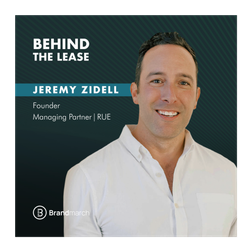
Retail Real Estate's Next Frontier: Jeremy Zidell on the Evolution of Curated Retail

In this episode of 'Behind the Lease', we sit down with retail real estate expert Jeremy Zidell for an in-depth look at his career journey, current brand collaborations, and a definitive breakdown of two major retail markets: Dallas's Knox Street and the massive, highly-curated Dublin Village project in Columbus. The Dublin Village Project Zidell details the vision for Dublin Village, a project driven by the desire for highly curated, artisan projects that offer an alternative to traditional centers like Easton Town Center. Scale and Delivery: The project is approximately 135,000 square feet of gross leasable area (GLA). It is scheduled for delivery in the first quarter of 2028 and will likely include both retail and office components. Targeted Mix: The vision focuses on best-in-class food and beverage (F&B), instructor-led fitness, and a smaller format furniture component. Fashion DNA: The fashion component will span contemporary brands through the lower end of luxury, citing Reformation, Rag & Bone, and Alice + Olivia as examples. Knox Street and Henderson Avenue Insights Zidell contrasts the distinct "DNA" of two key Dallas retail neighborhoods: Knox Street: Analogized to a combination of New York's SoHo and Madison Avenue, the environment is described as polished and regal. Zidell predicts that in five years, Knox will be a much taller, denser version of itself, becoming an "ecosystem and de facto small city unto itself". Henderson Avenue: Inspired by Abbott Kinney architecture, this market aims for a more ingratiated feel within the East Dallas community. It is expected to maintain a "cool kid" nature with lower-end contemporary aspirational brands. Evolution of Brand-Side Decision Making Zidell notes a significant shift in brand leasing decisions, emphasizing that decision-makers are now hyperfocused on the quality, resume, and track record of developers and deal sponsors. He highlights that while data is key, the business remains heavily reliant on relationships and placing trust in the "jockey" (developer) behind a project to subtract risk from the equation. Career Path and Brand Collaborations Learn about Zidell's start in retail real estate 22 years ago, which began unexpectedly after working in the restaurant business at Mi Cocina. He was hired alongside David Fazio as one of The Retail Connection's first interns. Today, his team works with brands considered the "darlings of their category", including Equinox, Pura Vida, Papa's Bagel, Sézane, Framebridge, and Boll & Branch.

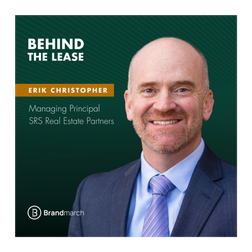
Erik Christopher on Denver Retail: Why the Best Space Is Getting Harder to Find

Retail demand in many U.S. markets is strong again. The challenge isn’t finding brands—it’s finding space. In this episode of Behind the Lease, we sit down with Erik Christopher, a Denver-based retail real estate broker with decades of experience working across landlord, tenant, and national brand roles. Erik shares how his career started leasing shopping centers in the Baltimore area, why working inside a retailer like Gap gave him a deeper understanding of store performance, and how that dual perspective shapes the way he advises brands and developers today. We talk about what’s happening in the Denver retail market, why high-demand districts like Cherry Creek have almost no available space, and how some shopping centers that struggled when they opened are finally seeing their markets grow into them. Erik also walks through the redevelopment of The Shops at Northfield, a large mixed retail center built on the former Stapleton airport site, where new ownership and population growth are helping reposition the project with major tenants and new brands. Throughout the conversation, Erik explains how retailers think about market strategy—from the first store in a market to the second wave of expansion—and why patience and brand discipline often matter more than speed. We cover: How Erik Christopher got his start in retail real estate What working inside Gap taught him about how stores actually perform Why understanding both landlord and tenant perspectives changes how deals get done The current supply shortage in top retail corridors like Cherry Creek How retailers decide whether to wait for the right location or expand elsewhere Why some shopping centers built decades ago are only now reaching their potential The redevelopment and leasing strategy behind The Shops at Northfield This is a practical conversation about how retail expansion works in real markets—where growth is uneven, great space is limited, and the best locations are rarely available for long. Erik Christopher's Areas of Expertise Denver retail real estate Tenant representation for national brands Shopping center leasing and repositioning Retail rollout strategy and market entry Mixed-use and lifestyle center merchandising Mountain West retail expansion Check out Erik's profile on Brandmarch: https://www.brandmarch.com/user/erik-christopher Markets Discussed Denver Cherry Creek Boulder Central Park (Stapleton redevelopment area) Brands Mentioned in the Episode Gap Old Navy American Eagle Wayfair Lifetime Fitness MINISO

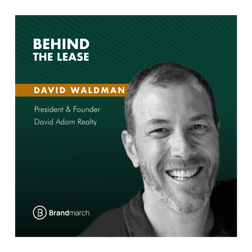
Building a High Street: 35 Years on Main Street Westport, with David Waldman

What does it actually take to build (and sustain) one of the strongest high streets in the country? In this episode of Behind the Lease, Brett Robinson sits down with David Waldman, a broker and developer who has spent more than three decades shaping downtown Westport, Connecticut. From historic restorations to national retail leases, David has worked both as an owner and as a street retail broker, giving him a rare perspective on how great retail districts evolve. They discuss: How Westport expanded beyond Main Street into a connected “Golden Triangle” Why parking, residential density, and food & beverage shifted the street’s economics How rents moved from $60 post-COVID back into the $120+ range Why small spaces can command the highest rents The underwriting realities behind cap rates, redevelopment, and flood mitigation What brands Westport supports, and where it likely caps out Why high streets thrive on thoughtful curation, not just demand It’s a practical conversation about retail fundamentals... place-making, risk, tenant mix, and the long arc of market cycles. If you work on high streets, represent national brands, or invest in mixed-use downtowns, this episode offers perspective grounded in real transactions. Brands Mentioned: West Elm, Gap Kids, Domain, Starbucks, Sundance, Chanel Beauty, Vince, Eileen Fisher, Ryridge Deli, Express, Urban Outfitters, Lux Bond & Green, Brooks Brothers, Lululemon, Alo, Vuori, Beyond Yoga, Brandy Melville

Expanding in a Constrained Market: Inside DC Retail with Jennifer Price

Retail expansion often looks fast from the outside. In reality, it’s slow, local, and full of tradeoffs. In this episode of Behind the Lease, we sit down with Jennifer Price, one of Washington, DC’s most experienced high-street retail brokers, to talk about what actually drives success on streets like Georgetown and 14th Street. Jennifer shares how she broke into retail real estate, why DC rewards consistency over flash, and what brands misunderstand about urban storefronts—especially when inventory is tight and rents keep climbing. We cover: Why DC shoppers gravitate toward quality, not trends How multi-level, narrow storefronts change deal math What rising rents mean for brands entering market today The real differences between high streets and shopping centers Why relationships still matter—but only when paired with context Jennifer also walks through current projects in Georgetown, including large-format redevelopments that are rare for the market, and explains how brands are adapting as demand continues to outpace supply. This is a practical conversation about how retail actually works on the ground—where constraints are real, and good decisions compound over time. Jennifer Price — Areas of Expertise High-street retail in Washington, DC Tenant representation for national and emerging brands Urban storefront strategy (multi-level & historic buildings) Market positioning for conservative, quality-led brands Navigating supply-constrained, high-rent environments Redevelopment and repositioning of complex retail assets Brands Mentioned in the Episode Lululemon, Veronica Beard, Vuori, Alo, J.Crew, Aritzia, Uniqlo

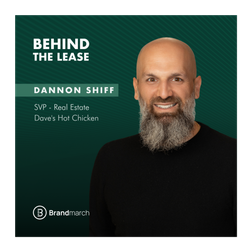
Why Dave’s Hot Chicken Treats Site Selection as Risk Management

Dave's Hot Chicken has grown fast, but not by accident. In our conversation, Dannon Shiff, SVP of Real Estate, shared why the real differentiator is selecting sites for long-term success. He highlighted how Dave’s considers modern customer behavior, third-party delivery, in-person traffic, and the responsibility of protecting franchisee investments. It’s a strategic approach shaped by a brand that grew out of COVID and understands how the trade area has evolved since the early days of Fast Casual.

Retail That Pulls People In: What DICK’S House of Sport Gets Right

Ethan Pacewiczh, Senior Real Estate Manager at DICK'S Sporting Goods, made one point clear in our conversation: brick and mortar is not dead. It has simply changed its purpose. House of Sport works when landlords think beyond filling a box and start thinking about the experience and traffic they want to create. In one market, converting a former Sears to House of Sport drove a roughly 30 percent traffic increase. The value comes from bodies, dwell time, and a format built to activate a center.

Cynthia Kratchman: Where Demand Is Landing in Detroit and Birmingham

In this conversation, Cynthia Kratchman shares what she’s seeing on the ground right now in Detroit and Birmingham, and why both markets are drawing serious brand attention. Cynthia is a principal at Mid-America Real Estate Group with more than thirty years in retail brokerage. The spaces she’s bringing to market today reflect how demand is evolving and what brands are prioritizing when they choose where to land next. We walk through two standout opportunities. A 4,800 square foot corner space at 1201 with basement access, patio potential, and a roof deck that opens the door for elevated fast casual or full service restaurant concepts. And the lower level at the Farwell Building, a 5,000 square foot space beneath a curated apparel gallery and the acclaimed Layla Restaurant, set inside one of downtown Detroit’s most architecturally striking buildings. Cynthia breaks down what brands are asking for, how site selection thinking is shifting, and why she sees long term momentum building in both markets. Brands represented: @andrettikarting @crayolaexperience @itsugar @jaredthegalleriaofjewelry @kayjewelers @kurasushi_usa @maurices @mysalonsuite @roomandboard @traderjoes

From Grit to Growth: How Charlotte Became a Retail Magnet with Adam Williams

This week we sit down with Adam Williams, a Charlotte native who has watched South End evolve from a corridor of barred windows and break ins to one of the most competitive retail streets in the Southeast. Adam grew up in the neighborhood long before Patagonia planted a flagship and long before national brands lined up for space along the light rail. He walks us through the turning points how the GFC pushed him into second-gen restaurant deals how buying and reinventing a 1960s bowling alley taught him to think like an operator why South End rents jumped from the twenties to the sixties and which neighborhoods will define the next wave of growth as Plaza Midwood, NoDa, South Park, Dilworth, and the suburbs all heat up. Adam also breaks down his current work on 110 East and Midblock, the density that is reshaping South End, and why Charlotte’s momentum keeps attracting major brands. Explore more at brandmarch.com Brands Adam works with @Patagonia @Target @AceHardware @MichaelsStores @UltaBeauty @PetSmart @WorldMarket @GAP @RH @TotalWine

Jeff Gaul on Building Retail Strategy From Nike to Fresh Food & Sephora

JEFF GAUL IS LIVE ON BEHIND THE LEASE. In our first episode, Jeff Gaul shares how site selection fundamentals stay the same whether you are building global brands like Nike and Sephora or scaling fresh food concepts. Different products, same customers, same trade areas, same decisions that drive results. www.brandmarch.com
2 de 3