Blindspot World

Blindspot World

por Nelson Pereira

Elena Aoun: Le millieu académique occidental demeure imprégné d’une vision coloniale

Le regard colonial, qui opposait les peuples « civilisés » aux « sauvages », maintient son empreinte sur la politique et les institutions occidentales. Malheureusement, l’académie n’est pas épargnée. Selon Elena Aoun, professeure et chercheuse en relations internationales à l’Université catholique de Louvain, en Belgique, « une large partie des institutions académiques occidentales restent ancrées dans une vision coloniale du monde ». Rares sont les chercheurs dans les milieux universitaires à remettre en question ces biais idéologiques. « On est trop peu de chercheurs à pouvoir s’exprimer ou à vouloir s’exprimer sur ces choses-là », a déclaré à Blindspot Elena Aoun. Parallèlement, la classe politique au pouvoir ne s’intéresse pas aux données scientifiques qui réfutent le cadre colonial. « Les dirigeants à travers le monde sont dans la négation de ces enjeux. Et puisque les postulats scientifiques et les savoirs factuels, empiriques, ne confirment pas l’instrumentalisation de la réalité qu’ils veulent perpétuer, ils ne s’y intéressent pas », souligne-t-elle. Photo: Nelson Pereira

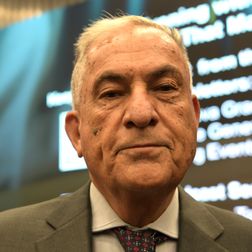
Gideon Levy: Survivors drew the wrong lesson from the Holocaust

“It’s possible to survive a Holocaust drawing two different messages,” Israeli journalist Gideon Levy told Blindspot. “Both say ‘never again,’ but ‘never again’ can mean ‘never again a Holocaust for the Jewish people’ or ‘never again a Holocaust for anyone.’ Unfortunately, most Israelis adopted the first message, ‘never again a Holocaust for the Jews,’ and that at any cost, at any price. This is the wrong message, because the correct message should be that, after the Holocaust, no one should face what the Jews faced, not just the Jews, no one. And that, unfortunately, is not the message adopted in Israel.” When asked if the survivors who have already passed away would have taken this stance, Gideon argues that most thought so. “There were different opinions, but most did not react as they should have, they did not react with solidarity with the Palestinians. No, they thought that, after the Holocaust, we should protect ourselves.” Photo: Gideon Levy © Nelson Pereira

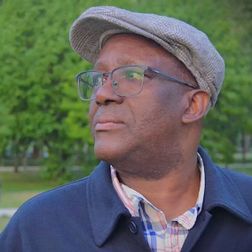
Albino Carlos: A resiliência angolana vem da música e da dança

As danças e músicas de Angola, peça essencial do património cultural do país, estiveram muito tempo ausentes dos estudos académicos angolanos. A “História da Música Angolana” do escritor, jornalista, e investigador Albino Carlos, veio alterar a paisagem bibliográfica nacional nesta área. "Eu não quis escrever um livro sobre música angolana, quis contar a história da Angola através da sua música, perceber como é que a música caracterizou o angolano," disse Albino Carlos a Blindspot. Entrevistado por Luís Guita, Albino Carlos ressalva que a música desempenhou um papel muito importante em Angola, "quer na resistência contra o colonialismo, quer para suportar as agruras da escravatura, e até na guerra civil que aconteceu, que dilacerou o nosso país". E acrescenta que "foi graças ao canto e ao batuque que os angolanos resistiram a esses momentos tremendos que nós passávamos e que queremos esquecer." Foto: © Luís Guita Podcast intro: © NapolhaVertical, Arnaldo Canda

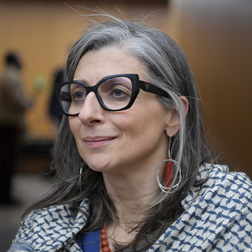
Francesca Albanese: Israel’s war crimes and genocide were enabled by Western democracies and media

Israel has always killed and tortured Palestinians, but when our democracies crush freedom of expression, they reveal that they are part of “the same system,” Francesca Albanese told Blindspot. On March 23, UN Special Rapporteur Francesca Albanese presented a report to the Human Rights Council in Geneva, alleging that Israel has adopted the systematic use of torture as state policy against Palestinians. Titled “Torture and Genocide,” the report argues that torture is a structural feature of the ongoing Israeli occupation and genocide, aiming to break the spirit of Palestinians as a people. “I see a system,” denounces Albanese. “A system that has enabled, provided weapons and means to Israel to commit this genocide. And this system is acting erratically, violently, without any restraint, but because it’s losing the legitimacy that it had.” The UN Special Rapporteur called, on August 24, for an “international protection presence” in the occupied West Bank, East Jerusalem and Gaza, stressing such a deployment was “absolutely urgent.” “Third states have an obligation, per the ICJ, to act to end Israel’s unlawful occupation,” Albanese wrote on the social media platform X, referring to a July 2024 advisory opinion by the International Court of Justice that ruled Israel’s occupation of Palestinian territory unlawful and underlined that states must not assist in maintaining it. Photo: Francesca Albanese © Nelson Pereira

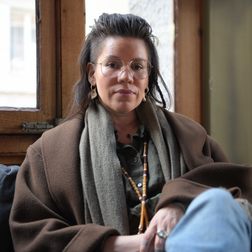
Amber Morning Star: Indigenous Peoples have seen it before

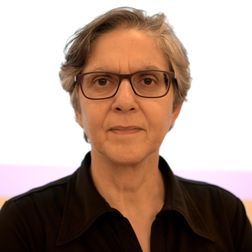
“When I hear the narrative that Trump is the absolute worst president the United States has ever seen, or the world has ever seen, I have to laugh because my People survived Andrew Jackson,” told Blindspot Indigenous Impact producer Amber Morning Star Byars, member of the Choctaw Nation of Oklahoma, the third-largest Indigenous Tribe in the United States. “The founding fathers of the United States, that we are taught in school as children to revere, to hold in very high regard, were presented to us as heroes, but we as Indigenous People, we know what they really were: slave owners, genocide perpetrators, murderers, rapists, and thieves,” she pointed out. “They tried very, very hard to erase us as People and to take our culture. They were not successful. They were, in some areas. They took a lot of our land, the majority of our land. They took our children,” she added. “They brainwashed them into thinking they were savage, their culture was bad. We were dirty Indians. We were no good, not smart, unworthy, unlovable.” Yet, all that was precisely something that goes against all of Indigenous teachings. “We know as Native People that we are sacred and that we are born of creation. We have that sacred value from the moment we are born. We have that umbilical connection to the land. That is what makes us strong. They tried so hard to take all that from us. They succeeded on some fronts, but not all. I am still here. We are still here. We are still fighting. We are fighting for our land. We are fighting for our culture. We are fighting for our futures.” “This is why storytelling is so important,” Amber emphasised. “At the end of a war, the People may not have survived, but the art has. It's the story, it's the film, it's the dance, the song, the regalia. It's the culture that will survive.” Amber Morning Star is an award-winning multidisciplinary artist, lawyer, impact producer, and Indigenous rights advocate. In 2023, she founded Good Trade Productions, a boutique media firm dedicated to supporting the art of Indigenous storytelling. Amber has contributed to the impact campaigns of acclaimed films including the two-time Emmy winning documentary Lakota Nation vs United States and the Academy Award nominated, Sugarcane. Photo: Amber Morning Star Byars © Nelson Pereira

Rewilding can be beneficial for people as well

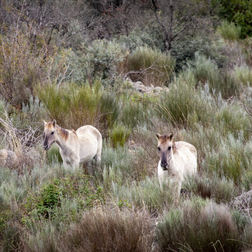
A rewilding project focused on restoring ecosystems along a 120,000-hectare corridor in northern Portugal's Greater Côa Valley is helping to power the growth of an increasingly vibrant nature-based economy. "Rewilding can be beneficial for people as well," told Blindspot Marta Calix, Head of Ecological Restoration at Rewilding Portugal. “Rewilding Portugal set in motion the Wild Côa Network, connecting about 70 businesses to work in partnership in the Greater Côa Valley landscape, from local accommodations to restaurants, local producers, everyone is working together on these touristic packages and we’re marketing the region as a great destination for nature-based tourism, conservation tourism,” Calix explained. “We are basically tourism promoters, we run our own touristic experiences.” Photo: Sorraia horses in Greater Côa Valley © Rewilding Portugal