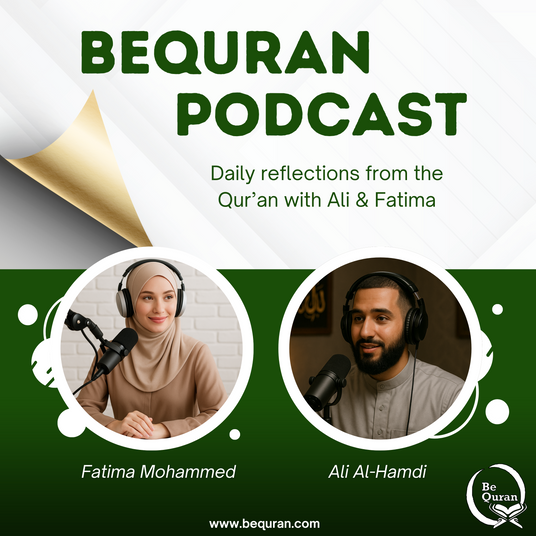
BeQuran Podcast

BeQuran Podcast

por Ali & Fatima
Temporada 1
After Karbala: The Voice of Lady Zaynab and the Legacy of Hussain
From the ashes of Karbala rose voices that still echo today. In this powerful episode, Ali and Fatima explore the days following the tragedy of Ashura moments that revealed the unshakable strength of Lady Zaynab and the living message of Imam Hussain (a). Through sermons, defiance, and unwavering faith, they stood as reflections of the Qur’an itself. Discover how their resilience, mercy, and commitment to divine truth offer timeless lessons for us all. We dive into their historical impact, Quranic parallels, and spiritual guidance that transcends time reminding us that Karbala was not the end, but the beginning of a greater call to justice and moral clarity. Tune in and reflect on how you, too, can carry their legacy in your everyday life.
Why Don’t Most Muslims Mourn Imam Hussein?
In this powerful and thought-provoking episode, Ali and Fatima explore a question that echoes across the Muslim world: Why do the majority of Muslims not mourn Imam Hussein (a)? Drawing from an insightful lecture by Dr. Sayed Ammar Nakshawani, they unpack six key reasons often given for this lack of mourning from historical fear and misconceptions to spiritual disconnect and confront each with deep, evidence-based counterarguments. Through stories of sacrifice, distortion of history, and the legacy of figures like Muslim Ibn Aqil, this episode challenges us to rethink inherited narratives and consider the true weight of Karbala across sects, cultures, and time.
10 Life Lessons from Ashura
In this powerful episode of the BeQuran Podcast, hosts Ali and Fatima explore ten timeless life lessons from the Day of Ashura, inspired by Dr. Sayed Ammar Nakshawani’s lecture delivered during Muharram. Through heartfelt discussion, they uncover how the tragedy of Karbala is not just a historical event but a living source of guidance. From the personal power of supplication and the importance of Fajr prayer, to themes of racial equality, loyalty, and the protection of children, each lesson offers a practical framework for spiritual growth and purpose. This episode is a moving call to live a Husseini life one rooted in sincerity, compassion, and unwavering faith. From the battlefield of Karbala come universal teachings on du'a, prayer, repentance, justice, and compassion that continue to shape how we live, believe, and stand for truth today.
Karbala: The Stand That Shook the World
In this episode of the BeQuran Podcast, Ali and Fatima delve into the enduring legacy of Karbala. Through the lens of history, theology, and ethics, they unpack the extraordinary life and sacrifice of Imam Hussein (a.s) a man who stood unwavering in the face of tyranny. From his early life in the Prophet’s household to the powerful final moments on the plains of Karbala, this episode explores how his selfless stand for truth became one of the most transformative moral victories in human history. Join us as we reflect on the lessons of courage, integrity, and resistance and how Hussein’s message continues to resonate with seekers of justice across the world.
The Voice That Refused Silence: Shia Islam and the Legacy of Resistance
In this powerful episode, Ali and Fatima explore the enduring legacy of Shia Islam as a force of resistance against injustice past and present. Drawing on a lecture by Dr. Sayyed Ammar Nakshawani, they examine how Shia thought is rooted in fitra (innate morality), Qur'anic injunctions, and the lived example of the Prophet’s family. From the unwavering stand of Imam Hussain (a.s) at Karbala to the role of modern Shia voices on the global stage, this episode unpacks why principled defiance is more than a political stance it’s a spiritual identity. Whether you’re Shia, Sunni, or simply curious, this conversation invites deep reflection on justice, faith, and what it truly means to never be humiliated.
How Can I Avoid Sins?
In this thought-provoking episode, Ali and Fatima dive into the often-overlooked consequences of sin not just on the soul, but on the mind, health, and daily life. Drawing on insights from Dr. Syed Muhammad Baqir Qazwini and the powerful legacy of Imam Hussain (AS), they explore how sin impacts intelligence, reduces baraka in our rizq, and even hastens death. From real-life strategies to scientific parallels, the conversation offers a practical and spiritual toolkit for breaking harmful habits and strengthening your connection with Allah. Featuring powerful hadiths, a profound five-point challenge from Imam Hussain, and reflections on grief, purpose, and self-accountability — this is an episode you don’t want to miss.
The Voice of Resistance: Shia Islam, Justice, and the Legacy of Imam Hussain
In this episode, Ali and Fatima explore why Shia Islam is often seen as the unwavering voice of resistance in the face of tyranny. Drawing on a powerful lecture by Dr. Sayyed Ammar Nakshawani, the episode traces the theological, historical, and moral foundations that shape this identity from the concept of fitrah (innate morality) to Quranic commands, and through the legacies of Lady Fatimah, Imam Ali, and Imam Hussain. With references to global struggles, contemporary leaders, and eschatological hope in Imam Mahdi, this episode invites listeners to reflect: what would it take for this principled stance against injustice to become a global norm?
Shia Oppression Past & Present
In this episode of the BeQuran Podcast, Ali and Fatima uncover the long and painful history of Shia oppression, focusing on the region of Parachinar in Pakistan — a place often overlooked in both global and Muslim media. With insights from Dr. Sayyed Ammar Nakshawani, they explore how historical neglect, sectarian manipulation, and political agendas have shaped a reality of violence and silence. From British colonialism to modern-day media bias, from Taliban influence to grassroots resilience — this episode connects the dots between past injustices and the struggles still unfolding today. Through it all, one truth remains clear: true Islamic values call for universal justice, not selective empathy. 🔹 What’s behind the violence in Parachinar? 🔹 Why is the suffering of Shia Muslims so underreported? 🔹 And what can we learn from their faith, their history, and their strength?
The Myth of Unity: Uncovering the Internal Divides in Sunni Islam
When people hear "Sunni Islam," they often picture a single, unified group one half of the Sunni–Shia divide. But what if that label hides centuries of internal debate, theological disagreements, and even sectarian rejection from within? In this episode, Ali and Fatima unpack the deep and often overlooked complexities within Sunni Islam. From the Hanbalis to the Maturidis, the Ash'aris to the Salafis, this discussion explores how diverse and sometimes conflicting these internal schools really are. This episode is based on insights from a powerful lecture by Dr. Sayed Ammar Nakshawani, whose analysis sheds light on how sectarian identity, theology, and historical narratives have evolved across centuries. They explore: What Ahl al-Sunnah wa’l-Jama’ah really means Key theological differences over God’s nature, predestination, and prophetic infallibility Why many Muslims haven’t read their own creedal texts How a claim to unity may be more constructed than inherited This episode is an invitation to go beyond the headlines, question assumptions, and reflect deeply on what religious identity truly means.
The Twelve Imams: Divine Succession in Islam
In this episode of the BeQuran Podcast, Ali and Fatima explore one of the most defining beliefs of the Imamiya Twelver Shia school the concept of divinely appointed succession through the Twelve Imams. Drawing from a lecture Naming the Twelve Imams by Name by Sayyid Moustafa Al-Qazwini, he breaks down the three foundational pillars of this belief: explicit prophetic naming, divine infallibility (ʿIsmah), and unparalleled superiority of the Imams in knowledge and piety. The episode also investigates two widely accepted hadith Hadith al-Thaqalayn (The Two Weighty Things) and Hadith al-Safina (The Ark) and discusses Sunni scholarly struggles with the hadith of “twelve successors.” Ultimately, this conversation leads to a powerful reflection on imtihan divine testing and the personal responsibility each seeker bears in pursuing truth, even when it challenges the majority view.
1 de 3