Beatles Rewind

Beatles Rewind

por Steve Weber

27 Most Insanely Valuable Beatles Artifacts 🏆

Watch on Youtube What are the most valuable pieces of Beatles history ever to cross the auction block? In this video, we count down the 27 most expensive, rare, and culturally significant Beatles artifacts ever sold. From the subterranean sweat of the Cavern Club and Hamburg residency relics to million-dollar stage instruments and private handwritten letters, these items tell the definitive story of the Fab Four's rise, peak, and legacy. We explore the astonishing provenance and gavel-dropping prices behind world-record treasures—including George Harrison’s stage-played guitars, Paul McCartney’s signed instruments, rare original Astrid Kirchherr photographs, authentic RIAA gold record awards, historic Shea Stadium ephemera, and working studio manuscripts in the band's own hands. Whether you’re a lifelong Beatles scholar, a music memorabilia enthusiast, or simply fascinated by the high-stakes world of elite pop culture collecting (including prized acquisitions from the Jim Irsay Collection and Julien's historic sales), join us for an inside look at the most coveted rock relics on earth. Sit back, turn up the volume, and discover which Fab Four treasure claimed the absolute top spot.

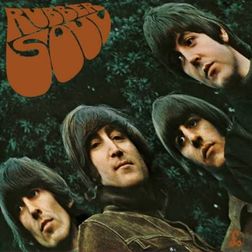
Christmas in October: The Rubber Soul Super Deluxe Edition

See the video version of this episode on Youtube For 60 years, Rubber Soul has occupied an extraordinary, contradictory space in the Beatles canon. Artistically, it marks the exact watershed moment when the biggest pop phenomenon in history became something infinitely more enduring: serious, literate studio artists. Released in December 1965, it was the record that pushed Brian Wilson to compose Pet Sounds, which in turn provoked Sgt. Pepper’s Lonely Hearts Club Band. It abandoned the cover songs, discarded the cheerful pop formulas of Beatlemania, and embraced introspection, French café waltzes, Greek bouzouki lines, and the intriguing drone of an Indian sitar. Yet technologically, Rubber Soul has long suffered from one of the most frustrating stereo presentations in modern music history. While its mono incarnation was a masterpiece—punchy, unified, and dialed in with obsessive care by Producer George Martin and Norman Smith—the 1965 stereo mix was an afterthought engineered for a novelty format. Driven by early twin-track and rudimentary four-track equipment, the stereo LP marooned rhythm guitars and drums in the far left channel, pushed lead vocals and harmonies into the hard right, and left a yawning, hollow chasm dead center. Put on a pair of modern headphones, and the record sounds less like four men playing in intimate communion at Abbey Road Studio Two and more like two different bands performing in different neighborhoods. Even George Martin’s 1987 digital remix for CD—which narrowed the stereo spread and added a sheen of digital reverb—felt like an awkward compromise that never solved the underlying mechanical limitations of the source tapes. Now, following the groundbreaking audio restoration seen on Revolver and the expanded 1962–1966 compilation, the Rubber Soul Super Deluxe Edition arrives to settle the historical score. As a physical artifact and a historical document, the package is expansive, containing new stereo and Dolby Atmos mixes, the original 1965 mono master, an exhaustive dive into Abbey Road session outtakes, and—in a welcome nod to transatlantic history—the complete American Capitol running order.

Why 'A Hard Day’s Night' Still Looks Fresh 60 Years Later ⚡🎞️

Watch this episode on Youtube As an Amazon Associate, I earn from qualifying purchases United Artists only wanted a quick soundtrack album to exploit Beatlemania before it faded. Instead, they accidentally financed a masterpiece. Released in the summer of 1964, A Hard Day’s Night blew up the standard Hollywood pop vehicle. Armed with handheld camera work, French New Wave jump cuts, and Alun Owen’s razor-sharp Liverpool dialogue, the film captured the exact moment four young Northern lads broke the British class barrier on the global stage. In this deep dive, we explore journalist Samira Ahmed’s sharp BFI Film Classics study of A Hard Day’s Night—examining the film’s groundbreaking visual grammar, its subtle social rebellion, and why it remains the gold standard of rock cinema six decades later. If you enjoy deep dives into Beatles history and classic film analysis, don't forget to like, comment, and subscribe!

Fisheye of the Hurricane: Inside Beatlemania Through George Harrison’s Lens

To see the photos mentioned in this episode, visit our Youtube channel. When the Beatles detonated in 1964, they instantly became the four most-photographed persons on earth. Every flashbulb in the free world was pointed directly at their faces—in press conferences, hotel corridors, airports, and screaming stadiums. Yet, amidst that barrage, one camera was pointed quietly back in the opposite direction. Armed with a 35mm Pentax, a fisheye lens, and an appetite for candid experimentation, George Harrison was chronicling the madness from the only vantage point that truly mattered: the inside looking out. Paul and Ringo were also avid shutterbugs, and both men published coffee-table books of their favorite Beatles-era shots within the past decade. But until now, George’s photos were in the background. Gathered in the forthcoming book The Third Eye: Early Photographs, George’s snapshots don’t capture icons posing for posterity. Instead, they freeze the astonishing, unguarded human reality behind the myth. Through his viewfinder, we see Paul lathered in shaving cream 30,000 feet above the Atlantic, John drifting into peaceful thought on a Tahitian boat, four lads playing cowboys in the Missouri dirt, and the long, silent highway stretch moments before 300,000 fans swarmed Adelaide.
LEAKED: Scenes of New Beatles Documentary (First Look!) 🎬🔥

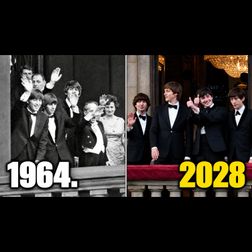
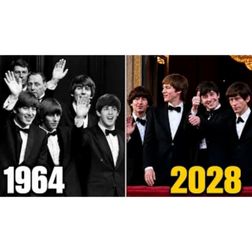
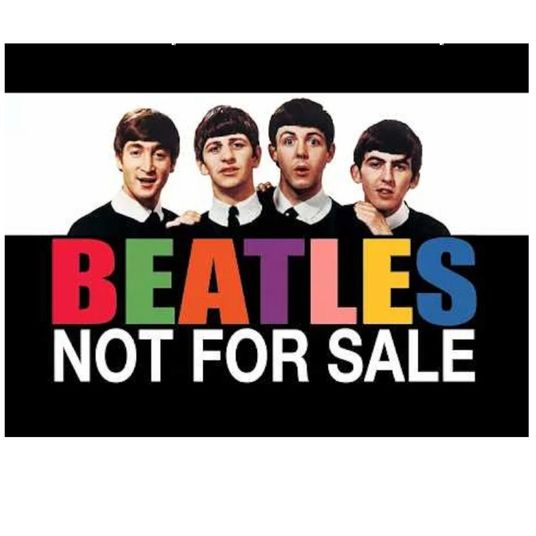
See the video and images here on Youtube. Hollywood has officially touched down at Liverpool Town Hall with four mop-top wigs, matching bespoke suits, and a green light to turn rock’s greatest story into a four-film cinematic marathon. With new set photos revealing Paul Mescal, Harris Dickinson, Joseph Quinn, and Barry Keoghan recreating the Fab Four’s iconic 1964 balcony return for the Northern premiere of "A Hard Day’s Night," director Sam Mendes is attempting what might be the "Avengers: Endgame" of rock biopics: four separate feature films, shot back-to-back, each told through the eyes of a single Beatle. Are four simultaneous perspectives and full Apple master-tape access a recipe for cinematic magic—or just high-budget hagiography? Here is my take on the casting, the unprecedented legal clearance, and what these first images tell us about what’s coming in 2028. #TheBeatles #Beatles #SamMendes #PaulMescal #BarryKeoghan #HarrisDickinson #JosephQuinn #AHardDaysNight #RockBiopic #FilmNews

Final Bow: An Inside Look at the Beatles’ Last Concert

On the chilly, wind-whipped evening of August 29, 1966, The Beatles walked onto a temporary stage erected over a baseball field at San Francisco’s Candlestick Park to face a roaring crowd. None of the 25,000 fans screaming into the wind realized they were watching the end of an era. Physically exhausted, creatively constrained, and fearing for their personal safety, the band had reached an unspoken pact. Candlestick would not merely mark the conclusion of their grueling North American tour—it was the final concert The Beatles would ever perform. Legendary music photographer Jim Marshall captured the event from the inside. Published to commemorate the 60th anniversary of that historic evening, The Beatles by Jim Marshall: Live at Candlestick Park 1966 gathers over 150 remarkable images and proof sheets, half of which have never been published before. Specially requested by the band, Marshall was the only photographer granted access to their backstage inner sanctum. His camera documented not just the electric thirty-minute set on the outfield grass, but the intimate, unvarnished hours preceding it—quiet teacups in the San Francisco Giants’ locker room, casual conversations with folk royalty Joan Baez, and the nervous anticipation before marching into the floodlights. Accompanied by historical commentary from music writer Joel Selvin, the book strips away the myth to present a human, indelible chronicle of the day the greatest pop phenomenon in history quietly stepped off the stage forever.

The Definitive Beatles Audiobook You Need to Hear! 🎧📖

Bob Spitz’s "The Beatles: The Biography" is widely regarded as one of the most meticulously researched, vivid accounts of the Fab Four ever put to paper—and Alfred Molina’s narration brings every studio argument, tour triumph, and untold story alive. 🎧 Listen to the entire unabridged audiobook (and more!) free when you start a 30-day Audible trial at this link. DISCLOSURE: As an Amazon Associate, I earn from qualifying purchases.

First Look at the New Beatles Movies: Genius or Disaster? 🧐👀

Hollywood has officially touched down at Liverpool Town Hall with four mop-top wigs, matching bespoke suits, and a green light to turn rock’s greatest story into a four-film cinematic marathon. With new set photos revealing Paul Mescal, Harris Dickinson, Joseph Quinn, and Barry Keoghan recreating the Fab Four’s iconic 1964 balcony return for the Northern premiere of "A Hard Day’s Night," director Sam Mendes is attempting what might be the "Avengers: Endgame" of rock biopics: four separate feature films, shot back-to-back, each told through the eyes of a single Beatle. Are four simultaneous perspectives and full Apple master-tape access a recipe for cinematic magic—or just high-budget hagiography? Here is my take on the casting, the unprecedented legal clearance, and what these first images tell us about what’s coming in 2028.

What REALLY Happened at The Beatles' Last Concert 🤫

Watch on Youtube On August 29, 1966, at San Francisco’s Candlestick Park, The Beatles took the stage before 25,000 screaming fans for an 11-song set that lasted barely thirty minutes. The audience had no idea they were witnessing the end of an era: it was the final ticketed, public concert The Beatles would ever perform. Exhausted by relentless touring, drowned out by screaming crowds, and shaken by bomb threats and protests following John Lennon’s "more popular than Jesus" remarks, the band made an unspoken pact to walk away from the road forever. Only one independent photographer was granted full backstage clearance to chronicle that fateful day: legendary music photographer Jim Marshall.

Why The Beatles Collapsed the Moment Brian Epstein Died 📉💥

Watch on Youtube When the telephone rang in a dormitory in Bangor, Wales, in late August 1967, John Lennon, Paul McCartney, George Harrison, and Ringo Starr were told that their manager, Brian Epstein, had been found dead in his London townhouse. He was just 32. Behind closed doors, John Lennon was shattered. He turned to his bandmates and uttered a brutally honest epitaph: "We’ve fuckin’ had it now." For decades, casual observers wrote off Lennon’s panic as typical rock-star melodrama. But as Philip Norman illustrates in his biography, Mr. Moonlight: Brian Epstein and the Making of the Beatles, Lennon was right. Epstein wasn’t merely their business manager—he was the central pillar and ultimate shock absorber who kept four explosive creative egos from tearing each other apart.I
1 de 2