Azimuth World Foundation - Connecting the Dots

Azimuth World Foundation - Connecting the Dots

por Azimuth World Foundation
Temporada 1

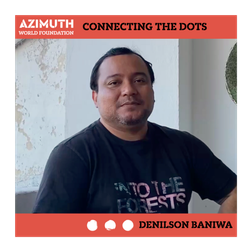
EN: Connecting the Dots with DENILSON BANIWA (dubbed version)

During the tenth edition of FOLIO – Óbidos International Literary Festival, which had “Borders" as its main theme, we had the privilege of speaking with artist Denilson Baniwa, from the Baniwa People of the Upper Rio Negro, in Amazonas, Brazil. Another highlight of Denilson's visit to Portugal was the opening of his first solo exhibition in Lisbon. "Contra-Feitiço" (Counter-Spell), on display at Galeria Quadrum until February 15, 2026, includes new works created during his stay in Portugal, and was curated by Ritó Natálio and the Terra Batida platform. Winner of the 2019 PIPA award and one of the curators of the Brazilian Pavilion at the 2024 Venice Biennale, Denilson Baniwa has become an essential voice in the Brazilian contemporary art scene. During this conversation, we touch on some of the multiple directions opened up by his work, which moves in the spaces between technology and ancestry, protest and poetry, the Rio Negro and the world. . Official website for FOLIO - Obidos International literary Festival: https://foliofestival.com/ Official website for Terra Batida: https://terrabatida.org . WATCH the video version of this interview or READ a transcript here: https://azimuthworldfoundation.org/stories/DenilsonBaniwa/ . AZIMUTH WORLD FOUNDATION - JOIN THE CONVERSATION: - WEBSITE: https://www.azimuthworldfoundation.org - INSTAGRAM: https://www.instagram.com/azimuthworldfoundation - FACEBOOK: https://www.facebook.com/azimuthworldfoundation - LINKEDIN: https://www.linkedin.com/company/azimuth-world-foundation/
PT: Connecting the Dots com DENILSON BANIWA (versão original)

Durante a décima edição do FOLIO – Festival Literário Internacional de Óbidos, que este ano explorou o tema "Fronteiras", tivemos o privilégio de conversar com Denilson Baniwa, artista originário do povo Baniwa do Alto Rio Negro, no Amazonas. A vinda de Denilson a Portugal marcou também a inauguração da sua primeira exposição individual em Lisboa. "Contra-Feitiço", patente na Galeria Quadrum até 15 de fevereiro de 2026, apresenta novos trabalhos criados durante a sua estadia em Portugal, numa curadoria de Ritó Natálio e da plataforma Terra Batida. Vencedor do prémio PIPA 2019 e um dos curadores do Pavilhão do Brasil na Bienal de Veneza de 2024, Denilson Baniwa tornou-se uma voz incontornável da arte contemporânea brasileira. Nesta conversa, seguimos algumas das múltiplas direções abertas pelo seu trabalho – entre tecnologia e ancestralidade, entre protesto e poesia, entre o Rio Negro e o mundo. . Website Oficial FOLIO - Festival Literário Internacional de Óbidos: https://foliofestival.com/ Website Oficial Terra Batida: https://terrabatida.org . VEJA a versão em vídeo desta entrevista ou LEIA a versão escrita aqui: https://azimuthworldfoundation.org/pt-pt/historias/DenilsonBaniwa . AZIMUTH WORLD FOUNDATION: - WEBSITE: https://www.azimuthworldfoundation.org - INSTAGRAM: https://www.instagram.com/azimuthworldfoundation - FACEBOOK: https://www.facebook.com/azimuthworldfoundation - LINKEDIN: https://www.linkedin.com/company/azimuth-world-foundation/
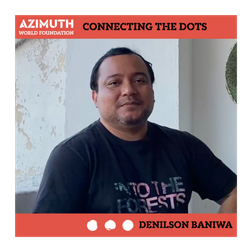
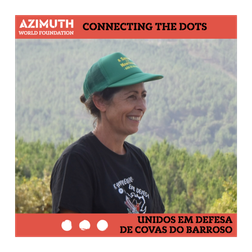
EN (dubbed): Connecting the Dots with UNIDOS EM DEFESA DE COVAS DO BARROSO

Today we bring you a conversation recorded in Covas do Barroso, in northern Portugal, during the annual resistance camp against lithium mining. This small mountain village, recognized by the FAO as a World Agricultural Heritage Site, faces plans for one of Europe's largest open-pit lithium mines. A mine that threatens to destroy 2,000 hectares of community land, contaminate the waters of the Covas River—a tributary of the Douro river—and displace a community that has lived self-sufficiently for generations. We hear from Aida Fernandes (local farmer), Catarina Alves Scarrott (born in Covas, and currently a teacher in London) and Mariana Riquito (researcher), all members of the local, grassroots association Unidos em Defesa de Covas do Barroso (UDCB). SUPPORT THIS CAUSE: if you’re in the United States, please head to savebarroso.com - the official website of Americans for the Conservation of Barroso Portugal, a US-based 501(c)(3) organization. LISTEN to the podcast version of this interview or READ transcripts in English and Portuguese here: https://azimuthworldfoundation.org/insights AZIMUTH WORLD FOUNDATION: - WEBSITE: https://www.azimuthworldfoundation.org - INSTAGRAM: https://www.instagram.com/azimuthworldfoundation - THREADS: https://www.threads.net/@azimuthworldfoundation - FACEBOOK: https://www.facebook.com/azimuthworldfoundation - LINKEDIN: https://www.linkedin.com/company/azimuth-world-foundation/
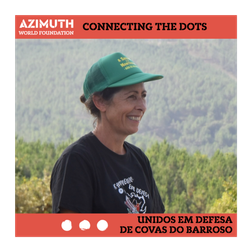
PT (original): Connecting the Dots com UNIDOS EM DEFESA DE COVAS DO BARROSO

Hoje partilhamos uma conversa gravada em Covas do Barroso, no norte de Portugal, durante o acampamento anual de resistência contra a exploração de lítio. Esta pequena aldeia, reconhecida pela FAO como Património Agrícola Mundial, enfrenta os planos para uma das maiores minas de lítio a céu aberto da Europa. Uma mina que ameaça destruir 2000 hectares de baldios comunitários, contaminar as águas do Rio Covas - afluente do Douro - e deslocar uma comunidade que há gerações vive de forma autossuficiente. Durante este episódio, conversamos com Aida Fernandes (agricultora local), Catarina Alves Scarrott (natural de Covas e actualmente professora em Londres) e Mariana Riquito (investigadora), que integram a Unidos em Defesa de Covas do Barroso. APOIE A UDCB: https://udcb.pt/ OUÇA a versão em podcast desta entrevista ou LEIA a versão escrita aqui: https://azimuthworldfoundation.org/pt-pt/perspectivas/ . AZIMUTH WORLD FOUNDATION: - WEBSITE: https://www.azimuthworldfoundation.org - INSTAGRAM: https://www.instagram.com/azimuthworldfoundation - THREADS: https://www.threads.net/@azimuthworldfoundation - FACEBOOK: https://www.facebook.com/azimuthworldfoundation - LINKEDIN: https://www.linkedin.com/company/azimuth-world-foundation/
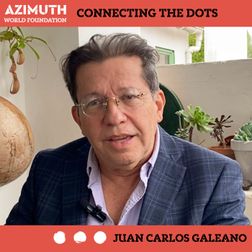
EN: Connecting the Dots with JUAN CARLOS GALEANO (dubbed)

Born in the Colombian Amazon, Juan Carlos Galeano bridges poetry, academia, and environmental activism with rare authenticity. His work, including "Folktales of the Amazon" and poetry inspired by Amazonian cosmogonies, reveals the intricate relationships between Indigenous, mestizo, and Afro-descendant communities and the forests, rivers, and beings they share their lives with. At Florida State University, Galeano teaches Latin American poetry while directing "Journey into Amazonia," a field program in the Peruvian Amazon where students engage directly with local communities and environments rather than just studying them from afar. We caught up with Juan Carlos at the FOLIO Festival in Óbidos, Portugal, where his book "Amazonia" has just been translated into Portuguese, further extending the reach of these essential Amazonian perspectives. . Official website for FOLIO - Obidos International literary Festival: https://foliofestival.com/ . Learn more about Juan Carlos Galeano’s work: https://myweb.fsu.edu/jgaleano/ . WATCH a video version of this interview or READ transcripts in English and Portuguese here: https://azimuthworldfoundation.org/insights/entry/stories/jcgaleano.html . AZIMUTH WORLD FOUNDATION - JOIN THE CONVERSATION: - WEBSITE: https://www.azimuthworldfoundation.org - INSTAGRAM: https://www.instagram.com/azimuthworldfoundation - THREADS: https://www.threads.net/@azimuthworldfoundation - FACEBOOK: https://www.facebook.com/azimuthworldfoundation - LINKEDIN: https://www.linkedin.com/company/azimuth-world-foundation/
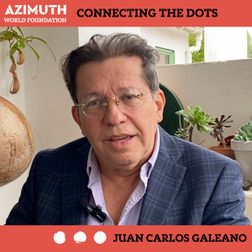
PT / ES: Connecting the Dots com JUAN CARLOS GALEANO

Nascido na Amazónia colombiana, Juan Carlos Galeano move-se entre a poesia, a academia e o activismo ambiental com uma autenticidade única. A sua obra, incluindo Contos Amazónicos e poesia inspirada nas cosmogonias amazónicas, revela as intrincadas relações entre comunidades indígenas, mestiças e afrodescendentes com as florestas, os rios e os seres com quem partilham a vida. Na Florida State University, Galeano ensina poesia latino-americana e é responsável por Journey into Amazonia, um programa de campo na Amazónia peruana, onde os alunos interagem directamente com as comunidades e os ambientes locais. Conversámos com Juan Carlos no Festival FOLIO, em Óbidos, Portugal, onde o seu livro Amazónia acaba de ser traduzido para português, ampliando ainda mais o alcance destas perspectivas essenciais sobre a Amazónia. . Website Oficial FOLIO - Festival Literário Internacional de Óbidos: https://foliofestival.com/ . A edição portuguesa de “AMAZÓNIA – Antologia e novos poemas” está disponível em: https://amariposa.net/amazonia-juan-carlos-galeano/ . VEJA a versão em vídeo desta entrevista ou LEIA a versão escrita em Português ou Inglês aqui: https://azimuthworldfoundation.org/insights/entry/stories/jcgaleano.html . AZIMUTH WORLD FOUNDATION: - WEBSITE: https://www.azimuthworldfoundation.org - INSTAGRAM: https://www.instagram.com/azimuthworldfoundation - THREADS: https://www.threads.net/@azimuthworldfoundation - FACEBOOK: https://www.facebook.com/azimuthworldfoundation - LINKEDIN: https://www.linkedin.com/company/azimuth-world-foundation/
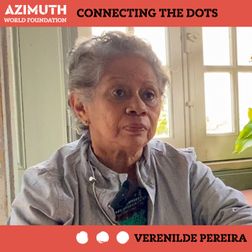
EN: Connecting the Dots with VERENILDE PEREIRA (dubbed)

It’s an honor to share our conversation with Verenilde Pereira, a pioneering voice of Afro-Indigenous literature and journalism in Brazil. Born in Manaus in 1956, the daughter of a black mother and an Indigenous Sateré Mawé father, Verenilde’s personal history embodies the complexities of Amazonian identity. A journalist, researcher, activist and writer, Verenilde has dedicated her life to amplifying the voices of marginalized communities in the Amazon. Her novel "An Endless River", published in 1998 and recently rediscovered and acclaimed, is considered a founding work of Afro-Indigenous Brazilian literature. Through the lives of four female characters, Verenilde portrays the devastating impact of a religious mission on a traditional community. With a PhD in Journalism and Society from the University of Brasilia, her thesis on the media coverage of the Waimiri-Atroari conflict denounced the deep and recurring media bias against traditional communities, through a work that reflects her commitment to challenging dominant narratives and amplifying voices that have almost been silenced. We’re very excited to talk to Verenilde at FOLIO festival, where we took part in a round table on “World Configurations". At Azimuth World Foundation, we want to highlight the importance of Indigenous knowledge in creating solutions to global challenges. Verenilde Pereira's perspectives and work can help us in this mission, and offer valuable lessons on how we can build bridges across different kinds of knowledge. . Official website for FOLIO - Obidos International literary Festival: https://foliofestival.com/ . WATCH the video version of this interview or READ transcripts in English and Portuguese here: https://azimuthworldfoundation.org/insights/entry/stories/verenilde.html . AZIMUTH WORLD FOUNDATION - JOIN THE CONVERSATION: - WEBSITE: https://www.azimuthworldfoundation.org - INSTAGRAM: https://www.instagram.com/azimuthworldfoundation - THREADS: https://www.threads.net/@azimuthworldfoundation - FACEBOOK: https://www.facebook.com/azimuthworldfoundation - LINKEDIN: https://www.linkedin.com/company/azimuth-world-foundation/
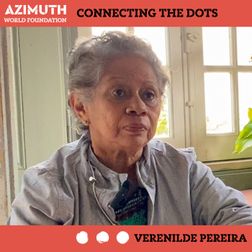
PT: Connecting the Dots com VERENILDE PEREIRA

É uma honra falar com Verenilde Pereira, voz pioneira na literatura e jornalismo afro-indígena do Brasil. Nascida em Manaus em 1956, filha de mãe negra e pai indígena Sateré Mawé, Verenilde personifica na sua própria história as complexidades da identidade amazónica. Jornalista, investigadora, activista e escritora, Verenilde tem dedicado a sua vida a dar voz às comunidades marginalizadas da Amazónia. O seu romance "Um Rio Sem Fim", publicado em 1998 e recentemente redescoberto e aclamado, é considerado uma obra fundadora da literatura afro-indígena brasileira. Nele, através das vidas de quatro personagens femininas, Verenilde retrata o impacto devastador de uma missão religiosa sobre uma comunidade tradicional. Doutorada em Jornalismo e Sociedade pela Universidade de Brasília, a sua tese sobre a cobertura mediática do conflito Waimiri-Atroari denunciou a profunda e recorrente violência mediática contra comunidades tradicionais, um trabalho que reflete o seu compromisso em desafiar narrativas dominantes e amplificar vozes que foram, quase, silenciadas. Estamos muito entusiasmados por poder falar com Verenilde no FOLIO, onde participámos na mesa-redonda "Configurações de mundos”. Na Azimuth World Foundation, queremos ajudar a sublinhar a importância do conhecimento indígena na criação de soluções para os desafios globais. A obra, as perspectivas e trabalho de Verenilde Pereira podem ajudar-nos na nossa missão, e oferecem-nos lições valiosas sobre como podemos construir pontes entre diferentes formas de conhecimento. . Website Oficial FOLIO - Festival Literário Internacional de Óbidos: https://foliofestival.com/ . VEJA a versão em vídeo desta entrevista ou LEIA a versão escrita em Português ou Inglês aqui: https://azimuthworldfoundation.org/insights/entry/stories/verenilde.html . AZIMUTH WORLD FOUNDATION: - WEBSITE: https://www.azimuthworldfoundation.org - INSTAGRAM: https://www.instagram.com/azimuthworldfoundation - THREADS: https://www.threads.net/@azimuthworldfoundation - FACEBOOK: https://www.facebook.com/azimuthworldfoundation - LINKEDIN: https://www.linkedin.com/company/azimuth-world-foundation/
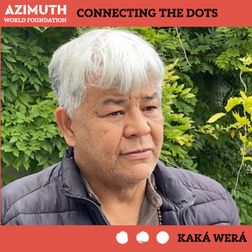
EN: Connecting the Dots with KAKÁ WERÁ (dubbed)

Over the last 30 years, the emergence of contemporary Indigenous literature in Brazil has become a fundamental act of re-existence. While the preservation of Indigenous Peoples’ territorial rights remains the most visible aspect of their struggle in Brazil, this fight would be incomplete without defending their intangible heritage. Their worldviews, their symbols, their ancestral knowledge. In this realm, the flourishing of Indigenous literature plays a vital role. Our guest for this episode, Kaká Werá, stands as one of the pioneers and most influential voices in this movement. A writer, educator, and public speaker, he has dedicated over three decades to preserving and sharing Indigenous traditional knowledge. Author of 16 books, including award-winning works like the “Land of 1000 Peoples” and “Thunder-Boy”, his work has been crucial both in strengthening Indigenous communities, and helping non-Indigenous society recognize the fundamental value of cultural diversity. We had the privilege of speaking with Kaká during FOLIO, the Óbidos International Literary Festival, where he presented his latest book, “Tekoá: The Art of Good Living”, a work that distills the ancestral Tupi Guarani philosophy of living well. During the festival, we also joined him for a round table discussion on World Configurations, exploring how Indigenous worldviews can shape our imagination of possible futures. Our conversation not only traces his literary journey, but also offers deep insights into how ancient Indigenous wisdom can light the way forward through humanity's contemporary challenges. . Official website for FOLIO - Obidos International literary Festival: https://foliofestival.com/ . WATCH a video version of this interview or READ transcripts in English and Portuguese here: https://azimuthworldfoundation.org/insights/entry/stories/kakawera.html . AZIMUTH WORLD FOUNDATION - JOIN THE CONVERSATION: - WEBSITE: https://www.azimuthworldfoundation.org - INSTAGRAM: https://www.instagram.com/azimuthworldfoundation - THREADS: https://www.threads.net/@azimuthworldfoundation - FACEBOOK: https://www.facebook.com/azimuthworldfoundation - LINKEDIN: https://www.linkedin.com/company/azimuth-world-foundation/
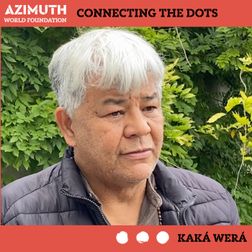
PT: Connecting the Dots com KAKÁ WERÁ

Nos últimos 30 anos, a emergência da literatura indígena contemporânea no Brasil tem surgido como um ato fundamental de re-existência. Se a preservação dos territórios materiais dos povos originários é a face mais visível da luta do movimento indígena no Brasil, é igualmente verdade que essa luta estaria incompleta sem uma defesa dos territórios imateriais - as visões de mundo, símbolos próprios e saberes ancestrais - e na qual a proliferação da literatura indígena ocupa um lugar central. O nosso convidado deste episódio, Kaká Werá, é um dos precursores e vozes mais relevantes deste movimento. Escritor, educador e conferencista, tem dedicado mais de três décadas à valorização e difusão dos saberes tradicionais dos povos originários. Autor de dezasseis livros, incluindo obras premiadas como "A Terra dos Mil Povos" e "Menino-Trovão", o seu trabalho tem sido fundamental tanto para o fortalecimento das próprias comunidades indígenas como para que a sociedade não-indígena reconheça o valor fundamental da diversidade cultural. Tivemos o privilégio de conversar com Kaká durante o FOLIO - Festival Literário Internacional de Óbidos, onde apresentou o seu mais recente livro "Tekoá: A Arte do Bem-Viver", uma obra que sintetiza a filosofia ancestral Tupi Guarani do bem viver. Durante o festival, participámos também numa mesa redonda sobre Configurações de Mundos, explorando o papel das cosmovisões indígenas na imaginação de futuros possíveis. A nossa conversa revela não apenas a sua trajetória literária, mas também uma profunda reflexão sobre como os saberes milenares dos povos originários podem iluminar caminhos para os desafios contemporâneos da humanidade. . Website Oficial FOLIO - Festival Literário Internacional de Óbidos: https://foliofestival.com/ . VEJA a versão em vídeo desta entrevista ou LEIA a versão escrita em Português ou Inglês aqui: https://azimuthworldfoundation.org/insights/entry/stories/kakawera.html . AZIMUTH WORLD FOUNDATION: - WEBSITE: https://www.azimuthworldfoundation.org - INSTAGRAM: https://www.instagram.com/azimuthworldfoundation - THREADS: https://www.threads.net/@azimuthworldfoundation - FACEBOOK: https://www.facebook.com/azimuthworldfoundation - LINKEDIN: https://www.linkedin.com/company/azimuth-world-foundation/
2 de 5