Aviation Education

Aviation Education

por MKD
Temporada 1

Aviation Hazards and Hot Spots

Aviation safety is the central theme, focusing on hazards, which are potential dangers during flight, and hot spots, which are specific high-risk locations at airports. Common aviation hazards are weather, congestion, and mechanical failures, alongside pilot and communication errors. Hot spot characteristics include incident history, poor visibility, and complex layouts, and their management involves improved airport diagrams, pilot training, design modifications, and air traffic control procedures. Essentially, the podcast explains how aviation addresses potential dangers both in general flight and at specific airport locations.
PPL Checkride Sample Q&A

This podcast comprises a collection of questions and answers related to checkride preparation for pilots. It covers essential topics such as aircraft documentation and inspections, preflight procedures, in-flight scenarios and emergencies, radio communication with air traffic control, instrumentation, handling spatial disorientation, and understanding airspace classifications. Specific areas addressed include V-speeds, engine malfunctions, and weight and balance calculations. The information provided aims to prepare aspiring pilots for their practical flight exam.

Weather Information

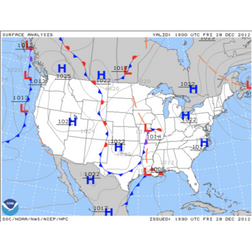
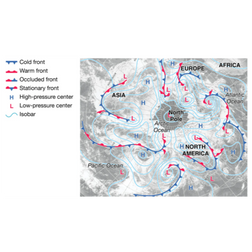
This podcast is a training manual on aviation weather, focusing on preflight weather briefings and the interpretation of various weather reports and charts. Key elements covered include the importance of thorough briefings, sources of weather information (both official and unofficial), and the use of real-time data for scenario-based training. The manual explains how to interpret METARs and TAFs, as well as surface analysis charts, winds and temperatures aloft charts, and significant weather prognostic charts. Finally, it discusses in-flight weather advisories (AIRMETs, SIGMETs, Convective SIGMETs, and PIREPs), recognizing weather hazards like wind shear and microbursts, and making informed "go/no-go" decisions.

FAR / AIM

FAR/AIM episode provides an overview of the Federal Aviation Regulations (FARs) as they relate to aircraft airworthiness and maintenance. The document emphasizes the importance of maintaining aircraft in an airworthy condition for safe flight operations. It outlines the requirements for pre-flight inspections, equipment deferral procedures, required documentation, and maintenance record keeping. The document also highlights the role and responsibilities of the pilot in command (PIC) in ensuring the airworthiness of their aircraft.

Flight Environment

This episode provides an overview of the flight environment, covering key aspects relevant to pilots. It includes information on flight safety tools like collision avoidance and right-of-way rules. The document also explores airport operations, including runway markings, taxiway procedures, and airport lighting systems. Additionally, it covers airspace classifications, from uncontrolled Class G airspace to the highly regulated Class A airspace. Finally, it explains special use airspace, emergency air traffic rules, and temporary flight restrictions (TFRs), highlighting their importance in ensuring safe flight operations.

Weather Theory

Weather Theory gives an overview of the elements that affect weather including atmospheric composition and stability, temperature, moisture and precipitation, weather system formation, clouds, turbulence, thunderstorms, microbursts, frost, and fog. The slides also provide a detailed explanation of wind and its contributing forces, including the pressure gradient force, the Coriolis force, and friction. The presentation further clarifies the types of icing that can affect aircraft and how to find icing information.

Aeromedical Factors

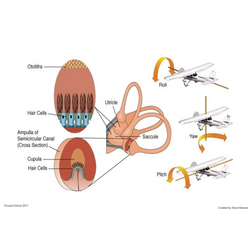
This episode focuses on aeromedical factors in the context of aviation. It aims to teach students about medical certificates, physiological conditions that can affect pilots and passengers, and the importance of these factors in ensuring flight safety. The presentation covers topics such as hypoxia, hyperventilation, middle ear and sinus problems, spatial disorientation, motion sickness, carbon monoxide poisoning, fatigue and stress, dehydration, alcohol and drug consumption, and nitrogen and scuba diving.

Radar and ATC

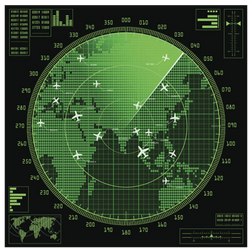
The first source, is an in-depth overview of air traffic control, explaining the different types of control, the history of air traffic control, and some of the challenges and proposed changes to the system. The second source provides a presentation for a training course on radar and ATC communications. It discusses the importance of radar and ATC communications, as well as the different types of radar systems, navigation aids, and communication protocols. The presentation also covers emergency procedures and regulations related to ATC.

Navigation

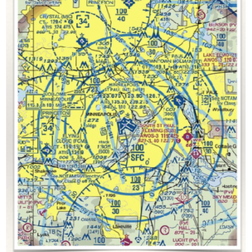
The sources provide an overview of visual flight rules (VFR) navigation methods for pilots, specifically focusing on planning and executing cross-country flights. The first source, "Navigation", outlines the basic elements of navigation, including pilotage, dead reckoning, and radio navigation. The second source, "Chapter 16" from the FAA, dives deeper into these topics, covering the use of aeronautical charts, compass headings, and wind triangles. The source then moves on to explain radio navigation systems, specifically Very High Frequency Omnidirectional Range (VOR), Nondirectional Radio Beacon (NDB), and Global Positioning System (GPS), providing detailed information on their operation, use, and limitations. The FAA document emphasizes that while technological advances offer new tools for pilots, pilots must still be in control of their aircraft, using all available resources to ensure safe navigation.

Spins

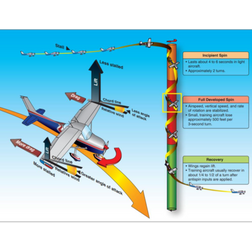
The provided text explains the phenomenon of a spin in aviation. It describes the conditions that lead to a spin, including high angle of attack, low airspeed, and a yawing motion. The text then breaks down the different phases of a spin, starting with the entry phase where the pilot intentionally or unintentionally creates the conditions for a spin. The incipient phase follows, during which the aircraft begins to rotate, and the developed phase where the spin is fully established and aerodynamic forces reach equilibrium. Finally, the text outlines recovery procedures, emphasizing the importance of applying power-idle, neutral ailerons, opposite rudder, and full forward elevator to break the stall and stop the spin.
2 de 3