At the Jazz Band Ball

At the Jazz Band Ball

por Kevin McLaughlin
Temporada 1

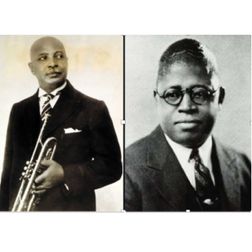
W.C. Handy and Clarence Williams
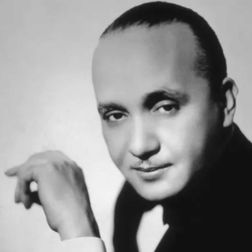
This week, W.C. Handy and Clarence Williams as shapers of early jazz. Composer and bandleader, W.C. Handy introduced blues form as a standard feature in jazz music. As a promoter, Williams helped enable the careers of Black performers and gave voice to jazz through avenues of publishing and recording.

Jazz Guitarists, 1920s-1940s

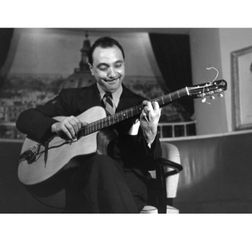
This week we're listening to early jazz guitarists who faced individual and societal struggles, even resistance by the jazz world to their chosen instrument. Guitarists Eddie Lang, Lonnie Johnson, Nick Lucas, Big Bill Broonzy, Charlie Christian, and Django Reinhardt will be featured.

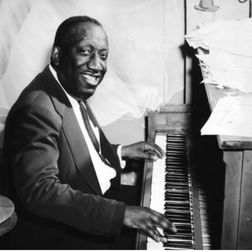
Jazz Pianists, 1920s-1940s

With performances of Earl "Fatha" Hines, James P. Johnson, Fats Waller, Teddy Wilson, Stephanie Trick, and Dorothy Donegan we'll tickle some ivories — but only scratch the surface of — recorded piano delights from the 1920s through the 1940s.

Jimmie Lunceford

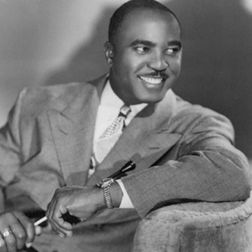
The Jimmie Lunceford band, in existence from the early 1930s to the late 1940s, was an extremely well-rehearsed and cohesive group. It was famous for for its sharp appearance onstage, its fancy showmanship and choreography—throwing and catching instruments and twirling mutes—their glee club style singing (everyone of its players could sing), and its danceable but extremely intricate rhythmic arrangements. For ten consecutive years, starting around 1934, the group's hit recordings sold in the hundreds of thousands, and was a favorite among black and white audiences.

Female Vocalists, 1920-1940

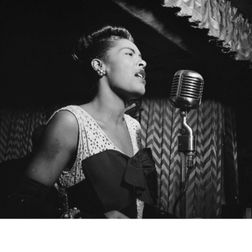
We’re listening to great female vocalists of the 1920s, 30s, and 40s this week, but we’re going to stretch our definition of “jazz” a bit. There are so many great singers to choose from, like Billie Holiday and Ella Fitzgerald, of course, but I also love some of the more mainstream, popular singers of the day. Annette Hanshaw, Ivie Anderson, Nina Mae McKinney, Connie Boswell, Mildred Bailey, and others.

Drop Me Off In Harlem

This week we're heading to Harlem, circa 1932, for a tour of some of the great jazz and dance clubs as mapped out by African American cartoonist Elmer Simms Campbell. He drew a map, titled "Night Clubs of Harlem, 1932" and published in Manhattan Magazine, The map faces southwest, bounded by 110th street, and runs along Central Park's northern edge. It concentrates on Lenox Avenue and Seventh Avenue — or "heaven" as Simms called it. Performances by Ellington, Lunceford, Webb, Fitzgerald, and McKinney.

Fletcher Henderson

This week, the Fletcher Henderson Band, led by one of the more unlikely and reluctant leaders in jazz, but easily one of the most talented. Fletcher Henderson, nicknamed "Smack," for the way he smacked his lips, apparently even in his sleep, was born in Cuthbert, Georgia, in 1897 to a middle-class African American family. In 1922 he formed his own band. His first steady gig with his band was at the Club Alabam on Broadway in 1924, but only after the band's players—not Henderson—talked their way into auditioning for their first long-term engagement.

International Sweethearts of Rhythm

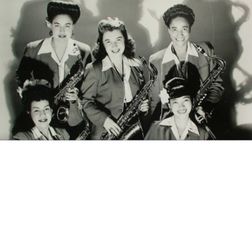
In May 1941 the International Sweethearts of Rhythm, an all-female, integrated high school swing band out of Piney Woods, Mississippi, was out on the road doing dance gigs, when they decided to break free, appropriating the bus and taking charge of their own careers — destined to become one of the best swing bands in history.

At the Jazz Band Ball promo

Trailer
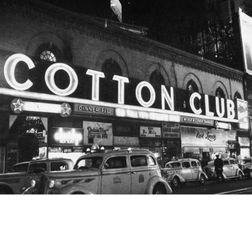
At the Jazz Band Ball is a podcast devoted to jazz from its earliest days through the 1940s. Every show is an exploration of an artist, a venue or an instrument. Louis Armstrong at Connie's Inn in Harlem, Duke Ellington at the Cotton Club, Bix Beiderbecke at the Palace Theatre in Cleveland, and lots more. Join me on Substack, Spotify, Apple, or wherever you listen to podcasts.

EXTRA: Benny Carter Interview Clips 1992, Smithsonian Jazz Oral History

Bonus
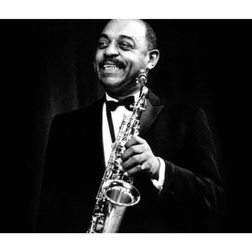
Benny Carter Recorded June 14, 1992, Courtesy of Smithsonian Jazz Oral History This native New Yorker made memorable impressions as a great bandleader and improviser. Largely self-taught, Benny Carter's first instrument was the trumpet, although the alto saxophone eventually became his principal instrument. He participated in tours with Jazz at the Philharmonic and wrote arrangements for singers including Ray Charles, Ella Fitzgerald, and Louis Armstrong. Carter received numerous awards, including a Grammy Lifetime Achievement Award in 1987. Complete Transcript (145 pages) View PDF Clip 1: MP3 Family Musical History Clip 2: MP3 First Saxophone Clip 3: MP3 Meeting Count Basie Clip 4: MP3 First Arrangements Clip 5: MP3 Why the Saxophone Clip 6: MP3 1932’s First Orchestra Clip 7: MP3 Dizzy Gillespie’s Impact Clip 8: MP3 Writing for Film and TV Benny Carter Photo Provided Courtesy of Ed Berger
5 de 6