Regístrate gratis
Funcionalidades
Recursos
Precios
Podcasts
Regístrate gratis
Iniciar sesión
At the Jazz Band Ball
por Kevin McLaughlin
Comentarios musicales
Feed RSS
Soporte
Sitio Web
Escuchar en
Compartir
Episodios
Detalles
Temporada 1
Female Vocalists, 1920-1940
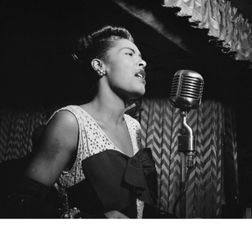
We’re listening to great female vocalists of the 1920s, 30s, and 40s this week, but we’re going to stretch our definition of “jazz” a bit. There are so many great singers to choose from, like Billie Holiday and Ella Fitzgerald, of course, but I also love some of the more mainstream, popular singers of the day. Annette Hanshaw, Ivie Anderson, Nina Mae McKinney, Connie Boswell, Mildred Bailey, and others.
Drop Me Off In Harlem
This week we're heading to Harlem, circa 1932, for a tour of some of the great jazz and dance clubs as mapped out by African American cartoonist Elmer Simms Campbell. He drew a map, titled "Night Clubs of Harlem, 1932" and published in Manhattan Magazine, The map faces southwest, bounded by 110th street, and runs along Central Park's northern edge. It concentrates on Lenox Avenue and Seventh Avenue — or "heaven" as Simms called it. Performances by Ellington, Lunceford, Webb, Fitzgerald, and McKinney.
Fletcher Henderson
This week, the Fletcher Henderson Band, led by one of the more unlikely and reluctant leaders in jazz, but easily one of the most talented. Fletcher Henderson, nicknamed "Smack," for the way he smacked his lips, apparently even in his sleep, was born in Cuthbert, Georgia, in 1897 to a middle-class African American family. In 1922 he formed his own band. His first steady gig with his band was at the Club Alabam on Broadway in 1924, but only after the band's players—not Henderson—talked their way into auditioning for their first long-term engagement.
International Sweethearts of Rhythm
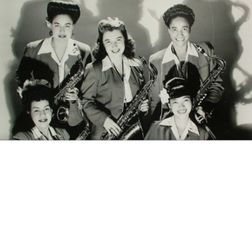
In May 1941 the International Sweethearts of Rhythm, an all-female, integrated high school swing band out of Piney Woods, Mississippi, was out on the road doing dance gigs, when they decided to break free, appropriating the bus and taking charge of their own careers — destined to become one of the best swing bands in history.
At the Jazz Band Ball
Trailer
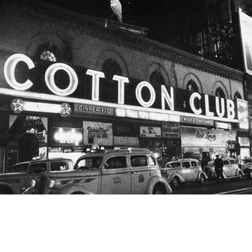
At the Jazz Band Ball is a podcast devoted to jazz from its earliest days through the 1940s. Every show is an exploration of an artist, a venue or an instrument. Louis Armstrong at Connie's Inn in Harlem, Duke Ellington at the Cotton Club, Bix Beiderbecke at the Palace Theatre in Cleveland, and lots more. Join me on Substack, Spotify, Apple, or wherever you listen to podcasts.
EXTRA: Benny Carter Interview Clips 1992, Smithsonian Jazz Oral History
Bonus
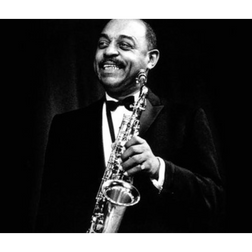
Benny Carter Recorded June 14, 1992, Courtesy of Smithsonian Jazz Oral History This native New Yorker made memorable impressions as a great bandleader and improviser. Largely self-taught, Benny Carter's first instrument was the trumpet, although the alto saxophone eventually became his principal instrument. He participated in tours with Jazz at the Philharmonic and wrote arrangements for singers including Ray Charles, Ella Fitzgerald, and Louis Armstrong. Carter received numerous awards, including a Grammy Lifetime Achievement Award in 1987. Complete Transcript (145 pages) View PDF Clip 1: MP3 Family Musical History Clip 2: MP3 First Saxophone Clip 3: MP3 Meeting Count Basie Clip 4: MP3 First Arrangements Clip 5: MP3 Why the Saxophone Clip 6: MP3 1932’s First Orchestra Clip 7: MP3 Dizzy Gillespie’s Impact Clip 8: MP3 Writing for Film and TV Benny Carter Photo Provided Courtesy of Ed Berger
AJBB Extra! Bubber, Bix, and Hoagy.
Bonus
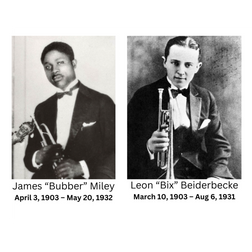
AJBB Extra! Bubber, Bix, and Hoagy Carmichael and His Orchestra. "Rockin' Chair" (1930). What a band: Benny Goodman (Saxophone, Clarinet) Bud Freeman (Tenor Saxophone) Tommy Dorsey (Trombone) Jimmy Dorsey (Alto Saxophone) Jack Teagarden (Trombone) Bix Beiderbecke (Cornet) Bubber Miley (Trumpet) Joe Venuti (Violin) Irving Brodsky (Piano) Eddie Lang (Guitar) Gene Krupa (Drums). Enjoy!
Mary Lou Williams
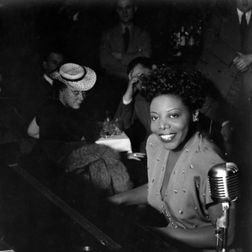
Mary Lou Williams is one of the great figures in jazz — pianist, arranger and teacher. We'll listen to some of Mary Lou Williams' earliest recordings as a stride pianist, then as a pianist and arranger as a member of the Andy Kirk band, and later the Benny Goodman, and Duke Ellington bands. We'll hear some of her work with the beboppers of the late 1940s. We'll also sample an interview she did in the 1970s with Marian McPartland, and we'll finish with a live recording she did at the Newport Jazz Festival in 1978.
5 de 5