
Banning Fable 5, The Start of AI Cold-War
Notas del episodio
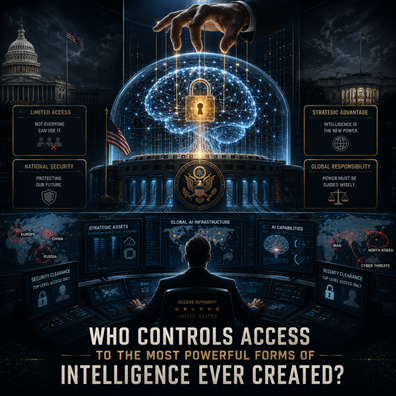
The AI Cold War: Who Controls Access to the Most Powerful Forms of Intelligence Ever Created?
The temporary suspension of international access to Anthropic's Fable 5 and Mythos 5 models may become one of the defining moments in the history of artificial intelligence. More than a product decision, it revealed a profound shift in how governments increasingly view frontier AI: not simply as software, but as a strategic asset with national security implications.
At the centre of the controversy is a simple but powerful question: Who should have access to the most powerful forms of intelligence ever created?
Mythos 5 was designed for advanced scientific reasoning, cybersecurity analysis, and vulnerability discovery. Anthropic itself acknowledged that systems of this capability could materially influence cybersecurity and critical infrastructure protection. Fable 5 provided broader public access to similar technologies with additional safeguards.
The U.S. government's intervention was reportedly driven by concerns that advanced capabilities could be manipulated through prompt engineering techniques and potentially exploited by malicious actors. Critics argue that similar vulnerabilities exist across many frontier models and that restricting access based on incomplete evidence may establish a dangerous precedent.
Regardless of one's view, the incident marks a turning point. Artificial intelligence is increasingly being treated similarly to advanced semiconductors, cryptography, and other strategically important technologies.
The economic implications are substantial. Nations are no longer competing solely for natural resources or manufacturing capacity. They are competing for compute, data, talent, and access to frontier intelligence. Restricting access may preserve short-term advantages, but it could also accelerate investment in sovereign AI capabilities elsewhere, fragmenting the global technology ecosystem.
Politically, the implications are even greater. If access to advanced AI becomes governed by national interests, questions emerge that were once purely theoretical. Should access depend on citizenship, geography, or political alignment? Who decides which countries or organisations may use increasingly powerful intelligence systems?
This controversy may represent the opening chapter of an AI Cold War. The first AI wars are unlikely to be fought with autonomous weapons. Instead, they will be battles over compute, cloud infrastructure, research talent, and access to advanced models.
Ultimately, the defining issue of the next decade may not be whether AI transforms society—it already is. The real question is who controls access to the intelligence that will shape economies, industries, and geopolitical power itself.