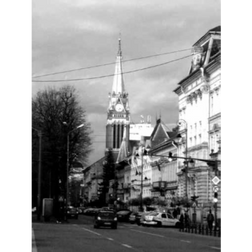
Discover Arad: a Hidden Gem of Central Europe

Discover Arad: a Hidden Gem of Central Europe

por Gabriel Roman, Puskel Péter, Ujj János, Király András, Lehoczky Attila, Muntean Tibor, Matekovits M
Temporada 1

Arad Medical: Healthcare, Charities and Philanthropy in a modernizing city

Back into the 18th and 19th-century Arad, where civic leaders, doctors, and philanthropists laid the foundations of a modern public health system. Explore how their vision shaped a thriving, socially responsible city ahead of its time. This episode based on a chapter written by Lehoczky Attila and translated by Gabriel Roman trace the development of healthcare and charitable organizations in the city of Arad, highlighting their evolution from the 18th century through the early 20th century. Early efforts focused on establishing medical facilities, with significant growth in the number of doctors, hospitals, and pharmacies occurring in the later 19th century as the city modernized. Charitable societies also played a crucial role, addressing social and welfare needs, with a diverse range of organizations focused on areas such as child protection, patient and funeral support, general aid, and professional assistance. Prominent citizens, including aristocracy and community leaders, were actively involved in leading and supporting these institutions, reflecting their importance to civic life. Full article here: https://www.arad.zone/blog-ar/asisten%C8%9Ba-medical%C4%83-%C8%99i-asocia%C8%9Biile-de-caritate-din-arad
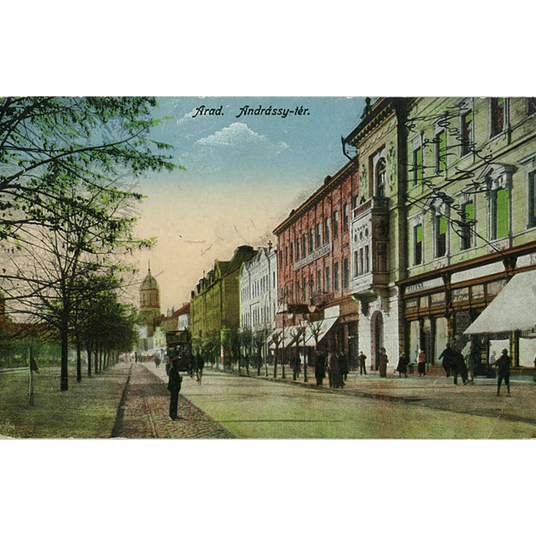
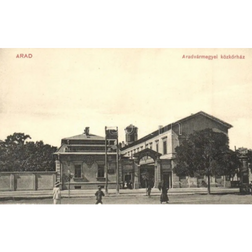
Arad Central Railway Station – Historic Transport Hub

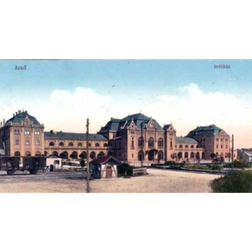
This document compiled by Gabriel Roman provides a detailed history of the Arad Central Railway Station, highlighting its significance as a major transportation hub within the pan-European corridor IV. It traces the station's development through multiple iterations, beginning in 1858, and details the architects and architectural styles involved in its construction, particularly focusing on the early 20th-century building designed by Pfaff Ferenc. The text also discusses major upgrades and renovations, including a significant modernization project completed in 2015, and includes a fact sheet outlining key information for tourists. The Arad Central Station stands as a key landmark in Hungarian and Romanian railway history, showcasing Eclectic Romanesque and Secession-style architecture and the legacy of architect Ferenc Pfaff. Opened in the early 20th century, this elegant building reflects the Austro-Hungarian influence on railway design and remains a vibrant transportation hub connecting Arad to major European cities like Budapest and Vienna. Read the full story here: https://www.arad.zone/blog-ar/gara-central%C4%82-arad (Romanian) https://www.aradvaros.com/blog-ar/gara-central%C4%82-arad (English)

Boros Béni and the Arad-Cenad United Railways – Rail Heritage of Arad

This document recorded by Puskel Péter and translated in English by Gabriel Roman explores the significant role of Boros Béni in the development of railways and water management in the Arad region and Central Europe during the 19th century. It details his pioneering work in constructing vicinal railways, which were simpler and cheaper than standard lines and significantly boosted the area's economic growth. Despite facing challenges and setbacks, Boros Béni became a key figure in Hungarian railway history, successfully advocating for and building extensive networks. The text also recounts the establishment, operation, and eventual dissolution of the Arad-Cenad United Railways, a company he led, highlighting its economic impact and the subsequent historical oversight of his contributions. Ultimately, the source advocates for a recognition of Boros Béni's legacy as a vital figure in Arad's industrial past. The Arad-Cenad United Railways (ACsEV) played a pivotal role in the development of regional railways across western Romania and Hungary. Founded during the Austro-Hungarian era, the company, under the guidance of engineer Béni Boros, left a lasting mark on Arad's industrial heritage. Known for its innovative railcar production by Weitzer wagon & engine works, the ACsEV helped modernize regional connectivity and stands as a testament to 19th-century railway engineering. Full story at: https://www.arad.zone/blog-ar/proiectantul-%C8%99i-constructorul-c%C4%83ilor-ferate-vicinale-din-regiunea-aradului-c%C4%83ile-ferate-unite-arad-cenad

Architectural Elegance: Arad Administrative Palace and Arad City Hall. A Neo-Renaissance Landmark

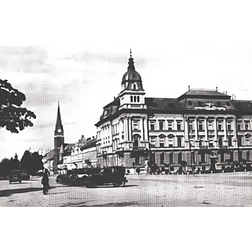
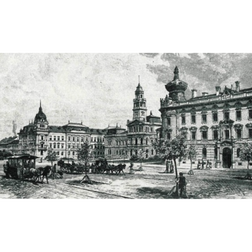
Located in the heart of Revolution Square, the Arad Administrative Palace, also known as Arad City Hall, stands as a testament to Flemish neo-Renaissance architecture. This iconic 19th-century municipal building is not only a functioning seat of local government but also a key landmark in Arad, Romania, attracting architecture enthusiasts and cultural tourists alike. This collection of excerpts compiled by Puskel Péter and a fact sheet written by Gabriel Roman offers a detailed account of the Administrative Palace in Arad, also known as the City Hall. The text traces the building's history, highlighting its architectural significance, particularly its Neo-Renaissance style and prominent tower, and notes its location among other important structures. Beyond its physical attributes, the sources emphasize the building's role as a central administrative hub and its importance in hosting numerous historical and contemporary public events in the city. Information on visiting hours, access, and nearby points of interest is also provided. Read full story at: https://www.arad.zone/blog-ar/palatul-adminstrativ-din-arad-cl%C4%82direa-prim%C4%82riei-aradului (Romanian) https://www.aradvaros.com/blog-ar/palatul-adminstrativ-din-arad-cl%C4%82direa-prim%C4%82riei-aradului (English)

Arad city and county administration and development, 1834-1919

This document compiled by Ujj János and translated by Gabriel Roman chronicles the administration and development of Arad City and Arad County in the Austro-Hungarian period, particularly focusing on the late 19th and early 20th centuries. It details the organizational structure of both the city and county, including their legislative committees, executive roles like mayors and prefects, and supporting offices. The text highlights the rapid population growth of Arad City and outlines significant modernization projects undertaken during this era, such as public transport and infrastructure development. Furthermore, it provides information on political representation, key administrative figures, and the geographical divisions within both the city and the county. Read the full story here: https://www.arad.zone/blog-ar/administra%C5%A3ia-comitatului-%C5%9Fi-ora%C5%9Fului-arad

Arad Social Life: Late 19th - Early 20th Century

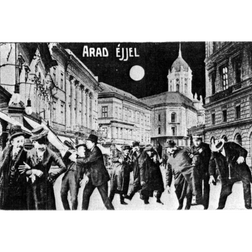
Dive into the vibrant social scene of Arad during the Belle Époque—an era of civic pride, charitable societies, cultural events, and growing public engagement that shaped the city's modern identity. This historical account recorded by Puskel Péter, translated in English by Gabriel Roman details the social life in Arad from the latter half of the 19th century through the early 20th century, following a period of Austrian repression. It highlights the emergence of various societies and associations, reflecting a growing desire for civic participation after the Austro-Hungarian Compromise. The text explores how social stratification influenced leisure activities, ranging from the exclusive balls and high society gatherings to more accessible sports, cafes, and even, for men, visits to the "red lantern houses." The source also briefly touches upon the role of women and their limited opportunities during this time, before concluding by noting the period's significance as a time of urbanization and economic growth that was ultimately halted by World War I. Full story here: https://www.arad.zone/blog-ar/via%C5%A3a-social%C4%83-ar%C4%83dean%C4%83

Arad Press Life: 19th-20th Century Development

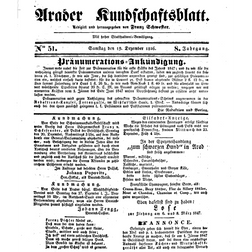
In the 1800s, Arad was a publishing powerhouse! Discover how newspapers in Hungarian, German, and Romanian shaped public life and chronicled the city's rapid development. This historical account compiled by Lehoczky Attila and translated in English by Gabriel Roman focuses on the development of press life in Arad during the 19th and early 20th centuries, detailing the macro and micro factors that influenced its growth, such as urbanization, industrialization, and changes in literacy rates. It highlights the city's transformation into a significant industrial and financial hub, which contributed to a burgeoning intellectual and bourgeois class with increasing needs for information and entertainment. The text then describes the establishment and evolution of numerous newspapers and magazines, with a particular focus on the three most influential Hungarian daily newspapers and the emergence of a Romanian-language press. Ultimately, the source portrays Arad's press as diverse, high-quality, and comparable to publications in larger cities, playing a crucial role in the city's public and cultural life. Read the full story at: https://www.arad.zone/blog-ar/via%C8%9Ba-presei-la-arad-%C3%AEn-secolul-al-xix-lea-%C5%9Fi-la-%C3%AEnceputul-secolului-al-xx-lea

Arad Theatrical Life: A History of the City's Stages

This research document compiled by Ujj János and translated in English by Gabriel Roman details the history of theatrical life in Arad, Romania, beginning with the first professional performances by a German troupe in 1787. It traces the development of theatrical venues, including the Hirschl Theatre built in 1817, which hosted both German and Hungarian troupes, and the larger National Theatre inaugurated in 1874, which became renowned in Hungary. The text also notes the challenges faced by the theatres, such as fires and political upheaval, and mentions the presence of famous actors and directors. Finally, it discusses the eventual disbandment of the Hungarian theatre company under communist rule and the current existence of a Hungarian-language Chamber Theatre. Full story here: https://www.arad.zone/blog-ar/teatrul-via%C8%9Ba-teatral%C4%83-ar%C4%83dean%C4%83

Arad Civil Associations and Organizations

This document compiled by Ujj János and translated by Gabriel Roman describes the development of civil organizations and associations in Arad during the 19th and early 20th centuries, a period marked by significant urbanization and social change. It details the founding of key institutions, including the Civil Shooting Association, the Music Lovers' Association and Conservatory, the Association of Volunteer Firemen, and various cultural and sports clubs like the Kölcsey Association and athletic organizations. The text highlights how these groups contributed to the city's infrastructure, cultural life, and recreational opportunities, even noting the impact of national identity and historical events on their formation and activities. The source also touches upon architectural achievements linked to these associations, such as the construction of the Cultural Palace. Full story at: https://www.arad.zone/blog-ar/asocia%C8%9Bii-%C5%9Fi-organiza%C8%9Bii-civile-ar%C4%83dene

Religious History of Arad Churches (19th-20th Century)

These chapters compiled by Ujj János and translated into English by Gabriel Roman offer insights into the religious and civil life of Arad during the late 19th and early 20th centuries, illustrating the city's growth and modernization. The document details the organization and development of various religious communities, including the Roman Catholic, Greek Catholic, Calvinist, Augustinian Lutheran, Mosaic (Jewish), and Orthodox churches, highlighting significant constructions and figures. Full story here: https://www.arad.zone/blog-ar/bisericile-aradului
4 de 5