Aging In Place Directory

Aging In Place Directory

por Esther C Kane CAPS, C.D.S.

From Guilt to Growth: Redefining the Healthy Caregiver

In this episode of the Senior Safety Advice Podcast, Esther C. Kane sits down with Kaley Johnson from TheHealthyCaregiver.net to pull back the curtain on the unspoken realities of caregiving. As a former Occupational Therapist with experience in geriatrics, Esther knows firsthand how caregiving can slowly take over your life, leading to a loss of identity and overwhelming guilt.

The TV-Based Ecosystem for Safer Aging in Place

This interview features Jim Conti from Vantiva, who discusses Homesite, an innovative "health hub" designed to support seniors aging in place. The technology integrates seamlessly with a television, allowing older adults to access health updates, wellness checks, and video calls through a familiar interface. To address privacy concerns, the device features a manual sliding camera shutter and only permits connections from authorized caregivers or family members. Beyond communication, the ecosystem includes environmental sensors that monitor motion, temperature, and habits to preemptively identify health risks like falls. The primary goal of the platform is to foster family connectivity and safety while keeping the technology "invisible" and easy for non-technical users to operate. Ultimately, Homesite aims to provide a comprehensive roadmap of care that evolves alongside the changing needs of the aging population.

Purposeful Retirement: Embracing Growth and Staying Active

In this interview, retired occupational therapist Esther Kaine speaks with therapist and author Faust Ruggiero about achieving emotional wellness and purposeful living during retirement. Ruggiero emphasizes that the transition to later life requires a positive mindset and a commitment to staying active, both physically and mentally, to avoid the pitfalls of depression and isolation. He introduces his "Process Way of Life" framework, which utilizes small, action-oriented steps to help individuals reach long-term goals without becoming overwhelmed. The conversation highlights the value of senior wisdom, suggesting that older adults possess a unique capacity for critical thinking and mentorship in a fast-paced, digital world. Ultimately, Ruggiero encourages seniors to embrace continuous learning and to view retirement not as an ending, but as a vibrant and productive new phase of existence.

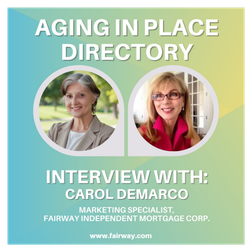
How Reverse Mortgages Help Seniors Stay at Home | Interview with Carol DeMarco

Are you or a loved one looking for ways to age in place comfortably and securely? In this informative interview, I speak with Carol DeMarco from Fairway Independent Mortgage Corporation about how reverse mortgages can support seniors who want to remain in their homes. Carol breaks down the essentials in a clear and compassionate way, helping families understand how this financial tool can provide stability and peace of mind. What You’ll Learn: ✔️ What a reverse mortgage is and how it works ✔️ Who qualifies for a reverse mortgage ✔️ How reverse mortgages support aging in place ✔️ Common myths and misconceptions ✔️ The impact on spouses and heirs ✔️ When a reverse mortgage makes sense for families Reverse mortgages are often misunderstood, but when used appropriately, they can be a powerful option for enhancing financial security and independence in later life.

How A Social Worker Turned Realtor Is Changing Home Design To Make Independence Last

Got a comment or idea? Send us a text. Ever wish your home could flex with real life—injuries, illness, toddlers, workouts, flu season, or just wanting to stay put without sacrificing style? That’s the heartbeat of our conversation with accessibility consultant and realtor Jackie Haddon, whose rare mix of SRES, CAPS, universal design expertise, and clinical social work reframes the whole “aging in place” debate. We dig into the words that shut people down, the stories that change minds, and the practical fixes that quietly prevent falls, cut future costs, and keep dignity front and center.Jackie shares the deeply personal ALS story that pulled her from running a mental health agency into housing advocacy, design, and certification. We unpack what really derails independence—one-inch thresholds, tight bathrooms, misplaced outlets—and how caregiver-informed planning avoids expensive do-overs. For builders and remodelers, Jackie offers a powerful shift: it’s not upselling, it’s stewardship. If a client’s goal is staying 20 years, ethics and economics both say “design for it now.” For realtors, we talk about making accessibility discoverable in the MLS with standardized features and clear definitions so families can finally search for what they need.We also look ahead: ADUs as elegant downsizing options, multigenerational housing as a rising norm, and policy incentives pushing Type A accessibility beyond ADA. Jackie’s standout example is a luxury multigenerational home that hides accessibility in plain sight—artful grab bars, generous wet rooms, beautiful finishes—proving safety can be stunning. Whether you’re a homeowner, contractor, designer, or part of the sandwich generation, you’ll leave with practical language, smarter checklists, and a new lens: universal design isn’t about age, it’s about being human.If this resonated, share it with someone planning a remodel, subscribe for more human-centered housing insights, and leave a review to help others find the show. Thanks for listening!  Sign up to our Homeowners Newsletter - it's a weekly newsletter filled with expert tips and advice on how to age safely and more comfortably in your own home.If you provide services for modifying homes for disabled or seniors aging in place, sign up to our directory and expand your business.
#71 - From “What Now?” to Purpose: Planning, Movement, and Mindset for a Fulfilling Retirement

Got a comment or idea? Send us a text. What if the most meaningful years aren’t behind you—but waiting for you to design them? We sit down with nationally recognized therapist and author Faust Ruggiero to reframe retirement from a vague “end” into a focused, energizing next chapter. Instead of chasing a perfect plan, we explore how tiny, consistent actions—moving daily, learning a skill, joining a group—unlock purpose, community, and confidence.Faust shares a clear framework: pair one steady long-term goal with a few short-term goals, each backed by concrete action steps. That grid keeps you moving without overwhelm and aligns with how the brain actually changes: repetition over time. We dig into “I over E”—intellect over emotion—to help you pause, think, and respond rather than react. You’ll hear how teaching what you know accelerates your own growth, why comparison is a trap, and how giving back restores a powerful sense of being needed.We get practical about the pillars that make everything else possible: exercise you’ll stick to, consistent sleep, simple nutrition, and a daily schedule that respects your energy. We also talk about tech and AI from a senior vantage point—why you don’t need to “keep up” to be valuable, and how your lived experience creates a niche younger generations can’t fill. From turning a yoga habit into a class to building a second career around your hard-won skills, this conversation offers concrete steps to make the next decade the most intentional one yet.If this resonates, subscribe for more grounded strategies on purpose, health, and aging well. Share the episode with someone planning retirement, and leave a review to tell us the one small step you’ll take this week. Thanks for listening!  Sign up to our Homeowners Newsletter - it's a weekly newsletter filled with expert tips and advice on how to age safely and more comfortably in your own home.If you provide services for modifying homes for disabled or seniors aging in place, sign up to our directory and expand your business.
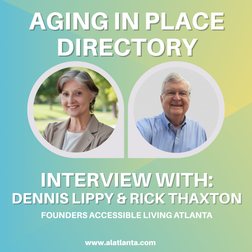
#69 - Interview With Dennis Lippy and Rick Thaxton of Accessible Living Atlanta

Got a comment or idea? Send us a text. A safer home shouldn’t look clinical, and it shouldn’t wait until after a fall. We invited Rick Thaxton and Dennis Lippy of Accessible Living Atlanta to share how they build beautiful, practical spaces that protect independence at any age, and why designing for caregivers is just as critical as designing for the person receiving care. From modern grab bars that blend into your bathroom to ceiling lifts that prevent back injuries, we walk through the upgrades that matter most and the small, low-cost steps that deliver outsized safety: better lighting, continuous handrails, decluttering, and zero-entry showers placed and sized for real bodies and real routines.We also dig into the logistics families face. Zoning and ADUs for multigenerational homes, vertical platform lifts when ramps won’t fit, stacked closets that future-proof townhomes for elevators, and the funding landscape that too often surprises people, because Medicare doesn’t pay for home modifications. Rick and Dennis share how to tap VA benefits, state Medicaid waivers, and condition-specific grants, plus why it pays to involve an occupational therapist to align body mechanics with the built environment. The takeaway is clear: plan early, personalize to the home and the person, and build with aesthetics in mind so accessibility boosts resale instead of harming it.Technology helps but isn’t a silver bullet, especially for bathroom falls, so layering solutions is key: non-slip surfaces, reachable controls, motion lighting, and thoughtful layouts that minimize transfers. Whether you’re supporting a parent, living with a progressive condition, or simply want a future-ready space, this conversation offers a practical roadmap to safer, smarter living. If this episode sparks ideas, share it with a friend, subscribe for more expert conversations, and leave a review to tell us which home upgrade you’ll tackle first. Thanks for listening! Sign up to our Homeowners Newsletter - it's a weekly newsletter filled with expert tips and advice on how to age safely and more comfortably in your own home.If you provide services for modifying homes for disabled or seniors aging in place, sign up to our directory and expand your business.
#61 - Seasonal Home Safety Checks for Older Adults

Got a comment or idea? Send us a text. Seasonal home safety checks are crucial for older adults who wish to maintain independence and prevent accidents while aging in place. Taking inspiration from a meticulous neighbor who prevented major maintenance issues through regular upkeep, I share practical advice for making your home safer through each season.• Spring and summer checks include examining pathways for cracks, updating smoke detectors, clearing yard hazards, and servicing air conditioning• Keeping a maintenance journal helps track issues and organize professional assistance when needed• Fall and winter preparation focuses on furnace and fireplace servicing, checking for non-slip rugs, and improving lighting for shorter days• Motion sensor lighting in bathrooms, closets and garages provides hands-free illumination and enhanced safety• Emergency supplies like blankets, flashlights, medications, and backup batteries are essential for power outages• Ice melt, snow removal services, and traction footwear help prevent dangerous winter falls• Installing handrails at all steps provides crucial support regardless of elevation changes• Remember seasons by their focus: Spring (refresh), Summer (cool), Fall (prepare), Winter (protect)• Small preventative steps today can prevent major problems and help maintain independence tomorrowDon't forget to subscribe and tell your friends about us. We put out podcasts every single week with free, helpful advice to make aging in place safer and more enjoyable. Thanks for listening!  Sign up to our Homeowners Newsletter - it's a weekly newsletter filled with expert tips and advice on how to age safely and more comfortably in your own home.If you provide services for modifying homes for disabled or seniors aging in place, sign up to our directory and expand your business.
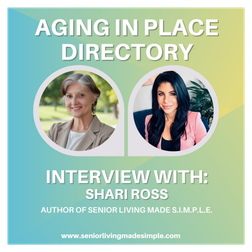
Interview with Shari Ross - Author of Senior Living made S.I.M.P.L.E.

Got a comment or idea? Send us a text. Most families don’t start planning senior living until a scare forces the issue. We wanted to change that. So we sat down with Sherry Ross, aging and caregiving resource expert and author of Senior Living Made Simple, to turn panic into a plan you can actually follow. Sherry shares her SIMPLE framework to guide every step: build the right support team, learn options before a crisis, match needs to the right environment, get legal and financial prep done, let go of guilt and excess stuff, and prioritize daily engagement that gives life meaning.We dig into the big misconceptions that keep people stuck, why “nursing home” isn’t a catch-all term, how “community” better reflects modern senior living, and why moving can increase independence instead of reducing it. You’ll learn the real-world signs it may be time to consider a move: falls, missed meds, skipped appointments, isolation, weight loss, or early cognitive slips that make routines risky. Then we get tactical about touring: limit to one visit a day, watch staff-resident interactions, verify activities beyond the calendar, do the smell test past the lobby, taste the food, and chat with residents to gauge happiness. We even cover a low-pressure path for resistant parents—start with lunch, not a hard sell, and a practical strategy of pre-screening yourself, then bringing your loved one to the top two choices so they keep agency.Technology shows up as a quiet hero throughout. From smart medication dispensers and passive fall detection to GPS wearables and simple video calling, the right tools extend safety and connection without replacing human care. We also look ahead at how communities are evolving around wellness, lifelong learning, creative pursuits, and intergenerational programs that make daily life feel vibrant instead of clinical. If you’re weighing independent living, assisted living, memory care, or board-and-care, this conversation gives you a humane, step-by-step way to move forward with clarity.If this helped, follow the show, share it with someone who needs a roadmap, and leave a quick review to help more families find trusted guidance. Thanks for listening! Sign up to our Homeowners Newsletter - it's a weekly newsletter filled with expert tips and advice on how to age safely and more comfortably in your own home.If you provide services for modifying homes for disabled or seniors aging in place, sign up to our directory and expand your business.
#36 - Creating Outdoor Spaces That Enrich Your Lifestyle Year-Round

Got a comment or idea? Send us a text. We explore how to create outdoor spaces that can be enjoyed throughout all seasons, emphasizing the health benefits and lifestyle improvements that come from well-designed outdoor areas. By incorporating key elements like shelter, heating, cooling, proper lighting, and weather-resistant furniture, any backyard can become a four-season haven for relaxation and enjoyment.• Key elements for year-round enjoyment include shelter structures, heating and cooling solutions, proper lighting, weather-resistant furniture, and seasonal planting• Safety and accessibility should be prioritized through non-slip surfaces, well-lit paths, and accessible layouts• Summer-specific design includes shade solutions, cooling features, and water elements• Winter enjoyment requires heated seating areas, fire features, and evergreen plants• Multiple wind protection options range from windproof fencing to retractable screens and structural elements• Seasonal plants and movable furniture create flexibility for changing conditions• Strategic placement of wind barriers requires observing prevailing wind patterns in your areaIf you have any questions or tips on designing your outdoor space, feel free to reach out to us. Thanks for listening!  Sign up to our Homeowners Newsletter - it's a weekly newsletter filled with expert tips and advice on how to age safely and more comfortably in your own home.If you provide services for modifying homes for disabled or seniors aging in place, sign up to our directory and expand your business.
12 de 12