A Word in Season

A Word in Season

por Brian Troxel
Temporada 2018

The Church in Sardis - Part 2

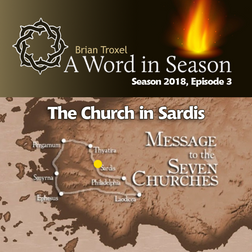
The second part of The Church in Sardis Brian continues exploring important aspects related to the Lord’s admonishing message to the church in Sardis, emphasizing the spiritual symbolism of the lampstand, the importance of abiding in Christ, and the continual process of spiritual growth and purification. He draws heavily on other other passages, including Zechariah 4 and Revelation 11, to convey the truth that believers are individual lampstands fueled by the Holy Spirit, represented by the oil in the lamps. He underscores the concept that true ministry stems from abiding in God's anointing and not from personal ambition. Brian also discusses the necessity of personal responsibility in nurturing one’s spiritual gifts, emphasizing the role of authentic interaction with God to discover one's purpose, coming against passivity in one’s faith, calling for active pursuit of one's calling and the development of spiritual gifts for the benefit of the church's mission on earth. This podcast episode further elaborates on the corporate nature of the church, using the image of two olive trees, stressing the vital importance of unity and that the church's role is to reflect Christ's light through purity, truth, and grace. Message by Brian Troxel in 2018 For more written content, go to AWord.info
The Church in Sardis - Part 1

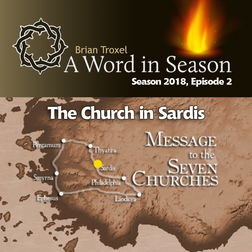
In this first part of his message, on the The Church in Sardis, Brian focuses on the spiritual condition of the Church in Sardis, as described in the Book of Revelation, emphasizing the dangers of spiritual complacency, using the metaphor of a church that appears alive but is spiritually dead. He warns against the modern "antinomian"** gospel, which disregards accountability and the necessity of maintaining a living, active faith. Key themes include: Spiritual vigilance: The need to stay spiritually alive by maintaining a personal relationship with God, likened to tending a flame. Responsibility in faith: Brian stresses the believer's role in nurturing their spiritual life, contrasting it with passive, spectator-like faith. Biblical examples: He draws on examples like David, Gideon, and others to illustrate the importance of active, courageous faith. Personal transformation: He encourages listeners to see themselves through God's eyes, believing in their potential to enact change through faith. The power of God's presence: Stories of revival are shared to inspire belief in God's ability to work powerfully in individual lives and communities. His overall message is a call to renewed commitment, vigilance, and faith in God's transformative power. Message by Brian Troxel in 2018 For more written content, go to AWord.info
The Church in Philadelphia

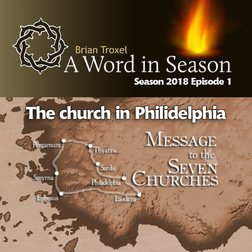
In this message Brian offers a profound reflection on spiritual growth, particularly in the context of the church at Philadelphia in the book of Revelation as well as Peter's second epistle. The focus is on the development of a believer's faith, moving from one level of spiritual maturity to the next, with the ultimate goal being Love—the selfless, divine love (agape) that surpasses brotherly love (phileo). Key Themes: Progressive Growth in Faith (2 Peter 1:5-7)Peter, aware of his imminent death, lays out a pattern for spiritual growth that includes faith, virtue, knowledge, temperance (self-control), patience, godliness, brotherly kindness (phileo), and finally love (agape). The development of faith leads to a virtuous life, which in turn leads to deeper understanding, self-control, and ultimately, love for others in a divine, selfless way. Phileo vs. AgapeThe Greek word phileo (brotherly love) is important in understanding the church at Philadelphia, which represents brotherly love. However, as shown in the conversation between Jesus and Peter (John 21), Christ is constantly calling Peter—and all of us—beyond phileo to agape, which is the highest form of love. In the dialogue, Jesus repeatedly asks Peter if he loves Him with agape (divine love), but Peter, after his denial of Christ, can only respond with phileo (human affection). Jesus meets Peter where he is, but ultimately, the call is always to agape. Authenticity and GenuinenessIn Revelation 3:7, Jesus describes Himself as "holy" and "true" (the Greek word alēthinos, meaning genuine). This speaks to God’s desire for authenticity in His followers—what we are on the inside should match how we present ourselves outwardly. There is a call to lay aside appearances and to become childlike in our genuineness, as Jesus taught that only those who become like little children can enter the Kingdom of Heaven. Message by Brian Troxel in 2018 For more written content, go to AWord.info
2 de 2