
Notas del episodio
What happens when the certainty of fundamentalist religion collapses, but the need for meaning, morality, and direction remains?
In this episode of Traversing the Strange World, we journey into ancient Stoicism and explore how it can serve as a philosophical anchor after religious deconstruction. From Zeno and the Painted Porch to the Stoic teachings on virtue, emotion, responsibility, and human flourishing, we uncover a philosophy far deeper than the modern command to simply “control your reactions.”
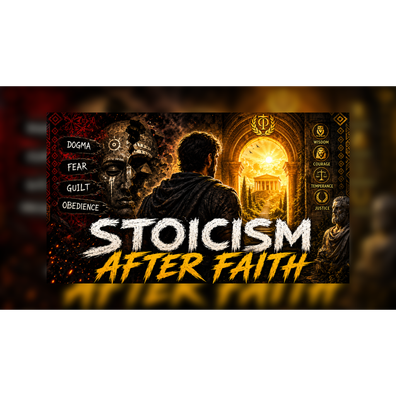
Stoicism offers wisdom without blind belief, courage without certainty, discipline without self-hatred, and morality without fear of divine punishment. We examine the four Stoic virtues—wisdom, courage, moderation, and justice—and challenge the popular idea that Stoicism means becoming cold, detached, or emotionally numb.
For anyone rebuilding their worldview after fundamentalism, this episode explores how Stoicism can provide inner strength, emotional resilience, ethical direction, and a meaningful path forward—without becoming another unquestionable system.
The old map may be gone. Stoicism may offer a compass.