Workplace Intelligence

Workplace Intelligence

por Sheryl Butchin
Temporada 1
Rolling Strong with Crystal Lee Laramore: Restoring Freedom, One Warrior at a Time
In this inspiring episode, Sheryl Butchin sits down with Crystal Lee Laramore, founder and executive director of Wheelchairs for Warriors, to discuss how a deeply personal calling led to the creation of an organization that is transforming the lives of injured veterans and first responders. Crystal shares her journey from working in Baghdad, Iraq, to recognizing the gaps in care faced by wounded warriors back home. She explains why mobility is about far more than a wheelchair—it's about dignity, independence, mental health, purpose, and hope. Listeners will hear powerful stories of resilience, the importance of adaptive sports, and why no hero who sacrificed for our country should ever be left behind. Key Topics Discussed • The story behind Wheelchairs for Warriors How Crystal's experiences and family legacy of service inspired her mission. • The hidden challenges faced by wounded veterans and first responders Why many heroes still struggle to obtain the mobility equipment they need. • Restoring dignity and independence How custom-built wheelchairs dramatically improve quality of life. • Adaptive sports and mental wellness Why camaraderie, purpose, and competition help combat isolation and depression. • The true cost of mobility Understanding why custom wheelchairs average approximately $10,000 and adaptive sports chairs can cost even more. • Building a legacy of service Crystal's faith, leadership philosophy, and commitment to ensuring that "No Warrior Is Left Behind." • How individuals and businesses can support the mission Ways to donate, sponsor programs, and become involved. About Crystal Lee Laramore Crystal Lee Laramore is the founder and Executive Director of Wheelchairs for Warriors, a nonprofit organization founded in 2016 that provides custom-fit mobility solutions to veterans and first responders injured in the line of duty. Inspired by her family's long history of military service and her own experience serving in Baghdad, Iraq, Crystal has dedicated her life to restoring freedom, dignity, and independence to America's heroes. Connect with Crystal Lee Laramore and Wheelchairs for Warriors Website Wheelchairs for Warriors Executive Director Crystal Lee Laramore 📞 Phone: 936-777-4548 📧 Email: Crystal@WheelchairsForWarriors.org Mailing Address 2810 U.S. Hwy 190 West, Suite 100 PMB 552 Livingston, TX 77351 Follow Wheelchairs for Warriors LinkedIn Instagram Facebook Memorable Quote from Crystal "When my country needed me, I showed up. Now I need my country." Hashtags #CrystalLeeLaramore #WheelchairsForWarriors #Veterans #FirstResponders #MilitaryCommunity #AdaptiveSports #VeteranSupport #ServiceBeforeSelf #Leadership #NonprofitLeadership #GivingBack #MobilityMatters #RollStrong #CommunityImpact #SupportOurVeterans #SherylButchinPodcast #PodcastInterview #PurposeDrivenLeadership #NoWarriorLeftBehind #FaithFamilyCountry
Executive Coaching with Nazma Rosado
IA
Executive Coaching: The Difference Between Experience, Leadership, and True Executive Readiness Podcast Summary What separates a strong leader from someone who is truly ready for executive coaching or the C-suite? In this episode, executive transformation consultant and leadership author shares insights from her Executive Coaching Readiness Assessment and explains why coaching has evolved from a corrective measure into a powerful development tool for high-performing professionals. Nazma discusses the difference between coaching, mentoring, consulting, and training, and why executive coaching requires a unique combination of business experience, emotional intelligence, active listening, and behavioral insight. She explores how leaders can identify blind spots, understand the gap between intent and impact, and determine whether they are truly prepared for greater executive responsibility. The conversation also examines how leadership expectations have changed in today's workplace, including the impact of hybrid work, multigenerational teams, technology, and artificial intelligence. Nazma shares practical advice for professionals considering executive coaching and for those interested in becoming executive coaches themselves. Whether you are an emerging leader, HR executive, business owner, or seasoned executive, this episode offers valuable guidance on leadership growth, executive presence, and personal development. Key Takeaways • Executive coaching is no longer a corrective action. It is a strategic development tool for high performers. • Leadership readiness is measured by both skills and behaviors. • Intent does not always equal impact. Self-awareness is critical for executive success. • Effective executive coaches rely on emotional intelligence, active listening, and real-world business experience. • Executive coaching helps leaders uncover blind spots and accelerate growth. • The rise of AI, hybrid work, and changing workforce expectations requires leaders to become more adaptable than ever. • The best coaches guide discovery rather than provide all the answers. Final Thought Leadership is not about having all the answers. It is about creating the awareness, perspective, and confidence needed to navigate increasingly complex challenges. Executive coaching can help leaders uncover what is holding them back and identify what is needed to move forward with greater impact and effectiveness.
From Attorney to CEO: Leona Krasner's 5-Step Framework for Building a Thriving Law Firm
Podcast Summary What does it take to move from practicing law to leading a successful law firm? In this episode, Sheryl Butchin sits down with Leona S. Krasner, Founder and Managing Partner of Krasner Law PLLC, to discuss the mindset, leadership, and business strategies required to become a true law firm CEO. Leona shares her proven five-step framework for building and scaling a successful firm, including developing a clear vision, hiring the right people, establishing meaningful performance metrics, and creating strategic quarterly initiatives that drive long-term growth. The conversation explores the often-overlooked transition from technical expert to business owner, emphasizing the importance of delegation, culture, accountability, and intentional leadership. Whether you are launching a new practice or growing an established firm, this episode offers practical guidance for creating a business that can thrive without depending on the founder for every decision. Key Takeaways • Develop a clear vision for your firm before building systems and processes. • Define what success looks like personally and professionally. • Create a vivid vision that guides decisions during both opportunities and challenges. • Hire for culture and values, not just technical skills. • Use practical assessments during interviews to evaluate real-world capabilities. • Establish measurable performance indicators so employees understand expectations. • Track business development activities and networking efforts consistently. • Focus on a small number of strategic quarterly projects that move the business forward. • Invest in client and referral relationships through intentional recognition and appreciation. • Delegate effectively to create a business that can grow beyond the founder. Discussion Highlights Mindset shifts required to become a CEO Creating a vivid vision for long-term success Building a team and learning to delegate Interviewing and hiring for culture fit Performance metrics that drive accountability Strategic quarterly goals and business growth Leveraging technology and CRM systems Referral relationship management Leadership lessons from growing multiple law firms Final Thoughts Leona's message is simple but powerful: successful law firms are built intentionally. Attorneys who want to grow beyond practicing law must learn to think like CEOs by creating a vision, building strong teams, measuring performance, and staying focused on strategic priorities. The firms that scale successfully are those led by individuals willing to transition from doing the work to leading the business.
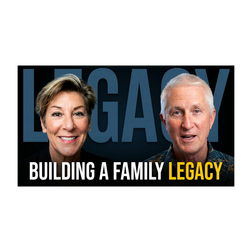
Building a Family Legacy: Family Offices, Dynasty Trusts, and Multi-Generational Wealth with Rick Durfee
What does it really take to create wealth that lasts for generations? In this episode, Sheryl Butchin sits down with estate planning and asset protection attorney Rick Durfee to explore the world of family offices, dynasty trusts, asset protection, and long-term family legacy planning. Drawing on more than three decades of experience, Rick explains why traditional estate planning often focuses too heavily on assets and not enough on the people who inherit them. The conversation dives into how families can build structures that protect wealth, reduce taxes, develop future leaders, and avoid creating generations dependent on inherited money. Rick also shares why successful wealth preservation requires more than legal documents. It requires intentional education, responsibility, and a long-term vision for family continuity. Key Takeaways What a family office is and why it is not reserved for billionaires How family offices can help families maintain control while protecting assets The relationship between family offices, family banks, and dynasty trusts Why outsourcing all financial management can weaken future generations Strategies for developing productive heirs instead of dependent beneficiaries How dynasty trusts help preserve wealth across multiple generations The importance of teaching financial stewardship through experience and responsibility Why family continuity and succession planning are critical to long-term wealth preservation Rick's perspective on building a legacy that extends beyond money and focuses on family sustainability Memorable Insights "The goal is not to create heirs who live off the previous generation's success. The goal is for each generation to create wealth, contribute to the family legacy, and make it stronger." "The family office controls everything but owns very little, creating both protection and flexibility." "For a family dynasty to work, there has to be a family." About the Guest Rick Durfee is the founder of Durfee Law Group, a law firm based in Mesa, Arizona, focused on estate planning, asset protection, business structuring, family offices, and dynasty planning. With a unique background that includes teaching world religions before entering law, Rick brings a human-centered approach to helping families preserve both their wealth and their relationships across generations. Who Should Listen Business owners Entrepreneurs Family business leaders Financial advisors Estate planning professionals Anyone interested in building a lasting family legacy Connect with Rick Durfee Website: Durfee Law Group, https://www.durfeelawgroup.com Final Thoughts Building wealth is one challenge. Preserving it across generations is another. This episode explores how intentional planning, education, governance, and family values can work together to create a legacy that lasts far beyond a single lifetime. Whether you are building a business, protecting assets, or thinking about your family's future, Rick offers valuable insights into the structures and strategies that support long-term success. Enjoyed the episode? Subscribe, share with your network, and connect with Sheryl Butchin for more conversations on leadership, business strategy, talent, and building sustainable success.

Internal Governance: The Hidden System Behind Elite Leadership Performance
What happens when high-performing leaders scale faster than their internal systems can handle? In this episode, Sheryl sits down with business growth advisor and author Mar Morabito to discuss why most leadership breakdowns are not caused by poor strategy, but by weak internal governance. Mar explains how decision fatigue, emotional volatility, inconsistent communication, burnout, and operational instability often stem from one overlooked issue: leaders have scaled their businesses without scaling themselves. The conversation explores how internal governance shapes leadership clarity, emotional regulation, execution under pressure, and organizational stability. Mar also shares insights from her book, Survival to Sip: The Seven Rhythms to Heal Your Body, Rewire Your Mind, and Live in Alignment, including the seven foundational rhythms she uses to help executives strengthen performance and sustainability. This episode is a powerful discussion on leadership, wellness, discipline, decision-making, and the systems required to sustain success at scale. Key Takeaways Why instinct becomes unreliable as leadership complexity increases How weak internal governance quietly damages organizations over time The connection between emotional regulation and decision quality Why burnout is often a systems problem, not a motivation problem How sleep, nutrition, movement, and recovery directly impact leadership execution The importance of creating stability before optimization Why AI and technology amplify leadership weaknesses if internal systems are unstable How self-awareness improves communication, consistency, and leadership presence Why elite leadership starts with governing yourself first About the Guest Mar Morabito works with business owners and executives to build internal governance systems that support sustainable growth, operational clarity, and leadership stability. Her work focuses on helping leaders strengthen the internal systems that shape decision-making, execution, emotional regulation, and long-term performance. She is also the author of Survival to Sip: The Seven Rhythms to Heal Your Body, Rewire Your Mind, and Live in Alignment and advises organizations globally on leadership performance and operational sustainability. Connect with Mar Morabito LinkedIn: https://www.linkedin.com/in/marisamorabito/ Final Thoughts Leadership performance is not built on strategy alone. It is built on the internal systems that allow leaders to think clearly, regulate pressure, communicate consistently, and execute with stability over time. This episode offers a refreshing perspective on why sustainable business growth starts with strengthening the operator behind the organization. If you enjoyed this episode, subscribe, share with your network, and connect with Sheryl for more conversations on leadership, business performance, organizational strategy, and executive growth.
Credibility in B2B Marketing - Part 1
IA
Stephanie Stocker is Vice President of Marketing and Head of Client Services at Conveyor Marketing Group, where she leads strategy for major client engagements and helps organizations rethink how credibility, visibility, and buyer trust are built in an increasingly AI-driven market. With more than 20 years in B2B marketing, Stephanie is known for her insights on buyer behavior, thought leadership, and what it takes for companies to stand out when buyers often make decisions long before the first sales conversation. Episode Summary In this episode, Stephanie Stocker shares how AI, changing buyer behavior, and digital discovery are transforming the way businesses earn trust and win attention. Buyers are no longer starting with company websites. They are researching through AI search, social media, online communities, and peer-driven conversations before ever speaking with sales. Stephanie explains why credibility now comes from real people with real expertise, why businesses must have something worth saying, and why a company’s website has shifted from being the starting point to becoming the place where buyers validate trust, review proof points, and decide whether to take the next step. Key discussion points include: • Buyers are building shortlists before companies know they are being evaluated • AI is changing how brands are discovered and surfaced online • Thought leadership from real practitioners builds stronger trust than corporate messaging • Websites must prove credibility, showcase proof points, and create a frictionless path to connect • Small businesses can start building visibility today through authentic public conversations and platforms like LinkedIn Timestamp Highlights 00:01 Introduction to Stephanie Stocker and her background in B2B marketing 01:08 How buyer behavior has evolved and why buyers delay sales conversations 02:05 The impact of AI search, LLMs, social media, and third-party discovery channels 03:24 Where credibility comes from today and why people trust practitioners 05:54 What it means to be “worth finding” in today’s market 06:06 Why traditional volume-based marketing is fading 07:30 The new role of websites in building trust and validating expertise 08:15 Practical advice for small business owners with limited budgets 09:00 Why proof points, case studies, and frictionless contact paths matter 10:00 Affordable ways to build reach using thought leadership and platforms like LinkedIn 11:00 Stephanie’s one message every business owner should remember 12:15 Final thoughts on visibility, courage, consistency, and showing up Final Thoughts As Stephanie Stocker shares in this conversation, your website may still be your front door... but the world outside that door has become much bigger. Buyers are researching, learning, comparing, and forming opinions long before they ever reach out. In today’s market, credibility is no longer built through volume or polished messaging alone. It is built through real people, real expertise, consistent visibility, and having something worth saying. If your buyers are already searching, learning, and deciding... the real question is not whether you have a marketing strategy.
Resilience Under Pressure: How Dre Nuzum Built Strength Through Adversity
Some people talk about resilience. Dre Nuzum has lived it. In this powerful episode, I sit down with speaker, life coach, and endurance athlete Dre Nuzum to explore what resilience really looks like when life pushes back. From physical endurance to mental toughness, from setbacks to breakthroughs, Dre shares how adversity became the training ground for purpose, discipline, and personal transformation. This conversation is not just about surviving difficult seasons. It is about learning how to grow stronger because of them. Based on the uploaded transcript, the episode opens with Dre being introduced as a speaker, life coach, endurance athlete, and the central theme of resilience. In This Episode We Discuss ✔ What resilience actually means beyond motivational quotes ✔ How adversity can become a training ground for leadership ✔ The mindset required to keep moving when results are not immediate ✔ Why physical endurance often reveals emotional and mental patterns ✔ How discipline creates confidence ✔ What separates people who quit from people who adapt ✔ Coaching others through fear, setbacks, and uncertainty ✔ Building a life rooted in purpose instead of comfort Memorable Takeaway “Resilience is not built when life is easy. It is built in the moments when quitting feels reasonable.” About My Guest Dre Nuzum is a speaker, coach, and endurance athlete dedicated to helping others unlock their potential, build mental toughness, and navigate life’s challenges with purpose, discipline, and clarity. Connect with Dre Nuzum https://www.linkedin.com/in/dre-nuzum/ Connect with Me I am Sheryl Butchin, helping leaders connect workforce strategy, leadership, and business performance. Follow for conversations with executives, founders, coaches, and thought leaders shaping the future of leadership. 🎙 Subscribe, share, and join us for more conversations that turn experience into wisdom.
John Cuellar and Sheryl - AI in HR
IA
AI, Workforce Design, and the Future of HR Leadership with John Cuellar That title carries executive gravity without sounding like clickbait. Sharp as a freshly honed strategy blade. ⚙️ Episode Show Notes What happens when artificial intelligence stops being just a tool... and starts becoming a workforce participant? In this episode, I sit down with technology innovator, enterprise architect, and SyncHR co-founder John Cuellar to explore one of the biggest leadership shifts happening right now: managing both human and non-human contributors inside modern organizations. John shares how AI is moving beyond productivity hacks and into operational decision-making, workforce design, governance, global HR systems, and enterprise architecture. From HRIS and payroll complexity to localization, organizational drift, and real-time workforce intelligence, this conversation challenges leaders to rethink how work gets designed, governed, and executed at scale. If you lead people, systems, or strategy... this conversation matters. 7 Key Takeaways ✅ AI is becoming a non-human actor inside organizations, not just a productivity tool. ✅ The same leadership disciplines used for people... performance, accountability, scope, and governance... now apply to AI agents. ✅ Most organizations are still using AI reactively instead of strategically embedding it into workflows. ✅ Poor organizational data creates "organizational drift," making AI governance nearly impossible. ✅ HR and IT alignment will become essential for maintaining workforce accuracy, identity management, and system trust. ✅ Global organizations need centralized workforce intelligence with localized execution to scale effectively. ✅ Natural language interfaces may finally replace many of the manual forms, tickets, and workflow bottlenecks slowing organizations today. About My Guest John Cuellar brings decades of experience in enterprise technology, workforce systems, AI strategy, and operational leadership. He co-founded SyncHR and served as Chief Technology Officer for more than a decade, helping shape one of the industry's most innovative HR platforms. His background includes leadership in systems integration for Fortune 500 organizations, international consulting, financial engineering, and operational leadership with the U.S. Navy. Today, John is focused on helping senior leaders redesign work for the AI era through advanced workforce systems, organizational intelligence, and enterprise AI applications. Connect with John LinkedIn: https://www.linkedin.com/in/cuellar/ Connect with Me Hosted by Sheryl Butchin, https://www.linkedin.com/in/sheryl-butchin/
From Data to Decisions: How Marcello Sasso Is Redefining Competitive Advantage with AI and Integrated Intelligence
IA
Episode Show Notes What happens when organizations stop looking at customer behavior, sales data, and market trends as separate stories... and start connecting them into one intelligent system? In this episode, Sheryl sits down with global strategic insights expert Marcello Sasso, a market intelligence leader with 25+ years of experience across 25 countries, to explore how integrated intelligence is changing the way organizations make decisions, launch products, identify opportunities, and stay ahead of disruption. From pharmaceutical market breakthroughs to fashion concept validation, Marcello shares how AI is helping companies spot weak signals earlier, reduce costly mistakes, and move from instinct-driven decisions to smarter, faster, data-driven execution. If you are an executive, founder, HR leader, marketing strategist, or business operator navigating AI, market uncertainty, and competitive pressure... this conversation delivers practical insight you can use immediately. In This Episode, You Will Learn ✅ What Integrated Intelligence really means in practice ✅ How behavioral, transactional, and contextual data create better decisions ✅ Why AI should augment expertise... not replace it ✅ How companies can identify weak signals before competitors do ✅ Why concept validation can save months of time and thousands in research costs ✅ The leadership mindset shift required to succeed in the AI era ✅ Why asking better questions may become the most valuable skill in business Timestamp Highlights 00:01 – Introduction to Marcello Sasso and his global expertise across industries 01:42 – What integrated intelligence looks like in the real world 04:17 – Breaking down organizational silos to create one customer truth 06:02 – Identifying weak signals versus market noise using AI 08:57 – Balancing speed, confidence, and human judgment in AI-driven insights 10:43 – How concept validation helps companies prioritize winning ideas 13:57 – A pharmaceutical case study that uncovered hidden cultural buying behavior 16:26 – When concept validation becomes true competitive advantage 18:47 – What leaders must unlearn to trust AI and integrated intelligence 20:33 – Why prompt engineering and better questions are becoming essential leadership skills 22:23 – “AI is a helper, not a replacement.” Key Quote from Marcello “We are no longer paid simply for having the answers. We are paid for asking the right questions.” About Our Guest Marcello Sasso is a strategic insights leader with over 25 years of experience transforming human behavior, market intelligence, and AI-enhanced analytics into measurable business growth. His work spans CPG, healthcare, pharmaceuticals, fashion, technology, finance, and global consumer markets across 25 countries. Marcello specializes in helping organizations connect consumer behavior, transactional intelligence, and market context into actionable strategies that accelerate innovation and competitive advantage. Connect Connect with Sheryl for more conversations on leadership, workforce strategy, AI, and business transformation.
Outsourcing Isn’t a Dirty Word: Turning Workforce Strategy Into a Business Advantage
Most organizations still treat staffing like a transaction. This conversation challenges that mindset and reframes workforce management as a core business discipline. In this episode, Sheryl Butchin sits down with Jeri Korb, Vice President of Workforce Solutions at Workforce Delivered, to unpack what happens when labor decisions move beyond “filling roles” and start driving margins, operational stability, and long-term growth. From fragmented vendor strategies to the hidden cost of reactive hiring, this discussion brings clarity to one central idea: workforce strategy is not HR support—it is business infrastructure. 🔑 Key Insights Workforce management becomes strategic when it aligns directly with business outcomes such as margin protection and capability readiness Treating full-time, contingent, and contract labor separately leads to inefficiency and missed optimization opportunities Fragmented vendor management creates hidden cost leakage through inconsistent rates and poor forecasting Reactive hiring decisions are often the most expensive due to lack of data and planning Centralized workforce data enables leaders to compare labor channels and make financially sound decisions Speed in hiring should come from standardized processes—not shortcuts in compliance Integrated workforce strategy requires alignment across finance, operations, HR, and leadership ⏱️ Timestamped Highlights 02:12 – When workforce management shifts from transactional to strategic 03:37 – Why separating labor types creates operational blind spots 05:56 – Where companies are losing money without realizing it 07:59 – Balancing speed, compliance, and control in hiring 10:51 – What centralized workforce data unlocks for leadership decisions 13:19 – Jeri’s career path and the evolution of Workforce Delivered 15:41 – Building a workforce model that works across industries, not just healthcare 16:56 – The future of workforce strategy and multi-sector growth 👤 Guest Overview Jeri Korb is the Vice President of Workforce Solutions at Workforce Delivered, bringing over 22 years of experience across healthcare, wellness, and workforce strategy. She has led initiatives across staffing agencies, hospital systems, and managed service providers, with deep expertise in workforce planning, vendor optimization, and strategic labor alignment. Jeri is recognized for her ability to translate complex workforce challenges into scalable, business-driven solutions that improve both operational performance and financial outcomes. 💬 Notable Quotes “Workforce planning has to become an operating discipline, not just a recruiting activity.” “The work doesn’t arrive in neat buckets, so your workforce strategy cannot be built that way.” “Reactive hiring is almost always the most expensive decision.”
1 de 2