WORKERS.COM Staffing Pulse : Labor Market Insights and Hiring Trends

WORKERS.COM Staffing Pulse : Labor Market Insights and Hiring Trends

por WORKERS.COM - Insights From The Frontline
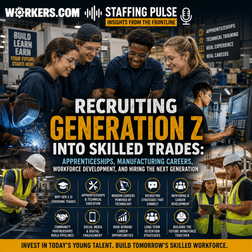
Recruiting Generation Z Into Skilled Trades: Apprenticeships, Manufacturing Careers, Workforce Development, And Hiring The Next Generation
Generation Z is transforming the future of Skilled Trades, Manufacturing, Construction, Logistics, Engineering, and Industrial careers. More young professionals are choosing apprenticeships, technical education, workforce certifications, and hands-on training instead of following the traditional four-year college path. As experienced tradespeople retire and demand for skilled labor continues to grow, Employers are adapting their recruiting strategies to attract, develop, and retain the next generation of talent. In this episode of WORKERS.COM Staffing Pulse: Insights From The Frontline, we examine why Skilled Trades are becoming an increasingly attractive career choice for Generation Z and what Employers need to know to build a sustainable workforce for the years ahead. Through practical recruiting insights and real-world staffing experience, they discuss how Manufacturers, Construction companies, Logistics providers, Engineering firms, and Industrial Employers are strengthening talent pipelines through apprenticeships, technical schools, mentoring programs, career development, and modern recruiting practices. Topics covered include: • Why Generation Z is choosing Skilled Trades instead of traditional college pathways • The growing importance of apprenticeships, technical schools, trade programs, and workforce certifications • How modern Manufacturing and Industrial careers have evolved through technology and automation • Recruiting strategies that connect with Generation Z job seekers • Building an Employer brand that attracts younger talent • Using social media, digital communication, and faster hiring processes to improve recruiting success • The value of structured onboarding, mentoring, and career development • Building long-term workforce pipelines through Education and Community partnerships • Career opportunities across Manufacturing, Logistics, Construction, Engineering, Warehousing, Maintenance, and Skilled Trades • Practical retention strategies that help younger Employees build lasting careers Whether you're an Employer, HR Professional, Recruiter, Workforce Development Leader, Educator, Technical School Administrator, or a Job Seeker exploring high-demand careers, this episode provides actionable guidance for recruiting and developing the future Industrial workforce. Learn how organizations are creating stronger talent pipelines, improving hiring outcomes, supporting apprenticeships, and preparing the next generation of skilled professionals for long-term success. Subscribe to WORKERS.COM Staffing Pulse: Insights From The Frontline on your favorite podcast platform for practical discussions covering Staffing, Recruiting, Workforce Development, Hiring Trends, Skilled Trades, Manufacturing, Logistics, Engineering, Construction, HR, and the future of work. Visit WORKERS.COM to learn more about workforce solutions: 🏢 Employers: Find workforce solutions at https://www.workers.com 👷 Job Seekers: Explore opportunities at https://jobs.workers.com 🌐 More Insights: https://www.workers.com/community
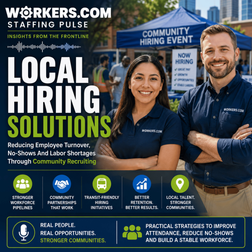
Local Hiring Solutions: Reducing Employee Turnover, No-Shows And Labor Shortages Through Community Recruiting
What if your strongest source of reliable talent already lives within your Community? In this episode of WORKERS.COM Staffing Pulse: Insights From The Frontline, we explore how Community-based recruiting and hyperlocal hiring strategies help Employers reduce Employee turnover, improve attendance, decrease no-shows, shorten hiring timelines, and build stronger local workforce pipelines. Rather than relying solely on traditional recruiting methods, we examine how Neighborhood Hiring Hubs, Community partnerships, workforce development organizations, Community colleges, transit-friendly recruiting, and localized hiring initiatives connect Employers with dependable candidates who are more likely to remain with the organization long term. We share practical recruiting strategies drawn from real workforce challenges across Manufacturing, Warehousing, Retail Distribution, Food Production, Logistics, Construction Support, and Skilled Trades. You'll learn how Community recruiting improves workforce accessibility, creates stronger candidate engagement, and produces measurable improvements in Employee retention while reducing hiring costs and operational disruption. Topics covered include: • Community-based recruiting strategies • Hyperlocal hiring programs • Neighborhood Hiring Hubs • Reducing Employee no-shows • Improving attendance and workforce reliability • Employee retention strategies • Workforce accessibility initiatives • Transit-friendly hiring programs • Pop-up hiring events • On-the-spot interviews and accelerated hiring • Community college recruiting partnerships • Workforce development organizations • Local talent pipeline development • Employer and Community partnerships • Warehouse recruiting strategies • Manufacturing hiring solutions • Retail Distribution workforce planning • Food Production recruiting • Skilled Trades recruiting • Workforce planning and recruiting ROI • Measuring hiring performance and retention Whether you're an Operations Manager, HR Professional, Plant Manager, Warehouse Manager, Distribution Manager, Manufacturing Leader, Business Owner, or Staffing Professional, this episode provides practical ideas that help strengthen workforce stability without requiring significant infrastructure investments. For Job Seekers, we explain how localized recruiting programs create faster access to employment opportunities through Community hiring events, workforce development partnerships, direct access to recruiters, and streamlined hiring processes that lead to careers in Manufacturing, Warehousing, Logistics, Retail Distribution, Construction, and Skilled Trades. If you're looking for practical staffing strategies that improve retention, reduce labor shortages, and build stronger local hiring networks, this episode offers actionable guidance you can begin applying immediately. Employers: https://www.workers.com Search Jobs: https://jobs.workers.com Community Resources and Podcast: https://www.workers.com/community Subscribe to WORKERS.COM Staffing Pulse: Insights From The Frontline for practical conversations about staffing, recruiting, workforce development, hiring trends, Employee retention, and workforce planning for today's industrial Employers.
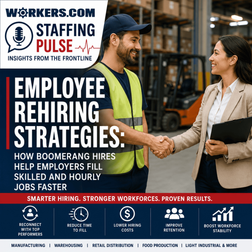
Employee Rehiring Strategies: How Boomerang Hires Help Employers Fill Skilled And Hourly Jobs Faster
What if one of your strongest recruiting sources is made up of people who have already succeeded with your organization? In this episode of WORKERS.COM Staffing Pulse: Insights From The Frontline, we explore how Employers build successful boomerang hiring programs by reconnecting with former Employees who already understand company culture, workplace safety, operational expectations, and job responsibilities. A structured Employee rehiring strategy helps Employers reduce recruiting costs, shorten time-to-fill, improve workforce quality, strengthen retention, and respond faster to labor shortages. Instead of starting every hiring cycle from scratch, organizations build long-term talent pipelines by maintaining relationships with proven performers. Whether you manage a Manufacturing facility, Warehouse, Retail Distribution Center, Food Production operation, or Light Industrial workforce, this episode provides practical guidance for HR leaders, Recruiters, Operations Managers, Plant Managers, Warehouse Managers, Production Supervisors, Workforce Planners, and Business Owners looking to improve hiring speed and workforce stability. Topics covered include: • What is a Boomerang Employee? • Benefits of rehiring former Employees • Building a successful Employee alumni recruiting program • Reducing recruiting costs and hiring expenses • Improving time-to-fill and time-to-productivity • Workforce planning strategies for skilled and hourly jobs • Employee retention and workforce stability • Re-engaging former Employees through effective outreach • Streamlining onboarding for returning workers • Skills verification and workforce readiness • Compensation, benefits, and return-to-work conversations • Reducing mis-hires through proven performance history • Measuring ROI for Employee rehiring programs • Best practices for Warehousing, Manufacturing, Retail Distribution, and Food Production Employers • Career advice for Job Seekers considering returning to a previous Employer Throughout the discussion, we share practical staffing insights, real-world workforce examples, and proven recruiting strategies that help Employers strengthen hiring outcomes while creating better opportunities for returning Employees. Whether you're facing labor shortages, seasonal hiring demands, high turnover, or increasing recruiting costs, this episode explains why former Employees often represent one of the most valuable and underused talent pools available. If you're an Employer seeking experienced staffing, recruiting, workforce planning, or direct hire solutions, visit WORKERS.COM If you're searching for your next career opportunity, visit https://jobs.workers.com Subscribe to WORKERS.COM Staffing Pulse: Insights From The Frontline on your favorite podcast platform and stay informed with practical staffing strategies, recruiting trends, workforce planning insights, and career advice for today's Employers and Job Seekers.
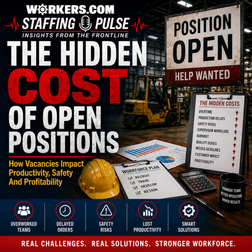
The Hidden Cost Of Open Positions: How Vacancies Impact Productivity, Safety And Profitability
Every open position costs more than an hourly wage. When critical roles remain unfilled, the impact spreads throughout an organization. Overtime increases. Production slows. Supervisors become overloaded. Employee burnout grows. Quality suffers. Customer deadlines become harder to meet. Safety risks increase. Many of these hidden costs never appear as a single line item, yet they affect profitability, operational performance, and long-term workforce stability. In this episode of WORKERS.COM Staffing Pulse: Insights From The Frontline, we examine the true operational cost of workforce vacancies and explain why delaying a hire often costs more than Employers expect. Drawing on real-world staffing experience, we discuss how open positions affect Manufacturing, Warehousing, Logistics, Distribution, Skilled Trades, Engineering, Construction Support, Maritime, and Industrial Operations. The conversation provides practical guidance for Operations Managers, Plant Managers, HR Professionals, Production Managers, Warehouse Managers, Business Owners, and anyone responsible for workforce planning. Topics covered include: • Calculating the true cost of open positions • Overtime costs and workforce fatigue • Production bottlenecks and reduced productivity • Supervisor workload and leadership capacity • Employee burnout and retention challenges • Safety risks associated with understaffed operations • Quality control and costly rework • Customer service impacts and missed delivery deadlines • Preventive maintenance delays • Workforce planning and succession strategies • Cross-training and operational resilience • Prioritizing high-impact hiring decisions • Measuring the return on strategic staffing investments Whether your organization is struggling to fill Skilled Trades positions, Warehouse jobs, Manufacturing roles, Maintenance Technicians, Logistics professionals, or other Industrial positions, this episode provides practical strategies to evaluate the operational impact of every vacancy before hidden costs begin affecting your business. Learn how proactive workforce planning, strategic recruiting, and effective staffing partnerships help reduce overtime, improve productivity, strengthen Employee retention, and support safer, more efficient operations. If this episode helps you move forward - whether you're hiring or job seeking - be sure to Follow and/or Subscribe, leave a Review, drop a Rating, Like the video and Share it with your network. 🏢 Employers: Find workforce solutions at https://www.workers.com 👷 Job Seekers: Explore opportunities at https://jobs.workers.com 🌐 More Insights: https://www.workers.com/community/
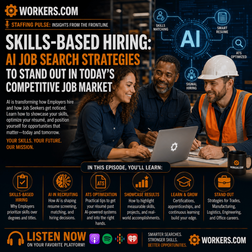
Skills-Based Hiring: AI Job Search Strategies To Stand Out In Today's Competitive Job Market
The job market is evolving rapidly, and standing out requires more than just a polished résumé. In this episode of WORKERS.COM Staffing Pulse: Insights From The Frontline, we explore how artificial intelligence is transforming the hiring process, why Employers are shifting toward skills-based hiring, and what today's Job Seekers can do to gain a competitive edge. Discover how Employers are moving beyond traditional credentials like job titles and degrees to focus on real-world skills, certifications, accomplishments, and measurable results. Learn practical AI job search strategies, how to optimize your resume for both recruiters and applicant tracking systems (ATS), and why demonstrating your capabilities is becoming more important than ever. We'll also examine the growing role of "signal hiring," how AI influences hiring decisions, and proven ways to showcase your value through certifications, projects, hands-on experience, and continuous learning. Whether you're searching for your first opportunity, advancing your career, or transitioning into a new role, this episode provides actionable advice to help you compete in today's changing workforce. Topics covered include: • What skills-based hiring means and why it's replacing credential-based hiring • How AI is changing recruiting, resume screening, and job searches • Strategies to optimize your resume for ATS and AI-powered hiring systems • How to demonstrate measurable skills and accomplishments • Understanding signal hiring and how to overcome it • The importance of certifications, apprenticeships, and continuous learning • Building a competitive advantage through technical and soft skills • Practical job search tips for Skilled Trades, Manufacturing, Logistics, Engineering, and Light Industrial careers Whether you're a Warehouse Associate, Maintenance Technician, Welder, Electrician, Machine Operator, Engineer, Office Professional, or Skilled Trades worker, these strategies can help you stand out and position yourself for long-term career success. If you found this episode valuable - whether you're hiring or job seeking - be sure to Follow and/or Subscribe, leave a Review, drop a Rating, Like the video and Share it with your network to help others navigate today's evolving job market. 🏢 Employers: Find workforce solutions at https://www.workers.com 👷 Job Seekers: Explore opportunities at https://jobs.workers.com 🌐 More Insights: https://www.workers.com/community/
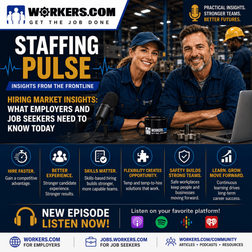
Hiring Market Insights: What Employers And Job Seekers Need To Know Today
Every hiring market leaves behind valuable lessons for Employers and Job Seekers - but not all of those lessons appear in labor market reports or industry headlines. In this episode of WORKERS.COM Staffing Pulse: Insights From The Frontline, we share practical recruiting observations drawn from decades of staffing experience across Manufacturing, Warehouse Operations, Logistics, Construction, Engineering, Skilled Trades, Transportation, Office Support, and other industries. The conversation explores why hiring speed has become a competitive advantage, how candidate experience influences recruiting success, why communication matters throughout the hiring process, and why Employers increasingly value adaptability, professionalism, continuous learning, and workplace safety alongside technical skills. Whether you're building a stronger workforce or planning your next career move, you'll gain practical strategies for navigating today's labor market with greater confidence. In this episode, you'll learn: • Why hiring speed affects recruiting success • How candidate experience shapes employer reputation • The growing importance of skills-based hiring • Why professionalism still differentiates top candidates • How temporary and temp-to-hire staffing create opportunities • Why workplace safety contributes to long-term success • How continuous learning supports career growth • Practical recruiting and workforce planning insights for Employers • Career advice for Job Seekers navigating today's hiring market If you're an Employer looking to improve recruiting, reduce time-to-fill, strengthen retention, or build a more resilient workforce, this episode provides actionable insights you can begin applying immediately. If you're a Job Seeker looking to stand out in a competitive hiring market, you'll discover practical ways to improve your job search, strengthen your professional reputation, and position yourself for long-term career success. If you found this episode valuable - whether you're Hiring or Job Seeking - be sure to Follow and/or Subscribe, leave a Review, drop a Rating, Like the video and Share it with your network to help others navigate today's evolving job market. 🏢 Employers: Find workforce solutions at https://www.workers.com 👷 Job Seekers: Explore opportunities at https://jobs.workers.com 🌐 More Insights: https://www.workers.com/community WORKERS.COM Staffing Pulse: Insights From The Frontline delivers practical hiring insights, workforce trends, career advice, and staffing expertise for Employers and Job Seekers across the United States.
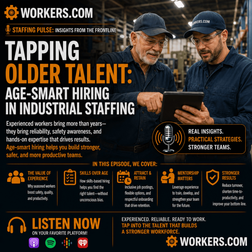
Tapping Older Talent: Age-Smart Hiring In Industrial Staffing
Experienced workers remain one of the most valuable - and often underutilized - talent pools in today's Industrial labor market. In this episode of WORKERS.COM Staffing Pulse: Insights From The Frontline, we explore how age-smart hiring strategies help employers tap into seasoned professionals who bring reliability, safety awareness, strong work ethics, and decades of practical experience to Manufacturing, Warehouse, Logistics, and Skilled Trades operations. As labor shortages continue across industrial sectors, many employers are rethinking how they evaluate talent. This episode explains why skills-based hiring, rather than assumptions tied to age, can help companies reduce turnover, shorten time-to-productivity, and build more stable, productive teams. Whether you're hiring Machinists, Welders, Maintenance Technicians, Forklift Operators, or Assembly workers, experienced talent can provide an immediate operational advantage. We also discuss practical strategies for attracting and retaining older workers, including inclusive job descriptions, recruiter training, flexible scheduling options, and onboarding practices that foster knowledge transfer and mentorship across generations. For Employers facing persistent labor shortages, age-smart hiring is more than a diversity initiative - it's a practical workforce strategy that strengthens productivity, safety, and retention. For Job Seekers with years of experience, this episode highlights why your skills, work ethic, and industry knowledge remain highly valuable in today's market. Listen now to discover how tapping older talent can help your organization build stronger teams and create a more resilient workforce. 🏢 Employers: https://www.workers.com 👷 Job Seekers: https://jobs.workers.com 🌐 Community: https://www.workers.com/community/
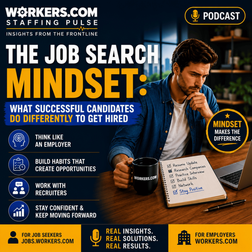
The Job Search Mindset: What Successful Candidates Do Differently To Get Hired
Searching for a new job can be challenging, especially when applications go unanswered, interviews don't lead to offers, or the hiring process takes longer than expected. While experience, skills, and qualifications are essential, your job search mindset can have a significant impact on how you approach opportunities, respond to setbacks, and present yourself to Employers. In this episode of WORKERS.COM Staffing Pulse: Insights From The Frontline, we explore the practical habits, professional behaviors, and career mindset that consistently set successful Job Seekers apart. Drawing on years of experience helping employers hire and placing candidates across Manufacturing, Warehouse Operations, Logistics, Skilled Trades, Engineering, Office Support, Construction, and other industries, we share real-world insights into what Employers notice and what successful candidates do differently throughout the hiring process. You'll learn why rejection doesn't always reflect your qualifications, how Employers make hiring decisions, why consistency often matters more than perfection, and how developing a structured, professional approach to your job search can improve both your confidence and your long-term career success. Whether you're entering the workforce, changing careers, returning after a layoff, seeking advancement, or simply looking for your next opportunity, this episode offers practical advice you can begin applying immediately. In this episode, you'll learn: • Why job searching can feel emotionally exhausting and how to stay focused and resilient. • The daily habits and routines successful Job Seekers consistently practice. • Why Employers don't always hire the "most qualified" candidate and what they actually look for. • How to think like an Employer during every stage of the hiring process. • How recruiters can help you uncover opportunities you might otherwise miss. • Why professionalism, communication, and preparation create long-term career advantages. • How to build confidence through consistent action instead of waiting for motivation. • Practical strategies to maintain momentum during a long job search. Whether you're searching for temporary work, a temp-to-hire opportunity, or a direct-hire position, this episode provides actionable guidance to help you navigate today's job market with confidence. If you found this episode valuable - whether you're Hiring or Job Seeking - be sure to Follow and/or Subscribe, leave a Review, drop a Rating, Like the video and Share it with your network to help others navigate today's evolving job market. 🏢 Employers: Find workforce solutions at https://www.workers.com 👷 Job Seekers: Explore opportunities at https://jobs.workers.com 🌐 More Insights: https://www.workers.com/community WORKERS.COM Staffing Pulse: Insights From The Frontline delivers practical hiring insights, workforce trends, career advice, and staffing expertise for Employers and Job Seekers across the United States.
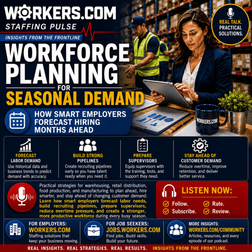
Workforce Planning For Seasonal Demand: How Smart Employers Forecast Hiring Months Ahead
Seasonal demand doesn't arrive without warning. The Employers who consistently meet production goals, maintain service levels, and reduce hiring pressure are the ones who begin workforce planning months before business reaches its busiest period. In this episode of WORKERS.COM Staffing Pulse: Insights From The Frontline, we discuss how Employers develop workforce forecasts, build recruiting pipelines, and prepare supervisors before seasonal hiring begins. Instead of reacting to labor shortages, they explain practical strategies that help organizations stay ahead of changing customer demand. Whether your business operates in Warehousing, Retail Distribution, Food Production, or Manufacturing, this episode explores how long-term workforce planning improves productivity, reduces overtime, strengthens employee retention, and creates a more predictable hiring process. Topics covered include: • Why workforce planning should begin months before peak season • Forecasting labor demand using historical business data • Building recruiting pipelines before hiring becomes urgent • Workforce planning strategies for warehousing operations • Seasonal staffing for retail distribution centers • Hiring plans for food production and processing facilities • Manufacturing workforce forecasting and production planning • Temporary staffing versus temp-to-hire strategies • Cross-training employees to improve workforce flexibility • Reducing overtime, fatigue, and burnout during busy seasons • Organizing onboarding for seasonal employees • Supporting supervisors during workforce expansion • Using workforce analytics to improve hiring decisions • Retaining seasonal employees for future hiring cycles • Common workforce planning mistakes and how to avoid them If your organization prepares for holiday fulfillment, production increases, inventory growth, customer demand, or recurring seasonal business cycles, this episode provides practical workforce planning strategies that help improve operational performance while creating a better experience for Employees and Managers. WORKERS.COM specializes in Staffing and Workforce Solutions for: • Warehousing • Manufacturing • Retail Distribution • Food production • Logistics • Skilled Trades • Construction • Maritime • Engineering • Office and Administrative 🏢 Employers: Find workforce solutions at https://www.workers.com 👷 Job Seekers: Explore opportunities at https://jobs.workers.com 🌐 More Insights: https://www.workers.com/community Subscribe to WORKERS.COM Staffing Pulse: Insights From The Frontline for practical discussions covering staffing strategies, hiring trends, workforce development, recruiting best practices, employee retention, industrial careers, and labor market insights for Employers and Job Seekers nationwide.
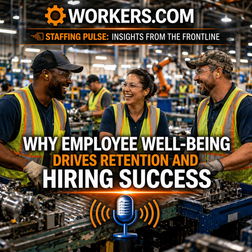
Why Employee Well-Being Drives Retention And Hiring Success
Employee well-being has become a critical driver of business performance, directly impacting retention, hiring success, and workforce productivity. In this episode of WORKERS.COM Staffing Pulse - Insights From The Frontline, we break down how companies that prioritize mental health, work-life balance, and supportive workplace cultures are gaining a competitive edge. When paired with flexible staffing strategies, these initiatives allow organizations to stay agile while creating environments where employees can perform at their best. The financial impact of well-being is clear. Replacing an employee can cost six to nine months of their salary, making retention a top priority for any employer. Organizations that invest in well-being programs - such as Employee Assistance Programs, flexible scheduling, and stress management resources - see reduced turnover and stronger employee loyalty. At the same time, these companies attract higher-quality candidates who are actively seeking employers that value long-term career sustainability and personal well-being. Ultimately, employee well-being is not a soft benefit - it's a strategic investment with measurable ROI. Businesses that combine well-being initiatives with flexible staffing models can respond faster to workforce demands, improve hiring outcomes, and build more resilient teams. The result is a more engaged workforce, faster time-to-productivity, and a stronger foundation for long-term growth. If this episode helps you move forward - whether you're hiring or job seeking - be sure to Follow and/or Subscribe to the podcast, leave a Review, drop a Rating, Like the video and Share it with your network.
1 de 7