Welcome to Road Life Hub: Real Life, Freedom, and Resources for Vehicle Dwellers

Welcome to Road Life Hub: Real Life, Freedom, and Resources for Vehicle Dwellers

por Linda Bryant
Temporada 1
No Kitchen? How to Use a Food Pantry When You Live in Your Vehicle
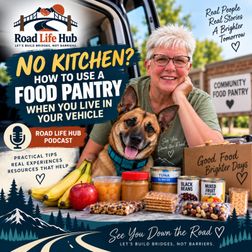
What happens when you need food assistance, but you live in a vehicle without a refrigerator, stove, or microwave? In this episode of Road Life Hub, I share an experience I had while traveling through a small town in Michigan. It took hours and several phone calls to find a food shelf that would help me because I wasn't a resident of the county. When I finally found a church that could, I explained that I lived in my car and needed food that didn't require cooking or refrigeration. They listened—and they worked hard to make sure the food they gave me was food I could actually use. That experience taught me a lesson I've carried with me ever since: sometimes all you have to do is ask. We'll talk about how to explain your needs to a food pantry, residency restrictions that travelers may encounter, client-choice pantries, foods that work well without a kitchen, package sizes and refrigeration after opening, and other options for finding ready-to-eat meals. Most food assistance programs weren't created specifically for people living in vehicles. That doesn't necessarily mean they can't help. Sometimes we need to explain what our lives actually look like and give people the opportunity to accommodate us. If you're living in a car, van, truck, or RV—or you work with people who are—this episode offers practical ways to make food assistance more useful for life on the road. Road Life Hub — Let’s build bridges, not barriers.
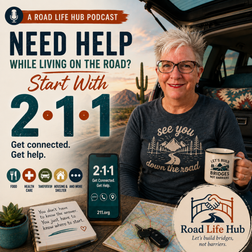
Need Help While Living on the Road? Start With 211
Living in a vehicle means you may need help in a community where you don’t know anyone—or even know which local organizations to call. In this episode of Road Life Hub, I’m talking about 211, a nationwide network that can help connect you with local health and human services. The real value for vehicle residents is simple: you don’t have to know which organization you need. You just need to know where to start. We’ll talk about how 211 works, what to tell them when you’re traveling, why it’s important to explain that you live in your vehicle, and what 211 can—and can’t—do for you. 📞 Dial 2-1-1 🌐 211.org I’ll also explain why 211 is an important part of the National Vehicle Life Resource Handbook I’m building through Road Life Hub. The goal isn’t just to collect resources—it’s to help vehicle residents learn how to find the right help wherever the road takes them. Read the accompanying Road Life Hub article: https://www.roadlifehub.com/post/living-in-your-vehicle-and-need-help-start-with-211 Visit Road Life Hub: roadlifehub.com Sometimes you don’t need to know the answer. You just need to know where to start. Let’s build bridges, not barriers. I’ll see you down the road.
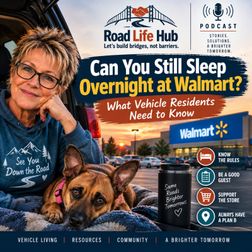
Can You Still Sleep Overnight at Walmart? What Vehicle Residents Need to Know
For decades, Walmart parking lots have been a familiar overnight stop for RVers, van lifers, car dwellers, and other people traveling or living in vehicles. But despite what you may have heard, not every Walmart allows overnight stays. In this episode of the Road Life Hub podcast, Ruby looks at how Walmart overnight parking actually works, why policies can vary from one location to another, and why a report from another traveler doesn't necessarily mean you have permission to stay tonight. We’ll also talk about the important difference between parking and camping, why our behavior can affect whether these free overnight options remain available, and what to do if you're asked to move along. You'll learn why it's smart to:• Check posted signs and ask when you're unsure• Treat private property with respect• Keep your overnight footprint small• Support the business when you can• Always have a Plan B Walmart can still be a valuable resource for vehicle residents, but it belongs in your toolbox of overnight options—not as your only option. The places we depend on along the road often exist because someone has chosen to extend a little hospitality. How we use those spaces today can help determine whether they're available for the person who arrives tomorrow. 🌐 Road Life Hub: www.roadlifehub.com 📝 Read the accompanying blog post: https://www.roadlifehub.com/post/can-you-still-sleep-overnight-at-walmart-what-vehicle-residents-need-to-know 🎥 Watch the video: https://youtu.be/nHbCmJshMgg?si=1Bzw_r4_C-GN4mV8 Let’s build bridges, not barriers. Road Life Hub — stories and solutions that matter to vehicle residents.
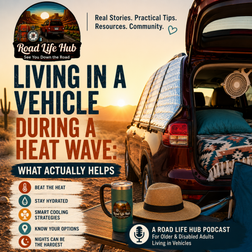
Living in a Vehicle During a Heat Wave: What Actually Helps
Extreme heat is one of the hardest parts of living in a vehicle, especially when the heat does not let up at night. In this episode, I share what it was like living in my Kia Sorento during a stretch of extreme heat and humidity while work camping in western New York. I talk about the tools and habits that helped me cope, including shade, Aluminet, fans, water, wet towels, ventilation, and paying attention to when the heat was becoming more than just uncomfortable. This episode is not about pretending vehicle life is easy. It is about being realistic, planning ahead, and knowing when fans and shade are not enough. I also talk about the importance of having a cooling plan, watching overnight temperatures, staying hydrated, protecting medications from heat, and finding places where you can safely cool down before you are in trouble. For older adults, disabled vehicle dwellers, and anyone living on the road, extreme weather is not just an inconvenience. It can become a safety issue quickly. Read the companion blog post at Road Life Hub: https://www.roadlifehub.com Road Life Hub shares real stories, practical information, and resources for older and disabled adults living in vehicles, along with information for service providers and organizations that want to better understand and support this community.
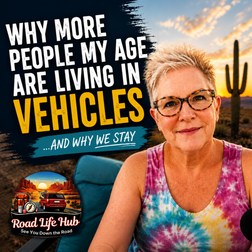
Why More People My Age Are Living in Vehicles—and Why We Stay
More people in their 50s, 60s, and beyond are choosing—or being pushed toward—life in cars, vans, SUVs, and RVs. But the reasons are more complicated than rising housing costs or a desire to travel. In this episode, I talk about why people my age are moving into vehicles, what life on the road really offers, and why many of us stay even when we have other options. For some, it starts with financial pressure. For others, it is about freedom, independence, community, reinvention, or simply wanting a life that feels more alive. This is an honest look at aging, housing insecurity, vehicle dwelling, nomadic life, and the surprising reasons road life can become more than a temporary solution. Learn more at RoadLifeHub.com.
Why I Created Road Life Hub—and Who It’s Here to Help
Road Life Hub started with a simple realization: living in a vehicle can offer incredible freedom, but finding help when you need it can be surprisingly difficult. In this first episode, I introduce myself, share the idea behind Road Life Hub, and explain why I believe older adults, disabled people, and others living on the road need better access to practical information, trusted resources, and organizations that understand the realities of vehicle dwelling. Road Life Hub is being built as a bridge between people living in vehicles and the services, information, and communities that can help them stay safer, healthier, and more independent. Along the way, we’ll talk honestly about road life—the freedom and adventure, but also the challenges of healthcare, benefits, extreme weather, finding resources, aging on the road, and navigating systems that were not designed with mobile people in mind. This is the beginning of Road Life Hub, and I’m glad you’re here. Learn more at www.roadlifehub.com