UUMUAC (You Me Act): The Unitarian Universalist Multiracial Unity Action Council

UUMUAC (You Me Act): The Unitarian Universalist Multiracial Unity Action Council

por Barbara Jean Walsh
Temporada 2

"I may not get there with you": Last Words (Campbell, Dec 2022)

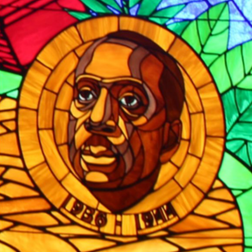
This archival episode from 2022 features UUMUAC founder Rev. Dr. Finley C. Campbell, introduced warmly by Rev. Richard Trudeau. Trudeau begins by situating Campbell within the long Universalist tradition of honoring senior clergy, noting that Campbell—scholar, minister, activist, and teacher—has become a beloved figure in that lineage. Campbell’s academic path, from Morehouse to Atlanta University to his 1969 University of Chicago PhD, is highlighted alongside his decades of teaching literature, composition, and Black studies. Listeners will hear Campbell sing several hymns with new lyrics he wrote specifically for this service, including “Oh, Freedom’s One Foundation Is Multiracial Unity.” The text shows him explaining that he rewrote traditional Christian hymns to better reflect a broad-based, multiracial UU faith. One example captures his approach when he sings, “Oh, freedom’s one foundation / Is multiracial unity / It is the power of struggle / For bright equality.” The heart of the episode is Campbell’s farewell homily as a racial‑justice activist, delivered on the winter solstice. He describes his theological stance—“Marxist‑Leninist historical theism”—and uses the symbolism of the darkest night of the year to reflect on global suffering, hope, and the ongoing struggle for justice. He weaves biblical narrative, political critique, and social analysis into a meditation on light persisting through darkness. Campbell then offers a sweeping autobiographical sermon recounting his five decades of activism, beginning with the night of Dr. King’s assassination in 1968. He describes organizing biracial responses in Atlanta, building Black student unions and John Brown Societies in Indiana, confronting academic racism in the 1970s, and later challenging what he saw as neo‑racist trends within Unitarian Universalism. His narrative emphasizes a lifelong commitment to building organizations rather than momentary movements. The episode closes with Campbell’s reflection on UUMUAC itself—its endurance, its mission, and its potential. He celebrates the organization’s growth, its journal The MAC Arrow, its new leadership, and its role in sustaining multiracial UU values. In his final words as an activist, he passes the torch to future organizers, urging them to “build nuclei” and continue the work he began.

Cat Got the String (Belcher, Sept 2026)

Rev. Denise Tracy opens the episode by introducing Rev. EmmyLou Belcher, reflecting on their decades‑long friendship and EmmyLou’s remarkable record of revitalizing congregations in Detroit, Traverse City, and Naperville. After lighting a chalice, EmmyLou begins with an evocative reading from Simple Morning Light, using the myth of the “miraculous pitcher” to explore the idea that spiritual resources—unlike material ones—are never truly depleted. As she reads, she quotes lines such as, “No matter how often they pour from the pitcher, it is always full,” and “In the realm of the Spirit, there is no such thing as a non‑renewable resource.” These passages set the stage for her central message: that fear, scarcity, and exhaustion often cloud our perception, but generosity and courage replenish the spirit. From there, EmmyLou shifts to the present moment, describing the feeling that “the cat has gotten the yarn that used to be my world,” a metaphor for political turmoil and social fragmentation. She recalls earlier decades in liberal religious life—debates about humanism and theism, expanding equality, speaking truth to power—and contrasts them with today’s climate of control, division, and shrinking public voice. Yet she insists that despair is not the answer. Instead, she urges listeners to “show up,” drawing inspiration from a trans speaker in her Traverse City congregation who emphasized that presence—not just words—is the most powerful form of solidarity. EmmyLou deepens this theme by sharing stories of people who embodied courage and moral clarity: civil rights workers in the 1950s, Paul McCartney’s “Blackbird” as a symbol of resilience, and Jewish writer Peter Beinart’s call for equality as the only path to lasting safety. She also recounts a moving documentary about Japanese American internment, where families survived through mutual aid—sharing clothing, planting gardens, caring for the sick, and building community despite scarcity. “They tended to the needs of everyone, regardless of what their social status… had been before the camps,” she notes, highlighting how communal care becomes a lifeline in times of crisis. The sermon turns toward practical action as EmmyLou describes congregations that model hands‑on justice, such as Third Unitarian Church of Chicago, which created raised‑bed gardens to combat food deserts and share fresh produce with neighbors. She imagines taking the “shredded yarn” of our current world and spinning it anew—knitting a garment “for the whole of the earth.” Her vision is radically inclusive: “If you’re a human, you are welcome… to sing together, to spend together, to water what we must have, and be humans together.” She calls for a faith practice rooted not in separation or superiority, but in shared humanity and mutual nourishment. Rev. Tracy closes the episode by affirming EmmyLou’s message, offering her own story about kindness transforming a life, and reminding listeners that small acts—smiling at teens, greeting strangers, building welcoming ministries—can ripple outward in powerful ways. The conversation ends warmly, with gratitude, gentle humor about knitting and cats, and an invitation for congregations and individuals alike to cultivate ministries that welcome, empower, and connect.

Beyond Words: Seeing Beyond Our Assumptions and Learning to See to the Heart of Life (Tracy, Aug 2026)

The sermon, delivered by the Reverend Denise Tracy for UUMUAC’s August Vespers service, centers on the theme “Beyond Words: Seeing Beyond Our Assumptions and Learning to See to the Heart of Life.” Tracy begins by situating her own life story: growing up in an all‑white town, entering ministry as one of the earliest women in UU leadership, and learning—through adoption, community work, and personal relationships—to see human complexity beyond surface differences. As she says, “My church taught me to see beyond color. Adopting brown children opened my heart, mind, and life and faith to understand a unity and complexity beyond words.” Her biography frames the sermon’s central message: that genuine human connection is a spiritual practice. She illustrates this message through vivid stories about her father, a man whose curiosity and openness allowed him to connect with anyone. Tracy recounts a moment on a tourist bus when her father sat beside a young African American woman and asked about her cornrows. His sincere interest led to a warm conversation that crossed racial and generational lines. She also describes how he welcomed Mormon missionaries, housed international visitors, and befriended people others overlooked—including a minister with no arms who ate at their dinner table using utensils held between his toes. These stories demonstrate how small acts of curiosity and respect can dissolve barriers and create trust. Tracy then reflects on her own childhood experiences of diversity, despite living in a racially homogeneous town. Her Native American grandmother taught her traditional plant knowledge, and a church camp experience introduced her to Black peers whose lives were shaped by segregation just five miles away. These early encounters taught her to “go sit with people who are the most unlike you,” to ask questions, and to “see with the heart.” She connects these lessons to her later ministry, where welcoming diverse families and community groups helped her first congregation flourish. A major portion of the sermon recounts the adoption of her daughters from Thailand, including the painful history of DDT exposure that left thousands of Thai children disabled. Tracy describes the prejudice these children faced and the courage of her daughter, adopted at age fourteen, who rebuilt her life in the United States. Decades later, Tracy brought her daughter and grandchildren back to Thailand, where the orphanage staff—still working after 36 years—received her daughter as a “living goddess,” a testament to their work and to the power of human connection across cultures, disabilities, and histories of harm. In closing, Tracy affirms that overcoming racism and building unity require openness, listening, and a willingness to cross boundaries. She praises UUMUAC for fostering community through relationship‑building and trust. The sermon ends with a ritual invitation to imagine holding a chalice flame and to carry that flame inward as a symbol of ongoing commitment to justice, love, and human connection. As she concludes, “Sometimes the smallest action, the smallest kindness can save the world, one person or one situation at a time.”

Who Harms? Exploring theologies of sin and redemption (July 2026)

Senje Wekoye SarahRuth Hodgkinson Davis explores the question “Who harms?” by weaving together scripture, Universalist theology, and contemporary reflections on human behavior. She opens with Hosea Ballou’s A Treatise on Atonement, using his imagery of rivers flowing toward the ocean to illustrate how human experiences—stained by “various mines and soils through which they pass”—ultimately return to a larger wholeness. She pairs this with the familiar passage from Matthew 25, reminding listeners that acts of compassion toward “the least of these” are acts of sacred solidarity. From there, she turns to the lived reality of harm: its causes, its consequences, and its universality. She emphasizes that harm is not abstract but tangible—“the harm to that earthworm is real,” she notes, and so is the harm caused by environmental destruction. Yet she also insists that every person is both a giver and receiver of harm, and simultaneously capable of repair. This duality echoes Ballou’s striking self‑description: “I am impure and yet I am pure… I am a vessel of dishonor and yet I am a vessel of glory.” Davis then expands the conversation by drawing on Christian Picciolini’s Breaking Hate, highlighting how extremist ideologies often emerge from personal brokenness rather than innate malice. She quotes Picciolini’s insight that beneath the “protective armor of hate is a fractured human who is wearing it to mask their agony, shame, and fear.” This becomes a bridge into a broader anthropological reflection, referencing Yuval Noah Harari’s Sapiens to show how human migration carried spiritual ideas across continents, shaping diverse traditions of understanding harm and restoration. A major portion of her talk surveys nine religious and cultural frameworks for interpreting wrongdoing, suffering, and redemption—from Buddhism’s focus on ignorance and craving, to Hinduism’s karma, to Confucian virtue ethics, Luhya ancestral harmony, Abrahamic teachings on sin and repentance, Taoist balance, Indigenous American relationality, Wiccan ethical responsibility, Humanist self‑actualization, and Universalist love. She invites listeners to “look for the similarities, look for the threads,” noting how traditions variously locate harm in disobedience, ignorance, or disharmony, and how they envision restoration through grace, transformation, ritual, ethical living, or communal repair. She concludes by grounding these ideas in ethical responsibility and communal faithfulness. Drawing on African theologian Mercy Amba Oduyoye and writer Parker J. Palmer, Davis emphasizes our interconnectedness with creation and our obligation to sustain life, justice, mercy, and courage. Redemption, she reminds us, begins “whenever we choose to restore one another rather than abandon one another.” She closes with a tender scriptural blessing—“Arise, my darling, my beautiful one”—inviting listeners to hear their own belovedness and to carry that awareness into the work of healing harm. If you want, I can also create: a shorter one‑paragraph version for the podcast site, a title and subtitle, or a printable handout summary for your workshop binder.

The God of Hope, Change, and Becoming (Monroe, May 2026)

Note: Featuring Dr. Xavier J. Monroe, this podcast episode is an edited version of a UUMUAC Vesper Service conducted via Zoom in May 2006, and then uploaded to the UUMUAC Third Wednesdays channel on YouTube. If you want to hear the full presentation, including music, and comments, please check it out there. https://www.youtube.com/watch?v=6ZqFH-Pse3o In this episode, "The God of Hope and Becoming," Dr. Xavier J. Monroe leads a reflection on faith, hope, and social transformation. Drawing from scripture, philosophy, and personal stories from a live audience, Dr. Monroe explores what it means to believe change is possible — even amid uncertainty, polarization, and exhaustion. The conversation weaves together the Exodus story, teachings from Buddhism, Islam, and Christianity, and honest audience reflections on when they last changed their minds about something important. The episode closes with a meditation on the "politics of becoming" and a reflection on Robert Frost's notion of the open-minded liberal. Dr. Monroe is an educator, policy leader, and community-rooted advocate working at the intersection of science, technology, and . He currently serves as a science and technology fellow at the National Science Foundation, where his work focuses on artificial intelligence, workforce development, and the impacts of emerging technology. I'll leave any other comments on himself and his background to him. Here, Dr. Monroe will ask that question, what if God is not a fixed answer, but an invitation to hope, to change, and to act. His reflection will explore, as he puts it, a living understanding of the divine as a force that calls us toward transformation within ourselves and in the world around us, as found in many faith traditions.
Revolutions Yesterday and Today (Holcomb, June 2026)

Anne Holcomb begins by invoking Frederick Douglass’s famous Fourth of July speech to expose the gap between America’s ideals and its historical realities. Douglass’s words highlight how liberty and justice were long reserved for some while denied to others, setting the stage for Holcomb’s central theme: the United States has always wrestled with contradictions between its revolutionary rhetoric and its exclusionary practices. She then traces the American tradition of toppling statues—from the 1776 destruction of King George III’s monument to the recent removal of Confederate, colonial, and Trump-related statues. These symbolic acts, she argues, reflect a recurring struggle over power, memory, and national identity. Holcomb contrasts this with Donald Trump’s self‑celebratory displays, including a massive 2025 military parade, which sparked the nationwide “No Kings” protests. With millions participating, these demonstrations surpassed Revolutionary War mobilization and signaled a modern rejection of authoritarianism. Holcomb examines whether the American Revolution was truly revolutionary. Some historians argue it preserved existing hierarchies—slavery persisted, women remained disenfranchised, and Indigenous peoples faced dispossession. Others contend it met the criteria of a revolution through its ideological vision and institutional transformation. Holcomb emphasizes the deep contradictions of the era: founders who preached equality while owning enslaved people, religious rhetoric used to justify both liberty and oppression, and educational institutions like the Bray School that simultaneously taught literacy and reinforced racial hierarchy. Turning to the present, Holcomb argues that a “revolution of sorts” is already underway—marked by rising authoritarianism, harmful legislation, and the normalization of cruelty. She cites contemporary voices warning that compassion is being reframed as extremism and that indifference enables injustice. Yet she insists that resistance begins with small, deliberate acts: caring, learning, speaking truth, repairing harm, and standing in solidarity. These, she says, are the sparks that ignite meaningful change. Holcomb closes with Alexander Hamilton’s warnings about demagogues who manipulate public fears and the dangers of collapsing the separation of powers. She reminds readers that the Constitution ultimately places responsibility in the hands of the people. In her view, the true revolution is the ongoing effort to align American governance with its professed ideals—and the willingness of ordinary citizens to act when those ideals are threatened.

Dancing with the Panthers Part Two (Campbell and Rice, c2000)

Reverend Dr. Finley C. Campbell opens this segment by describing how the Indiana chapter of the Black Panther Party confronted the distorted public image that dominated local perceptions—an image of armed, threatening Black men shaped largely by media caricature. To counter this, the Panthers worked closely with Black student unions, insisting that these groups not isolate themselves on campus but instead engage openly with white students. Their goal was to humanize the movement, dismantle fear, and demonstrate that the Panthers were not anti‑white extremists but community‑oriented organizers. Campbell recounts taking Panthers into small Indiana towns and churches during his congressional run, where face‑to‑face encounters helped shift attitudes and reveal the Party’s actual commitments. Campbell and Dr. Jon Rice then address the proliferation of Panther‑inspired groups, including the White Panther Party and similar formations in the U.S. and abroad. These groups adopted the Panthers’ program wholesale, often as a form of solidarity or self‑defense in the face of police violence and political repression. The speakers contrast these organizations with the Weathermen, whose destructive tactics the Panthers rejected. Rice emphasizes that the Panthers operated under democratic centralism—members could debate policy, but once decisions were made, discipline and order were expected. Even the Party’s use of firearms was framed as political education about legal rights, not as preparation for armed conflict. The conversation turns to the impact of COINTELPRO. Campbell and Rice explain that once Panther leadership was jailed on fabricated charges, younger, less disciplined recruits were more easily provoked into armed confrontations with police—encounters the original leadership had deliberately avoided. This shift contributed to the Party’s vulnerability. The speakers also explore ideological influences, especially Malcolm X, whose later work encouraged cross‑racial alliances and a Marxist analysis. They distinguish the Panthers’ approach from the Nation of Islam, which many Panthers viewed as politically passive or aligned with establishment power, even as Rice acknowledges the personal guidance he received from individual Muslims during his youth. Religion more broadly played a complex role. Campbell describes how the Panthers in Indiana evaluated churches based on whether they supported community programs like free breakfasts. Ministers who embraced liberation theology were welcomed as allies, while those preaching passivity or personal enrichment were sharply criticized. The Party also grappled with internal issues, including sexism. Women leaders such as Roz Frazier pushed back against the expectation that female members serve primarily in support roles, insisting on full participation and equal respect within the movement. Finally, the speakers address membership expectations and the harsh realities of organizing in places like Chicago’s West Side, where police corruption, mafia influence, and political silence in the face of violence fueled radicalization. Rice recalls that joining the Panthers required both ideological commitment and personal courage, as members routinely faced threats from law enforcement and criminal networks. The assassination of local Black officials and the refusal of political leaders to speak out deepened the sense that revolutionary action was necessary. The segment closes with the reminder that these pressures shaped both the rise of the Party and the forces that ultimately contributed to its decline.

The Four Horsemen of Our Apocalypse

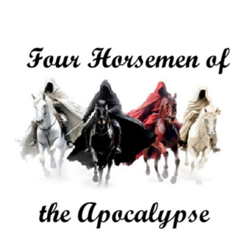
Rev. Jack Reich opens his sermon with Isaac Asimov’s reminder that “if knowledge can create problems, it is not through ignorance that we will solve them,” setting a tone rooted in evidence, clarity, and moral responsibility. He contrasts the everyday issues Americans believe are most urgent—rising costs, taxes, crime, immigration—with the deeper, structural crises that truly threaten our collective future. This mismatch between public perception and actual danger, he argues, undermines our ability to act effectively as citizens. Reich identifies four overarching crises: climate change, extreme inequality, pervasive violence, and the erosion of voting rights and democratic functioning. These are not isolated problems but interconnected systems shaping American life. Climate change threatens long‑term survival; inequality distorts democracy; violence saturates daily experience; and political division, fueled by defensiveness and misinformation, weakens the nation’s capacity to respond. As he notes, “a population that insists on believing in the facticity of fairy tales” becomes less capable of solving real‑world problems. A major theme of the sermon is the need to look beneath surface‑level symptoms to the underlying causes: failures in education, the decline of critical thinking, the rise of defensiveness, and the cultural elevation of belief over evidence. Reich critiques the ways religious certainty, anti‑intellectualism, and lack of discernment have made Americans vulnerable to manipulation and unable to confront hard truths. Rebuilding discernment—especially through early childhood reading, civic learning, and a renewed respect for science—is framed as essential to national survival. Reich also highlights the epidemic of loneliness and alienation in American society. He calls for rebuilding community life through new forms of gathering, honest conversation, and shared purpose. He urges listeners to imagine a society that invests in children, supports teachers, guarantees healthcare, rejects violence, and cultivates courageous dialogue about the future we want. Structural reforms—such as strengthening workers’ rights, addressing inequality at its roots, and recommitting to democratic participation—are presented as necessary steps toward renewal. In closing, Rev. Reich reframes the “Four Horses of Our Apocalypse” not as biblical omens but as modern forces—defensiveness, inequality, violence, and democratic decay—that threaten the nation’s moral and civic fabric. Yet his message remains hopeful: by confronting root causes, rebuilding community, and choosing evidence over illusion, Americans can still shape a just and sustainable future. The sermon invites listeners into a deeper conversation about responsibility, courage, and the work of collective repair.

Howard Thurman: Medicine for Our Times (Kennedy, 2022)

IA
This episode introduces listeners to the life and wisdom of Howard Thurman, the influential mystic, theologian, and spiritual guide whose work shaped generations of activists, including Martin Luther King Jr. Drawing from a 2022 video presentation by Rev. Dr. Mellen Kennedy, along with two excerpts from a 1976 PBS interview with Thurman, the episode highlights why his teachings remain “medicine for our times.” Rev. Kennedy opens with one of Thurman’s most beloved lines: “Don’t ask yourself what the world needs. Ask yourself what makes you come alive.” She situates her message within a larger interfaith project co‑hosted by the Springfield Vermont Universalist Meeting House and the Empowerment Center in Maryland—an effort to bring Thurman’s legacy to new audiences. Listeners first hear Thurman in his own voice. In the PBS interview, he recalls his childhood in Daytona Beach, where the ocean, night sky, and a sturdy backyard oak tree formed the foundation of his earliest religious experiences. Sitting with his back against the tree during storms, he learned that beneath life’s turbulence there is a deeper stability. Nature, he explains, taught him to speak aloud to God and to feel part of a “rhythmic flow of life.” Rev. Kennedy frames Thurman as a healer for three modern ailments: fear, environmental disconnection, and social divisiveness. She describes fear as a “second pandemic” that constricts our thinking and compassion. Thurman’s practices of silence, grounding, and communion with nature offer a path back to clarity and courage. Environmental crisis, she argues, stems from forgetting our place within the natural world. Thurman’s spirituality—rooted in direct experience of sky, sea, and earth—invites us to reconnect with the living world as a source of wisdom and belonging. The third ailment, divisiveness, is addressed through a second interview excerpt. Thurman explains that when one goes deeply inward, one “comes up inside every other living person.” True self‑knowledge reveals universal kinship. Rev. Kennedy connects this insight to Mother Teresa’s practice of seeing the divine “in all of his many disguises.” She also highlights the influence of Thurman’s grandmother, an enslaved African woman whose stories instilled in him a lifelong sense of dignity: “You are not slaves. You are a child of God.” This grounding enabled Thurman to resist fear and to become a spiritual anchor for the Civil Rights Movement. John Lewis called him a saint; King drew heavily from his teachings, especially on nonviolence. Rev. Kennedy closes by urging listeners to practice what Thurman lived: silence, rootedness, connection, and love. She quotes his reminder that we are living “where the old is breaking up and the new is being born”—a moment not for despair but for engagement. Thurman’s legacy calls us to become healing presences in a bruised and beautiful world.

The God-No-God Divide (Matthew Shear, March 2026)

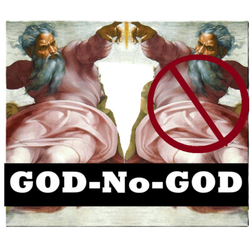
Rev. Dr. Matthew Shear’s presentation explores the long‑standing divide between those who believe in God and those who do not, beginning with the observation that people often mean very different things when they use the word God. As he notes, when asked whether he believes in God, he responds, “Tell me what you mean by God,” because most people describe not a biblical figure but “a spirit or a presence, something outside of and greater than themselves.” This divide, he argues, is no longer just theological but increasingly political, shaping how people perceive one another across social and ideological lines. To illuminate the complexity of the God–No‑God question, Shear draws on cultural and literary references. He reflects on the song “From a Distance,” which evokes what transcendentalist Theodore Parker called the “infinite God,” a perspective from which human differences diminish. He then turns to Isaac Asimov’s story “The Last Question,” summarizing its exploration of entropy and cosmic evolution. The story ends with the line “Let there be light and there was light,” prompting Shear to suggest that scientific and religious narratives may not be as incompatible as they seem—perhaps the Big Bang and creation stories are different expressions of the same mystery. Shear then situates the God–No‑God divide within a broader historical and cultural context. He traces how scientific advancement, humanism, and shifting religious identities have shaped Unitarian Universalism, sometimes pushing it toward defining itself by what it rejects rather than by a positive spiritual vision. He cites contemporary political commentary, including David French’s warning that “we have reached end‑stage polarization,” to show how religious identity and political identity have become entangled in ways that deepen division. To offer a path forward, Shear highlights the work of Krista Tippett, who emphasizes the importance of language, deep listening, and love as tools for navigating polarization. Tippett argues that “we are starved for fresh language to approach each other,” and that listening requires “a willingness to be surprised… and take in ambiguity.” She frames virtues as “spiritual technologies” that can help communities move beyond tribalism. Shear also discusses Amanda Montel’s analysis of cultish language and cognitive bias, noting how easily people can be drawn into rigid ideological groups—and how religious communities can instead cultivate “ritual time” that supports meaning without fanaticism. In closing, Shear argues that congregations have an opportunity to counteract polarization by fostering wisdom, transcendence, and spiritual practice rooted in compassion rather than dogma. As he puts it, “we can make the choice to turn away from… fanaticism and… practice speaking of a faith dedicated to becoming wise.” The presentation ultimately invites listeners to reconsider the God–No‑God divide not as a battleground but as a space for curiosity, humility, and shared human striving.
1 de 3