TYRANNUS HALL BIBLE COLLEGE(THBC)

TYRANNUS HALL BIBLE COLLEGE(THBC)
por TYRANNUS HALL BIBLE COLLEGE
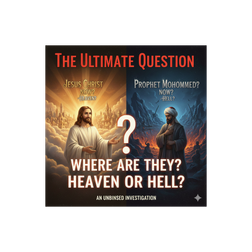
Jesus and Muhammad: Where are they? Heaven or Hell?

This text examines a theological debate regarding the contrasting statuses of Jesus and Muhammad within Islamic scripture and tradition. The author argues that the Quran portrays Jesus as being in a state of perfect peace with God on His throne, while Muhammad is shown expressing uncertainty about his own salvation and the afterlife. A central tension is highlighted between Quran 69:44-47, which warns that a false prophet’s aorta would be severed as divine punishment, and Hadith reports where Muhammad describes his death using that exact terminology. Furthermore, the source suggests that liturgical honors given to Jesus in Islam were later developments intended to distinguish Muslim reverence from Christian worship. Ultimately, the text uses these internal contradictions to challenge the prophetic legitimacy of Muhammad compared to the elevated position of Jesus.
Islamic Allegations Against the Bible: A Refutation

The source material offers a multifaceted Christian defense of the Bible's integrity against specific criticisms, primarily those leveled by Muslims based on the Qur'an. It initially addresses Islamic allegations of Bible corruption, arguing that, even if the Qur'an is taken as a foundation, it should support the Bible's status as the Word of God, and explains the historical and physical challenges of biblical transmission through ancient manuscripts. The text then systematically addresses perceived difficulties and contradictions in the Bible, such as textual variations and numerical discrepancies, attributing them to human error in copying and translation, before countering these arguments by presenting supporting evidence for the Bible's divine origin, focusing heavily on fulfilled prophecy, eyewitness accounts, and archaeological and historical confirmation. Finally, a significant section is dedicated to debunking the "Gospel of Barnabas," asserting it is a medieval forgery, citing both external and internal anachronistic evidence to invalidate its use as an anti-Christian argument.
Fearfully and Wonderfully Made: Evidence of a Creator

The presentation, titled "Answering Challenges 2," sets out to provide evidence for the existence of God by challenging evolutionary concepts and highlighting the complexity of biological life. It begins by addressing the origin of life, pointing out the intricacy of cells and DNA, before shifting to examine the human body’s remarkable design with numerous specific biological facts. A significant portion of the slides counters the evolutionary arguments concerning "junk DNA" and the widely cited similarity between human and chimpanzee DNA, citing research to suggest the genetic difference is much greater than often taught. Ultimately, the source promotes the belief that the sophisticated nature of biology, rather than being the product of a purely selective mechanism like natural selection, is evidence of an Intelligent Designer or Creator God, concluding that the detailed design of life rejects the theory of evolution.
Evolution, Mutations, and Intelligent Design
This presentation, titled "Are Apes and Humans Cousins," critiques the theory of evolution, specifically focusing on its claimed mechanisms and evidence. The slides repeatedly argue that mutations and natural selection cannot create new genetic information, citing multiple experts who assert that observed changes involve only a loss or rearrangement of existing data. Furthermore, the material challenges the commonly taught genetic similarity between humans and chimpanzees, claiming the actual difference is much greater than the publicized 1-2%. The presentation also attempts to discredit several key hominid fossils, such as Lucy and Ida, as misinterpreted evidence for human evolution. Ultimately, the source concludes that the educational system and media are promoting a false view of science, proposing a Christian education plan to equip young people with apologetics and critical thinking to defend a creationist worldview.
The Deity of Christ: Biblical Claims and Evidence
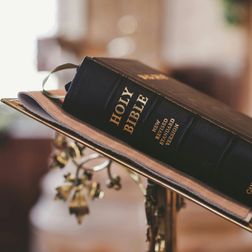
The provided slides offer an overview of the concept of the Deity of Christ, asserting that the Bible is the primary source for understanding Jesus's identity. The information presents evidence that Jesus made claims only God could make, such as the authority to forgive sins and being the final judge of human destiny. Furthermore, the slides emphasize that miracles, death, and resurrection substantiated Jesus’s divine claims, which were predicted and fulfilled. Ultimately, the text presents a choice to invite Christ into one's life by confessing him as Lord and believing in his resurrection, referencing the Holy Spirit as a teacher and stating that God judges based on one's decision concerning Jesus Christ.
The Trustworthiness of Scripture
The provided slides, titled "THE AUTHORITY OF SCRIPTURE," outline several lines of reasoning used to support the claim that the Bible is the Word of God and should be trusted. The presentation focuses on four key areas that give the scripture credibility: its amazing unity and preservation, the fulfillment of prophecies, mathematical evidence related to those predictions, and the evidence of the resurrection of Christ. The sources detail how the Bible was written over 1,500 years by forty authors but maintains a single theme, offering specific examples of prophecies and their fulfillments in the New Testament. Ultimately, the material concludes with a section prompting the viewer to make a personal decision about Christ, referencing several New Testament verses regarding faith and salvation.
Trinity, Incarnation, and Atonement: A Christian Response to Islamic Objections
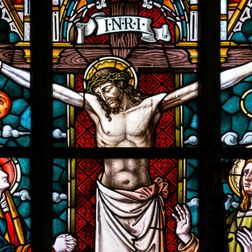
The source material presents a detailed theological comparison, focusing on the fundamental differences between Islamic and Christian beliefs concerning Jesus and the concept of salvation. It meticulously outlines four major Islamic objections derived from the Qur'an: the rejection of the Trinity, the denial of Jesus's divinity and Sonship, the assertion that the crucifixion did not occur, and the ethical dismissal of the Christian doctrine of atonement. The text then offers extensive Christian counter-arguments, using numerous Biblical citations to support the doctrines of the Triune God, the deity of Christ, the historical reality of the crucifixion, and the necessity of vicarious atonement for sin. Ultimately, the discussion highlights the core areas of contradiction, emphasizing the Christian view of Jesus's unique role as both fully God and fully man and the singular path to reconciliation with God.
Jesus: More Than Just a Great Man
The presented slides argue that Jesus is more than just a great man, challenging the idea that he was simply a moral teacher. The argument hinges on the assertion that, unlike other religious figures, Jesus fulfilled over 300 prophecies and claimed to be God, a declaration that led to attempts to stone him. The source explores the logical alternatives to his divine claim, suggesting that if his claims were false, he would have to be a liar or a lunatic, but dismisses these possibilities by noting his selfless character and balance. Ultimately, the text concludes that the only fitting explanation is that Jesus is Lord, leading to the necessity of either rejecting him or entering into a relationship with him for eternal life.
Beyond White: The True Origins and Inclusive Message of Christianity
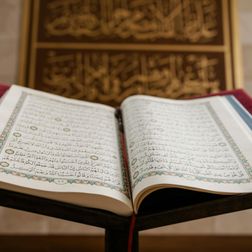
The text, titled "YOUR WHITE RELIGION," serves as a religious polemic against racial prejudice within the Christian church, arguing that faith in Jesus is meant for all nations and that God does not favor any single race. The source uses biblical passages and historical accounts to challenge the notion that Christianity originated in Europe or is exclusively a "white man's religion," highlighting that the faith began in Asia and spread to Africa before reaching Europe. A significant portion of the document is dedicated to showing that Jesus was a Jew, not a white man, and critiquing how European missionaries later conflated Christian faith with European customs, mistakenly contributing to the idea of a "white" Christianity. Ultimately, the text calls for repentance from racial hatred and prejudice in the church, emphasizing the necessity of spreading the original, unadulterated message of Jesus Christ to the world.
The Problem of Thirty Qurans
The provided text, a transcript from a YouTube video, challenges the common Muslim belief that the Quran has remained unchanged throughout history. It asserts that there are currently 30 official Arabic versions of the Quran, differing in words, verses, and meanings, with over 100,000 such variations existing. The source highlights that these different versions were created in various cities by individuals who prioritized their students memorizing their specific rendition. It explains that the "official" Huffs Quran, widely used today, was only standardized for Cairo in 1924, then for all of Egypt in 1936, and finally adopted globally by Saudi Arabia in 1985. The text emphasizes the difficulty this presents for Muslim scholars, as it contradicts the Quran's own claims of being eternally preserved and unaltered by man. Visit “Tyrannus Hall Bible College -” Use the FOLLOWING LINK: Tyrannus Hall Bible College(THBC): https://kk2020.store/shop/tyrannushallbiblecollege,
1 de 2