Thing4Things
por Zara Anishanslin and Joanna CohenTemporada 1
BUTTON
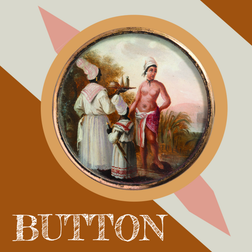
The Expert Guest for "BUTTON" was TK Smith The smallest thing we've looked at so far this season has a big story to tell. Little enough to fit in the palm of your hand, it transports us from Caribbean battlefields to a prison in France. Along the way, it tells us about the enduring power of portraits--especially for Black revolutionaries like the one who allegedly wore this BUTTON. TK Smith is an award-winning writer, curator, and cultural historian focused on modern and contemporary art. He has served as Curator of Arts of Africa and the African Diaspora at Emory University’s Michael C. Carlos Museum and as Assistant Curator at the Barnes Foundation. His research examines performance and identity in Black portraiture, asking how representation both reflects and constructs power. Smith is currently working in the History of American Civilization program at the University of Delaware on his dissertation, “Granite, Power, and Piss: The Shifting Position of a Confederate Symbol.” For more on TK Smith visit his website. For more on the button: Button, attributed to Agostino Brunias, Italian, ca. 1730-1796, Cooper Hewitt Other things: Haitian Winter Olympics Uniforms Image 1 of Toussaint Louverture Image 2 of Toussaint Louverture Portraits of Barack and Michelle Obama Photographs of Frederick Douglass Image of Sojourner Truth Thoms J. Price, "Grounded in the Stars" Further Reading: https://artuk.org/discover/stories/agostino-brunias-and-depicting-people-of-colour-in-the-colonial-caribbean https://www.smithsonianmag.com/history/a-mystery-in-miniature-175686099/ https://www.journal18.org/issue21/finding-william-lee-a-black-founder-in-early-american-portraiture/ See also Trouillot’s Silencing the Past and work of scholars Marlene Daut, Laurent Dubois, Julia Gaffield, Annette Gordon-Reed, and Ashli White.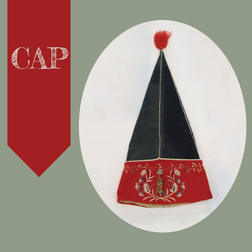
CAP
Everywhere but their heads. Our fourth episode follows the travels of a cap that won't stay put. The expert guest for “CAP” was Paul Ramirez Jonas. Paul Ramírez Jonas is an artist in the public realm and Professor and Art Department Chair, at the College of Architecture, Art, and Planning at Cornell University. Paul Ramírez Jonas was born in Pomona, California in 1965 and raised in Honduras. Educated at Brown University (BA, 1987) and Rhode Island School of Design (MFA, 1989), Ramírez Jonas currently lives and works in Ithaca NY. Over the last thirty years Ramírez Jonas has created works that range from large-scale public installations and monumental sculptures to intimate drawings, performances and videos. Through his practice he seeks to challenge the definitions of art and the public and to engineer active audience participation and exchange. His 2010 Creative Time project, Key to the City, for example, involved 20,000 participants and centered around a key as a vehicle for exploring social contracts pertaining to trust, access, and belonging. His most recent project, a large-scale participatory monument, was installed in the National Mall in Washington DC in the summer of 2023. Public Trust (2016) continues to show every year. For more on Ramirez Jonas and his work “Key to the City” project “Let Freedom Ring” monument For more on the cap: Cap, French, c. 1790, The Metropolitan Museum of Art Related objects of interest: Sons of Liberty bowl, Paul Revere, Jr., 1768, The Museum of Fine Arts, Boston William Hogarth, Portrait of John Wilkes (print), 1768, The British Museum Thomas Crawford, Statue of Freedom, Dome of the US Capitol, 1863 Further reading: Did you guess which six states have liberty caps on their seals? Mystery solved: the six states are Arkansas, Iowa, New Jersey, New York, North Carolina, and West Virginia. Bonus points: the Liberty Cap is also on the state flags of Idaho, New Jersey, New York, and West Virginia. For more about this episode, guests, further readings and previews of upcoming episodes - please visit us at https://www.thing4thingspodcast.com/cap-episode Performance of Jopseph Haydn's Hob III:36 performed and recorded by Gregor Quendel. https://ko-fi.com/gregorquendel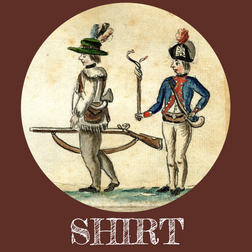
SHIRT
A fringed shirt is not all it seems in our third episode. The expert guest for “SHIRT” was Amanda Vickery. Amanda Vickery is a Professor in Early Modern History at Queen Mary University of London. Her expansive research interests include: the history of British society and culture, gender and family, words and objects, love and power, consumerism and fashion, art and architecture, The Georgians, and post-war British society and culture. Vickery is a dynamic speaker and public figure, whose media work includes two major BBC television series based on her research, The Story of Women and Art (2014) and Suffragettes Forever: The Story of Women and Power (2015). Vickery’s upbringing in a British cotton town fostered her love of social and economic history, and fascination with the warp and woof of work and family, power and emotion, and a life-long love of clothes. Her award-winning publications include: Behind Closed Doors: At Home in Georgian England (Yale University Press, 2009) The Gentleman's Daughter: Women's Lives in Georgian England (link is external) (Yale University Press, 1998). Ed, Gender, Taste and Material Culture in Britain and North America, 1700-1830 (Studies in British Art, Yale University Press, 2006). For more on the shirt at the heart of this episode: Hunting Shirt, c. 1780, United States of America, Museum of the American Revolution. Related objects of interest: Verger, Jean Baptiste Antoine de (1762-1851), Soldiers in Uniforn, watercolor, made in Virginia,1781-84, Anne S.K. Brown Military Collection, Brown University. Reproduced hunting shirts Further reading: Anderson, Fred. Crucible of War: The Seven Years’ War and the Fate of Empire in British North America, 1754-1766 (New York: Alfred A. Knopf, 2000). Anishanslin, Zara. “ ‘This is the Skin of a Whit[e] Man:’ Material Memories of Violence in Sullivan’s Campaign,” in Patrick Spero and Michael Zuckerman, editors, The American Revolution Reborn (University of Pennsylvania Press, 2016). Baumgarten, Linda. “Hunting Shirts and Leather Leggings,” in American Material Culture: the shape of the field ed. by Ann Smart Martin and J. Ritchie Garrison (Knoxville: University of Tennessee Press, 1997). Brown, Kathleen M. Foul Bodies: Cleanliness in Early America (Yale University Press, 2009). Calloway, Collin G. The Indian World of George Washington: The First President, the First Americans, and the Birth of the Nation (Oxford University Press, 2018). For more about this episode, guests, further readings and previews of upcoming episodes - please visit us at https://www.thing4thingspodcast.com/key-episode Performance of Jopseph Haydn's Hob III:36 performed and recorded by Gregor Quendel. https://ko-fi.com/gregorquendel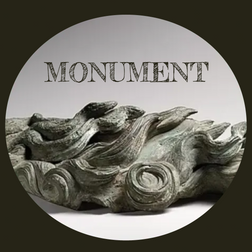
MONUMENT
The strange tale of a tail leads us into the history and art behind the revolutionary toppling of a king. The expert guest for “MONUMENT” was Wendy Bellion. Bellion is Associate Dean for the Humanities and the Sewell C. Biggs Chair in American Art History at the University of Delaware. Bellion's scholarship takes an interdisciplinary approach to American visual and material culture, focusing on the late colonial and early national United States and exploring American art within the cultural geographies of the British Atlantic world and early modern Americas. Her books include: Iconoclasm in New York: Revolution to Reenactment (2019) and Citizen Spectator: Art, Illusion, and Visual Perception in Early National America (2011), which won the Smithsonian American Art Museum’s Charles C. Eldredge Prize for Outstanding Scholarship. Bellion is also co-editor (with Prof. Mónica Domínguez Torres) of Objects in Motion: Art and Material Culture across Colonial North America (2011), a special issue of the journal Winterthur Portfolio. For more on the tail: Tail fragment of the Equestrian Statue of King George III, New-York Historical Society Related objects of interest: Additional Fragment of the equestrian statue of King George III Yet another Fragment of the equestrian statue of King George III Fragment of the equestrian statue of King George III taken by Alwina Wlodeck during a visit to the New-York Historical Society in the 1890s. Johannes Adam Simon Oertel, Pulling Down the Statue of King George III, New York City (1852–1853), oil on canvas. For more about this episode, guests, further readings, objects and previews of upcoming episodes - please visit us at https://www.thing4thingspodcast.com/monument-episode Performance of Jopseph Haydn's Hob III:36 performed and recorded by Gregor Quendel. https://ko-fi.com/gregorquendel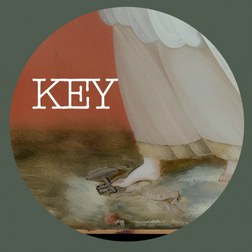
KEY
The key to the most hated prison fortress in France unlocks the secrets to not one but two revolutions The expert guest for “KEY” was Adam Erby. Adam Erby is a Curator at George Washington’s Mount Vernon who is a specialist in furniture and historic interiors. Erby, who was born and raised in south central Virginia among a family of antiques experts, holds degrees from the University of Virginia and the University of Delaware’s Winterthur Program in American Material Culture. Among the many exhibitions and projects he has worked on is the restoration and reinterpretation of both the large dining room, or “New Room,” and the Front Parlor at Mount Vernon. For more on Erby’s thoughts on being a curator, see: https://www.mountvernon.org/preservation/collections/more-than-putting-objects-on-display For more on the Key to the Bastille: https://www.mountvernon.org/education/primary-source-collections/primary-source-collections/article/key-to-the-bastille/#:~:text=Lafayette%20gave%20this%20key%20to,the%20mansion%20after%20his%20death. https://www.mountvernon.org/library/digitalhistory/digital-encyclopedia/article/bastille-key/#:~:text=The%20principal%20key%20to%20the,its%20symbolic%20importance%20in%20America. https://www.mountvernon.org/blog/2018/07/the-bastille-key-case-conservation/ Related objects of interest: Edward Savage’s well-known “Liberty, in the form of the goddess of youth, giving support to the bald eagle” (1796)--note the key to the Bastille under her foot! Jefferson hung a copy at Monticello. https://www.loc.gov/resource/ppmsca.13641/ Scale Model of the Bastille, Musee de Carnavalet, Paris https://www.carnavalet.paris.fr/en/collections/scale-model-bastille For more about this episode, guests, further readings and previews of upcoming episodes - please visit us at https://www.thing4thingspodcast.com/key-episode Performance of Jopseph Haydn's Hob III:36 performed and recorded by Gregor Quendel. https://ko-fi.com/gregorquendel