The Wiseman Brief

The Wiseman Brief

por Trevor Wiseman
Deep Dive: When Heavy AI Users Double Down and Everyone Else Pulls Back
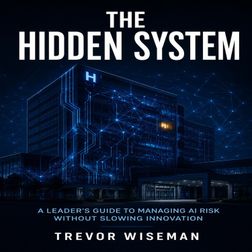
In this episode of The Wiseman Brief, you walk through a 10 month longitudinal study on everyday AI use and what it means for your roadmap. You see why heavy AI users keep delegating more work to AI while the wider population slowly pulls back, even as experience grows. We break down: What Luther and colleagues actually measured about trust, writing delegation, and privacy over time. Why simple “more usage = more trust” stories fail once you look at behavior across a full year. How UnBlooms Create/Resist level helps you separate disengagement from deliberate, metacognitive refusal to use AI. You leave with three lenses for your own AI program: adoption, dependence, and discernment. You also get concrete questions to ask in your next leadership or governance meeting so you know where AI support should stop and where human ownership must stay. Subscribe: Subscribe to The Wiseman Brief on LinkedIn [https://lnkd.in/gU_J87JG] for weekly articles and podcasts on AI governance, cybersecurity, and leadership in the age of AI. I also wrote The Hidden System: A Leader's Guide to Managing AI Risk Without Slowing Innovation, on Amazon: https://www.amazon.com/dp/B0H2Y3QHDS
Question: Can AI Want?
Welcome to The Wiseman Brief. We say AI decides, learns, and prefers. Most people accept those words without question. Today I challenge that. AI does not have wants. It learns patterns and optimizes outcomes. That difference shapes how you lead, how you govern, and how much you trust the systems you deploy. Let’s break it down. Subscribe: Subscribe to The Wiseman Brief on LinkedIn [https://lnkd.in/gU_J87JG] for weekly articles and podcasts on AI governance, cybersecurity, and leadership in the age of AI. I also wrote The Hidden System: A Leader's Guide to Managing AI Risk Without Slowing Innovation, on Amazon: https://www.amazon.com/dp/B0H2Y3QHDS
The Debate: The Human Judgment Gap in the Age of AI
What This Episode Covers AI gives speed. It does not give wisdom. When leaders push AI outputs too fast, they lose judgment. That loss creates exposure in sales, data, security, compliance, and hiring. This episode shows where AI helps, where AI misleads, and where leaders must step in. You get three practical rules to keep human judgment in the loop: Define the stop point Require a human reason Escalate risk Why This Matters AI is not the problem. Misusing it is. This principle powered your past talks and consulting work. It still holds in 2026. Who Should Listen IT Directors and CIOs AI Governance leaders Cybersecurity leaders and CISOs Sales and operations executives Board members and policymakers Subscribe Subscribe to The Wiseman Brief on LinkedIn [https://lnkd.in/gU_J87JG] for weekly articles and podcasts on AI governance, cybersecurity, and leadership in the age of AI. I also wrote The Hidden System: A Leader's Guide to Managing AI Risk Without Slowing Innovation, on Amazon: https://www.amazon.com/dp/B0H2Y3QHDS
Discussion: Governing the Shadows: Managing AI Risk Without Slowing Innovation
Episode Summary: Welcome to this week's episode of The Wiseman Brief! Today, we dive deep into The Hidden System: A Leader’s Guide to Managing AI Risk Without Slowing Innovation by Trevor Wiseman. We explore the hidden dangers of ungoverned "shadow AI" and how well-intentioned, everyday decisions can lead to invisible, catastrophic system failures. Using a gripping narrative about a fictional health system, Meridian Health, the book illustrates how an unmonitored patient deterioration model silently broke, nearly costing a man his life. Tune in as we break down the battle-tested frameworks you need to protect your organization without strangling the fast-paced innovation that makes AI so valuable. Key Topics & Takeaways: The Danger of Shadow AI: Why the biggest AI risk isn't rogue, malevolent intelligence, but rather the quiet accumulation of unmonitored, everyday tools. The Five Paths to Governance: We outline Wiseman's core framework for taming AI: Visibility, Accountability, Risk Alignment, Control Design, and Continuous Oversight. Centralized vs. Decentralized Governance: We compare two vital structural approaches to AI risk: centralized oversight driven by IT leadership versus decentralized accountability, where individual department heads become the single named owner answerable for the AI tools used in their specific domains. Why Paper Doesn't Govern: Why beautifully written AI policies are essentially useless liabilities unless you engineer those controls directly into the daily workflows of your team. Tiering by Risk: How to avoid becoming the "department of no" by matching your governance friction to the actual potential harm of the AI tool—saying "yes" quickly to low-risk tools so you have the credibility to pause high-risk ones. The Reality of "Drift": Understanding why AI isn't like static software, and how changes in data can cause a perfectly deployed model to become miscalibrated and dangerous over time. About the Author: Trevor Wiseman leverages his deep operational expertise and validation from major research frameworks, like Gartner’s AI TRiSM, to provide actionable, practical governance strategies for technology leaders who have to balance the competing forces of speed and fear. Get the Book: Ready to stop treating AI governance like a paperwork exercise? You can find Trevor Wiseman's The Hidden System available now on Amazon Books.
The Debate: AI Security Fails Without Balance: Protect, Utilize, Govern
AI security breaks when teams focus on one area and ignore the rest. In this episode, we cover the three pillars from the SANS AI Security Maturity Model: Protect, Utilize, and Govern. You will see where gaps form, why most programs stall, and how to take focused action. What You Will Learn Why blocking AI tools does not equal security Why turning on AI features does not create value How to secure AI assets, models, and agents How to use AI to improve detection and response How to assign ownership and control AI risk Action Steps Build your AI asset inventory Test one AI use case in security operations Form a small AI governance group Define rules for public AI use Key Takeaway Balance Protect, Utilize, and Govern or accept unmanaged risk. Resources SANS AI Security Maturity Model https://www.sans.org/white-papers/sans-ai-security-maturity-model-ebook ::: Trevor Wiseman writes The Wiseman Brief, a weekly note on AI governance, cybersecurity, and technology leadership. Subscribe on LinkedIn: https://lnkd.in/gU_J87JG He is the author of The Hidden System: A Leader's Guide to Managing AI Risk Without Slowing Innovation, available on Amazon Books - https://www.amazon.com/HIDDEN-SYSTEM-Leaders-Managing-Innovation/dp/B0H2Y3QHDS/ref=vo_sr_l_dp_bo_ff?s=books&sr=1-1 Make sure to subscribe to the 'The Wiseman Brief' on all major podcast platforms for more informative briefs on AI, Cybersecurity, and Leadership.
The Mandate of Digital Hygiene: Why Cyber Threats Are Personal
Episode Title: The Mandate of Digital Hygiene: Why Cyber Threats Are Personal Episode Summary: In this episode, we dive into the alarming reality of modern cybersecurity, drawing insights from Trevor Wiseman's article, "Cyber Hygiene Is Not Optional; The Threat Is Personal". We explore why data breaches are no longer just a corporate issue but a deeply personal risk that can lead to fraudulent transactions, damaged credit, and stolen identity. With over 60% of breaches involving the human element, attackers are exploiting our daily digital routines. We discuss the critical steps you need to take right now to protect yourself against the latest 2026 threats, including AI deepfakes and voice cloning. Key Takeaways & Topics Covered: * The Human Element: Why 60% of breaches are driven by human behavior like phishing and password reuse, and why stolen credentials are the most expensive attack vector. * The 2026 Threat Shift: How attackers have moved to exploiting individuals directly using highly accurate AI-generated deepfakes, cloned voices, and personalized social engineering. * The 5 Pillars of Personal Digital Hygiene: 1. Passwords: Why you need a password manager and unique passwords of at least 16 characters for every account. 2. Multi-Factor Authentication (MFA): How enabling MFA can reduce your risk of account compromise by 99%. 3. Software Updates: Why delaying security patches is the primary driver of malware and ransomware attacks. 4. Healthy Suspicion: How to navigate a world of cloned voices and impersonators by independently verifying requests. 5. Wi-Fi Security: The importance of using WPA3 (or at least WPA2) encryption on your home network. * The AI Connection: Why weak basic cyber hygiene directly causes weak AI security and governance. Listener Action Items: * Check your exposure: Visit Have I Been Pwned to see if your email and data have been exposed in known breaches. If they have, change your passwords immediately. * Turn on MFA: Take the 5 to 30 seconds to enable multi-factor authentication on every account that supports it—it is the highest-impact action you can take. * Treat digital hygiene like physical health: Stop sharing "digital toothbrushes" by reusing passwords across multiple accounts. Resources Mentioned: * The Wiseman Brief – A weekly note on AI governance, cybersecurity, and technology leadership by Trevor Wiseman - https://www.linkedin.com/newsletters/the-wiseman-brief-7457103866900418560/ * The Hidden System: A Leader's Guide to Managing AI Risk Without Slowing Innovation – Book by Trevor Wiseman - https://www.amazon.com/s?k=the%2Bhidden%2Bsystem%2Bby%2Btrevor%2Bwiseman&i=stripbooks * [Have I Been Pwned] (https://haveibeenpwned.com) – Tool to check for compromised credentials.
Ransomware vs AI Rulebooks: The 2026 Double Bind for Healthcare and Finance
Healthcare and financial services are in a 2026 double bind: ransomware shuts down hospitals and exposes millions of accounts while regulators roll out strict new AI rulebooks. In this episode of The Circuit, you learn how recent attacks in both sectors connect to the US Treasury’s Financial Services AI Risk Management Framework and emerging healthcare AI expectations, and you walk away with a focused 90 day plan to align cyber, vendor risk, and AI governance before attackers and supervisors force your hand. Follow - The Circuit with Trevor Wiseman — AI governance, cybersecurity & business translation, no jargon. 👉 Newsletter: https://www.linkedin.com/newsletters/the-circuit-7203212621104185345/ 👉 LinkedIn: https://www.linkedin.com/in/vpoftech/ Trevor Wiseman is Principal Consultant at The Circuit LLC, focused on AI governance, cybersecurity, and business alignment. He brings 25 years of experience in technology, leading IT teams, cybersecurity, and AI initiatives.
The Perplexity Playbook for Modern CISOs
In today's episode, we learn how today's cybersecurity leaders can cut through the endless noise of newsletters and alerts using sourced research and agent workflows. This episode explores how Perplexity verifies and expands your external view, perfectly complementing internal drafting tools like Claude. We break down Perplexity's core modes—Standard, Deep Research, Model Council, and Computer—and walk you through the five essential weekly workflows every CISO needs to adopt: threat landscape briefings, vendor due diligence, regulation gap analysis, current awareness monitoring, and decision verification pipelines. Follow - The Circuit with Trevor Wiseman — AI governance, cybersecurity & business translation, no jargon. 👉 Newsletter: https://www.linkedin.com/newsletters/the-circuit-7203212621104185345/ 👉 LinkedIn: https://www.linkedin.com/in/vpoftech/ Trevor Wiseman is Principal Consultant at The Circuit LLC, focused on AI governance, cybersecurity, and business alignment. He brings 25 years of experience in technology, leading IT teams, cybersecurity, and AI initiatives.
The Claude Co-Pilot: 7 Workflows to Reclaim Your Week
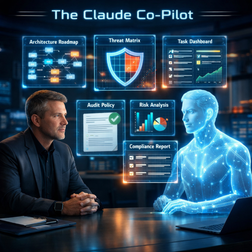
Are planning, analysis, and documentation eating up your entire week?. In this episode, we explore how tech leaders and CISOs can gain 2–3x more output without adding headcount by leveraging Claude as an operations co-pilot. We break down a highly effective 6-part prompt pattern—comprising Role, Context, Task, Constraints, Output Format, and Quality Check—that forces structure and cuts out the fluff. Listen in as we walk through seven essential weekly workflows you can implement immediately. Follow - The Circuit with Trevor Wiseman — AI governance, cybersecurity & business translation, no jargon. 👉 Newsletter: https://www.linkedin.com/newsletters/the-circuit-7203212621104185345/ 👉 LinkedIn: https://www.linkedin.com/in/vpoftech/ Trevor Wiseman is Principal Consultant at The Circuit LLC, focused on AI governance, cybersecurity, and business alignment. He brings 25 years of experience in technology, leading IT teams, cybersecurity, and AI initiatives.
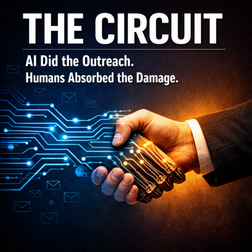
AI Did the Outreach. Humans Absorbed the Damage.
Your AI sales tools are working. They are also making sure certain buyers will never work with you. I watched a seven-step sales process collapse to three with the right AI deployment. I also watched one bad automated outreach guarantee a lost customer for life. Both happened at the same company. In today's episode I break down what separates the two. Follow - The Circuit with Trevor Wiseman — AI governance, cybersecurity & business translation, no jargon. 👉 Newsletter: https://www.linkedin.com/newsletters/the-circuit-7203212621104185345/ 👉 LinkedIn: https://www.linkedin.com/in/vpoftech/ Trevor Wiseman is Principal Consultant at The Circuit LLC, focused on AI governance, cybersecurity, and business alignment. He brings 25 years of experience in technology, leading IT teams, cybersecurity, and AI initiatives.
1 de 3