The Vault: Absolute Truth Podcast

The Vault: Absolute Truth Podcast

por Alexis A Ramos
Temporada 2
Question 3: Why Did God Give Instruction? | The Shape Love Takes
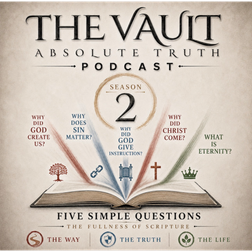
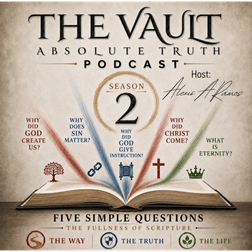
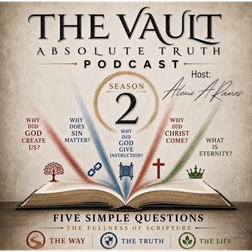
Question 3: Why Did God Give Instruction? The Shape Love Takes Season / Episode Season 2, Episode 4 Episode Summary Why did God give humanity commandments and instruction? Was the Law a system designed to make people earn God’s acceptance—or was something much deeper being revealed? In Season 2, Episode 4 of The Vault: Absolute Truth Podcast, Alexis A. Ramos continues the Five Simple Questions series with Question Three: Why Did God Give Instruction? Beginning at Sinai, we discover an important biblical order: God delivered Israel before He instructed them. Grace came before command. Relationship came before requirement. This episode explores how God’s instruction reveals His character, defines and protects covenant faithfulness, exposes what fractures relationship, and forms His people for holiness and purpose. From the Ten Commandments to Jeremiah’s promise of the Law written on the heart, from Jesus’ summary of the Law as love for God and neighbor to the New Covenant work of the Spirit, the same relational purpose continues throughout Scripture. Love initiates. Covenant defines and protects. Instruction forms. Christ restores. Dwelling is the destination. The Law was never the enemy. It is holy, righteous, and good. But instruction alone could not transform the fallen human heart. That creates the need for Question Four: Why did Christ come? Scriptures Discussed Exodus 20:1–17; Exodus 25:8; Romans 7:12; Jeremiah 31:31–34; Matthew 5; Matthew 22:34–40; John 13:34–35; John 14:15; Romans 8:3–4; 1 John 4:19. Series Five Simple Questions: The Fullness of Scripture Why did God create? Why did sin matter? Why did God give instruction? Why did Christ come? What is eternity? The Vault: Absolute Truth Podcast The profound becomes simple. The simple becomes personal.
Question Two: Why Does Sin Matter?
The Fracture: Why Sin Is Bigger Than Breaking a Rule Episode Summary If God created humanity to dwell with Him, why did sin matter so much? In Episode 3 of Season 2, Alexis A. Ramos explores the second of the Five Questions that open the whole story of Scripture. Sin is certainly disobedience, rebellion, and guilt—but Scripture reveals something even deeper. Humanity was created for covenant communion with God, and sin represents humanity choosing autonomy over dependence: life on our terms rather than life received from Him. From Eden to Cain, Babel, Israel, the wilderness, and ultimately Christ, the same question continues to appear: Will humanity trust God and receive life from Him, or attempt to define life apart from Him? Understanding the fracture helps us understand why covenant, instruction, redemption, and ultimately Jesus Christ are necessary. The simple answer: Sin matters because it fractured the relationship humanity was created for. Episode Description In this episode: Why the command in Eden was fundamentally relational The difference between dependence and autonomy Why the Tree of Knowledge represents more than forbidden fruit Cain and the expanding fracture of God’s presence Babel and humanity’s attempt to create identity and purpose independently Israel, wilderness, and the revelation of the heart Jesus as the faithful Son where Adam and Israel failed Luke 4 and humanity as poor, captive, blind, and unable to restore itself Why repentance is ultimately a return from our way to God’s way How Question Two naturally leads into Question Three: Why did God give instruction? Creation reveals the purpose. Sin explains the fracture. Redemption reveals the restoration. From Him. Through Him. To Him. Primary Scriptures Genesis 2–3 Genesis 4 Genesis 11 Exodus 19:4 Deuteronomy 8:2–3 Matthew 4:1–11 Luke 4:18–21 John 14:6 Series Season 2: Five Questions That Explain Everything Episode 1 — The Five Questions That Explain the Whole Story Episode 2 — Why Did God Create Us? Episode 3 — Why Does Sin Matter?
QUESTION ONE: WHY DID GOD CREATE US?
Created for Communion: God’s Purpose Revealed in the Beginning Before Scripture explains sin, salvation, instruction, Christ, or eternity, it reveals humanity’s original purpose. In this episode, Alex Ramos explores the first of the Five Simple Questions: Why did God create us? God did not create because He was incomplete, lonely, or in need of servants. Creation flowed from His fullness. Humanity was made in God’s image for covenant communion—to receive His love, reflect His character, share His presence, steward His creation, and freely love Him in return. This episode examines: Why creation begins with God’s initiative and generosity What it means to bear the image of God Eden as sacred space and the first dwelling Why relationship comes before responsibility Why instruction existed before sin How the Tree of Life represents received life in God’s presence Why Revelation fulfills the purpose revealed in Genesis How salvation restores humanity to the reason life was given The Bible begins with God dwelling with humanity. The Bible ends with God dwelling with redeemed humanity forever. The beginning reveals the purpose. The end reveals the fulfillment. Everything in between explains how God restores what sin fractured. He loved first. Will we love Him back? From Him • Through Him • To Him The Vault: Absolute Truth Podcast Hosted by Alex Ramos.
Five Simple Questions: The Fullness of Scripture
Episode Summary Season 2 begins with a simple question: What if the Bible has been answering the same five questions all along? From Genesis to Revelation, Scripture tells one unified story—not through isolated doctrines, but through a consistent pattern that reveals God’s purpose for humanity. In this opening episode, Alex introduces the Five Questions framework, a simple yet powerful way of reading the Bible that brings clarity to creation, the fall, the law, the gospel, and eternity. Rather than adding complexity, this episode demonstrates how the many witnesses of Scripture—creation, the wilderness, the tabernacle, the feasts, the prophets, and the kingdom—all point to the same revelation. The Five Questions: Why did God create us? Why does sin matter? Why did God give instruction? Why did Christ come? What is eternity? If you’ve ever felt like the Bible was a collection of disconnected stories, this episode offers a fresh perspective that reveals its remarkable unity. One Story. One Savior. One Kingdom. One consistent revelation. “Read less randomly. Read more intentionally. Discover the fullness of Scripture—one question at a time.”
Temporada 1
The Temple of God: From Eden to the Kingdom
What if the Temple is not ultimately a building, but a theme that runs from Genesis to Revelation? In this episode of The Vault: Absolute Truth Podcast, Alex Ramos traces the biblical pattern of God’s dwelling place from Eden, through the Tabernacle and Temple, to Christ, the Holy Spirit, and ultimately New Jerusalem. Rather than viewing these as disconnected events, Scripture reveals a unified story of restoration: God dwelling with man. Topics include: Eden as the first sanctuary Avad and Shamar as priestly language The Tabernacle as a shadow of restored presence The Temple and the limitation of access Jesus as the true Temple The believer as the dwelling place of God Why Revelation says there is “no temple” New Jerusalem as Eden restored Romans 11:36 as the structural framework of redemption Key Scriptures Genesis 1–3 Exodus 25:8–9 1 Kings 8 John 1:14 John 2:19–21 Ephesians 2:21–22 1 Corinthians 3:16 Revelation 21–22 Romans 11:36 Core Theme The Bible is the story of God restoring what was lost in Eden. The purpose has never changed. God desires to dwell with man.
THE WILDERNESS: Shaping NOT Judgement
The Wilderness: Shaping, NOT Judgment Why does God repeatedly bring His people into the wilderness? Why did Israel pass through it? Why was Jesus led there by the Spirit? And why do believers still experience wilderness seasons today? In Episode 21 of The Vault: Absolute Truth Podcast, we explore the biblical pattern of: Deliverance → Wilderness → Purpose This episode reframes the wilderness not as abandonment or punishment, but as God’s process of sanctification, dependence, and preparation. Topics covered include: Israel’s wilderness journey after the Exodus Manna, the pillar of fire, and the cloud of God’s presence Why God shapes His people before sending them The connection between holiness and God dwelling among His people Jesus succeeding in the wilderness where Israel failed The deeper meaning of sanctification through:The Potter’s Wheel The Vine and Branches The Wilderness Key Scriptures: Romans 11:36 Exodus 12–19 Deuteronomy 8:2–3 Matthew 3–4 John 15 Isaiah 64:8 2 Corinthians 6:16 Core Theme: God is not trying merely to rescue people from bondage. He is shaping a people He can dwell within and work through. The wilderness is not where God forgets His people. It is where He forms them. Episode Highlights Deliverance is immediate. Formation is progressive. The wilderness reveals what deliverance did not heal. God dwells only in what He makes holy. Israel failed in the wilderness. Jesus obeyed. Sanctification is learning to abide, trust, and depend daily.
From Blood to Presence — The Gospel in Exodus
The Gospel wasn’t introduced—it was illustrated. In this episode, we walk through the Exodus narrative and uncover the full pattern of redemption: From the blood of the Passover lamb… through the wilderness of formation… to the presence of God dwelling among His people. This is not just history. It is the Gospel in motion.
The Consistent Choice — Eden, The Holy Place, and Sanctification
Episode 19: The Consistent Choice — Eden, The Holy Place, and Sanctification From the very beginning of Scripture, a single choice has defined the course of humanity. In this episode of The Vault: Absolute Truth Podcast, we trace a consistent pattern that runs from the Garden of Eden, through Israel’s history, and into the life of every believer today. This is not a new idea. It is not complex. But it is foundational. In Eden, the choice was between trusting God or redefining truth. In the wilderness, it was trusting His provision or rejecting it. In the life of Jesus, it becomes clear—truth is not abstract. It is a person. And in sanctification, that same choice continues. Will we allow God to shape us through His truth, or will we continue to define reality for ourselves? This episode breaks down: The true nature of the choice in Eden How that pattern repeats throughout Scripture Why sanctification is not self-improvement, but transformation through truth The structure of the Holy Place and what it reveals about spiritual formation How this choice confronts every person today This is not just theology. It is the defining reality of the Christian life. We are either being shaped by God’s truth… or we are shaping truth for ourselves. Listen now and step into the pattern that has always been there.
The Pattern That Explains the Entire Bible
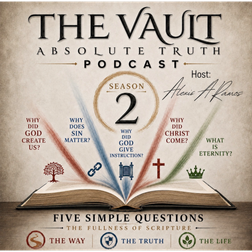
What if the Bible is not a collection of disconnected stories…but a single, unified structure? In this episode, we uncover a simple but profound pattern that appears across every layer of Scripture: From Him. Through Him. To Him. The Way. The Truth. The Life. Rather than approaching the Bible as 66 separate books, this episode introduces a lens that reveals one continuous narrative of creation, redemption, and restoration. We explore how this same pattern is consistently expressed through: Creation (Genesis 1) The Tabernacle (Exodus) The Feasts of Israel (Leviticus 23) The process of salvation The structure of Scripture itself Biblical geography (Eden, Sinai, Moriah) And even deeper structural layers within the text When one pattern appears across multiple independent domains, it forces a question: Is this coincidence…human design…or something greater? This episode walks through the convergence of that pattern and why it leads to a single, unavoidable conclusion: Jesus Christ is not just part of the story. He is the structure of it. If you’ve ever struggled to see how the Bible fits together… this episode will change how you read it forever.
Two Goats: One Atonement
Episode 17 – Two Goats: One Atonement | Jesus Paid the Price and Removed the Sin In this episode of The Vault Podcast, Alexis Ramos and Bill Gragg explore one of the most powerful prophetic shadows found in the Torah: the two goats of the Day of Atonement described in Book of Leviticus 16. Why did God command Israel to bring two goats instead of one? The ritual reveals two essential aspects of atonement. One goat was sacrificed, its blood brought into the Most Holy Place to satisfy justice. The other, known as the scapegoat, carried the sins of the people away into the wilderness. Together, these two goats formed a single act of atonement. This episode examines how this ancient ceremony points directly to the work of the Messiah. Through His death, Jesus paid the penalty for sin. Through His sacrifice, He also removed sin from those who trust in Him. Drawing from passages such as Book of Isaiah 53, Book of Psalms 103, Gospel of John 1, and Epistle to the Hebrews 10, this discussion highlights how justice and mercy meet at the cross. Two goats. One atonement. A prophetic shadow fulfilled in the Messiah.
1 de 3