The Semi-Seminarian

The Semi-Seminarian

por Pastor Jim Wilhelm
Temporada 8
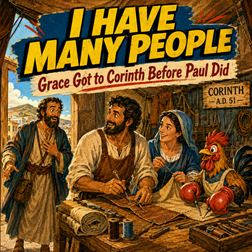
Paul Thought He Was Alone in Corinth He Was Wrong Acts 18
Paul Thought He Was Alone in Corinth — He Was Wrong | Acts 18 YouTube Description Paul walks into Corinth exhausted, rejected, and afraid — and discovers that God was already there. In this Acts 18 Bible study, we follow Paul into Corinth, where he meets Aquila and Priscilla, finds unexpected companions at a tentmaker’s workbench, faces opposition in the synagogue, and hears Jesus speak one astonishing sentence into the darkness: “Do not be afraid, but speak and do not be silent; for I am with you… for I have many people in this city.” — Acts 18:9–10 Paul thought the mission depended on his courage, his preaching, and his ability to keep going. Jesus showed him something different. The people were already there. Aquila and Priscilla were already working. Titius Justus already had an open door. Crispus was already listening. Grace had reached Corinth before Paul ever walked through the gate. This episode of The Semi-Seminarian explores Acts 18:1–17, Paul in Corinth, Aquila and Priscilla, the early church, Christian mission, grace, fear, biblical theology, and what it means to discover that God’s work does not begin when the preacher arrives. Sometimes God does not answer our fear by making us stronger. Sometimes He simply says: Look again. You are not alone. Theology Thru The Static. #Acts18 #BibleStudy #Paul
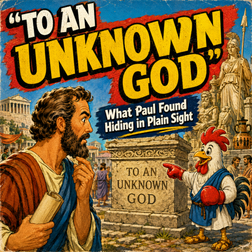
TO AN UNKNOWN GOD: Paul Found What Athens Couldn’t Name Acts 17
Athens had a god for everything. Then Paul found one altar that admitted the whole system had a hole in it: “TO AN UNKNOWN GOD.” In Acts 17:16–34, the Apostle Paul walks into Athens with no shared Bible, no Abraham, no Moses, no prophets—and somehow preaches Jesus anyway. Standing before the Areopagus, surrounded by Stoics, Epicureans, temples, idols, philosophers, and centuries of Greek thought, Paul does something remarkable. He doesn’t begin by telling Athens that everything it knows is worthless. He begins with something they already know they don’t know. An altar. A confession carved into stone. We may have missed something. Paul takes that little crack in the marble and walks straight through it. He quotes their poets. He speaks their language. He recognizes the longing underneath their religion. And then he tells them the astonishing thing they have been reaching toward without knowing its name: “He is not far from each one of us.” But Paul doesn’t leave them with philosophy, poetry, or vague spirituality. Everything moves toward Jesus and the resurrection. Some mock him. Some want to hear more. Some believe. And Paul lets all three responses stand. This episode of The Semi-Seminarian digs into Paul’s sermon at Athens, the altar to the Unknown God, the Areopagus, Greek philosophy, Acts 17, and one of the most important questions facing the church today: How do you proclaim the gospel to people who no longer share your biblical vocabulary? Maybe evangelism doesn’t always begin by telling somebody where they’re wrong. Maybe sometimes it begins by noticing where they’ve already been brushing up against God without knowing His name. Because the God they were reaching for was closer than they knew. And maybe He still is. Acts 17:16–34 | Paul in Athens | The Unknown God | Areopagus | Apostle Paul | Bible Study | Christian Theology | Jesus and the Resurrection Welcome to The Semi-Seminarian — Theology Through the Static. #Acts17 #UnknownGod #ApostlePaul
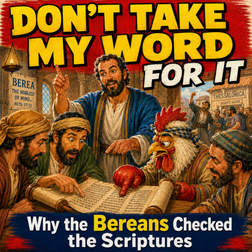
Acts 17: Why the Bereans Checked Paul | Don’t Take My Word for It
Acts 17 asks a dangerous question: What if strong faith is willing to check the preacher? Paul opens the Scriptures in Thessalonica and Berea—but the Bereans do something remarkable: they examine the text for themselves. In this Acts 17 Bible study, Pastor Jim Wilhelm follows Paul and Silas from Thessalonica to Berea and asks what Luke really means when he praises the Bereans for “examining the Scriptures daily.” This isn’t suspicion dressed up as discernment. And it isn’t blind trust in whoever holds the microphone. The Bereans receive eagerly and examine carefully. They know the biblical story well enough to test what Paul is preaching—and recognize Jesus when they find him there. What does “Be a Berean” actually mean? Why does biblical literacy matter? And what responsibility does the church have to form people who can read Scripture for themselves? Paul opens the scroll. The Bereans check the text. And Luke shows us a faith strong enough to look. Acts 17:1–15 | Paul in Thessalonica and Berea | The Bereans | Bible Study | Biblical Literacy | Christian Discernment #Acts17 #BibleStudy #Bereans
Before the Earthquake | Lydia, Paul & the First Church in Philippi (Acts 16)
Before the earthquake shook Philippi, before Paul and Silas sang in prison, before the jail doors flew open, Acts 16 gives us Lydia—a woman praying beside a river whose heart the Lord opened and whose home became a place for the gospel to live. In this sermon on Acts 16:11–15, Pastor Jim Wilhelm explores Lydia of Thyatira, Paul’s arrival in Philippi, the riverside prayer gathering, and the quiet beginning of the church in Philippi. Paul crossed the Aegean because of a vision of a man from Macedonia saying, “Come over and help us.” But when Paul arrived, he didn’t find the man from the vision. He found women praying by the river. And God was already there. The Lord opened Lydia’s heart. Then Lydia started opening everything else—her household, her door, her table, her home. That is the strange, beautiful grammar of grace in Acts 16: God opens Lydia. Lydia makes room. The gospel gets an address. Before Rome’s prison shakes, before the magistrates beat Paul and Silas, before the Philippian jailer asks what he must do to be saved, Jesus already has something Rome cannot control: Lydia’s house. If you’re studying Lydia in the Bible, Acts 16, Paul’s second missionary journey, Philippi, women in the early church, Christian hospitality, baptism, grace, or the Book of Acts, this episode digs beneath the familiar earthquake story to the quiet moment that came first. Welcome to The Semi-Seminarian — Theology Through the Static, where Scripture, story, grace, and a little Red Dirt meet somewhere between the Wild and the Word. #Acts16 #Lydia #BookOfActs

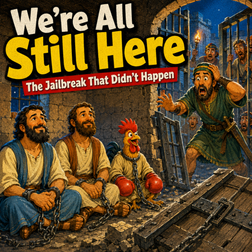
Paul and Silas in Prison: The Jailbreak That Didn’t Happen | Acts 16
Paul and Silas are beaten, chained, and locked inside a Philippian prison in Acts 16:25–34. Then an earthquake opens every door—but the greatest miracle is that nobody runs. At midnight, Paul and Silas are praying and singing hymns while the other prisoners listen. Suddenly, the prison foundations shake, the chains fall loose, and every door swings open. The Philippian jailer awakens, sees the open cells, and prepares to take his own life. Then Paul cries from the darkness: “Do not harm yourself, for we are all here.” Paul could have escaped—but his freedom would have cost another man his life. So he stays. In this Acts 16 sermon, Pastor Jim Wilhelm explores the deeper meaning of Paul and Silas in prison, the conversion of the Philippian jailer, and the kind of Christian freedom that refuses to leave somebody else bleeding behind. The earthquake opened the prison. Mercy opened the jailer. Before the night is over, the man who guarded their wounds begins washing them. A household is baptized. Prisoners become guests. Strangers become family around a table. Basin. Baptism. Breakfast. This is the jailbreak that did not happen—and the salvation that did. Welcome to The Semi-Seminarian, where we read Scripture with our sandals on the ground, listen for theology through the static, and trust that grace still speaks from inside the dark. 📖 Scripture: Acts 16:25–34 🎙️ Preacher: Pastor Jim Wilhelm ⛪ First Christian Church, Cushing, Oklahoma Throw a like in the offering plate, tithe your subscribe, and share this episode with somebody who needs to hear: Do not harm yourself. We are all still here. #Acts16 #PaulAndSilas #BibleSermon
The Fight That Split the Apostles | Useful to Me
Paul and Barnabas helped write the letter that saved Gentile Christianity — then split apart over one man's failure. This is the Bible study on Acts 15:36-41 and the apostle Paul verse "useful to me." Right after the Jerusalem Council settles the biggest theological question in the early church — grace is enough, full stop — two of its greatest champions have a fight so sharp (the Greek word is paroxysmos) that they part ways for good. Barnabas wants to give John Mark a second chance. Paul refuses. Luke never tells us who was right. This study walks through Acts 15:36-41, the Paul and Barnabas conflict, and traces the thread all the way to 2 Timothy 4:11, where a much older Paul writes from a Roman prison and asks for the same man he once rejected — calling him "useful to me in my ministry." What you'll take away from this episode: Why believing in grace and practicing grace toward someone who hurt you are two different battles. The real difference between the Greek word paroxysmos and a simple disagreement. Why Barnabas's track record (Saul in Jerusalem, the Gentiles in Antioch) makes his instinct about Mark worth taking seriously. Why Paul's refusal wasn't hypocrisy but pastoral protection for the churches he'd already lost people from. What changed between Pamphylia and the prison letter — and why forgiveness and restored trust aren't the same thing. This message covers Acts 15:36-41, Acts 13, and 2 Timothy 4:11 — Paul, Barnabas, John Mark, the second missionary journey, and what it means when grace and history collide inside the church. Scripture references: Acts 15:36-41 | Acts 13 | 2 Timothy 4:11 #Acts #PaulAndBarnabas #BibleStudy #JohnMark #ActsOfTheApostles #SecondMissionaryJourney #ChristianPodcast #Sermon #BibleTeaching #Grace #Forgiveness
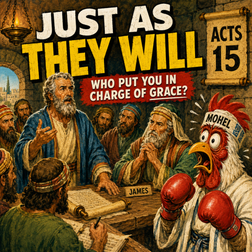
Acts 15 Bible Study: Who Put You in Charge of Grace? | Just As They Will
Acts 15 asks a question the church has never fully escaped: Who put us in charge of grace? In this Acts 15 Bible study and sermon, Pastor Jim Wilhelm examines the Jerusalem Council, Peter’s defense of Gentile believers, James’s use of Amos 9, and the church’s decision not to burden people whom God had already welcomed. When some believers insist that Gentiles must be circumcised and obey the Law of Moses to be saved, Peter stands and makes a startling confession: “We believe that we will be saved through the grace of the Lord Jesus, just as they will.” — Acts 15:11 Peter does not merely argue that Gentiles can be saved like Jewish believers. He reverses the comparison. The uncircumcised Gentiles—welcomed by God, cleansed by faith, and given the Holy Spirit—become the evidence that everyone is saved on the same terms: through the grace of Jesus Christ. Then James opens the Scriptures and quotes Amos 9. The nations were already present in the promise. The words were ancient, but the work of the Holy Spirit in Cornelius’s household, the church at Antioch, and Paul and Barnabas’s mission taught the Jerusalem church to hear those words again. This sermon explores: • The meaning of Acts 15:1–35 • The Jerusalem Council and Gentile inclusion • Peter’s statement, “just as they will” • Salvation by grace through faith • Circumcision and the Law of Moses • James’s quotation of Amos 9 • “It seemed good to the Holy Spirit and to us” • The four instructions given to Gentile Christians • Why discipleship follows welcome rather than purchasing it • How churches still add conditions to grace The Jerusalem Council did not create grace or vote it into existence. The church finally recognized what God had already done. Grace was never ours to ration. The door was never ours to guard. And when God is already turning someone toward himself, the church’s calling is clear: “We should not trouble those Gentiles who are turning to God.” — Acts 15:19 Welcome to The Semi-Seminarian—theology through the static, where Scripture, story, church history, and porch-front grace meet. Throw a like in the offering plate, tithe your subscribe, and share this Acts Bible study with someone who has ever been told that what God did in their life was not enough. You are loved. And you are not in charge of who else is. #Acts15 #BibleStudy #ChristianSermon
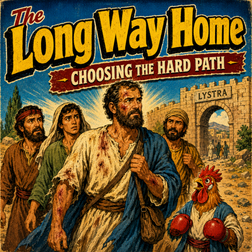
The Long Way Home | Acts 14 Bible Study on Paul Stoned at Lystra
Why did Paul return to the city where he had just been stoned? This Acts 14 Bible study follows Paul and Barnabas through Iconium, Lystra, and Derbe as they face opposition, false worship, persecution, suffering, and the difficult work of strengthening new churches. In Acts 14, Paul and Barnabas preach boldly in Iconium until a violent plot forces them to leave. In Lystra, Paul heals a man who had never walked—but the crowd mistakes Paul and Barnabas for the Greek gods Hermes and Zeus. Their celebration quickly turns violent when opponents arrive from Pisidian Antioch and Iconium, persuade the crowd, stone Paul, and drag him outside the city believing he is dead. But Paul rises, walks back into Lystra, and continues preaching the gospel. Then he makes an even harder choice. Instead of taking the shorter and safer road home, Paul retraces the path through Lystra, Iconium, and Pisidian Antioch—the same towns where he had been threatened, rejected, and attacked. He does not return to settle an argument with the crowd. He returns to strengthen the disciples, appoint elders, encourage the churches, and remind them: “It is through many afflictions that we must enter into God’s Kingdom.” —Acts 14:22 The Long Way Home is a sermon about Christian perseverance, spiritual discernment, faithful leadership, and knowing when to stay, when to leave, and who to go back for. Acts 14 teaches us that apostolic courage is not a martyr complex. Sometimes faithfulness means refusing to be intimidated. Sometimes faithfulness means leaving before violence consumes the mission. And sometimes the road home leads back through the places that wounded us—not to win over the crowd, but to care for the people grace has left behind. This sermon also explores: • Paul and Barnabas preaching in Iconium • The healing of the man unable to walk • Why Lystra called Barnabas Zeus and Paul Hermes • The story of Baucis and Philemon • Paul’s contextual preaching about rain and fruitful seasons • Paul being stoned and left for dead • The connection between Paul and Stephen • Paul’s return to Lystra, Iconium, and Antioch • Timothy’s connection to Lystra • Christian suffering and perseverance • Appointing elders in the early church • Strengthening disciples after persecution • Why crowds are not the same as the Church Crowds are weather. Disciples are people you shepherd. The greatest miracle in Acts 14 is not simply that Paul survived the stones. The greatest miracle is that there were churches to go back to. The mob did not get the last word. The rocks did not get the last word. Grace left praying people, fasting people, elders, disciples, and little congregations learning how to hold on. The gospel did not merely survive the road. It planted churches all along it. Welcome to The Semi-Seminarian, where we read Scripture closely, listen for grace through the static, and put our sandals on the ground inside the biblical story. Throw a like in the offering plate, tithe your subscribe, share this Acts 14 sermon with somebody walking a difficult road—and be blessed. #Acts14 #BibleStudy #PaulTheApostle
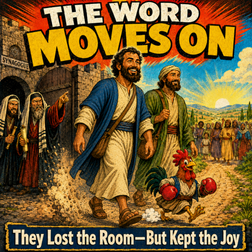
Acts 13 Bible Study: Paul’s First Missionary Journey Begins | The Word Moves On
The gospel has left home. In this Acts 13 Bible study, we begin Paul's First Missionary Journey and witness one of the greatest turning points in the Book of Acts. After years of the Holy Spirit preparing the church, Barnabas and Saul are finally set apart and sent from the church at Antioch to proclaim the gospel throughout the Roman world. But the mission immediately meets resistance. What do faithful Christians do when obedience leads to opposition? Acts 13 answers that question. This verse-by-verse Bible study follows Acts 13:13–52, where Paul preaches his first recorded sermon, recounting God's covenant faithfulness from Abraham through David to Jesus Christ. As the crowds grow, so does the resistance. Religious leaders become jealous. Paul and Barnabas are opposed, rejected, and ultimately driven out of the city. Yet the gospel keeps moving. This Christian sermon explores why Paul's first missionary journey begins with conflict instead of success, why persecution never stops the spread of the gospel, and why the Holy Spirit often moves beyond the places that try to contain God's grace. Along the way we'll examine: • Acts 13 explained verse by verse • Paul's first missionary journey and why it matters • Barnabas and Paul as apostles of Jesus Christ • Pisidian Antioch and Paul's first recorded sermon • The Book of Acts and the spread of Christianity • Why religious jealousy becomes opposition to the gospel • The Holy Spirit and the unstoppable mission of God • The meaning of Acts 13:46 — "We are turning to the Gentiles." • The prophecy of Habakkuk in Paul's sermon • Elymas the sorcerer, Sergius Paulus, and spiritual resistance • Why the gospel cannot be controlled by institutions or gatekeepers • Biblical leadership, Christian discipleship, obedience, persecution, and faithfulness One of the greatest surprises in Acts is that the message never changes. The audience does. Paul preaches the same gospel on two consecutive Sabbaths. The doctrine never changes. Jesus Christ never changes. The Scriptures never change. What changes is who begins listening—and suddenly the message becomes controversial. The Word of God refuses to stay where people try to keep it. Acts 13 reminds every church that God's mission has never been about preserving comfortable institutions. The mission of Jesus Christ is to proclaim salvation to the nations through the death, burial, and resurrection of Christ. The Holy Spirit continues opening doors that fear tries to close. If you've ever wondered why faithful Christians face resistance, why churches struggle with change, or how the early church carried the gospel across the Roman Empire, this Acts Bible study will help you see Acts 13 with fresh eyes. The question is not whether the gospel will keep moving. The question is whether we'll move with it. If this Bible study encourages you, consider subscribing as we continue our verse-by-verse study through the Book of Acts, exploring the history of the early church, the ministry of the Apostle Paul, the work of the Holy Spirit, and the good news of Jesus Christ. Throw the like in the offering plate, tithe your subscribe, and join us next time on The Semi-Seminarian. #Acts13 #BibleStudy #BookOfActs #PaulTheApostle #ChristianSermon #VerseByVerse #HolySpirit #MissionaryJourney #Barnabas #EarlyChurch #JesusChrist #BibleTeaching #ChristianPodcast #BiblicalTeaching #NewTestament
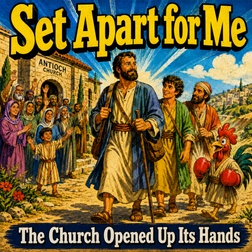
Acts 13 Bible Study: Paul’s First Missionary Journey | Set Apart for Me
Acts 13 begins Paul’s first missionary journey as the Holy Spirit calls the church at Antioch to set apart Barnabas and Saul for the work of spreading the gospel. But this Acts 13 Bible study is not only about missionaries leaving home. It is about a church learning to open its hands. Throughout the book of Acts, the Holy Spirit moves first and the church struggles to catch up. Philip preaches in Samaria. The Ethiopian eunuch is baptized on a desert road. Peter enters the home of Cornelius and watches the Holy Spirit fall upon the Gentiles. But in Acts 13:1–12, something changes. For the first time, a local congregation hears the Spirit before the journey begins and willingly releases its own leaders into God’s mission. “As they served the Lord and fasted, the Holy Spirit said, ‘Set apart for me Barnabas and Saul for the work to which I have called them.’” — Acts 13:2 The church at Antioch was led by an extraordinary gathering of prophets and teachers: Barnabas, Simeon called Niger, Lucius of Cyrene, Manaen, and Saul. Different histories, cultures, social positions, and personal stories had been gathered around one table by the grace of Jesus Christ. Then the Holy Spirit asked that church to release two of its strongest teachers. The church opened its hands—and the gospel left home. Barnabas and Saul travel to Cyprus with John Mark and proclaim the Word of God in the synagogues. In Paphos, they encounter Sergius Paulus, a Roman proconsul who wants to hear the gospel, and Elymas the sorcerer, a false prophet determined to stand between a searching man and the truth. Filled with the Holy Spirit, Saul confronts Elymas, and temporary blindness falls upon him. The scene deliberately echoes Saul’s own experience on the Damascus Road: darkness, helplessness, and the need for someone to lead him by the hand. Paul does not give Elymas death. He gives him darkness with an expiration date. It is during this confrontation that Luke writes, “Saul, who was also called Paul.” The church released him, the road revealed him, and the mission to the Gentiles moved forward. This Christian sermon and Bible study explores: • Paul’s first missionary journey • Barnabas and Saul being set apart • The multicultural church at Antioch • The calling and sending of the Holy Spirit • Worship, fasting, prayer, and discernment • Elymas the sorcerer and Sergius Paulus • Saul becoming known as Paul • Barnabas as a mentor and apostolic leader • Christian calling, surrender, and mission • The difference between loving God’s gifts and trying to own them Barnabas built a place large enough for Paul’s calling to grow beyond him. That is not Barnabas losing. That is Barnabas succeeding. A faithful church does more than gather people. It releases them. A faithful leader does more than build a ministry. A faithful leader builds a porch large enough for another person’s calling to outgrow the builder. What are you holding so tightly that the Holy Spirit may be asking you to release? What could God do with it if you opened your hands? Join us for this verse-by-verse Acts 13 sermon about Paul, Barnabas, the church at Antioch, the first missionary journey, and the Holy Spirit’s continuing work through ordinary congregations willing to pray, listen, release, and go. Throw the like in the offering plate, tithe your subscribe, and join us as we continue walking through the Book of Acts. The Spirit is still speaking. The gospel is still moving. And grace can travel farther than anything fear could preserve by holding it. #Acts13 #BibleStudy #BookOfActs #PaulTheApostle #ChristianSermon
1 de 28