
The Grace Inspired Community Podcast

The Grace Inspired Community Podcast
por The Grace Inspired Community Team
“It Is Well With My Soul”: Finding Biblical Peace
IA
“It Is Well With My Soul”: Finding Biblical Peace... this episode of The Never Stop Learning Podcast, we explore the biblical meaning of peace through the story behind “It Is Well With My Soul,” the hymn written by Horatio Spafford after unimaginable loss. From there, we trace the theme through three biblical scenes: Jesus asleep in the storm, Job worshiping in the ashes of catastrophe, and David walking through the darkest valley in Psalm 23. This is not peace as denial, optimism, or emotional numbness. It is peace as a deeper anchor — formed through trust, suffering, surrender, and the nearness of God. Together, we examine how Scripture presents peace not as the absence of storms, sorrow, or enemies, but as the presence of the Shepherd within them. The question is not whether life will remain calm. The question is whether the soul can learn, slowly and honestly, to say: it is well.
Stand Firm: The Weight of Biblical Conviction
IA
Stand Firm: The Weight of Biblical Conviction is a biblical deep dive on what it means to remain faithful when truth becomes costly. Rooted in Ephesians 6:14–15, this episode explores the difference between opinion, belief, and true conviction. Through Daniel’s quiet refusal in Babylon and Peter’s painful denial by the fire, we see that conviction is not loudness, pride, or stubbornness. It is allegiance formed before God, tested under pressure, and restored by grace when we fail. This is a meditation on truth, righteousness, peace, fear, compromise, mercy, and the call to stand firm in Christ.
“Amazing Grace”: The Grace That Finds, Forgives, and Transforms
IA
“Amazing Grace”: The Grace That Finds, Forgives, and Transforms explores the story, Scripture, and meaning behind one of the most enduring hymns in Christian history. Beginning with John Newton’s desperate cry for mercy during a storm at sea, this episode follows the biblical theme of grace through Newton’s life, Paul’s road to Damascus, and the words of the hymn itself. With insight from Timothy Keller, C.S. Lewis, J.I. Packer, Billy Graham, Charles Spurgeon, John Wesley, and Max Lucado, we examine grace not as shallow comfort or self-improvement, but as the mercy of God that finds the lost, forgives the sinner, opens blind eyes, and begins the long work of transformation.
“How Great Thou Art": Seeing Beauty in the World,
IA
In “How Great Thou Art: Seeing Beauty in the World,” we begin with the storm-soaked origin of Carl Boberg’s hymn and follow its journey through Stuart K. Hine, George Beverly Shea, and the Billy Graham crusades. From there, the episode explores a biblical theology of attention: how Genesis, the Psalms, Philippians, Romans, and Lamentations teach us to see creation as witness, beauty as a signpost, and gratitude as trained sight. Drawing on A. W. Tozer, C. S. Lewis, Craig Groeschel, Timothy Keller, Anne Frank, Steven Furtick, and Max Lucado, this deep dive asks how the soul learns to find sweetness without denying suffering, grace without erasing regret, and worship on the far side of the storm.
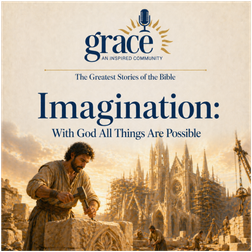
Imagination: With God All Things Are Possible
IA
Imagination: With God All Things Are Possible...In this episode, we reclaim imagination from the world of self-help, manifestation, and spiritualized control, and return it to its biblical home. Anchored in Jesus’ words in Mark 10:27 — “With man this is impossible, but not with God; all things are possible with God” — this deep dive explores holy imagination as the faith-filled ability to see what God can build through what He has already placed in our hands. Through the story of the three stone cutters, we learn the difference between seeing labor, seeing provision, and seeing a cathedral. God gives us raw material. Faith imagines what it can become. Obedience builds it. Drawing from Scripture and the voices of T.D. Jakes, C.S. Lewis, John Piper, Rick Warren, Max Lucado, Erwin McManus, Bill Johnson, and Charles Spurgeon, this episode examines the tree, the stone, the opportunity, the wound, the relationship, the gift, and the forgiven life as raw material in the hands of God. We explore imagination as both a creative gift and a spiritual battleground, showing how anxiety, shame, and cynicism can misuse imagination — and how a renewed mind can learn to see through faith. This is not fantasy. This is not denial. This is surrendered vision, grounded in Scripture and built through obedience. You may be cutting stone today, but in the hands of God, you may be building a cathedral.
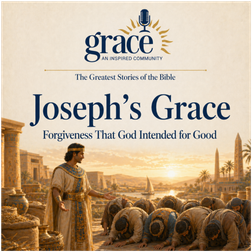
Joseph’s Grace: Forgiveness That God Intended for Good

IA
Joseph’s Grace: Forgiveness That God Intended for Good...In this deep dive, we revisit the story of Joseph not as a simple rags-to-riches success story, but as one of Scripture’s most profound portraits of forgiveness. Genesis 50 brings the whole wound into view: the pit, the betrayal, the bloodied robe, the years in slavery and prison, the famine, the reunion, and the brothers’ fear that Joseph will finally take revenge after Jacob’s death. Instead, Joseph answers with words that still define biblical grace: “Am I in the place of God?” and “You intended to harm me, but God intended it for good.” Drawing from Timothy Keller, John Piper, Chuck Swindoll, Max Lucado, BibleProject, and T.D. Jakes, this episode explores forgiveness that does not deny evil, providence that does not minimize pain, and grace that becomes practical provision. This is a story about wounds that were real, evil that was named, power that was surrendered, mercy that fed the very family that once threw Joseph away, and the forgiveness that God intended.
"Come Before Winter": Make the Most of Today
IA
"Come Before Winter": Make the Most of Today.. In Paul’s final letter to Timothy, one small sentence carries the weight of an entire life: “Do thy diligence to come before winter.” From the cold darkness of a Roman prison, Paul is not writing in fear, but with the sober urgency of a faithful man who knows time is short and love must not be delayed. This episode explores the humanity of Paul’s final days, the meaning of winter as both a literal deadline and a spiritual warning, and the Bible’s repeated call to respond to God today. Drawing on voices like Clarence Macartney, Chuck Swindoll, David Jeremiah, Steven Furtick, Billy Graham, Rick Warren, Max Lucado, and others, we examine why we postpone the things that matter most: forgiveness, repentance, obedience, gratitude, reconciliation, and love. This is a meditation on time, regret, grace, and the open road still before us. Come before winter. Make the most of today.
The Biblical Ideal of Friendship: Love, Loyalty, Truth, and the Friends Who Bring Us Closer to God
IA
Why do so many modern friendships feel shallow, fragile, or easy to abandon? In this deep dive, The Never Stop Learning Podcast explores The Biblical Ideal of Friendship: Love, Loyalty, Truth, and the Friends Who Bring Us Closer to God. Beginning with Proverbs, Ecclesiastes, and the words of Jesus, this episode examines friendship not as convenience or constant affirmation, but as a serious, weight-bearing form of love that endures adversity, tells the truth, sharpens character, carries burdens, and helps believers remain near to God. Along the way, the episode moves through the great biblical portraits of friendship and loyalty—David and Jonathan, Ruth and Naomi, the friends who carried the paralyzed man to Christ, and Jesus himself as the truest Friend. It also gives special attention to C.S. Lewis and Tim Keller, whose reflections help illuminate friendship as one of God’s gifts: a providential bond through which we come to know one another more deeply and even know Christ more fully. This is not a light reflection on companionship, but a serious biblical exploration of friendship as one of the ways God forms character, strengthens faith, and makes endurance possible.
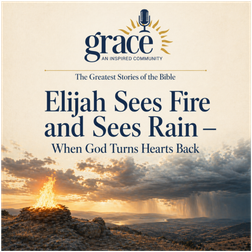
Elijah Sees Fire and Sees Rain — When God Turns Hearts Back

IA
Elijah Sees Fire and Sees Rain — When God Turns Hearts Back: In this episode, we reflect on the powerful story of Elijah in 1 Kings 18, where fire falls on Mount Carmel and rain returns after a long drought. At a time when Israel was spiritually divided, wavering between the Lord and Baal, Elijah stood with clarity, courage, and faith, calling the people back to the truth of who God is. Before a silent and compromised nation, he asked the question that cut to the heart of everything: “How long will you waver between two opinions?” Through Elijah’s obedience, God revealed both His power and His mercy—sending fire to expose false worship and sending rain to restore the land. This episode explores the exhaustion of divided loyalties, the futility of idols that cannot answer, and the grace of a God who does not simply display His glory, but turns hearts back to Himself. Elijah’s story reminds us that God still meets His people in drought, still answers with truth, and still sends mercy, even when it first appears as small as a cloud on the horizon.
Women of the Bible: Grace, Flaws, and God’s Purpose — Part 2
IA
Women of the Bible: Grace, Flaws, and God’s Purpose — Part 2...In Part 2, we explore the stories of Hannah, the woman with the bleeding issue, the Samaritan woman, the Canaanite woman, Mary of Bethany, the poor widow, and Mary Magdalene. These women were not remembered because their lives were easy or perfect, but because God met them in grief, weakness, suffering, and need—and used them in extraordinary ways. Their stories are a reminder that God’s grace is often seen most clearly through human brokenness, faithful surrender, and quiet courage.
1 de 2