Tesch Talks European History

Tesch Talks European History

por Marius Tesch
Temporada 1
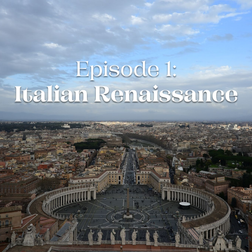
Italian Renaissance
In this episode, we explore the Italian Renaissance. We’ll look at the economic factors that made the Renaissance possible, the patrons who became sponsors of art and scientific breakthroughs, and the accomplishments that visitors from all around the world travel to Italy and marvel at.
Northern Renaissance
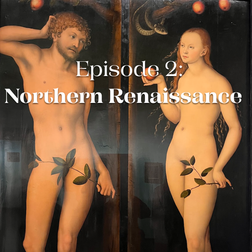
Last week, we learned about the rekindling of classical learning, science, and the arts that was fueled by tremendous economic growth and trade that historians call the “Renaissance.” Today, we head to Northern Europe, where a similar Renaissance was taking place. Like the artists, architects, and scientists of the Italian Renaissance that we talked about in our last episode, the Renaissance in Northern Europe focused on the potential of individuals. That is what Dürer represents: an artist whose love for learning and desire to express his ideas through his works had such a profound impact on their age, that they still resonate with us today.
Printing Press
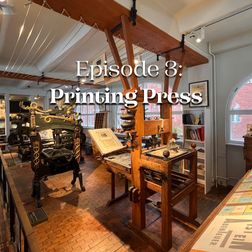
Printing had been invented in the city of Mainz by the craftsman Johannes Gutenberg. In a few short decades, its invention nearly brought down the institutional Christian church, allowed for the foundations of modern science and medicine, and led to the discovery of about half of the planet. In this episode, we will look at the history of how Europeans recorded human knowledge, and how an inventor in Mainz accidentally altered the future of humanity forever.
New Monarchs
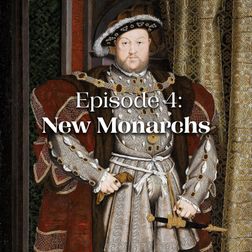
By the end of the sixteenth century, the New Monarchs had left the European continent transformed. New monarchs found ways to raise taxes and fill their states’ treasuries. New monarchs also sought to create a more unified national identity in their kingdoms. By centralizing power, professionalizing war, and tethering the Church to the crown, they did more than just expand their borders—they invented the concept of the nation-state. They found Europe a collection of private estates and left it a map of sovereign powers, proving that the pen of a letrado and the ledger of a Fugger were often mightier than any noble’s sword.
Exploration
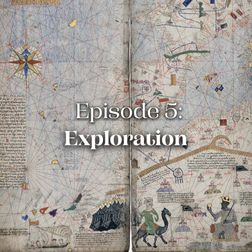
This was a century when European explorers were traveling farther than they had ever gone before from their own shores. Ferdinand and Isabella were competing with the Portuguese to find routes to travel to Southern Asia. These routes were incredibly valuable, as merchants could buy large quantities of luxury goods such as spices like pepper and cinnamon, porcelain, ivory, cotton, or even silk, then bring them back to Europe and sell them at a huge profit. But these voyages were also very risky. Signing on to a voyage of exploration was a bit like buying a lottery ticket, where you had just as good a chance of earning a fortune as you did of never returning. It is astonishing to imagine just how many sailors were willing to accept this risk and set sail for unknown shores, often without having any idea precisely where their destination was. Until 1434, European sailors would sail no further than Cape Bojador on the coast of Morocco. They were afraid that the currents and winds would never allow them to sail back northwards. But within less than a hundred years, an expedition sponsored by the Spanish crown would manage to sail all the way around the world.
Rivals on the World Stage
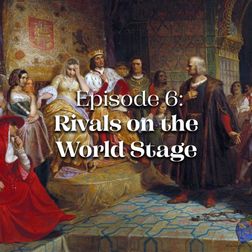
When the news reached Venice that Vasco da Gama had made it all the way to India and back by ship, the Venetians knew that their monopoly on selling luxury goods from Asia was over. The task of breaking the news to the Doge of Venice fell to Piero Pasqualigo, the Venetian diplomat stationed in Lisbon. Throughout the 1400s, European states like Portugal, Castile, and Venice were locked in a battle for trade dominance. Venice guarded its Mediterranean strongholds (meaning), Castile and Portugal looked outward to the uncharted Atlantic. With every new island that Portugal claimed, its neighbor Castile looked for ways to increase its own regional and global influence. This decades-long competition for trade ignited an age of discovery that permanently shifted the global balance of power from the Mediterranean to the Atlantic. In this episode, we look at how these power struggles played out.
Columbian Exchange
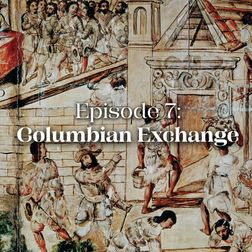
It boggles the mind to think that when the Taino people walked out onto the beaches of San Salvador and looked at Christopher Columbus, they weren’t just looking at men from another country; they were looking across a 15,000-year-old canyon of human separation. Columbus’s men brought weapons, clothes, and concepts forged by thousands of years of European, Asian, and African collision. But they also brought diseases that had never existed in the New World. In this episode, were going to talk about how the geographic isolation that had allowed these two worlds to grow into distinct, beautiful masterpieces was about to become the New World’s undoing.