Human evolution

Human evolution

por Stephen Placious
Temporada 1
Human evolution: Homo sapiens
Homo sapiens is a modern human species that originated in Africa and appeared about 200,000 years ago. During this time, humanity has undergone many biological, cultural and social changes.Biologically, Homo sapiens is larger in size and body shape than other human species such as Homo neanderthalensis and Homo erectus. They also have better logical, creative and linguistic thinking. These changes helped Homo sapiens to adapt to new habitats and grow rapidly.Culturally, Homo sapiens developed many new technologies such as stone tools, fire, and pottery. They also built the first villages and cities. These changes made it possible for Homo sapiens to live more centrally and cooperate with each other more effectively.Socially, Homo sapiens developed more complex relationships with each other. They formed small groups, tribes and even nations. These changes made it possible for Homo sapiens to protect themselves and their offspring from threats from the environment and other animals.About 100,000 years ago, Homo sapiens began to migrate out of Africa and onto other continents. They replaced other human species such as Homo neanderthalensis and Homo erectus and became the only human species on Earth.The migration of Homo sapiens has had a major impact on the environment and other animals. They have hunted many animals to extinction and destroyed many natural habitats. However, they also contributed to the development of new civilizations and made it possible for humans to live in many places on Earth.Homo sapiens is a species with strong adaptability and development. They have undergone many changes during the last 200,000 years and are currently the only human species on Earth.These changes have enabled Homo sapiens to survive and thrive, and will continue to help them face future challenges. Thanks to that Homo sapiens developed rapidly and became the only human species on Earth.
Human evolution: Homo habilis
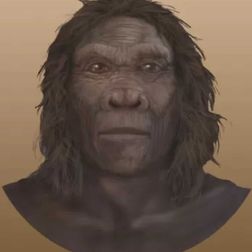
Homo habilis was an ancient human species that lived about 1.5 million years ago. They are considered the first humans to know how to make stone tools, and are one of the most important species in human evolution.Homo habilis was about the same size as modern humans, but had a smaller brain. They had wide and strong teeth, indicating that they were more carnivorous than other hominids.Homo habilis was the first human to use fire. This has helped them cook food, keep warm and keep wildlife away. Fire also helps them make better stone tools.Homo habilis lived in small groups, consisting of about 10 to 20 people. They move constantly in search of food and water.Homo habilis was an important human species in human evolution. They were the first humans to know how to make stone tools, know how to use fire and live in small groups. These traits helped Homo habilis survive and thrive, and eventually led to the birth of modern humans.Homo habilis was the first human to know how to make stone tools. They used stone to create simple tools such as axes, blunts, knobs, and knives. These tools were used for hunting, gathering, and food preparation.Homo habilis tools were crafted from cobblestone. They use rocks to break large cobblestones into smaller pieces. They then use these small pieces of stone to create tools of different shapes and sizes.Homo habilis was the first human to use fire. They use fire to cook food, keep warm and scare away wild animals. Fire also helped them make better stone tools.Homo habilis lived in small groups, consisting of about 10 to 20 people. They move constantly in search of food and water.Homo habilis was an important ancient human species in human evolution. They were the first humans to know how to make stone tools, know how to use fire and live in small groups. These traits helped Homo habilis survive and thrive, and eventually led to the birth of modern humans.
Human evolution: The Australopithecus
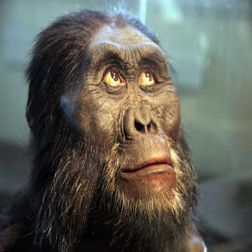
Australopithecus is an extinct genus of hominid dating from about 4.4 to 2.5 million years ago. They were the first hominids to be able to walk upright on two legs, and are thought to be the ancestors of modern humans.The first Australopithecus was discovered in 1924 in South Africa, and since then, scientists have found hundreds of fossils of this species in Africa. Australopithecus fossils show that they were small hominins, averaging about 1.3 meters tall and weighing about 30 kilograms. They have small skulls, small brains, and faces that are quite similar to monkeys. However, Australopithecus also shared some human-like features, such as straight legs, sloping shoulders, and flexible hands.Scientists believe that Australopithecus lived in a jungle environment. They are omnivores, and their food includes fruits, vegetables, small animals, and insects. Australopithecus lived in groups, and each swarm could have 10 to 20 members.Australopithecus are hominids that were very important in human evolution. They were the first hominids to be able to walk upright on two legs, and this helped them expand their range and access more food sources. Australopithecus were also the first hominids to use tools, and this made it possible for them to survive and thrive in harsh environments.Australopithecus finally became extinct about 2.5 million years ago. The cause of their extinction is still unknown, but some scientists think it may be due to climate change, or to being hunted by other predators.Some well-known species of Australopithecus include Australopithecus afarensis, Australopithecus africanus and Australopithecus sediba.Australopithecus are hominids that were very important in human evolution. They were the first hominids to be able to walk upright, use tools, and live in groups. Australopithecus laid the foundation for the development of modern humans.


Human evolution: The Ape II
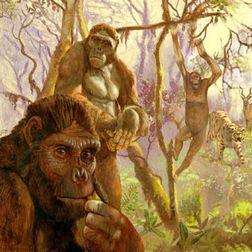
The earliest apes evolved into many different species of apes over the course of evolution. Some apes have become extinct, while some apes have evolved into humans. Humans are the only apes that exist today.The evolution of humans from apes is a long and complex process. The earliest apes developed human-like traits such as upright gait, tool use, and intelligence. These traits helped humans adapt to new habitats and eventually led to the development of modern humans.Here are some key features of human evolution from apes:Upright gait: The earliest apes had a stooped, ape-like gait. However, the apes later developed an upright gait. The upright gait has made it easier for humans to move on the ground and has opened up new opportunities for humans in terms of habitat.Use of tools: The earliest apes did not use tools. However, the apes later developed the ability to use tools. The ability to use tools has helped humanity solve the more difficult problems of life and has given humanity a competitive advantage over other animals.Intelligence: The earliest apes did not have high intelligence. However, the apes then developed more intelligence. Intelligence has helped mankind learn and adapt to new living environments.The evolution of humans from apes is a long and complex process. However, human-like traits such as upright gait, tool use, and intelligence helped humans adapt to new habitats and eventually led to the development of modern humans.

Human Evolution: The Ape
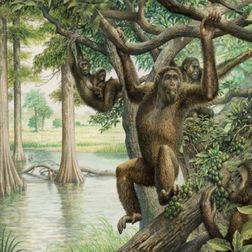
The first apes appeared in Africa about 7 million years ago. They are small, hairy creatures that eat fruit and live in trees. The earliest known ape species include Sahelanthropus tchadensis, Orrorin tugenensis, Ardipithecus ramidus and Australopithecus afarensis.Sahelanthropus tchadensis is the earliest known hominid, dating to about 7 million years ago. It was discovered in Chad, Africa. Sahelanthropus tchadensis has some ape-like and some human-like features. For example, it has an ape-like face, but it has a more upright gait.Orrorin tugenensis is a species of ape that lived about 6 million years ago. It was discovered in Kenya, Africa. Orrorin tugenensis has some ape-like and some human-like features. For example, it has long arms and legs, but it has ape-like teeth.Ardipithecus ramidus is a species of ape that lived about 4.4 million years ago. It was discovered in Ethiopia, Africa. Ardipithecus ramidus has some ape-like and some human-like features. For example, it has ape-like hands and feet, but it has a more upright gait.Australopithecus afarensis is a species of ape that lived about 3.9 million years ago. It was discovered in Ethiopia, Africa. Australopithecus afarensis is the most famous gibbon. It is the first known ape to walk upright. Australopithecus afarensis is also the first known ape to use tools.
Human evolution
The history of human evolution is a long and complex process, spanning millions of years. This process began with small, tree-dwelling apes, and ended with modern, highly intelligent and civilized humans.Scientists have discovered that the first apes appeared in Africa about 7 million years ago. These gibbons are small, hairy, and move on all fours. However, they have begun to develop some characteristics that distinguish them from other apes, such as larger brains and the ability to stand upright.About 2.5 million years ago, a new species of ape appeared, called Australopithecus. Australopithecus had more human-like features than other apes, such as a larger brain, the ability to stand upright, and walk on two legs. Australopithecus was also the first ape to use tools.About 1.5 million years ago, a new species of ape appeared, called Homo habilis. Homo habilis was more intelligent than Australopithecus and used a wider variety of tools. Homo habilis was also the first apes to start processing food.About 200,000 years ago, a new species of ape appeared, called Homo sapiens. Homo sapiens is the most modern and highly intelligent apes. Homo sapiens has the ability to think abstractly, create and communicate using language. Homo sapiens was also the first apes to cultivate and raise livestock.The history of human evolution is also a process full of wonders. Over millions of years, humans have evolved from small, tree-dwelling apes, into highly intelligent and civilized beings. The evolutionary history of man is a testament to the power of life and human adaptability.7 million years ago: The first apes appeared in Africa.2.5 million years ago: Australopithecus appeared.1.5 million years ago: Homo habilis appeared.200,000 years ago: Homo sapiens appeared.The history of human evolution is a process of constant development and change. We still do not know what will happen in the future, but it is certain that humans will continue to develop and progress.