Stay Current in Pediatric Surgery

Stay Current in Pediatric Surgery

por StayCurrent: Pediatric Surgery
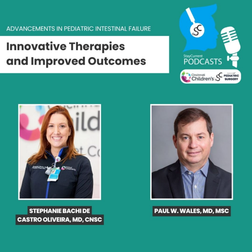
Advancements in Pediatric Intestinal Failure: Innovative Therapies and Improved Outcomes
Explore the latest advancements in pediatric intestinal failure, including innovative therapies and improved patient outcomes. Dr. Stephanie Bachi de Castro Oliveira and Dr. Paul W. Wales discuss intestinal rehabilitation, challenges like chronic inflammation and liver disease, and the crucial role of multidisciplinary teams. They also highlight groundbreaking nutritional strategies and novel peptide therapies that are transforming care. This podcast episode features Dr. Stephanie Bachi de Castro Oliveira and Dr. Paul W. Wales from Cincinnati Children's, discussing advancements in pediatric intestinal failure. They define intestinal failure as a reduction in functional intestinal mass requiring parenteral support for an extended period, primarily caused by short bowel syndrome. The conversation highlights a shift in focus from survival to managing long-term complications like neurocognitive outcomes and caregiver burnout. Intestinal rehabilitation programs are key to optimizing intestinal function and adaptation, with multidisciplinary teams improving survival and reducing transplant rates. They delve into the spectrum of liver disease associated with intestinal failure, risk factors like prematurity and infections, and the critical management of parenteral nutrition. The doctors provide a history of lipid emulsions, explaining how traditional soybean-based lipids can cause liver dysfunction and the benefits of newer omega-3 balanced options. They also discuss innovative central line lock solutions like KiteLock and the transformative impact of GLP-2 analogs such as Teduglutide and Apraglutide on reducing TPN dependence and promoting bowel lengthening. The ultimate goal is to avoid transplantation and lifelong immunosuppression through integrated, specialized care.
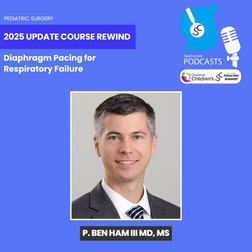
Update Course Rewind 2025: Nerve Monitoring - Diaphragm Pacing for Respiratory Failure
Dr. P. Ben Ham III discusses diaphragm pacing as an intervention for children with respiratory failure, aiming to help them wean off mechanical ventilation. The video covers indications such as central hypoventilation, spinal cord injury, ALS, and metabolic disorders like Pompe's disease. It explains the mechanism of phrenic nerve and diaphragm muscle stimulation, and differentiates between various device types.
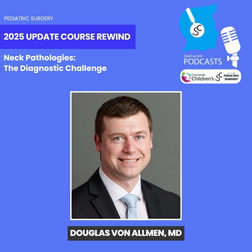
Update Course Rewind 2025: Neck Pathologies - The Diagnostic Challenge
This video, featuring Dr. Douglas von Allmen from Cincinnati Children's Hospital, explores the differential diagnosis and management of cystic neck masses in pediatric patients, specifically ranulas and lymphatic malformations. It presents a clinical case that highlights diagnostic challenges and discusses various treatment approaches, including surgical excision, sclerotherapy, and emerging medical therapies. The role of genetic testing in guiding treatment for lymphatic malformations is also covered.
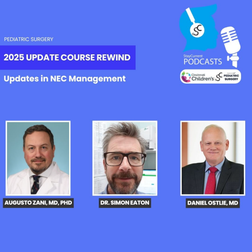
Update Course Rewind 2025: Updates in Necrotizing Enterocolitis (NEC) Management
Narrated by Lizzy Lee, PA-C & Maggie Koenig, FNP-BC, this podcast, a rewind from the 2025 Pediatric Surgery Update Course, delves into crucial updates in Necrotizing Enterocolitis (NEC) management. Leading pediatric surgeons Drs. Augusto Zani, Simon Eaton, & Dan Ostlie discuss diagnostic challenges, highlighting the superior sensitivity of ultrasound over X-rays for early detection of surgical NEC indicators. The panel also debates various surgical interventions, including primary anastomosis versus ostomy, and examines emerging evidence on optimizing recovery outcomes for neonates with NEC.
Update Course Rewind 2025: The Recurrent TEF Problem
This video, featuring experts from Cincinnati Children's, discusses the challenging management of recurrent tracheoesophageal fistula (TEF) years after initial repair. Dr. Douglas von Allmen presents a clinical scenario and highlights the risk of recurrent laryngeal nerve (RLN) injury during re-repair. The episode emphasizes a transtracheal approach to improve surgical exposure and minimize potential harm to the RLN, thereby reducing long-term voice and aspiration issues.
Update Course Rewind 2025: Sacral Nerve Stimulation for Refractory Pediatric Fecal Incontinence
This video, featuring Dr. P. Ben Ham III, discusses sacral nerve stimulation (SNS) as a treatment option for children with severe fecal incontinence and constipation refractory to conventional medical therapies. It presents a clinical scenario of a 13-year-old male and reviews the technique, efficacy, and potential complications of SNS in pediatric patients. The discussion highlights improved continence rates and important considerations regarding its current FDA approval status for children.
Updated Course Rewind 2025: Branchial Cleft Cyst Management: Endoscopic vs. Open Surgical Approaches
This video, featuring Dr. Douglas von Allmen from Cincinnati Children's Hospital, explores the management of branchial cleft cysts. It discusses a clinical scenario of a child with a painless neck swelling and delves into the congenital nature of these cysts. The video highlights the comparison between endoscopic cauterization and open surgical excision, emphasizing the benefits of the endoscopic approach in reducing morbidity and avoiding recurrent laryngeal nerve injury for specific cyst types.
Update Course Rewind 2025: Nerve Monitoring in Pediatric Thyroid Surgery
This video recaps key highlights from the 13th Annual Pediatric Surgery Update Course, focusing on nerve monitoring in pediatric thyroid surgery. Dr. Ben Ham discuss clinical scenarios, the utility of TI-RADS in children, and the role of intraoperative nerve monitoring (IONM) in preventing recurrent laryngeal nerve injury. The discussion covers current guidelines, surgeon expertise, and advancements in monitoring devices for pediatric patients.
Inside a FETO Procedure: Fetoscopic Balloon Tracheal Occlusion with Dr. Beth Rymeski
This video, presented by Dr. Beth Rymeski of Cincinnati Children's Hospital, details the procedural aspects of Fetal Endoluminal Tracheal Occlusion (FETO). It explains how a fetoscope is used to insert a balloon into the fetal trachea to temporarily block fluid, facilitating lung expansion and preventing pulmonary hypoplasia in CDH babies. The presentation includes real-life video footage, demonstrating critical navigation techniques through fetal anatomy and careful balloon placement.
Update Course Rewind 2025: New Technologies for Central Line Management
This video explores innovative technologies for central line management, focusing on solutions for blocked superior vena cava (SVC). Dr. Nathan Fagan discusses the MeritMedical Surfacer system for image-guided SVC recanalization via a femoral approach. The presentation also delves into the potential of 4D intracardiac echo catheters for radiation-free recanalization and reviews transhepatic and translumbar access as last-resort options when traditional venous access is lost.
1 de 45