Building Trust to help Identify Ebola Infected Patient and contact tracing in Dr Congo, Uganda, and Kenya to P
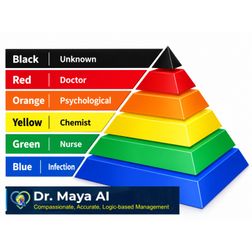
Ebola is spreading faster in DR Congo because people have lost trust, and the World Health Organisation is unable to contain the infections. It is clear that people are not reporting cases, nor going to hospitals; instead, they are escaping and returning to their communities and homes. They are also removing bodies and transporting them to villages without proper protection. The only solution is to create Prema Kiosk, involving local people such as retired nurses, doctors, priests, teachers, and respected community members to be guardians of Prema Kiosk. These guardians will be motivated by financial incentives, and people will listen to them. Maya Advocates can be trained to assist in the community and monitor infected individuals. Prema Kiosk, powered by Dr Maya AI and created by Dr Kadiyali Srivatsa, can identify infected persons and their contacts, and monitor their movements using smartphones. First, a suspected patient or family member contacts a PREMA Guardian, scans a QR code, or uses a smartphone link. The system asks simple questions in the local language, recording symptoms, timing, exposure, funeral attendance, household members, travel routes, and close contacts. Second, Dr Maya AI generates a structured summary—not a diagnosis, but a risk assessment. It advises the person on what to do next and, if the risk is high, forwards the case to trained local public health responders. Third, contacts are identified swiftly: who shared a house? Who cared for the patient? Who touched vomit, blood, stool, bedding, clothing, or the body? Who attended the funeral? Who travelled in the same vehicle after symptoms began? These contacts can then receive daily symptom check-ins for the incubation period. Fourth, smartphones may support movement monitoring through consent-based check-ins. A person under observation can confirm their location, temperature, symptoms, and whether they need food, water, medicine, or emotional support. If isolation is required, the system must also help ensure their well-being during that period. It cannot be reasonable to ask a low-income family to isolate without support. PREMA Guardians can coordinate food delivery, reassurance calls, spiritual support, and referrals to official responders. Fifth, the system can create anonymised community heat maps. If several blue or red-blue patterns appear in a single village, market, church, school, mining camp, or transport route, public health teams can investigate sooner. That is not lockdown thinking. That is early-warning thinking. Sixth, PREMA Guardians can transform safe burial from a foreign order into a community-respected ritual. Priests and elders can explain that love does not require physical contact. Love means protecting the living. Families can be offered prayers, video memorials, witnessed burial, and dignity without dangerous contact. This is the missing bridge. Hospitals treat disease. Laboratories confirm the disease. WHO coordinates the response. But the community decides whether the response will succeed. Deploying the online PREMA system on smartphones and computers, training local guardians, translating key scripts, creating emergency QR access points, and connecting high-risk cases to authorised public health teams. Day one: identify community guardians and launch the digital PREMA response cell. It is the missing front door of public health. And in the Democratic Republic of Congo, that front door may be the difference between an outbreak that is chased and an outbreak that is stopped.