The Public Comment presented by ShelterWF

The Public Comment presented by ShelterWF

por Keegan Siebenaler
Temporada 1

"The Color of Law" with Mallory Phillips

How does a book about how the government segregated America apply to a valley that's 95% white? Keegan keeps circling that question with ShelterWF co-founder Mallory Phillips, a planning commissioner and social worker who first handed him the book. Richard Rothstein's argument is blunt: segregation was built on purpose, by government, and zoning was the main tool. They trace it from Buchanan v. Warley to the "neighborhood character" language still sitting in Whitefish's growth policy, then to Montana's own erased Black communities, sundown towns, and the histories the book skips. 00:00 Intro 03:32 Segregation As Policy 06:46 The Spread of Zoning 7:51 Neighborhood character and Montana's erased history 29:02 From race to class 35:14 Public housing, gentrification, and reform

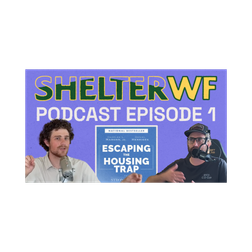
Episode 1- Escaping the Housing Trap with Nathan Dugan

In the first ShelterWF podcast episode, host Keegan Siebenaler talks with ShelterWF co-founder and Livable Flathead executive director Nathan Dugan about Strong Towns’ “housing trap,” where communities say they need both ever-rising home prices and affordable housing. They discuss how U.S. policy over decades turned housing into a financial instrument, leading government to intervene to prevent price declines, chronic underbuilding since the 1980s, and rising prices that benefit existing homeowners, local governments, and the finance sector while harming renters, first-time buyers, and the poor. The conversation critiques rigid, top-down zoning and regulatory barriers (including fire codes) that limit “missing middle” housing and encourage only single-family subdivisions or large apartments. They argue subsidized/deed-restricted housing can’t scale and often avoids lowering market prices. They review six principles from the book and emphasize incremental, neighborhood-scale development such as ADUs, duplexes, and fourplexes. 00:00 Welcome and Introductions 00:17 Livable Flathead Explained 00:54 Strong Towns and Today’s Topic 01:52 Defining the Housing Trap 03:44 Housing as a Financial Instrument 06:00 Why Prices Keep Rising 07:43 Winners, Losers, and Local Politics 13:12 From Finance to Zoning 14:08 Why Zoning Breaks Cities 18:22 Codes, Fire Rules, and Hidden Motives 22:03 Two Housing Products and Five-Over-One 26:21 Affordable Housing Doesn’t Scale 29:31 Six Principles to Fix Housing 36:23 Incremental Development Playbook 38:43 Wrap-Up and Final Thoughts


Episode 3: Land Trusts with Kim Morisaki

Kim Morisaki runs the Northwest Montana Community Land Trust. She's also a sixth-generation Montanan out of three generations of Flathead builders, and she was my first boss. We get into how the land trust model actually works, why the organization was built in 2009 to solve a problem that no longer exists, and the argument I most wanted to have on tape: whether subsidized housing and zoning reform are competing strategies or the same one. Kim's line is that we regulated ourselves into this, so we can probably regulate ourselves out. Her dad bought a lot and built a house for about three years of his income when he was 24. Nobody is doing that now. Guest and organization Kim Morisaki, Executive Director, Northwest Montana Community Land Trust Applications, current listings, and donations: nwmtclt.org Give during the Great Fish Community Challenge The Great Fish Community Challenge runs August 11 through September 11, 2026. The Whitefish Community Foundation awards a percentage match on the first $25,000 each organization raises. A record 89 Flathead Valley nonprofits are participating this year. The free launch party is Tuesday, August 11, 5:00 to 7:30 p.m. at Glacier Bank Park in Kalispell, home of the Glacier Range Riders. Food, ice cream, booths from all 89 organizations, and a drawing for five $1,000 grants to the nonprofit of your choice. ShelterWF is a 501(c)(4), so we can't participate in Great Fish. If you want to support the advocacy side of this work, give to us directly. Links Neighborhood Stabilization Program, the HUD program that capitalized the land trust in 2009. Program background Trailview, Whitefish. Developer Jerry Dunker took additional density in exchange for deed-restricting the homes. The council later released 10 of the 58 to market rate, leaving 48 restricted, and the land trust bought several down further. Whitefish Pilot coverage Montana's 2023 housing reforms, which Kim credits with finally changing what you're allowed to build: SB 323 on duplexes, SB 528 on ADUs, and SB 382, the Montana Land Use Planning Act. Montana Free Press overview 00:00 Coming home to a valley you can't afford, and how a land trust works 07:17 Starter homes, small lots, and the neighborhoods we already love 12:14 From foreclosure crisis to frozen market 19:59 Does subsidized housing compete with supply? 26:54 $14,000 and three years of income 36:09 Japan, Cambridge, and what sprawl costs a city 46:04 The Great Fish Community Challenge