Scientific Health: Education and Human Performance

Scientific Health: Education and Human Performance

por Scientific Health: Education and Human Performance
Temporada 1
Are peptides supplements? The problem with reclassifying peptides to fall under DSHEA
There is a current political push to reclassify a growing number of potential therapeutics from being a potential drug to being a supplement. But could moving synthetic peptides under DSHEA's dietary supplement framework be a serious public health mistake? Well, let's talk about that... Please make sure to follow our work on: Webpage @ https://www.scientific-health.org/ YouTube @ https://www.youtube.com/@Scientific.Health.Education Substack @ https://jeclark.substack.com Instagram @ https://www.instagram.com/sci.health.performance/ Threads @ https://www.threads.net/@sci.health.performance Bluesky @scientific-health.bsky.social If you want to support what is being published, please make sure to subscribe and become a supporter on the substack.

The problem with oversimplification... myths of homeostasis
We have discussed already issues of oversimplification leading to misinformation being a foundation of much of the dietary advice that we encounter on a daily basis. But what about another bit of oversimplification that can have a fundamental impact on how we talk about how our body works and what it means to be healthy. Well, let's talk about that... Please make sure to follow our work on: Webpage @ https://www.scientific-health.org/ YouTube @ https://www.youtube.com/@Scientific.Health.Education Substack @ https://jeclark.substack.com Instagram @ https://www.instagram.com/sci.health.performance/ Threads @ https://www.threads.net/@sci.health.performance Bluesky @scientific-health.bsky.social If you want to support what is being published, please make sure to subscribe and become a supporter on the substack.

What is the problem with the "maxxing" culture?
Social media has fundamentally reshaped how individuals conceptualize health, identity, and self-improvement. Recently, there has been a movement labeled as "maxxing" that pushes the notion of what is healthy and what behaviors should be used to achieve health. As with many fads related to health we have mixture of pseudoscience and logical fallacies pushing a health narrative, but what is the impact of the emerging “maxxing” trends across social media platforms on our health? Well, let's talk about that... Please make sure to follow our work on: Webpage @ https://www.scientific-health.org/ YouTube @ https://www.youtube.com/@Scientific.Health.Education Substack @ https://jeclark.substack.com Instagram @ https://www.instagram.com/sci.health.performance/ Threads @ https://www.threads.net/@sci.health.performance Bluesky @scientific-health.bsky.social If you want to support what is being published, please make sure to subscribe and become a supporter on the substack.
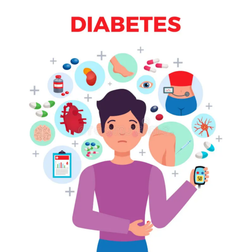
Diabetes... is it a sugar disease?
We’ve been taught that sugar is the villain of the diabetes story, but how true is that story? Well, let's talk about that... Please make sure to follow our work on: Webpage @ https://www.scientific-health.org/ YouTube @ https://www.youtube.com/@Scientific.Health.Education Substack @ https://jeclark.substack.com Instagram @ https://www.instagram.com/sci.health.performance/ Threads @ https://www.threads.net/@sci.health.performance Bluesky @scientific-health.bsky.social If you want to support what is being published, please make sure to subscribe and become a supporter on the substack.

Is there any truth to learning styles?
We've all heard that we learn best if taught with our preferred learning style, but does this idea match what you know about how the brain works and how we learn? Well, let's talk about that... Please make sure to follow our work on: Webpage @ https://www.scientific-health.org/ YouTube @ https://www.youtube.com/@Scientific.Health.Education Substack @ https://jeclark.substack.com Instagram @ https://www.instagram.com/sci.health.performance/ Threads @ https://www.threads.net/@sci.health.performance Bluesky @scientific-health.bsky.social If you want to support what is being published, please make sure to subscribe and become a supporter on the substack.
It is more than subtle teasing or side comments... the dangers of having an "Almond" parent
We see social media stories, the memes and hear the shorthand of "Almond." A label that specifies the lifestyle. One rooted in a mom's focus on diets of Caloric restriction, obsessive "clean eating," the other founded on a dad's obsession with biohacking, exercising to the max, and eating to ensure correct "macros." LIfestyles that apply the facade of trying to help kids be "healthier," all while projecting their own insecurities about their bodies and their body image onto their children. While the term began as a meme, actions that are housed under "just teasing" it has evolved beyond the tasteless humor to belie a systemic issue of misinformation, parental bias, and the intergenerational transmission of disordered eating across generations. The "Almond" parenting, what is it and why we should be concerned. Well, let's talk about that... Please make sure to follow our work on: YouTube @ https://www.youtube.com/@Scientific.Health.Education Substack @ https://jeclark.substack.com Instagram @ https://www.instagram.com/sci.health.performance/ Threads @ https://www.threads.net/@sci.health.performance Bluesky @scientific-health.bsky.social If you want to support what is being published, please make sure to subscribe and become a supporter on the substack.
Should we be concerned about sweetened drinks being unsafe?
There has been a recent stream of social media posts from HHS Secretary RFK Jr calling into question the safety of sugar-sweetened beverages from Starbucks and DunkinDonuts. But is there a concern we should have about these beverages? Well, let's talk about that... Please make sure to follow our work on: YouTube @ https://www.youtube.com/@Scientific.Health.Education Substack @ https://jeclark.substack.com Instagram @ https://www.instagram.com/sci.health.performance/ Threads @ https://www.threads.net/@sci.health.performance Bluesky @scientific-health.bsky.social If you want to support what is being published, please make sure to subscribe and become a supporter on the substack.

A real plan or just another diet fad?
In the endlessly rotating carousel of diet trends, few formulas capture public attention like a rule built around memorable numbers. The latest entries in the numerical nutrition sweepstakes are the “30-30-30” and “30-30-3” plans. Both promise structure, simplicity, and metabolic magic. Both are spreading rapidly across social media. And both sit at an uncomfortable intersection between evidence-based health principles and the seductive pull of diet culture. But are these plans legitimate health strategies — or simply the newest iteration of the same old wellness cycle?Well, let's talk about that... Please make sure to follow our work on: YouTube @ https://www.youtube.com/@Scientific.Health.Education Substack @ https://jeclark.substack.com Instagram @ https://www.instagram.com/sci.health.performance/ Threads @ https://www.threads.net/@sci.health.performance Bluesky @scientific-health.bsky.social If you want to support what is being published, please make sure to subscribe and become a supporter on the substack.
The problem with moralizing food choices
There has been a lot of discussion about the scientific credibility of the MAHA influenced dietary guidelines recently. But with the rollout of the media and online resources that was met with the rollout of ad blitzes for eating "good food" to counter the messages from others related to accepting the more nuanced understanding of diet, exercise health we need to ask, what's the problem with moralizing food choices? Well, let's talk about that... Please make sure to follow our work on: YouTube @ https://www.youtube.com/@Scientific.Health.Education Substack @ https://jeclark.substack.com Instagram @ https://www.instagram.com/sci.health.performance/ Threads @ https://www.threads.net/@sci.health.performance Bluesky @scientific-health.bsky.social If you want to support what is being published, please make sure to subscribe and become a supporter on the substack.

Are the low fitness standards an explanation?
There has been a lot of political discussions around the deployment of ICE and DHS through the US, with protests and interactions with officers leading to less than desired responses by some of the DHS and ICE personal. Some want to blame it on lack of training and teaching, but what about the laxity of fitness standards. Is having low fitness a potential avenue for explanation and a way to solve some of these issues. Well, let's talk about that... Please make sure to follow our work on: YouTube @ https://www.youtube.com/@Scientific.Health.Education Substack @ https://jeclark.substack.com Instagram @ https://www.instagram.com/sci.health.performance/ Threads @ https://www.threads.net/@sci.health.performance Bluesky @scientific-health.bsky.social If you want to support what is being published, please make sure to subscribe and become a supporter on the substack.
1 de 19