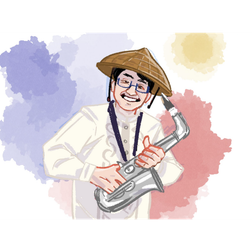
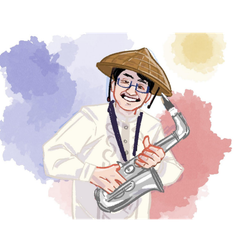
Saxing Around With Keith: The Sax-Kuwentuhan of Ketong

Saxing Around With Keith: The Sax-Kuwentuhan of Ketong

por Keith Olivares
Temporada 1
Episode 9: The Reed Revolution
It's just a tiny piece of cane. Or maybe it's synthetic. Either way, it costs between $3 and $42, and it completely shapes your sound. Welcome to the world of saxophone reeds—where half the reeds in every box are duds, where you can love something for two weeks and then watch it fall apart, and where the quest for consistency can turn into a decades-long journey. In this episode, Keith shares his entire reed evolution—from almost quitting the saxophone at age 15 because his teacher started him on a Vandoren Classical #4 (way too hard for a beginner), to finding the Vandoren ZZ that finally unlocked altissimo, to settling on D'Addario Select Jazz 2M Filed as his benchmark for brightness and consistency. But the story doesn't end there. Keith also dives into the world of synthetic reeds—testing the indestructible Forestone Hinoki (his son used one reed for a year and a half!) and the Légère American Cut (amazing tone, but only lasts two weeks before splitting at $42 a pop). The episode includes a live 4-reed comparison where Keith plays the same musical examples on D'Addario Select Jazz, BetterSax, Forestone Hinoki, and a degraded Légère so you can hear the tonal differences for yourself. Keith also shares his wish list of reeds he wants to try next—D'Addario LaVoz (the reed Kenny G uses), Rigotti Gold (the company that makes reeds for boutique brands like BetterSax and Roberto's Winds), Boston Sax Shop Silver or Red Box, Forestone Bamboo Black with Double Blast XS, and Fibracell Premier. The big takeaway? Experimenting with reeds is the cheapest way to transform your saxophone sound. You can spend $30-40 on a box of reeds and completely change your tone, compared to hundreds or thousands for a new mouthpiece or saxophone. The reed is where the vibration starts—it's where your tone is born. So don't be afraid to experiment until you find the one that clicks. Saxing Around with Keith: The Sax-Kwentuhan of Ketong --- Contact: saxingkeith@gmail.com YouTube: @JustSaxingWithKeith
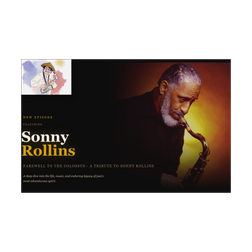
Episode 8: Farewell to the Colossus - A Tribute to Sonny Rollins
This week, we say goodbye to the Saxophone Colossus. Sonny Rollins - the last of the jazz gods - has left the stage. And for anyone who plays the saxophone, this loss cuts deep. In this extended tribute episode, Keith shares how he discovered Sonny late (thanks to Manila's smooth jazz radio scene), what makes his sound so impossible to replicate, and why his legacy goes far beyond the notes he played. What You'll Hear: • The Invisible Giant - Why Sonny wasn't on Manila's jazz radio in the '90s • The Battle of the Horns - Buescher vs. Selmer, Otto Link vs. Berg Larsen • Overtone Mastery - The deceptive simplicity of "Alfie's Theme" and "St. Thomas" • The Warrior Spirit - The Opus 40 jump story (he broke his heel and kept playing!) • Fearless Evolution - From bebop to avant-garde without hesitation • The Sabbatical Master - Williamsburg Bridge, India, and the courage to walk away • The 9/11 Concert - Six blocks from Ground Zero, four days later he played • Pulmonary Fibrosis - How the Colossus found grace when he lost his voice • The Piano-Less Trio - Why Sonny didn't need chords to create a world of sound • The Controversial Take - Why Keith prefers Sonny over Coltrane (it's the fun factor) This episode is reverent, personal, educational, and deeply emotional. It's a celebration of a life spent in service to the music. Mentioned Albums: - Saxophone Colossus - The Bridge - Way Out West - Our Man in Jazz - East Broadway Run Down - Without a Song: The 9/11 Concert - Next Album If you play saxophone, or if you just love jazz, this one's for you. Rest in power, Sonny Rollins. The echo of your horn on the Williamsburg Bridge will never fade.
Episode 7 - The Manila Blues - Parallel Universes, Hidden Lineages, and the sound that was always yours
Keith discovers the Manila blues scene he never knew existed — even though he was literally in the same neighborhood, sometimes in the same venues, just on the wrong nights. From Binky Lampano and Dean's December at Red Rocks while Keith was at Birdland watching jazz. To 70's Bistro Sundays he never attended. To Martini's at the Mandarin Oriental where he knew more blues than the band. To the Birdland-to-Ozone Disco tragedy that took 162 lives one month after he left the country. Plus: the complete Manila Blues Taxonomy — BINO, BIVO, BIB, TBR, and a fifth category Keith is coining tonight. The four-district map. The family tree. And why your identity doesn't require having been in the room where it happened. The episode ends with the first installment of the Filipino Blues Suite: "Magtanim ay Di Biro" — a Filipino folk song about planting rice, played as Delta blues. Solo. Raw. The way it starts before the band joins in. The blues was always in the soil. We just didn't know what to call it. Tribute to Binky Lampano, Eddie Katindig, and the Filipino blues pioneers who created art in the margins.
Episode 6: Learning Blues in a Vacuum
Keith shares how he learned to play blues saxophone without a teacher, a local scene, or even YouTube. From Ray Charles's "The Right Time" to a bootleg cassette tape featuring Muddy Waters and Big Mama Thornton, Keith traces his blues education from Manila in the 1990s — through years of playing in a vacuum — to his current deep dive into blues saxophone through SaxSchool.online and his transcription project: David "Fathead" Newman's "Hard Times." Along the way, he talks about the honking and growling techniques that define the blues saxophone sound, the challenge of playing blues on alto when most blues is played on tenor, his discoveries of Earl Bostic and Vi Redd, and why he still sings Big Mama Thornton's "Hound Dog" at karaoke — never Elvis's version.
Episode 5: The Multi-Instrumentalist - Gear, Grooves, and the Jam
Keith and Dr. Anton Marquinez continue their conversation with Part 2 - diving deep into Anton's journey as a multi-instrumentalist (guitar, keyboards, saxophone, and the Brazilian cuica drum!), the legendary Iskul Bluekol cover band days, and a full gear shootout comparing Selmer Mark VIs to Yamaha 62 Purple Logos.
Episode 4 - Day Job, Night Gig - How Busy Professionals Make Time for Music
How do you balance the high-stakes world of neurology with the rhythmic demands of jazz? In Part 1 of this special "Sax-Kuwentuhan," Keith sits down with longtime friend, neurologist, and Jazzilog saxophonist Dr. Anton Marquinez. Anton shares his fascinating journey from growing up in the Philippines with Mike Ruivivar to building a medical career in the US—all while teaching himself to play the saxophone after starting out on the guitar. We dive into the mindset required to master a new instrument during medical school and the discipline of maintaining a "night gig" groove while working a demanding "day job." Highlights of this episode include: * The Origin Story: Anton’s childhood friendship with Mike Ruivivar and their shared musical roots. * The Transition: From guitar to sax—the challenges of being a self-taught horn player in the middle of medical training. * The "Day Job, Night Gig" Balance: Real-world advice on making time for music when life gets busy. * The Cuica Demo: A special look (and listen) at the unique Brazilian friction drum that adds a whole new dimension to the rhythm. Whether you're a busy professional trying to find time for your instrument or a gear-head interested in the "Jazzilog" sound, this episode is packed with insights on passion, discipline, and the joy of "saxing around." --- Join the conversation: Just keep on saxing around. #SaxingAroundWithKeith #SaxKuwentuhan #Jazzilog #AntonMarquinez #DayJobNightGig #Saxophone #NeurologyAndMusic #Cuica #BuescherToYamaha
Episode 3: From Student Horn to Silver Soul: The 30-Year Upgrade
Is it the player or the horn? In this episode, Keith takes us through the three-decade history of his primary instrument. We start in 1986 in San Juan, Metro Manila, where a $78 Buescher Aristocrat 200 became his first "voice." Keith shares the stories that made that student horn legendary—from failing at transposition in his first band to the "Bugle vs. Saxophone" battle at the 1991 SEA Games, and the unforgettable "Secret Harana" where he serenaded his wife under a Quezon City streetlamp. Finally, we jump to 2019, where a text message from a music store manager led to a life-changing Christmas gift: the Yamaha YAS-62IIIS "Silver Beauty." Keith discusses the technical and psychological shift of moving to a pro horn and settling the debate: Does the silver finish actually change the sound? In this episode: * The Buescher Era: Growing up with a student horn in the Philippines. * The Bugle Battle: Winning over the crowd with Jose Mari Chan's "Beautiful Girl." * The Harana: The cultural tradition of the Filipino serenade. * The Gear Hunt: Testing Selmer, Yanagisawa, and Eastman before finding "the one." * Lacquer vs. Silver: Why the YAS-62S felt more "alive" than the standard finish. Just keep on saxing around. 🎷🔥
My Mouthpiece Journey... So Far ;-)
In this episode, I'm confessing my mouthpiece obsession – from the Selmer Metal Jazz size F that became my college setup, to discovering the CE Winds Studio Sonic (my first altissimo G!), and finally landing on the Theo Wanne Earth 2. You'll hear stories about meeting killer sax players like Scott Solomon in Old Bridge, NJ, the time I shared a cab with Joel Frahm AND a swarm of bees in NYC, and meeting Grammy-nominated saxophonist John Michalak. I'll also explain why an alto mouthpiece sized "F" is brutal for beginners, but a tenor "F" is totally different. And yes – I'll make the big confession. The one my wife discovered. Let's just say... she had questions. If you're a gear nerd, a mouthpiece chaser, or just someone who's wondered "does this mouthpiece really make a difference?" – this one's for you. Both descriptions are now Anchor-ready. You're all set to upload tonight! 🎷
Episode 1: The Altissimo Struggle
In this episode, you'll hear about my journey from Yamaha Music School in Greenhills, Philippines to gigging in New Jersey with two bands (Jazzilog and Dizzy Cats). I'll talk about the nightmare of practicing altissimo in a living room, then a bathroom, then finally escaping to the garage. You'll hear multiple live attempts at David Sanborn's "The Dream" – including the ones where I completely bomb. And I'll share the YouTube video and techniques that finally helped me crack the code. This is the story of how a Spyro Gyra album from 1982 – Incognito – changed my life when I first heard it in 1986, and why I still practice in my garage at night (because my neighbors need sleep). If you've ever struggled with altissimo, bombed at a gig, or wondered if you'll ever sound like your heroes – this episode's for you.
Episode 5 Bonus Material - Jam Session: JP De Leon's OFW Blues
Bonus
Bonus Material from Episode 5 -- We were jamming to a song our friend, JP De Leon, composed years ago. JP De Leon on the Guitar and vocal, Anton Marquinez on Keyboard, Mike Ruivivar on drums, and yours truly on Alto Sax