Roborant Review

Roborant Review

por Hugh Leeman
Temporada 1
Beth Lipman on Glass, Abundance, and What We Leave Behind
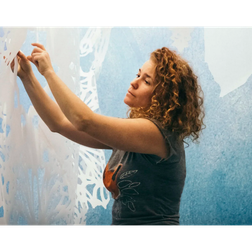
What can a table of glass fruit tell someone excavating our civilization a thousand years from now? And what happens to art — and to us — when the tangible world starts losing to the virtual one? In this episode, host Hugh Leeman sits down with Beth Lipman — an acclaimed artist known for her monumental, often ghostly still lifes rendered in glass — for a wide-ranging conversation about material culture, memory, and what gets left behind. Lipman traces her path into the still life tradition "through the back door," from a childhood among craft fairs and folk-art books in Pennsylvania Dutch country to her first intentional engagement with the genre at the Brooklyn Museum. She explains why she deliberately keeps the smartphone — and any marker of new technology — out of her sculptures, and how her ethical restraint around cultural appropriation shapes what she will and won't put on the table. She reflects on the piece in the Jewish Museum's permanent collection that became unexpectedly autobiographical, her first permanent outdoor work Hive Mind at Iowa State, and the idea of anxiety, or "perseverating," as an artistic tool. The conversation opens into the biggest questions of the moment: the digital revolution's effect on human consciousness, the possibility of a coming backfire against AI and misinformation, the fragility of the systems we depend on, and why she believes making anything at all is a radical, political act. It closes on the double — two sides of the coin, truth and untruth — the theme she thinks may carry her work for years to come.
Don't Gentrify the Image: Rick Lowe on Art, Data, and Community
What does it mean to gentrify a painting? And can a Wall Street ticker be reprogrammed to broadcast Black progress instead of stock prices? In this episode, host Hugh Leeman sits down with Rick Lowe — the MacArthur "Genius" Fellow, painter, and social sculptor who founded Project Row Houses in Houston's Third Ward — for a wide-ranging conversation about art, data, community, and the difference between empathy and empowerment. Lowe traces his own improbable path: from a sharecropping childhood in rural Alabama and a high school diploma he says was "basically just given," to a basketball scholarship, to the "easy" art class that redirected his entire life. He explains how a young person's question — why can't an artist create solutions? — set in motion a decades-long practice that turned twenty-two derelict shotgun houses into a landmark of socially engaged art, and why he insisted the housing be for young mothers in the neighborhood, not visiting artists. At the heart of the conversation is his current museum exhibition at the University of Michigan, built out of a multi-year residency inside the Institute for Social Research. Lowe unpacks the Black Wall Street Journey ticker, the "deficit model" that measures communities only in relation to others, and his conviction that data is a kind of sculpture — one that has shaped a distorted and illegitimate perception of Black life in America. Drawing on Joseph Beuys's idea of social sculpture, he makes the case that anything — politics, organizing, a game of dominoes — can be a work of art, and that real power is never given, only claimed.
Suzanne Lacy on Art, Aging, and Accountability
At 80, one of the founders of socially engaged art climbed back into a dragster — as Cinderella — fifty years after she first did it. Why? In this episode, host Hugh Leeman sits down with Suzanne Lacy — a pioneering figure in performance and social practice art whose work has been shown at Tate Modern, SFMOMA, and around the world — for a remarkably candid conversation about aging, accountability, and what art can and cannot change. Lacy revisits her 1976 performance Cinderella in a Speeding Dragster and its new incarnation, Cinderella Redux, using them as a lens on artistic longevity, the compulsion to keep moving, and a lifelong awareness of mortality. She walks through De tu Puño y Letra, the extraordinary Ecuador project in which 300 men stepped into a bullring — a space of masculinity and domination — to read aloud women's letters describing violence and femicide, then carried those letters, candle in hand, into the crowd. She reflects on We Are Here, her Lancashire mill project about two communities divided by a railroad track and joined only by a shared industrial past. Most striking is her honesty about her own position: what it means to work across race and class as a white, working-class woman; the friends who publicly humiliated and generously taught her; and why she believes accountability begins with the willingness to be wrong. She closes with a clear-eyed critique of an art education system that pays lip service to social practice while funneling everyone toward the market — and a defense of art made because you believe in it, not because you think it will save the world.
Caledonia Curry (Swoon) on Art, Trauma, and Healing
What if the most powerful thing art can do isn't hang on a museum wall, but sit two people down to draw a bird together — and quietly open a door to healing? In this episode, host Hugh Leeman sits down with Caledonia Curry — the artist widely known as Swoon, a pioneer of street art whose portraits have appeared everywhere from Manhattan to the West Bank to the Venice Biennale — for a profoundly honest conversation about trauma, addiction, chronic pain, and the alchemy of turning buried pain into art. Curry traces her path from printing fragile portraits on newsprint and watching them decay, to the mobile American-stories truck of The House Our Families Built, to her deeply personal work in Philadelphia's Kensington neighborhood — the largest open-air drug market on the Eastern Seaboard — where her own family's history of addiction gave her a rare foothold of compassion. She unpacks the "third thing" that makes making art together a precursor to healing, why the opposite of addiction is connection, and how a character named Strawberry Shortcake once let her say what she couldn't say as herself. She speaks with striking vulnerability about losing her mother, learning to tell her own story on stage despite panic attacks, and moving from asking "why the addiction" to "why the pain." And she shares the remarkable account of healing years of chronic pain through the work of Dr. John Sarno — slowly, slowly, and then all at once. She closes with a deceptively simple call to action: do one thing badly. Follow your bliss. Unkink the hose.
Cannupa Hanska Luger, A Field Manual for the Future
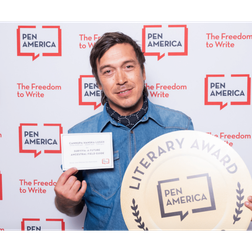
What do you do when your own success prices your community out of your work? And what happens when a Vietnam-era Army survival manual — built quietly on stolen Indigenous knowledge — lands in the hands of the artist whose ancestors that knowledge was taken from? In this episode, host Hugh Leeman sits down with Cannupa Hanska Luger — the acclaimed multidisciplinary artist and enrolled member of the Three Affiliated Tribes of the Mandan, Hidatsa, and Arikara Nation — for a conversation about survival, storytelling, and the permeability of time. Luger's new PEN-recognized book, Surviva, began as a government-issue field manual his wife found in an Army surplus store — one issued to soldiers during the Vietnam War, the same era his father served. By redacting and illustrating over its pages, Luger transformed it into an artifact from the future, a catalog of his practice Future Ancestral Technologies. Luger traces the twin inspirations behind the book: a cattle-rancher father whose war lives in silence, and a Native artist mother who raised five kids on an art career and became, in his words, his real "field manual" for survival. He reflects on imposter syndrome and why he calls himself a maker of make-believe, on fatherhood and the idea that a relationship isn't a thing but a process, and on his grandfather — a self-taught orator and tribal councilman who lobbied Washington as a dam flooded 42% of their reservation. And he unpacks New Myth, asking who the monsters of our age really are — extractive industry, media, corporate greed, the manufacture of panic — and why the answer to slaying them is simpler, and harder, than any hero's tale.
Noah Charney on AI art authentication and 85.7% Caravaggio
Can an algorithm tell you whether a painting is a real Caravaggio — and should we let it? And what happens when a performance artist steals Hitler's favorite painting and hangs it in an immigrant family's kitchen? In this episode, host Hugh Leeman sits down with Noah Charney — art crime historian, founder of ARCA (the Association for Research into Crimes Against Art), TED speaker, and author of dozens of books including The Art of Forgery and The Museum of Lost Art — for a wide-ranging conversation about theft, forgery, lost masterpieces, and the artificial intelligence now quietly reshaping how the art world decides what's real. Charney tells the extraordinary story of the artist Ulay, who in 1976 stole Carl Spitzweg's The Poor Poet from a Berlin museum as a political "aktion" — with Marina Abramović photographing and a getaway van idling in the snow — and how Charney came to record ten hours of interviews with Ulay in the final year of his life. He explains why two-thirds of all old master works may be lost to history, and why the ones we can visit aren't necessarily the ones that mattered most. Then he unpacks the "fourth pillar" of art authentication: AI image analysis. Using the real case of a $71,000 "follower of Caravaggio" painting that an algorithm flagged as the genuine article, Charney walks through how a closed, purpose-built AI is trained on a catalogue raisonné, fed forgeries and synthetic fakes to learn what not to be fooled by, and used as a tiebreaker when equally decorated scholars refuse to agree. He makes the case against the all-powerful single connoisseur — from Bernard Berenson's sales commissions to the Wacker Van Gogh forgery trial — and teases a coming "demotion" of a famous painting that he predicts will make headlines around the world.
FBI Special Agent and Art Crime Founder Robert Wittman on Stolen Art, Lies, and the Gardner Heist
He spent two decades pretending to be someone he wasn't — and recovered over $300 million in stolen art doing it. In this episode, host Hugh Leeman sits down with Robert Wittman, the founder of the FBI's Art Crime Team and the author of the bestselling memoir Priceless, for a riveting conversation about the psychology of going undercover, the art market's underworld, and what it costs to live a lie for a living. Working under the alter ego "Bob Clay," Wittman infiltrated criminal networks from Miami to Madrid to Paris, recovering Rembrandts, Goyas, Picassos, a $35 million Rembrandt self-portrait, an ancient Moche backflap said to be cursed, and Geronimo's eagle-feather war bonnet. He explains the tradecraft of ingratiation and mirroring, why the best weapon in any deal is a good mind, and the night he sat across from Corsican mobsters who'd put out a hit on him — with a gun in his pocket and a plan to talk his way out. Wittman also opens up about the car accident and wrongful DWI indictment that nearly ended his career and instead became its turning point, the wife who anchored him through it all, and the strange emotional toll of befriending people for months only to turn them in. He breaks down how stolen art is really used to launder money through free ports, why the Salvator Mundi never rang true to him, why criminals keep stealing art they can't sell, and how a set of screws in a picture frame helped him authenticate a stolen masterpiece. He closes on the one that got away — the still-unsolved Isabella Stewart Gardner heist — and the $10 million reward still waiting.
Juana Alicia on Murals, Memory, and Who Gets to Be a Hero
What do you do when the man you painted thirty feet tall on the side of an elementary school turns out to have a history you can no longer celebrate? In this episode, host Hugh Leeman sits down with legendary Chicana muralist, educator, and activist Juana Alicia — co-creator of Maestrapeace, the iconic five-story mural on San Francisco's Women's Building, and one of the most consequential public artists of the last half century — for a sweeping conversation about collective authorship, cultural memory, gentrification, and the ethics of erasure. Juana Alicia traces her path from cutting paper dolls on the kitchen floor in Detroit, to the Rivera murals at the Detroit Institute of Arts, to the picket lines of the United Farm Workers Union, where she says she received "the most foundational education I could have received." She talks about her artistic godmother, Dr. Cledie Collins Taylor, and about learning from members of Mexico's Taller de Gráfica Popular. She recounts painting a solidarity mural in Managua during the Contra War, and the arranged marriage of seven women artists who decided — without permission or budget — to paint an entire building.
The Beating Heart Is Bohemian: Oscar Villalon on ZYZZYVA and San Francisco
What does a forty-year-old San Francisco literary journal have to teach us about loneliness, wealth, belonging, and how to survive an age of authoritarianism? A great deal, it turns out. In this episode, host Hugh Leeman sits down with Oscar Villalon — managing editor of ZYZZYVA, the acclaimed independent literary journal publishing West Coast writers and artists since 1985 — for a wide-ranging, deeply humane conversation about the purpose of literature in the 21st century, the displacement of the creative class from San Francisco, and why young people are quietly returning to print. Villalon traces ZYZZYVA's history and mission, explains why he imagines his ideal reader living in a rent-controlled apartment by choice, and makes the case that a literary journal exists to surface a community that's already there — not to manufacture one. He reflects on the border and the value placed on Mexican American futures, the bilingual prose that lets him write the way he actually thinks, and the false protection of wealth in a city blinded by its own gleam. And he closes with something quietly radical: the idea that meaning is found in service to others, that those children are your children too, and that literature's job is not to hand us answers but to give us the vocabulary to name where it hurts.
Enrique Chagoya on invisible censorship, keeping our humanity, and uselessness
What happens to an artist — and to an entire creative ecosystem — when four major galleries close in a single month, when university endowments are taxed at twenty times the old rate, and when the art market itself becomes the most invisible form of censorship? In this episode, host Hugh Leeman sits down with acclaimed artist and longtime Stanford professor Enrique Chagoya — whose work has been exhibited in museums around the world, censored on two continents, and once destroyed with a crowbar — for a wide-ranging, unflinching conversation about the economics of art, the collapse of Bay Area art institutions, and why the humanities may be our only defense against an AI future. Chagoya traces the closing of Anglim Trimble Gallery and the "perfect storm" that has reshaped the art market since 2008. He reflects on his decision to retire from Stanford after thirty-one years, the layoffs and funding cuts reshaping academia, and the devastating closures of the San Francisco Art Institute and CCA. And he closes with something genuinely hopeful: a meditation on neuroplasticity, synesthesia, and why making art — useless, unsellable, joyful art — is one of the most human things we can do.
1 de 5