Regístrate gratis
Funcionalidades
Recursos
Precios
Podcasts
Regístrate gratis
Iniciar sesión
Philosophy in Dialogue
por Hypatia and Pandora
Libros
Filosofía
Feed RSS
Escuchar en
Compartir
Episodios
Detalles
Temporada 1
Slavery and Freedom part two
Explícito
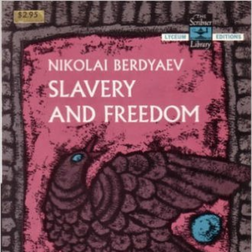
Here we discuss the last two sections of Nicholas Berdyaev's Slavery and Freedom. This continues his examination of the manifold ways which humans are enslaved and how to reclaim our liberation.
Slavery and Freedom
Explícito
Nicholas Berdyaev explores the many ways humanity is enslaved. Enslavement, he argues, begins with self-alienation, which, mythically speaking, can be seen as expressed in the story of the Fall. Whether we're enslaved by society, civilization, our own egos, or even by more abstract things like nature itself, or being, or even (our ideas about) God, it all stems from our objectivization - the projecting out into these diverse aspects of reality the spiritual qualities we, as conscious, unique persons, made in the image of God, have within ourselves, and then subjugating ourselves to those forces which have been externalized and falsely perceived as something above us. He argues for the need of a transvaluation of values, in which the human person is placed at the center of life; recognizing that all the diverse form of enslavement which face us are merely aspects of personally with misplaced emphasis on their primacy over the person, and the false necessity they place over the free spirit of persons, who have a divine birthright to be slave to nothing.
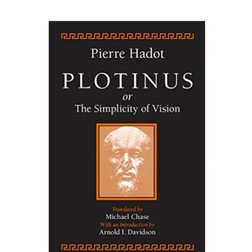
Plotinus, The Faceless Philosopher
Plotinus is the father of Neoplatonism. He lived from 204-270 CE and took the thought of Plato to new heights, deepening the meaning of its mystical and psychological significance.
The First Philosophers and Our First Podcast
Explícito
The presocratics are know as the first Philosophers, at least in the western world and according to written history. They asked the question "what's the world made of at its most basic and fundamental level?" Little of their works remains intact today but what does survive tells of a fundamentally different worldview than ours today. They're answers to the question of what's the world made of, and their views on their understanding of those answers, underscores just how radically different our worldviews are. Where today we have strong lines between notions of the secular and the sacred, their material bases for the fundamental constituent(s) of the world were seen as either divine, eternal, or infinite or all of the above! Whether it was Pythagoras' mathematical universe, Thales' water, Anaximander's apeiron (boundless, indefinite, infinite), Heraclitus' logos, - even the infinite atoms and the void of the atomists - they all shared a sense of the infinite. This sense of the infinite may prove to be a lasting and important through line from the wisdom of ancient times to our modern living if we are to live whole and meaningful lives. Join Hypatia and Pandora for a laid-back, free-flowing conversation on Robin Waterfield's The First Philosophers: The Presocratics and Sophists, where we discuss the section on the presocratics... and whatever else happened to pop into our heads.