Orion Talks

Orion Talks

por Orion Policy
Mauro Lubrano: A Deep Dive into Anti-technology Extremism
This episode of Orion Talks, hosted by Marta Furlan, features Dr. Mauro Lubrano examining the rise of anti-technology extremism. He begins by distinguishing it from anti-technology activism, emphasizing that conflating the two risks discrediting legitimate concerns and may even contribute to further radicalization. The discussion situates recent attacks on tech leaders and infrastructure within a broader and expected escalation of anti-technology violence. These acts are driven by the belief that technology poses an existential threat to humanity and the environment. Drawing on his book Stop the Machines, Lubrano traces the evolution of anti-technology thought from material concerns (e.g., job loss) to philosophical critiques, and ultimately to today’s extremist view of technology as a “mega-machine.” The episode concludes by reflecting on the fact that anti-technology extremism is most visible in Europe and North America but has global dimensions. Lubrano argues that effectively countering this trend requires engaging seriously with non-violent activists and addressing their concerns, while clearly isolating and condemning extremist violence. Ignoring or dismissing public fears about technology, he warns, may ultimately fuel the very dynamics that lead to radicalization.
Kerry Chavez: Drones, Non-State Actors, and the Changing Nature of Warfare
In this episode of Orion Talks, hosted by Suat Cubukcu, we are joined by Dr. Kerry Chavez to explore how drones are reshaping modern warfare and homeland security. As commercial drone technology becomes more accessible, the barriers to air power are rapidly eroding, enabling non-state actors and even lone individuals to challenge traditional military dominance. Dr. Chavez examines this shift through the lens of “precise mass,” where relatively low-cost systems can generate strategic effects at scale. The conversation also explores the broader implications of drone proliferation for global security, technological innovation, and the future character of conflict.
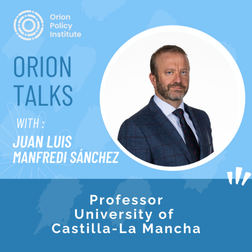
Juan Luis Manfredi Sánchez: The New World Order
In this episode, host Marta Furlan talks with Juan Luis Manfredi Sánchez reflecting on the new world order that is taking shape under President Donald Trump. Manfredi Sánchez talks about an end of the liberal order and a return to “areas of influence”. He goes on to note that the recent direct US intervention in Venezuela is a clear sign of a new approach with which Latin American and European countries need to deal with. Europe, in particular, is invited to take a more proactive approach. He then discusses how energy and trade have been used, or instrumentalized, in Trump’s order of things.
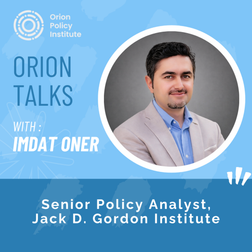
Imdat Oner: The Good, the Bad, or the Ugly - What is Next for Venezuela?
In this Orion Talks episode, hosted by Suat Cubukcu, Dr. Imdat Oner joins the conversation to unpack Venezuela’s sudden political turning point following the capture of Nicolás Maduro and his transfer to the United States. Dr. Oner examines the immediate fallout in Caracas, the rise of interim president Delcy Rodríguez, and the competing forces, domestic and international, now shaping the transition. From Washington’s strategic aims and regional reactions to risks of internal conflict, the future of Venezuelan oil, and the response of Maduro’s allies in Moscow, Beijing, and Ankara, the discussion lays out three possible paths ahead—the good, the bad, and the ugly—and what a truly stable Venezuela would require in the long run.
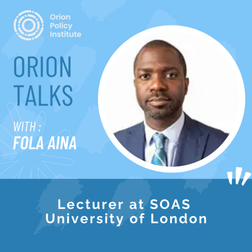
Fola Aina: The Current Islamist Insurgency in Nigeria
In this episode, host Marta Furlan talks with Fola Aina about the current security situation in Nigeria and the threat posed by Boko Haram and the Islamic State West Africa Province. The episode starts with Dr. Aina giving a comprehensive and detailed overview of the current status of the Boko Haram and ISWAP insurgency in Nigeria. He then moves on to talk about the recent targeting of farmers' communities and the strategic reasons behind those. He also gives important information about the funding strategy of the Islamist insurgency, reflecting on how the two groups finance their activities. To conclude the conversation, Dr. Aina reflects on the most important initiatives that have been taken to counter Boko Haram and ISWAP and gives his thoughts on how those measures should be strengthened and made more effective.
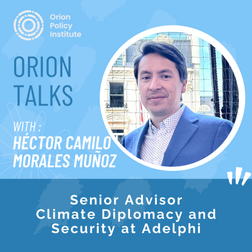
Héctor Camilo Morales Muñoz: The State of Things in Colombia
In this episode of Orion Talks, host Marta Furlan talks with Héctor Camilo Morales Muñoz about the current situation in Colombia. The conversation starts with an overview of the current political and security climate in Colombia, with some reflections on where the country stands half a year before the elections in May 2026. Morales Muñoz then proceeds to reflect on the relations between Colombia and its South American neighbors, focusing on issues of climate diplomacy and environmental peacebuilding. From there, the conversation expands to discussing the relations between Colombia and the US, which have seemed particularly tense during the latest UNGA in New York.
Mehmet Metehan Ciftci: Unpacking the Harmful Implications of Extracting Critical Minerals
In this episode of Orion Talks, host Marta Furlan talks with Mehmet Metehan Ciftci about the socio-political harms linked to the mining of critical minerals. The conversation starts with Mete explaining the paradox of green minerals being extracted in the Global South, where their harmful impacts are felt, and end technologies being enjoyed in the Global North. He then reflects on conflicts surrounding lithium mining and expands on what makes lithium conflicts different from others. From there, he zooms in on the South America region and the role of Indigenous communities: while not everyone among them is against mining, many Indigenous people have been involved in conflicts and looked for innovative ways of responding to the mining. He concludes by sharing his thoughts on how the tension between the goals of the energy transition and responsible mining can be balanced.
Joshua Walker: Conflict and Peace in the Eastern DRC
In this episode of Orion Talks, host Marta Furlan speaks with Dr. Joshua Walker about the current conflict and peace dynamics in the Eastern DRC. Following M23’s capture of Goma and Bukavu in late January 2025, Dr. Walker starts by describing the state of the current peace processes. Highlighting the role and leverage of Qatar and the US, Dr. Walker compares their efforts with the shortcomings of past mediation efforts. He then explains how domestic politics in the DRC and regional dynamics have been influencing the M23 conflict, and their role in the current peace processes. From there, he offers his thoughts on the role that the Eastern DRC's richness in natural resources has been playing in the conflict, questioning the dominant narrative whereby the conflict is exclusively driven by natural resources.
Nicholas Barnes: Criminalized Governance in Rio's Neighborhoods
In this episode of Orion Talks, host Marta Furlan talks with Dr Nicholas Barnes on criminalized governance inside some of Rio de Janeiro's favelas. After sharing the process that led him to focus his research on political violence and non-state governance as observed in some of Rio's neighborhoods, Dr Barnes explains how the gangs that control favelas develop relationships with the communities living there. He explains the combination of coercion and benefits that the gangs use to obtain obedience and cultivate support, as well as the changes that these strategies undergo over time and space. He completes the discussion by noting some of the ways in which community members themselves use different tools and strategies to influence gangs' behavior. Dr Barnes then explains the concept of criminalized governance as opposed to the more widely used criminal governance. He also reflects on how criminalized governance relates to other forms of non-state governance, such as rebel governance. To conclude, Dr Barnes builds on his research and direct experience in Rio and shares his thoughts on how authorities should and could navigate the challenges posed by the presence and activities of those gangs in some of Rio's neighborhoods.
David Des Roches: The Trump Administration and Yemen -2
In this episode of Orion Talks, host Marta Furlan talks with Prof. David Des Roches on the recent developments in Yemen as the US revisits its approach to the country under President Trump. Prof. Des Roches starts by discussing the US approach to Yemen and the Houthis, over the past years - from the first to the second Trump Presidency, passing through Biden's time in office. As he does so, he illuminates the differences in approach as well as respective strengths and weaknesses. He then helps us to make sense of the US' recent re-designation of the Houthis as FTO and operations against Houthi targets. He emphasizes the possible effectiveness of this approach and how it connects with President Trump's strategy towards Iran. To conclude, he reflects on how regional countries position themselves vis-a-vis these developments and offers his thoughts on the implications that the new US administration's approach may have for the Red Sea/Gulf region.
1 de 6