Ops Clinic — Healthcare Operations, Simplified

Ops Clinic — Healthcare Operations, Simplified

por Gerardo Savo González - GSG Global Ops
Temporada 1
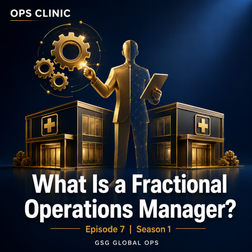
What Is a Fractional Operations Manager?
IA
You need operations leadership, but you don't need — or can't afford — a full-time hire. There's a middle ground. A full-time clinic operations manager costs $90,000 to $128,000 per year fully loaded. A fractional operations manager delivers the same senior-level expertise at $18,000 to $42,000 annually — 2 to 4 days per month, building systems your team maintains independently. The fractional executive market has topped $5.7 billion globally. 72% of CEOs plan to increase their use of fractional leaders. This isn't a trend — it's a structural shift. And private clinics are the perfect fit. What you'll learn: What "fractional" actually means and how it works in a clinic setting The full cost comparison: full-time vs. fractional (the math that changes everything) What a fractional ops manager does month by month — and what they leave behind Five signals that your clinic has reached the inflection point Six questions to ask before hiring one — and the red flags to walk away from 14 free tips to evaluate whether your clinic needs operational leadership Resources mentioned: → Full article: gsglobalops.com/insights → Change Management Playbook: payhip.com/GSGlobalOps → Previous episodes: EP01-EP05 (referenced throughout) → Book a discovery call: gsglobalops.com/service Hosted by GSG Global Ops | Systems. Processes. Execution.
Designing a Patient Intake Process That Actually Works
IA
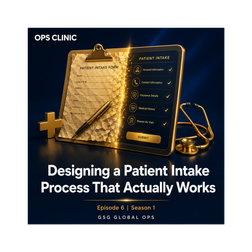
You remember the clipboard. The pen that barely worked. The four pages of forms asking for your date of birth three separate times. That was your first impression of the clinic — and it probably shaped your opinion more than the care itself. Patient intake is the silent dealbreaker in private clinic operations. 81% of patients prefer digital forms over paper. 61% of claim denials trace back to simple demographic errors made during manual data entry. And the average practice spends $125,000 per year on manual intake labor alone. In this episode, we break down how to design an intake process that respects the patient's time, eliminates costly errors, and takes your front desk from data collection to data verification — with 13 free, actionable tips you can implement this week. What you'll learn: Why intake is the most underestimated process in clinic operations The difference between new patient and returning patient flows (and why using the same process for both is a mistake) 13 free tips to fix your intake process this month — no software required How paper forms create a 31% error rate vs 0.67% with digital intake A complete intake SOP framework using the three-column format from Episode 1 Five intake KPIs to start tracking immediately How to connect intake improvements to the DMAIC framework from Episode 3 Resources mentioned: → Full article: gsglobalops.com/insights → Patient Intake & Onboarding SOP Template: payhip.com/GSGlobalOps → SOP Template Book (Amazon): search "GSG Operations Toolkit" → Previous episodes: EP01 (SOP Library), EP03 (Lean Six Sigma), EP04 (Wait Times) → Book a consultation: gsglobalops.com/service Hosted by GSG Global Ops | Systems. Processes. Execution.
Reducing Patient Wait Times Without Hiring More Staff
IA
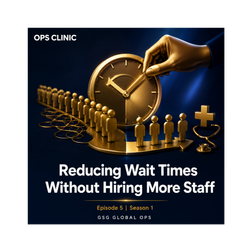
The average patient wait costs you more than you think. 25% of patients have switched providers over long waits. 30% have walked out before being seen. And each lost patient represents $12,000 in lifetime value — not $200. Most clinic directors assume the fix is more staff. It's not. It's the process. In this episode, we break down the six hidden bottleneck points in every clinic's patient flow, five specific tactics to reduce wait times this month with zero new hires, and a real case study showing a 68% reduction in wait times — total cost under $50. What you'll learn: Why two-thirds of doctors underestimate how much wait times hurt retention The six bottlenecks hiding in your patient flow (and the fix for each) How a 5-minute buffer every fourth slot prevents cascading delays Pre-visit digital intake: 8-15 minutes down to 1-3 minutes per patient The scheduling myths keeping clinics stuck A weekly tracking habit that makes wait times visible and manageable Resources mentioned: → Full article: gsglobalops.com/insights → Weekly Operations Dashboard: payhip.com/GSGlobalOps → Free Clinic Operations Mini Audit Guide: gsglobalops.com → Book a consultation: gsglobalops.com/service Hosted by GSG Global Ops | Systems. Processes. Execution.
Lean Six Sigma Simplified: A Practical Guide for Healthcare Clinics
IA
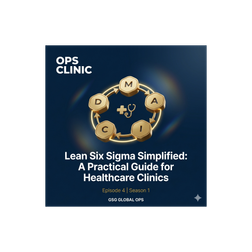
Lean Six Sigma sounds like it belongs in a factory. It doesn't. It belongs in your clinic. In this episode, we strip the methodology down to what it actually is — two ideas combined: stop wasting time and resources, and stop getting inconsistent results. We walk through the eight types of waste hiding in every clinic, break down the DMAIC framework step by step, and follow a real family medicine practice through a complete improvement cycle that cut patient wait times by 59% at near-zero cost. What you'll learn: What Lean and Six Sigma actually are — and why the name is intimidating but the method isn't The eight wastes (DOWNTIME) mapped to private clinic operations DMAIC explained: Define, Measure, Analyze, Improve, Control A complete clinic case study: 34-minute wait times reduced to 14 minutes Where clinics go wrong with process improvement — and how to avoid those mistakes How to run your first DMAIC cycle in 6 weeks with no budget and no certification Resources mentioned: → Full article: gsglobalops.com/insights → DMAIC Full Project Tracker: payhip.com/GSGlobalOps → Process Improvement Workbook (Amazon): search "GSG Operations Toolkit" → Book a consultation: gsglobalops.com/service Hosted by Gerardo Savo González - GSG Global Ops | Systems. Processes. Execution.
What to Expect from an Operations Consultant
IA
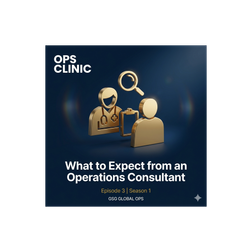
Thinking about hiring a consultant for your clinic? You're not alone — but the word "consultant" covers everything from IT specialists to Big Four strategists to solo operators who fix workflows. Hiring the wrong type is expensive. Not hiring anyone because the whole category feels intimidating is worse. In this episode, we cut through the confusion. We explain exactly what an operations consultant does (and doesn't do), the four types of engagements from a single diagnostic session to fractional leadership, realistic cost ranges, and the six questions every clinic owner should ask before signing anything. What you'll learn: The difference between operations, management, IT, compliance, and revenue cycle consultants Four engagement types and what each costs ($125 to $3,500/month) The five signals that your clinic is ready for outside operational help Six questions to ask any consultant before hiring — and what good answers sound like Red flags that tell you to walk away How to calculate ROI on an operations consulting engagement Resources mentioned: → Full article: gsglobalops.com/insights → Process Improvement Project Charter: payhip.com/GSGlobalOps → DMAIC Workbook (Amazon): search "GSG Operations Toolkit" → Book a discovery call: gsglobalops.com/service Hosted by GSG Global Ops | Systems. Processes. Execution.
Is Your Clinic Running on Tribal Knowledge?
IA
Your best receptionist knows every insurance carrier's pre-authorization rules by heart. Your office manager is the only person who handles credentialing renewals. Your billing coordinator has the phone numbers that actually get answered. None of it is written down. That's tribal knowledge — and it's running your clinic. In this episode, we cover the five warning signs that your clinic depends on undocumented expertise, the real financial cost when key staff leave (spoiler: $60,000+ per departure), and a 15-minute dependency audit you can run this week to see exactly where your vulnerabilities are. What you'll learn: What tribal knowledge is and why healthcare is especially vulnerable The five signs: single points of failure, inconsistent execution, shadow training, "just ask" culture, and slow onboarding A 15-minute dependency audit exercise for your clinic Three immediate actions to start protecting your operations Resources mentioned: → Full article: gsglobalops.com/insights → Free Clinic Operations Mini Audit Guide: gsglobalops.com → Clinic Operations Audit Checklist: payhip.com/GSGlobalOps → Book a consultation: gsglobalops.com/service Hosted by GSG Global Ops | Systems. Processes. Execution.
Why Every Clinic Needs an SOP Library
IA
Most private clinics don't have written procedures — they have tribal knowledge held in the heads of long-tenured staff. When those people leave (and healthcare turnover runs at 22.7% annually), the knowledge walks out with them. In this episode, we break down why every private clinic needs a standard operating procedure library and how to build one from scratch — no consultants required. What you'll learn: The five warning signs your clinic runs on tribal knowledge The real cost of undocumented processes (hint: $60,000+ per staff departure) A simple three-column SOP format any clinic can use immediately How to prioritize which processes to document first A week-one action plan to start building your SOP library today Resources mentioned: → Full article: gsglobalops.com/insights → Free Clinic Operations Mini Audit Guide: gsglobalops.com → SOP Template Book (Amazon): search "GSG Operations Toolkit" → Patient Intake SOP Template: payhip.com/GSGlobalOps → Book a consultation: gsglobalops.com/service Hosted by GSG Global Ops | Systems. Processes. Execution.