On Second Thought with Komal Mirani

On Second Thought with Komal Mirani

por Komal Mirani
Temporada 1
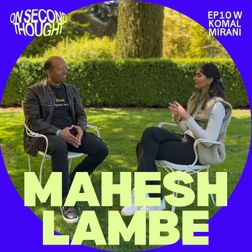
On Coordinating Intelligence and Building the Internet of AI Agents w/ Mahesh Lambe | Chief Scientist, Project Nanda
In this episode, we explore collective intelligence, personal agents, and the Internet of AI Agents with Mahesh Lambe, one of the minds behind Project Nanda. For the last two decades, the internet connected information. What if the next phase connects intelligence itself? We discuss why coordination may be one of the defining challenges of the coming decade, the infrastructure required to enable intelligent agents to collaborate, and why AI may ultimately become an invisible layer woven into everyday life. Some key points covered: • Why collective intelligence matters more than individual intelligence • Personal agents and the rise of AI-native interfaces • The Internet of AI Agents and the Agentic Web • Decentralization, trust, identity, and discovery • Solving the coordination problem at scale • Why AI may become an invisible infrastructure layer • Kumbhdoot and using AI to coordinate the world's largest gathering • What the next internet could look like when intelligence is networked • The future of human-AI collaboration and collective problem-solving If you've been curious about where AI is headed beyond chatbots and productivity tools, this episode offers a glimpse into a future where intelligence becomes networked, collaborative, and woven into the fabric of everyday life. About Mahesh Lambe Mahesh Lambe is a technologist, researcher, and systems thinker working at the intersection of artificial intelligence, distributed systems, and digital public infrastructure. His work focuses on how intelligent systems coordinate, collaborate, and create value at planetary scale. About Project Nanda Project Nanda is an open, community-driven initiative exploring the foundations of an Internet of AI Agents. Inspired by the protocols that enabled the modern web, it seeks to build the trust, identity, discovery, and coordination layers required for intelligent agents to interact safely and effectively across organizations, geographies, and ecosystems. Its long-term vision is to enable collective intelligence at scale through open, decentralized infrastructure.
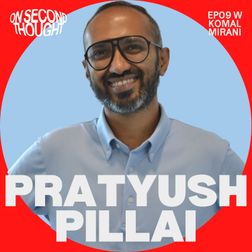
On Irrationality, Nuance, and Behavioural Design w/ Pratyush Pillai (TinkerLabs)
We like to believe we’re rational. That we think, then act. But most of the time, behaviour is shaped elsewhere by habit, perception, context, and a special kind of chaos. In this episode, I’m in conversation with Pratyush Pillai, Head of Behavioural Design at TinkerLabs. We explore what it really means to design for people as they are not as we assume them to be. From irrational decisions to the gap between knowing and doing, this is a deep dive into how behaviour actually works in the real world. Along the way, we cover his personal journey into behavioural design, the thinking behind TinkerLabs and what makes the practice unique, how innovation often comes from the most unexpected places, and the nuances of behaviour in the Indian context from stereotypes to social cues. There are second thoughts, contradictions, and a lot to take away on the other side of this one. Tune in!
Designing Your Own Genre w/ Yash Pradhan | Nostalgia, Ownership & Creative Independence
Yash Pradhan is a self-taught illustrator and designer whose creative education happened online. A 90s baby shaped by internet culture, he began his career as an accountant before turning his obsession with design into a full-time practice. What started as small experiments shared online became commissioned work for brands like Coach, Real Madrid, Meta, Kingfisher and lots more!. In this conversation, we unpack: what it means to build taste in public how digital curiosity becomes a competitive edge why understanding IP, ownership, and pricing is non-negotiable for creators today genre-building nostalgia as aesthetic strategy why the best work often comes from designing for yourself first More than anything, this is a conversation about playing the long game: making the work, owning it, and not taking the process so seriously that you stop enjoying it. Follow Yash below: Website, Instagram
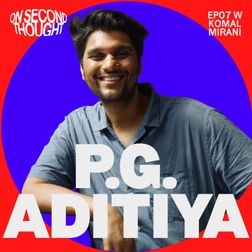
Talented’s PG Aditiya on Where Advertising Still Feels Alive
PG Aditiya is the Co-Founder and CCO of Talented, one of India’s sharpest and most awarded creative agencies, built on the belief that great work begins with great people. Titles, however, only partly describe his role. His thinking extends well beyond the mechanics of advertising, shaped by a deep reverence for craft, an archival curiosity for its history, and a visible pride in the people behind the work. In this episode of On Second Thought, he reflects on the changing agency model, the thinking behind Talented’s internal handbook, and why talent density - rather than scale has become the organising principle of the company. Drawing on family lore, objects of close affection, and years spent in the business of advertising, he speaks candidly about creative ambition, and how Talented responded to a long-standing need in the market. He also considers the history of advertising and its influence on modern culture, alongside his own journey as a founder. The conversation also covers culture and attention, touching on matcha raves, soft clubbing, and the fragmentation of media and meaning online. Taken together, it is a portrait of a creative leader thinking carefully about what endures and where advertising still feels alive. About Talented: Talented is on a mission to be the greatest creative company in the world. It is an independent creative agency founded in 2022 in Bangalore by Gautam Reghunath and PG Aditiya. The firm has quickly built a reputation for thoughtful, nuanced work for both legacy and modern brands, and has been recognised on the global stage: Talented has won multiple Cannes Lions, including a Silver Lion for its Avani’s Gold campaign for Britannia Marie Gold at the 2025 Cannes Lions International Festival of Creativity, among other metals for work across media and storytelling.
On Curation, Craft, and Taste w/ Malini Malik | Co-Founder, General Items • Founder, Come Away
What does it mean to live a life guided by curiosity, taste, and intuition? In this episode, I sat down with Malini Malik, co-founder of General Items in Bangalore and founder of Come Away, to explore a life shaped by art, travel, and trust in the process. Growing up as an army kid, Malini’s world was defined by movement: each new place leaving behind textures, colors, and memories that quietly built her aesthetic sensibility. With a background in art history and textile design, she began her career at Chumbak, working at the intersection of design and sourcing before finding her own voice as a curator and cultural entrepreneur. The conversation traces her leap into entrepreneurship with General Items—a design-led store that celebrates the beauty of everyday objects and the emotional resonance of craft. Malini reflects on building something rooted in thoughtfulness and joy, the art of curation, and the confidence that comes from trusting the universe to guide your path. It’s a story about taking the plunge, noticing deeply, and living a life rich in experience and meaning.
The Business of Doing Good: How to Make the World Slightly More Just w/ Siddhartha Menon, Tiny Miracles
Most people talk about changing the world. A few try to redesign it: system by system, person by person, story by story. Siddhartha Menon is one of those few. As Head of Mission at Tiny Miracles, Siddhartha helps lead a social enterprise with a clear, ambitious goal: enable communities to get themselves out of poverty and stay out. Their model moves beyond short-term aid to tackle systemic change through five interconnected pillars: education, health, livelihood, social awareness, and happiness. At its core, it’s about dignity, agency, and designing systems that last. In this conversation, we go deep into the realities of doing good: the trade-offs, the invisible walls, and the constant tension between business and social purpose. Siddhartha shares what poverty really is beyond income, how trust is built in communities that have been let down before, and why design can be as powerful as policy in creating change. We also explore his work on the Tiny Cane Collective: an open experiment in radical transparency. From artisan wages to projected losses, nothing is hidden. The goal is simple but rare: keep a business truly social by showing the full, messy, handcrafted reality of balancing bottom lines with moral imperatives. This episode covers: How Tiny Miracles’ “Get Out, Stay Out” model works in practice The role of design in breaking the poverty cycle Why transparency can be the strongest trust-building tool Navigating the “profit vs purpose” paradox in real time What it takes to keep purpose at the center as you scale I stumbled upon Tiny Miracles by chance but with a conversation that left a deep, lasting impression. This is the story of what I found: a team making the world slightly more just, one system at a time.
How Do You Design for Life, Not Just Work? w/ Kritika Trehan | Founder and Creative Head, Studio Ping Pong
What Does It Take to Design a Creative Life? In this episode, we explore what it really means to live the process: to design with intention, to lead with taste, and to build brands and studios that are both joyful and durable. Kritika Trehan opens up about the creative pursuit behind Studio Ping Pong. We cover: 🧒🏽 Origins: Growing up between Kolkata and Bangalore, early sparks of creativity, and the people and places that shaped her way of seeing 🎨 Philosophy: How her design instincts evolved, the principles she returns to, and how she makes space for delight in the work 🚪 Studio Building:Why she started Ping Pong, what “home” means in a creative studio, and the tension between doing good work vs. running a good business 🧠 Team & Culture: What it takes to build culture from scratch, how she hires, and what true creative freedom looks like inside a team 💼 Working with Brands: Her approach to briefs, why clarity matters more than cleverness, and how to walk the line between what clients want and what they need ✍️ Creative Leadership: The rituals, discomforts, and lessons that keep her evolving — as a founder, designer, and creative 🔮 Reflection: What she’s chasing next, the idea of “creative confidence,” and her advice to anyone trying to live and work with more intention For creative entrepreneurs, independent thinkers, and anyone navigating the messy middle between vision and execution: this episode is a gut-check and a reminder to build with delight, discipline and depth. → Learn more: Kritika's Instagram: @kritikatrehan Studio Ping Pong: studiopingpong.com
So, You Want to Build Culture? Varun Patra on The Creative Economy and Infrastructure That Holds It Together
In a world where culture became a commodity, Varun Patra is working to make it personal again. He’s the co-founder and CMO of Homegrown, one of India’s most influential youth culture platforms. What began as a passion project questioning mainstream narratives has evolved into a multi-dimensional ecosystem—part publication, part creative agency, part community builder—helping shape the voice of India’s creative economy. Alongside his sister and co-founder Varsha Patra, Varun has spent the last decade building the creative infrastructure powering India’s next generation of cultural entrepreneurs: real-world experiences like HG Street, talent networks that help creators thrive, and platforms that move culture forward—before brands catch up. But as India’s creative economy grows—and global attention follows—the next challenge is bigger than content. What does it really take to build sustainable ecosystems where creators, communities, and commerce can coexist? How do you build for longevity in a world obsessed with scale and virality? And what does meaningful cultural leadership look like now, when anyone can start a platform but few can build a legacy? In this conversation, we unpack: The journey of building Homegrown and what it taught him about creative infrastructure in India What most brands get wrong when they try to “tap into culture” How festivals, talent networks, and platforms are creating what India’s creative economy needs next And why the real work of building culture is long, unglamorous, and necessary Timestamps: 00:00 Introduction to the Podcast and Guest 03:44 Varun Patra's Early Life and Entrepreneurial Journey 08:14 The Genesis of Homegrown and Its Vision 11:08 Evolution of Culture and Brands in India 14:23 Global Perspective on Culture and Economic Impact 22:50 The Creative Economy and its Potential in India 28:20 Building a Cultural Ecosystem: Challenges and Solutions 34:29 Homegrown's Impact and Future Initiatives 41:37 The Local Consortium and Community Impact 45:00 Promoting Financial Literacy and Insurance 49:03 Guidance for Cultural and Creative Entrepreneurs 54:06 Varun Patra's "Second Thought" and Learnings If you're curious about where India’s creative economy is headed—and what it’ll take to build something that lasts beyond the hype, this episode is for you. → Learn more: Varun's Instagram: @p0tra Homegrown: homegrown.co.in
What If We Taught Children to Express, Not Just Excel? Manasi Mehan on Educating the Heart through Art
In this episode of On Second Thought, I speak with Manasi Mehan — co-founder and CEO of Saturday Art Class, an organisation bringing He(art) back into education through visual arts and social-emotional learning (SEL). I’ve spent the early years of Saturday Art Class alongside them — sometimes up close, sometimes from afar — but always as someone who deeply believes in the world they’re building. Which is why this conversation, with Manasi as my second (and most special) guest, means so much. We trace the arc of Saturday Art Class: from a scrappy, volunteer-led classroom experiment to a national program working across schools, governments, and educator networks. Manasi shares what sparked the idea, how she and her co-founder Chhavi built early trust with the system, and why expression and emotional literacy are essential — not optional — in education. We also talk about her personal evolution: what it’s taken to grow from a passionate founder into a clear-eyed leader, how she’s built and scaled a team, and what her time at Harvard taught her about sharpening vision without losing heart. Manasi speaks candidly about the hard decisions, the doubts, and the responsibility of building something that lasts. This episode is about creative expression, safe spaces — and what happens when you believe in children, and build with conviction. It's about Educating the Heart, Head and Hands through Art. I hope it leaves you, as it left me, with a little more clarity about what education could be — and what’s possible when we make space for expression. Timestamps: 00:00 Introduction to Saturday Art Class 03:17 Manasi Mehan's Journey and the Genesis of Saturday Art Class 05:42 The Importance of Social Emotional Learning (SEL) in Art 09:10 Impact of Saturday Art Class on Children 12:52 Evolution of Saturday Art Class: From Volunteer Program to Train the Trainer Model 15:41 Navigating Partnerships and Authorities in Education 18:18 The Role of Incubators and Fellowships in Shaping Saturday Art Class 23:51 Challenges and Learnings as a Leader in the Social Sector 28:08 Building an Ecosystem and Collaboration in the Arts 30:03 Measuring Impact and Creating Safe Spaces 32:39 Conclusion About Saturday Art Class: Saturday Art Class is a nonprofit that brings art and social-emotional learning into classrooms across India — creating space for children to feel, express, and belong. Founded on the belief that every child deserves a safe space to be seen and heard, SARC works with and within the education system to embed creative expression at the heart of learning. By integrating visual arts with Social Emotional Learning (SEL), the organization helps children build the skills they need to navigate the world — confidence, empathy, resilience, and self-awareness. At its core, Saturday Art Class exists to make expression accessible — because when children are given the tools to create with confidence, they begin to believe in themselves and their place in the world. Some further recommended watching: Do schools kill creativity? | Sir Ken Robinson Follow: Saturday Art Class
We’re All Creators Now. What Happens Next? Shephali Bhatt on Content, Identity, Algorithms and the Future of Indian Media
We’re all creators now. So what happens when content is infinite, and attention isn’t? For the first episode, I’m speaking with Shephali Bhatt—one of the sharpest cultural reporters I know. She writes long-form stories at the intersection of technology, media, pop culture, and digital subcultures, with a kind of clarity and depth that’s increasingly rare. We explore how the Indian internet is evolving: Is it fragmented, unified, exhausted, or just in transition? What key shifts (from Jio to Reels to the TikTok ban) have shaped the way we connect and create? Has content creation become a default setting for everyone? What happens when AI floods the internet with content—and curation becomes the most valuable skill? Where do we draw the line between the person and the personality online? We also talk about: 📊 The strata of Indian creators and the path from emerging to established 👩🏽‍💻 How the internet is shaping young creators—especially women 🎙 Why so many top Indian podcasts still sound like men talking to men 🔐 What it means when culture moves into encrypted group chats 📰 The role of journalism, and what “prestige media” could look like by 2030 Timestamps: 00:00 Introduction to Shephali Bhatt 02:26 The Chaos of Indian Internet Culture 07:17 The "Creator" Identity and Performative Authenticity 13:40 Understanding Parasocial Relationships 18:55 Person vs. Personality in the Digital Age 34:33 AI as a "Therapist" and Data Privacy 47:27 The Future of AI Content and Human Curation 52:02 Female Representation in Indian Media 59:39 Journalists vs. Content Creators 1:09:08 The Influence of Media and Curating Your Attention 1:12:45 The Future of the Creator Economy1:18:39 Advice for Newcomers in Internet Culture If you’re curious about how the internet is reshaping identity, creativity, and power in India, this conversation is a starting point. 🔗 Check out more of Shephali’s work: LinkedIn Economic Times Mint Lounge The Seen and the Unseen episode
1 de 2