Temporada 2

O Choque de Ormuz: Por Que a Economia Global Prende a Respiração
Bem-vindos de volta ao podcast onde pegamos as questões mais complexas do mundo e as tornamos brilhantemente simples. Hoje, estamos analisando um enorme engarrafamento global que está fazendo os maiores especialistas financeiros do mundo suarem. O Estreito de Ormuz — frequentemente chamado de "aorta do comércio global de combustíveis fósseis" — foi efetivamente fechado, desencadeando o que os especialistas chamam de uma das maiores crises da história do capitalismo moderno. Mergulhamos no relatório Chief Economists Outlook de maio de 2026 do Fórum Econômico Mundial para decodificar exatamente o que isso significa para o seu bolso. Explicamos por que 89% dos principais economistas esperam que o crescimento da economia global enfraqueça, e por que impressionantes 94% preveem o aumento da inflação como resultado direto da disparada nos preços da energia e dos alimentos. Na verdade, as ondas de choque econômicas desta única via navegável bloqueada estão atualmente sendo comparadas aos graves impactos da pandemia de COVID-19. Mas nem tudo é desgraça! Também exploramos a outra tendência gigantesca que luta para moldar nosso futuro: a revolução da Inteligência Artificial. Apesar do caos na cadeia de abastecimento, mais de 90% dos economistas-chefes esperam que a adoção da IA aumente no próximo ano, trazendo uma onda de otimismo e a promessa de ganhos significativos de produtividade.Temporada 1

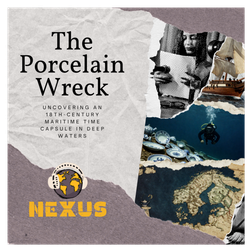
The Porcelain Wreck: Uncovering an 18th-Century Maritime Time Capsule in Deep Waters
In this episode, we dive nearly 2,000 feet below the surface of the Skagerrak strait between Norway and Denmark to explore the astonishing discovery of the "Porcelain Wreck". Sunk sometime around the year 1750 during a period of rapid expansion in global commerce, this mysterious merchant ship—believed to be a two-masted "galliot"—holds an unbelievably preserved cargo of luxury goods. We discuss the breathtaking find of intact Chinese ceramics, including rare Batavia ware and Blanc de Chine, discovered resting in perfect stacks on the seabed alongside chandeliers and mysterious sealed crates. Join us as we explore how marine archaeologists are using advanced, remotely operated underwater vehicles equipped with robotic arms to carefully bring these 275-year-old treasures to the surface. We also delve into the clues surrounding the ship's Northern European origins—including a brick from Lübeck, Germany—and ponder the haunting, unanswered questions regarding the ultimate fate of its small crew.
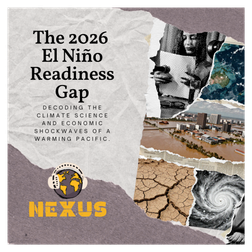
How El Niño Reroutes Global Weather
Welcome back to Nexus: Complex Topics. Simple Conversations, where we take the world's densest topics —from mind-bending science and tech breakthroughs to deep history and complex economics-and break them down into smooth, easy, and entertaining conversations. No jargon, no pretension, just brilliant ideas made brilliantly simple. In our third episode, we are taking a deep dive into the fascinating mechanics of one of the most powerful naturally occurring climate patterns on Earth: El Niño. While you have likely heard the term on the news, we are breaking down the simple science of how a warming of ocean surface temperatures in the central and eastern Equatorial Pacific triggers a massive domino effect across the entire globe. How does an event that originates in the Pacitic Ocean end up causing droughts in Australia and Indonesia, flooding in the southern United States, and even suppressing hurricane formation in the Atlantic? We explain exactly how this phenomenon essentially reroutes global weather, turning typical forecasts upside down. Tune in for a fun, easy-to-understand breakdown of what El Niño actually is, why it predictably occurs every two to seven years, and how its far-reaching footprint ultimately impacts global temperatures, agriculture, and our daily weather.
The Hormuz Shock: Why the Global Economy is Holding Its Breath
Welcome back to the podcast where we take the world’s most complex issues and make them brilliantly simple. Today, we're looking at a massive global traffic jam that has the world's top financial experts sweating. The Strait of Hormuz—often called the "aorta of global fossil fuel trade"—has been effectively shut down, triggering what experts are calling one of the biggest crises in the history of modern capitalism. We dive into the World Economic Forum's May 2026 Chief Economists Outlook to decode exactly what this means for your wallet. We break down why 89% of top economists expect the global economy to weaken, and why a staggering 94% see inflation rising as a direct result of skyrocketing energy and food prices. In fact, the economic shockwaves of this single blocked waterway are currently being compared to the massive disruption of the COVID-19 pandemic. But it's not all doom and gloom! We also explore the other massive trend battling to shape our future: the Artificial Intelligence revolution. Despite the supply chain chaos, over 90% of chief economists expect AI adoption to surge this year, bringing a wave of optimism and the promise of massive productivity boosts. Join us as we skip the dense financial speak and break down the clash of these two titans—a geopolitical supply chain shock versus the unstoppable rise of AI—and explain exactly how they are reshaping global growth, inflation, and our everyday lives.
Beyond the Bedside: Can Your Health System Survive the Next Big Crisis?
Ever feel like the world’s most fascinating ideas are hidden behind a wall of boring text, heavy jargon, and endless academic papers? Welcome to Nexus. In this inaugural episode, we are diving deep into the invisible shield that keeps you safe when global chaos hits: Health System Resilience. In this inaugural episode, we are diving deep into the invisible shield that keeps you safe when global chaos hits: Health System Resilience. We often take for granted that a hospital will have a bed for us, or that medicine will be on the pharmacy shelves. But what happens when pandemics, economic crashes, climate disasters, or cyberattacks hit all at once? In this episode, we unpack why some countries bounce back stronger while others suffer from "malign resilience"—where short-term coping mechanisms actually mask deeper issues. We cover: The difference between "hardware" (money, buildings) and "software" (governance, trust) in healthcare. Why rushed financial cuts (austerity) do real, long-term harm to your healthcare access. How communities, cities, and everyday health workers hold the real power to innovate during a crisis. Hit subscribe, connect the dots, and find your Nexus. Source Material for this Episode: This discussion is based on the comprehensive findings from Policy Brief 81: Lessons from a global review of health system resilience (2026), authored by Steve Thomas, Liz Farsaci, Catherine O'Donoghue, Arianna Almirall-Sanchez, Alastair Ager, Pedro Pita Barros, Sara Burke, Marco Antonio Catussi Paschoalotto, Charalampos Economou, Julia Zimmermann, Jonathan Cylus, Ewout van Ginneken, and Marina Karanikolos. Published by the European Observatory on Health Systems and Policies, WHO Regional Office for Europe.