MURSA Podcasts

MURSA Podcasts

por Alex Zakharia
Temporada 1
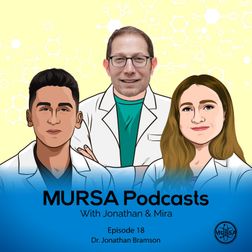
Episode 18: Dr. Jonathan Bramson
Hey Science Nerds! This week's episode is with Dr. Jonathan Bramson, a professor in the Department of Pathology and Molecular Medicine, as well as the Vice Dean of Research for the Faculty of Health Sciences. Dr. Bramson's lab focuses on the development of novel cancer immunotherapies. Specifically, the Bramson lab researches the use of adaptive T-cell therapies to better direct patients' immune systems against tumours. Tune into this week's podcast to learn about Dr. Bramson's academic journey, his current research projects, and the role of undergrads in his lab.
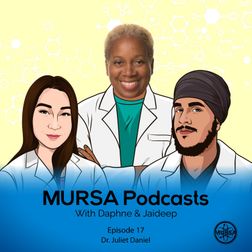
Episode 17: Dr. Juliet Daniel
Hey Science Nerds! This week's episode is with Dr. Juliet Daniel from the Department of Biology. Dr. Daniel completed her postdoctoral fellowship at Vanderbilt University where she discovered the Kaiso transcription factor and has continued researching its role in breast and colon cancer ever since. Tune into this week's podcast to hear about Kaiso's role in triple-negative breast cancer and colorectal cancer, the racial disparities in triple-negative breast cancer, the profound clinical applications of her research, and the role of undergrads in her lab.
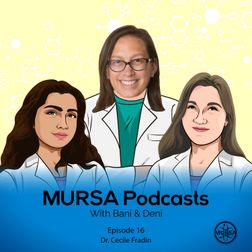
Episode 16: Dr. Cecile Fradin
Hey Science Nerds! This week's episode is with Dr. Cecile Fradin, a Professor in the Department of Physics and Astronomy, and the principal investigator at the Molecular Biophysics Group at McMaster. Dr. Fradin’s research is targeted towards the cellular dynamics of single molecules, specifically focusing on the diffusion of macromolecules in a crowded media, nuclear transport, conformational molecular changes, and the interactions of single molecules at the cell membrane. Tune into this episode to learn about Dr. Fradin's academic journey, how she combines the interests of physicists and biologists alike, and the role of undergrads in her Molecular Biophysics Group.
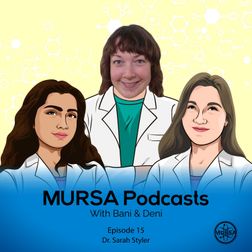
Episode 15: Dr. Sarah Styler
Hey Science Nerds! This week's episode is with Dr. Sarah Styler, an Assistant Professor at the Department of Chemistry and Chemical Biology. Dr. Styler earned her PhD in Environmental Chemistry from the University of Toronto before establishing the Styler Research Group at the University of Alberta, where she was an Assistant Professor of Environmental Chemistry. She moved the Styler Group to McMaster in 2020 and has been focusing on integrating atmospheric chemistry to historic conservation ever since. Tune in to learn more about leading Environmental Chemistry research, the photoreactive behavior of atmospheric particles and urban film and its effect on historic conservation, and the role of undergrads in the Styler Group.
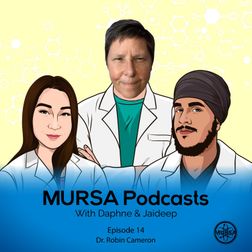
Episode 14: Dr. Robin Cameron
Hey Science Nerds! This week's episode is with Dr. Robin Cameron, a professor in the Department of Biology. The Cameron Lab studies plant-microbe interactions, focusing on plant immune responses in the Arabidopsis-Pseudomonas pathosystem. More specifically, Dr. Cameron's work focuses on Age Related Resistance (ARR) and Systemic Acquired Resistance (SAR). Tune into this episode to learn more about plant immune responses, why this area of research is so important, and the role of undergrads in her lab.
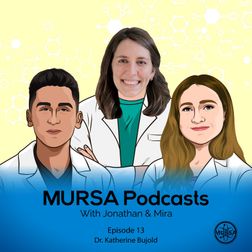
Episode 13: Dr. Katherine Bujold
Hey Science Nerds! This week's episode is with Dr. Katherine Bujold, an Assistant Professor in the Department of Chemistry and Chemical Biology here at McMaster. Dr. Bujold's lab focuses on the development of DNA nanostructures, and how they can be used for tissue-specific drug and gene therapies for a wide range of diseases. Tune into this episode to learn about Dr. Bujold's academic journey, her current research projects, and the role of undergrads in her lab.
Episode 12: Dr. Yingfu Li
Hey Science Nerds! This week's episode is with Dr. Yingfu Li, a professor and renowned researcher in the Department of Biochemistry and Biomedical Sciences. Dr. Li studies Functional Nucleic Acids, focusing on single stranded DNA and RNA molecules outside of their traditional role for encoding genetic material. The Functional Nucleic Acids research group at McMaster is a leader in the exploration of DNA aptamers and DNAzymes. These DNA structures have exciting applications as biosensors, such as in the antigen-based COVID-19 test capable of detecting all variants of SARS-CoV-2 that Dr. Li's group has developed. Tune into this episode to learn more about Dr. Li’s academic journey, DNA aptamer and DNAzyme-based diagnostic testing, as well as the role of undergrads in his lab.
Episode 11: Dr. Laura Parker
Hey Science Nerds! This week's episode is with Dr. Parker, a Professor and University Scholar in the Department of Physics & Astronomy. Dr. Parker identifies observable properties of galaxies and correlates them with properties of their environment, such as the mass of the dark matter halo in which they reside, their position within this halo, and the properties of the gases that surround these galaxies. Tune into this episode to learn about Dr. Parker’s academic journey, her current research on galaxy evolution, and the role of undergrads in her lab!
Episode 10: Dr. Brian Coombes
Hey Science Nerds! This week's episode is with Dr. Coombes, the Chair of the Department of Biochemistry and Biomedical Sciences. Dr. Coombes has an extensive background in bacterial pathogenesis, antibiotic resistance, and the role of enteric bacteria in inflammatory bowel diseases. Dr. Coombes has also developed an active research program in infectious diseases at the Coombes Lab that focuses on the exploration of risk factors that contribute to the development of Crohn's Disease. Tune in to learn more about the virulent behaviour of pathogens, the leading microbiological research in Crohn's Disease, and the role of undergrads in his lab.
Episode 9: Dr. Martin Gibala
Hey Science Nerds! This week's episode is with Dr. Gibala, a professor and renowned researcher in the Department of Kinesiology with an extensive background in exercise physiology. Dr. Gibala focuses on studying high-intensity interval training (HIIT) and its physiological impacts and benefits on different populations, especially for those who claim to have 'no time' for exercise. Tune in to explore how HIIT is investigated in the human performance lab here at McMaster, how Dr. Gibala balances his lab work with knowledge translation to the general public, and the role of undergrads in his lab.
1 de 2