Makerspace

Makerspace

por Sam Burrows & CEN
Temporada 4
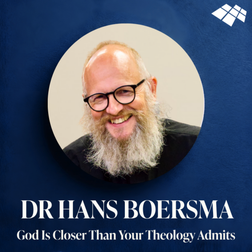
Hans Boersma: God Is Closer Than Your Theology Admits
How do we understand the connection between God and the world? Is God close and involved or is he just watching us get on with it? This week we speak to theological heavyweight, Hans Boersma. Hans is a Dutch-Canadian theologian and prolific author, widely recognised as a leading voice in retrieving the wisdom of the early church for contemporary Christian thought. He holds the Chair in Ascetical Theology at Nashotah House Theological Seminary in Wisconsin. In this conversation, we talk through what it might mean to listen to the church fathers of the first few centuries, what we may miss in our contemporary ways of thinking, and what it might mean for Christ to be in all things. It’s a revolutionary and challenging conversation and one that I hope inspires lots of chewing over of the ideas afterwards. His book, Heavenly Participation, is a great place to dive into this conversation in more detail.
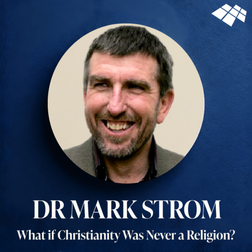
Mark Strom: What if Christianity Was Never a Religion?
This week I get to talk with author, speaker and consultant, Mark Strom. Mark is the author of the popular books Reframing Paul, the Symphony of Scripture, and lead with Wisdom. He also served as principal of Laidlaw College in NZ FROM 2005 - 2009, where our paths crossed, despite never actually meeting. Mark is Pauline scholar, and so in this conversation we centre mainly on the thinking of Paul in his letters, and the way he seems to be doing something revolutionary with his understanding of the way the gospel changes the world. This was a dynamic and inspiring conversation that helps us to not sell short, as Mark says in his words, this wild good news. Enjoy!
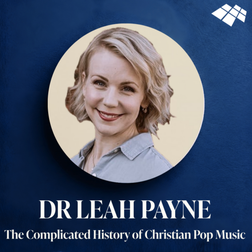
Dr Leah Payne: The Complicated History of Christian Pop Music
In this episode I get to speak with Leah Payne. Leah is an award-winning historian and Professor of American Religious History at Portland Seminary. She also is the author of God Gave Rock & Roll to You: A History of Contemporary Christian Music, which was the Christianity Today Book of the Year for History and Biography, and her research on religion, politics, and popular culture has appeared in The Washington Post, Harper's Magazine, The Economist, BBC Radio, and NBC News. She co-hosts the podcast Rock That Doesn't Roll and created Weird Religion, a religion and pop culture podcast. In his conversation Leah and I talk about the story of contemporary Christian music and the way that Christians have engaged in cultural formation, politics and markets through it, as a way of understanding the story of the church over the last 60 years or so. In the middle I actually take some time to go through her book with some music snippets! https://www.drleahpayne.com Rock that Doesn’t Roll podcast: https://open.spotify.com/show/6duv0G8igy2tL0W1aW8mCU?si=5aa859c1aab348d5
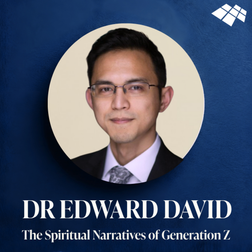
Edward David: The Spiritual Narratives of Generation Z
This week I get to chat with Edward David, the director of associateship and lecturer of ethics and values at King’s College London, as well as a research fellow at Oxford. Edward has recently lead a research team in a pioneering study into the spirituality of generation Z. Instead of just asking questions, this study uses story completion—letting young people finish the narrative to reveal the hidden spiritual maps they’re actually using to navigate the world. They have identified 5 main ways people are understanding spirituality today and so in this conversation I chat with Edward about what these results mean for teachers, but also how they help us to understand the spiritual climate our young people are growing up in.
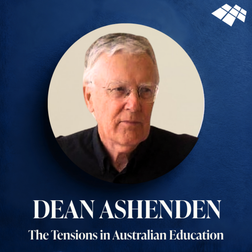
Dean Ashenden: The Tensions in Australian Education
This week our guest is Dean Ashenden, a former teacher, researcher, political advisor, and veteran observer of the Australian school system and the author of Unbeaching the Whale. Dean’s work cuts through the political noise to examine the structural bones of our education system. He’s a regular contributor to mainstream publications and one of the sharpest minds in the country when it comes to the politics of the classroom. This conversation is a challenging one, as Dean presents us with big questions to ask of Australia’s education system, and the inequalities present within it.
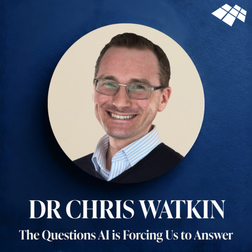
Chris Watkin: The Questions AI is Forcing Us to Answer
Our first guest this season is a returning guest, Chris Watkin, author of Biblical Critical Theory and more recently, The State of Nature and the Shaping of Modernity. Chris speaks into a variety of areas, one of them being AI. He’s launching a course on the underlying philosophy of this, so we jump on to talk through some of the contours of the content. We go big picture here, not so much about how to use AI, but asking the questions that need to be addressed before we do. Chris's upcoming AI course through Notre Dame: https://events.nd.edu.au/artificial-intelligence-and-christian-wisdom?fbclid=IwY2xjawSByi9leHRuA2FlbQIxMABicmlkETFSZ094R25qMDg5YVdFcHJhc3J0YwZhcHBfaWQQMjIyMDM5MTc4ODIwMDg5MgABHkv0daT6xEstpG1EeXocgOiqFcp7hGt0fKmAJdydFirrFJLHj8LE7L8fyZQ3_aem_6-WQpxGkSZU9Zfxba777lA
Temporada 3
Jessica Schroeder: Appearance Culture, Beauty Standards and Biblical Perfection
This week I’m joined by Jessica J. Schroeder, who has published a chapter recently about The Cult of Perfection and beauty standards. In this conversation I chatted to her about her ideas In it, and we discuss the pressures of appearance culture, and how Scripture redefines what it really means to be perfect and beautiful. We also tackled the complicated space of feminist theology and a little plug for more women to get involved in theology itself.. https://jessicajschroeder.substack.com
Dr Travis Stevick: T.F. Torrance and a Theology of Knowledge
This week we welcome Dr Travis Stevick, a theologian, author, and ordained elder in the the Global Methodist Church. Travis earned his doctorate from the University of St. Andrews and has spent years bridge-building between the local church and systematic theology. He is the author of Encountering Reality,, a work that explores how we engage with truth at the intersection of theology and science. What Travis and I are trying to do in this technical conversation, is pinpoint what difference Jesus makes to knowledge and how we know things. We’re constantly coming back to the idea that language can only go so far, and that means we need humility with our ideas. We also keep coming back to the fact that the incarnation changes everything because it is God making truth known to us, not just giving us facts to believe. We’re drawing on Scottish Reformed theologian, TF Torrance for this stuff. I hope that if this sort of thinking is important to you, you’ll find thinking through this connective work helpful. https://travisstevick.substack.com
Dr Sylvia Keesmaat: Resisting Empire and Forming Communities
This week I got to speak with Canadian theologian and prominent author, Dr Sylvia Keesmaat. Sylvia is a biblical scholar, obtaining her doctorate at Oxford University, studying with N.T. Wright. She is a professor of biblical studies and hermeneutics at the Institute for Christian Studies in Toronto. Sylvia is the co-author, with her husband, Brian Walsh, of the popular books Romans Disarmed and Colossians Remixed, both books highlighting how the gospel challenges dominating powers and invites alternative, justice‑oriented ways of life both in the first century and today. In this conversation we talk about her work that centres around hearing Paul’s letters in their socio-political terms, about his anti-Empire language and what that means for us today. We also talk about hope and lament, and how we need to be forming communities that are grounded in the place they’re in, as well in important teachings.
Justin Ariel Bailey: The Current Worldview Conversation
In this episode I speak with Dr Justin Ariel Bailey, a prominent voice in Christian ministry and theological writing, Justin is a professor of theology at Dordt University in Iowa, and published a book, Interpreting Your World in 2022. In this conversation we talk about the changing nature of worldview studies, and how to find the balance between an appreciative and critical approach when Christians engage with culture. We chat through the history of the term "worldview" and what it might mean to lead students in important conversations now.
1 de 4