Leaves in the Wind - By David Bentley Hart

Leaves in the Wind - By David Bentley Hart
por David Bentley Hart
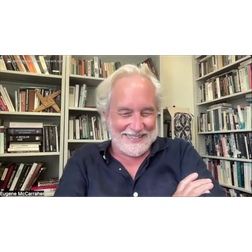
#37 - "Tom Holland's School Days" - Eugene McCarraher and David Bentley Hart
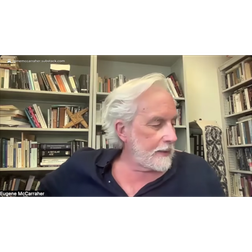
Episode #37 - "Tom Holland's School Days" - Eugene McCarraher and David Bentley Hart That was the closest thing to a clever title we could think of https://genemccarraher.substack.com/p... Tomorrow, deo volente, we shall record a conversation with Tom Holland, despite having discovered at the last moment that he is not, in fact, the fellow who plays Spider-Man or Telemachus, but rather the distinguished British historian. As is our wont, we have recorded some idle banter on the Vorabend. Our topics, as ever, were no better organized than our wandering wits. We discussed, among other things, J. D. Vance’s recent “memoir” of his “conversion” to “Catholic” “Christianity”, Integralism, Christian Nationalism, Post-Liberal Orderlies, J. D. Vance’s natural resemblance to the demonic titan at the end of Ghostbusters, the mystery of American white Evangelicalism, the Great Library of Alexandria, the World Cup, the utter spiritual vacuity of J. D. Vance, J. D. Vance’s blood-and-soil resentments, Rhode Island’s ethnic mix, Tom Holland (not the historian, the actor who plays Spider-Man), and Tom Holland (not the actor who plays Spider-Man, the historian), and much much more.
#36 - "Capitalism, Myth, Jonathan Pageau's Hysterics & Other Distractions"
Capitalism, Myth, Helen of Troy, Jonathan Pageau's Hysterics, Automated Vistas... https://genemccarraher.substack.com/p... Eugene McCarraher and David Bentley Hart resume their monthly conversation after a hiatus occasioned by David's house move and the submission of Eugene's manuscript, The Automated Vistas, to Yale University Press. The conversation begins by touching on AI-generated correspondence, David's recent translation of the Tao Te Ching, and anecdotes about Thomas Aquinas. David and Eugene also discuss Sven Beckert's recent historiography of capitalism, which Eugene compares to Trevor Jackson's The Insatiable Machine, and proposes a distinction between industrial and "super-industrial" society. The discussion then turns to J.D. Vance's conversion memoir Communion, Evelyn Waugh's Brideshead Revisited, and Malcolm Muggeridge. The conversation concludes with an extended critique, led by Hart, of the right-wing cultural commentator Jonathan Pageau's objections to Lupita Nyongo's casting in Christopher Nolan's upcoming Odyssey adaptation, including a detailed discussion of the etymology of "Helen." Forthcoming on the podcast is a conversation with Tom Holland (not the one playing Telemachus in The Odyssey).
#35 - "On the Road to Christman" with Eugene McCarraher
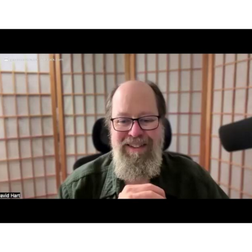
Episode #35 - "On the Road to Christman" with Eugene McCarraher A Wandering Conversation https://genemccarraher.substack.com/p... Eugene McCarraher, PhD., is an Associate Professor of Humanities at Villanova and author of The Enchantments of Mammon: How Capitalism Became the Religion of Modernity.
#33 - "Before Minniecon" with Eugene McCarraher
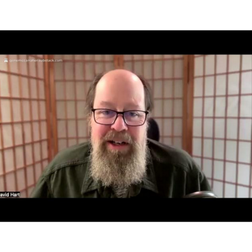
Episode #33 - "Before Minniecon" with Eugene McCarraher A desultory exchange between two elderly man wearied by the interesting times they live in... https://genemccarraher.substack.com/p... Eugene McCarraher, PhD., is an Associate Professor of Humanities at Villanova and author of The Enchantments of Mammon: How Capitalism Became the Religion of Modernity.
#32 - "Before Seymour" with Eugene McCarraher
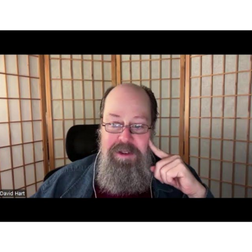
Episode #31 - "Before Seymour" with Eugene McCarraher The Moment We Are In https://genemccarraher.substack.com/p... Eugene McCarraher, PhD., is an Associate Professor of Humanities at Villanova and author of The Enchantments of Mammon: How Capitalism Became the Religion of Modernity.
#31 - "AI, Smartphones, and Consciousness": A CBC Interview
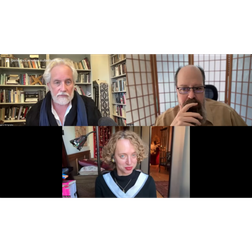
You may notice that neither I nor my interviewer made any attempt here to appear especially elegantly turned out. The recording was for an audio article, but I have been given leave to use the video record (though, if I had any sense of shame or style, I would not). The young man interviewing me is named Gabriel Ellison-Scowcroft, a journalist for the CBC in Montreal (though on Anglophone radio). Our conversation began with a consideration of the changes the smartphone has made in our lives, personal and social, but soon expanded into any number of related topics, including philosophy of mind, information theory, the progressive dissolution of human experience in the solvent of virtual space, the ubiquity of the algorithm, and (of course) dogs and otters.
#30 - "A conversation on Magic, Media, Machines, Modernity, and ever so much more..." - with Dr.'s Eugene McCarraher, Tara Isabella Burton and David Bentley Hart
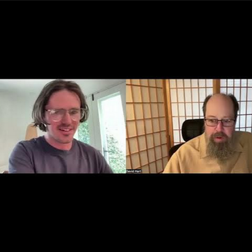
#30 - A conversation on Magic, Media, Machines, Modernity ...and ever so many other things beginning with M - with Eugene McCarraher, PhD., and Tara Isabella Burton, PhD. https://genemccarraher.substack.com/p... Eugene McCarraher, PhD., is an Associate Professor of Humanities at Villanova and author of The Enchantments of Mammon: How Capitalism Became the Religion of Modernity. Tara Isabella Burton, PhD., is a novelist, cultural critic. She writes on religion, secular spirituality, identity, ritual, aesthetics and finding meaning in the modern age. She holds a doctorate in theology from Oxford University.
#29 - A Conversation on "Prisms, Veils" by David Bentley Hart with Bryn Morris
It has been some time since I lasted posted a video here. The past year and a half has been a physical challenge. This is the record of what for me was an altogether delightful encounter. It was, I suppose, an interview, with me in the place of the interviewee. Bryn Morris is a reader of my works who lives in Sunshine Coast, Australia: A husband, father to a nine month old baby, a musician, and a friend of humpback whales and their young. He has taken assorted masters degrees in education and theology, even studying for a time under John Behr. He also studied geology at some juncture, being a lover of the sciences. And he writes a Substack publication of his own called A Leisurely Stroll. The occasion of the conversation was that he thought I should have discussed my book Prisms, Veils in public a bit more than I have been able to do to this point, and offered to play the part of an interviewer on the topic. It was not hard to convince me, since the book is especially close to my heart. I expected a short conversation, but that was not to be, principally because Bryn turned out to be just about the most perceptive reader of the text I could have hoped for. In the course of the interview, we talked about any number of topics in the arts, philosophy, theology, the natural sciences, and so forth, all of which was rich and illuminating for me. More to the point, though, when Bryn questioned me directly about both the book as a whole and various of the stories in particular, his insights were to my mind extraordinarily penetrating. It made me think that the book actually succeeds at what I wanted it to do. I am extremely grateful to him. One incidental note: At the end of the recording, the conversation turned to baseball (which is a game actually played by some Australians) and we paused to rhapsodize on the talents of Shohei Ohtani. As soon as the recording was finished, I went to watch the final NLCS game between LA and Milwaukee—a game in which Ohtani had possibly the single greatest performance on the field in the history of the sport. Six shut-out innings with ten strikeouts from the mound, his fastball reaching triple digits, his other pitches darting like dragonflies over a marsh, and three home runs at the plate. In fact, he started the first inning with three Ks in the top of the frame and then led off the bottom with the first of his homers. The second he hit left the stadium, so it is hard to say whether the estimate of 469 feet was accurate or not; it seemed to go that high before descending beyond the pavilions of Chavez Ravine. Anyway, what a remarkable moment of synchronicity. And can anyone doubt that Ohtani is not only the greatest baseball player of our time, but possibly the greatest there has ever been?
#28 - A Conversation with My Brother (the other one)
Episode #28 - A Conversation with My Brother (the other one) Though my brother Robert is an Anglican rector down in the Research Triangle down in North Carolina, he was a musician will before he ever considered ordination. Our conversation here, consequently, is on matters strictly musical. You can see he dressed for the occasion. The exchange took an unexpected turn. We began by discussing aspects of the performer's art and some of his own compositions, then shifted to Chopin (who was supposed to be the principal topic), only to veer off onto an extended discussion of The Beatles.
#27 - "The Light of Tabor: Notes Toward a Monistic Christology", Lecture 5 of 5
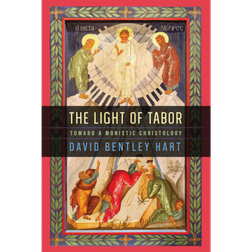
#27 - "The Light of Tabor: Notes Toward a Monistic Christology", Lecture 5 of 5 And, at last, the final chapter in the sprawling epic that was this year's Stanton Lectures. That infernal machine the "Owl" seems to me to have done an especially bad job of separating voices from the ambient sound in the lecture theatre, but that's what makes technological progress so exciting: it's as likely to make things worse as it is to make them better. In fact, the audio in the live recording is sufficiently bad in this case that I have recorded an alternative version, which I have used for this podcast here and over at the Substack page for Leaves in the Wind (https://davidbentleyhart.substack.com). If one wants to follow the lecture easily, it might be better simply better to listen to this recording. If then wants to try to listen in to the final question and answer session of the lectures, one could start the original video at about the 47-minute mark and try to make out the exchanges recorded there: https://www.youtube.com/watch?v=WDYXOsEtURE. In time, the lectures will be published, in considerably longer forms than the versions delivered live.
1 de 4