The Great Hope Message

The Great Hope Message

por Jack Alan Levine
Temporada 4

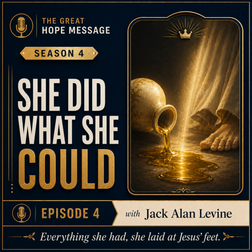
She Did What She Could: Giving God Your Best With What You Have | Jack Alan Levine

Episode Guide She Did What She Could: Giving God Your Best With What You Have Do you ever feel like what you have to offer is too small to make a difference? In this episode of The Great Hope Message, Jack Alan Levine shares a powerful reminder from the story of the woman who poured expensive perfume on Jesus. Others criticized her actions, but Jesus defended her with a simple statement: “She did what she could.” God does not ask us to give what we do not have. He asks us to faithfully use the time, abilities, resources, opportunities, and influence He has already placed in our hands. It is easy to compare ourselves with people who appear more talented, successful, experienced, or financially capable. Comparison can convince us that our contribution is insignificant. But God measures faithfulness differently than the world measures success. What seems small to others can become meaningful when it is offered to Him with love and obedience. Jack encourages listeners to stop waiting for perfect circumstances before serving God. You may not be able to solve every problem, reach every person, or meet every need—but you can do something. A prayer, encouraging word, generous act, honest testimony, or simple step of obedience may have a greater impact than you realize. This episode also examines the criticism that can come when we wholeheartedly follow God. Not everyone will understand your sacrifice or recognize its value. The approval that matters most comes from the One who sees your heart. Your responsibility is not to do everything. It is to faithfully do what God has equipped and called you to do. In This Episode The meaning behind “She did what she could” Giving God your best instead of comparing yourself Recognizing what He has already placed in your hands Serving without waiting for perfect circumstances Why small acts of obedience still matter Responding when others criticize your faithfulness Trusting God with the results of your efforts Measuring success through obedience rather than recognition Key Scriptures Mark 14:3–9 Matthew 25:14–23 Colossians 3:23–24 2 Corinthians 8:12 Galatians 6:9–10 Zechariah 4:10 1 Corinthians 15:58 Key Takeaway God is not asking you to do everything or give what you do not have. He is asking you to faithfully offer your best and do what you can with what He has placed in your hands. Listen to She Did What She Could: Giving God Your Best With What You Have | Jack Alan Levine on The Great Hope Message. Available on Spotify, Apple Podcasts, YouTube Music, Amazon Music, iHeartRadio, and your favorite podcast platform. Learn more at JackAlanLevine.com.
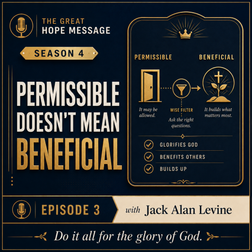
Permissible Doesn’t Mean Beneficial: Choosing What Strengthens Your Faith and Honors God | Jack Alan Levine

Episode Guide Permissible Doesn’t Mean Beneficial Just because you are allowed to do something does not mean it is helping you become the person God created you to be. In this episode of The Great Hope Message, Jack Alan Levine examines Paul’s teaching that while some choices may be permissible, not every choice is beneficial—and nothing should be allowed to gain control over us. Christian freedom is not permission to live without boundaries. It is freedom from sin’s control and the opportunity to make choices that honor God, strengthen faith, and protect our spiritual well-being. Jack challenges listeners to look beyond the question, “Is this technically wrong?” and ask more meaningful questions: Does this draw me closer to God? Does it strengthen my character? Could it negatively influence someone else? Is it becoming something I cannot easily give up? A habit, relationship, form of entertainment, substance, or personal desire may not initially appear harmful. But when it begins controlling our thoughts, consuming our time, weakening our convictions, or damaging our witness, it is no longer producing freedom. This message also reminds believers that their decisions affect other people. Something we feel free to do may become a stumbling block for someone who is struggling. Love sometimes calls us to voluntarily surrender a freedom for the spiritual benefit of another person. Spiritual maturity is not measured by how close we can get to the boundary without crossing it. It is shown by choosing what is wise, constructive, loving, and pleasing to God. In This Episode The difference between what is permissible and beneficial Why Christian freedom still requires wisdom Recognizing when something begins controlling you Examining habits, relationships, and entertainment Protecting your spiritual growth and personal witness Avoiding choices that may cause others to stumble Choosing love over personal entitlement Asking whether your decisions glorify God Key Scriptures 1 Corinthians 6:12 1 Corinthians 10:23–24 1 Corinthians 10:31 Romans 14:13–21 Galatians 5:13 Hebrews 12:1 Philippians 4:8 Key Takeaway The better question is not simply, “Am I allowed to do this?” Ask, “Is this strengthening my faith, helping others, and honoring God—or is it slowly gaining control over me?” Listen to Permissible Doesn’t Mean Beneficial | Jack Alan Levine on The Great Hope Message. Available on Spotify, Apple Podcasts, YouTube Music, Amazon Music, iHeartRadio, and your favorite podcast platform. Learn more at JackAlanLevine.com.
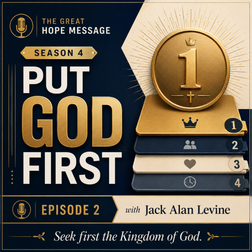
Put God First: Making Him the Priority Through Prayer and Faith | Jack Alan Levine

Put God First: Making Him the Priority Through Prayer and Faith What does it actually mean to put God first? In this episode of The Great Hope Message, Jack Alan Levine examines the difference between simply believing in God and allowing that belief to shape our priorities, decisions, attitudes, and actions. Through the biblical story of Mary and Martha, Jack explains how easily we can become distracted by responsibilities, worries, and the desire to accomplish more. Martha was busy serving, preparing, and working, while Mary remained at the feet of Jesus. Christ’s response was clear: although Martha was concerned about many things, only one thing was truly needed. Jack connects this lesson to Matthew 6:33: “Seek first the kingdom of God and His righteousness, and all these things will be given to you as well.” Putting God first does not mean ignoring responsibilities or waiting passively for life to happen. It means surrendering control, trusting God’s direction, and allowing Him to shape us according to His purpose. Instead of constantly asking what our next move should be, we can become willing vessels—like clay in the hands of the Potter. This episode also challenges listeners to consider whether their faith is visible in the way they live. Salvation is the beginning of a relationship with Christ, but spiritual fruit should become evident through obedience, love, trust, peace, and changing priorities. In this episode, you will hear about: Why busyness can distract us from God The lesson of Mary and Martha What Matthew 6:33 means in everyday life Surrendering the need to control the future Trusting God one day at a time Allowing God to mold and direct your life The difference between professing faith and living it How spiritual fruit reveals our priorities Key takeaway One thing is needed: put God first, trust Him fully, and allow everything else to find its proper place. Listen to The Great Hope Message with Jack Alan Levine on Spotify, Apple Podcasts, YouTube Music, Amazon Music, or wherever you listen to podcasts. Visit JackAlanLevine.com for more messages, books, and resources.

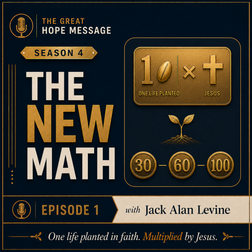
The New Math: Understanding God’s Way of Living | Jack Alan Levine

The New Math: Seeing Your Life Through God’s Perspective What happens when we stop measuring life by the world’s standards and begin seeing value the way Jesus does? In The New Math, Jack Alan Levine introduces what he calls the Jesus Theory of Multiplication: One life planted in faith, multiplied by Jesus, can produce a thirty-, sixty-, or hundredfold return. Jack begins with the story of a child choosing twenty pennies instead of four quarters because the larger pile looked more valuable. The child saw quantity, but he did not understand true worth. In the same way, we can be drawn toward what appears impressive, successful, or satisfying while overlooking the greater value found in Christ. This episode challenges listeners to examine whether they are living according to their God-given purpose. Jack compares an unfruitful Christian to a broken toaster: it may still look like what it was created to be, but it is not functioning as intended. Faith is meant to become active, fruitful, and visible through the way we live. Using the parable of the sower and the miracle of Jesus feeding the four thousand, Jack explains that God specializes in multiplication. When a life is placed in Christ’s hands, He can multiply its faith, purpose, influence, and spiritual fruit far beyond what human effort can accomplish alone. Before Christ, Jack describes his personal equation as one life multiplied by his own strength, ambition, and choices—resulting in no lasting joy, peace, satisfaction, purpose, assurance of heaven, or close relationship with God. A life disconnected from Christ is like an appliance that has never been plugged into its power source. It may have potential, but it cannot operate as designed. The message also asks an important question: Are we more willing to trust uncertain people and worldly systems than we are to trust Almighty God? The crowds brought the sick, blind, lame, and hurting to Jesus because they believed He had the power to heal them. Their faith moved them to act, and Jesus responded. In this episode, you will hear about: The difference between worldly value and eternal value The Jesus Theory of Multiplication Why faith should produce visible spiritual fruit The parable of the sower and the thirty-, sixty-, and hundredfold harvest Becoming a new creation through Jesus Christ The importance of connecting your life to its true power source Trusting God more than unreliable worldly systems Refusing to take salvation, the Holy Spirit, and God’s miracles for granted Key Scriptures Matthew 13:23 Mark 4:8 Matthew 15:29–38 Mark 8:17 2 Corinthians 5:17 Key Takeaway The world may tell you that more possessions, success, power, or recognition equal a more valuable life. Jesus teaches a different equation: place your life in His hands, live by faith, and allow Him to multiply it for His purpose. Listen to The New Math: Seeing Your Life Through God’s Perspective, Season 4, Episode 1 of The Great Hope Message with Jack Alan Levine. Available on Spotify, Apple Podcasts, YouTube Music, Amazon Music, and your favorite podcast platform. Learn more about Jack Alan Levine, his books, speaking, and additional resources at JackAlanLevine.com.
Temporada 3

The Only Thing That Matters: Living With Eternity in Mind | Jack Alan Levine

The Only Thing That Matters: Living With Eternity in Mind What matters most when everything we work for, worry about, and accumulate in this life is temporary? In The Only Thing That Matters, Jack Alan Levine challenges listeners to look beyond today’s pressures and consider life from an eternal perspective. Our years on earth may feel long while we are living them, but compared with eternity, they are only a brief moment. The most important question is not how much success, comfort, recognition, or wealth we gain—it is whether we know Jesus Christ and where we will spend eternity. The world encourages us to invest nearly all our attention in temporary concerns. We prepare for careers, retirement, financial security, storms, emergencies, and countless possible problems. Yet many people give little thought to the one future that every person will eventually face. Jack explains that Jesus offers more than temporary help during difficult circumstances. Through His death and resurrection, Christ offers forgiveness, salvation, a relationship with God, and eternal life. This gift cannot be earned through good behavior or religious performance. It is received through faith because of God’s unconditional love and grace. The episode also compares salvation to receiving an extraordinary gift that remains unopened. A gift can be offered freely, but its intended benefit is never experienced until it is accepted. In the same way, knowing about Jesus is not the same as personally receiving Him, trusting Him, and allowing Him to transform your life. Living with eternity in mind does not mean ignoring the life God has given us today. It means viewing our choices, priorities, relationships, and struggles through a larger perspective. Temporary possessions can be lost, but the eternal place Christ prepares for His people cannot be taken away. In this episode, you will hear about: Why earthly life is brief compared with eternity The danger of preparing for everything except our eternal future Why death is not the end The difference between knowing about Jesus and receiving Him Salvation as an undeserved gift from God Why money, possessions, and accomplishments cannot follow us beyond this life The peace that comes from knowing where you will spend eternity How an eternal perspective changes the way we live today Key Scriptures John 3:16 John 4:13–14 John 6:35 Romans 6:23 Ephesians 2:4–9 Matthew 18:12–14 1 John 4:15 Key Takeaway Everything in this world is temporary. The only thing that ultimately matters is knowing Jesus Christ, receiving God’s gift of salvation, and living today with eternity in mind. Listen to The Only Thing That Matters: Living With Eternity in Mind | Jack Alan Levine on The Great Hope Message. Available on Spotify, Apple Podcasts, YouTube Music, Amazon Music, and your favorite podcast platform. Learn more about Jack Alan Levine, his books, speaking, and additional resources at JackAlanLevine.com.

When the Holy Spirit Takes Over: Living Under God’s Guidance and Power | Jack Alan Levine

When the Holy Spirit Takes Over: Living Under God’s Guidance and Power What happens when we stop relying only on our own ability and allow the Holy Spirit to lead? In this episode of The Great Hope Message, Jack Alan Levine looks at the Day of Pentecost, when the Holy Spirit filled the disciples with supernatural power. Acts 2 describes a sound like a mighty wind, tongues of fire, and ordinary men suddenly speaking languages they had never learned. The transformation was so dramatic that some people thought they were drunk. Peter explained that they were not under the influence of wine—they were filled with the Spirit of God. Jack reminds listeners that everyone who accepts Jesus Christ receives the Holy Spirit. But receiving the Spirit and living a Spirit-led life are not always the same thing. Believers must continually surrender their plans, fears, decisions, and responsibilities to God’s direction. The Holy Spirit gives wisdom, courage, understanding, and strength beyond our natural ability. The disciples could not have accomplished what happened at Pentecost through education, personality, or human effort. God equipped them for the assignment He had given them. This episode also challenges listeners to consider whether they truly want more of God. Sometimes we resist the Spirit because we fear what God may ask us to change, release, say, or do. Yet surrender does not lead to a smaller life. It opens the way for God’s purpose and power to become visible through us. Through the Holy Spirit, believers can understand spiritual truth, recognize God’s direction, grow in faith, and develop the mind of Christ. We do not have to face God’s assignments alone. When He calls us, He also provides what we need. In This Episode What happened when the Holy Spirit came at Pentecost The difference between receiving the Spirit and living Spirit-led Why believers should ask God for fresh filling and guidance Moving from fear and self-reliance to surrender How the Holy Spirit gives wisdom and understanding Allowing God to work beyond your natural ability Living with the courage and passion of the early disciples Key Scriptures Acts 2:1–18 Joel 2:28 1 Corinthians 2:6–16 Ephesians 5:18 John 14:26 Romans 8:5–14 Key Takeaway The Holy Spirit lives within every believer, but a Spirit-led life requires daily surrender. When we ask God to guide, fill, and empower us, He can accomplish through us what we could never accomplish on our own. Listen to When the Holy Spirit Takes Over: Living Under God’s Guidance and Power | Jack Alan Levine on The Great Hope Message. Available on Spotify, Apple Podcasts, YouTube Music, Amazon Music, and your favorite podcast platform. Learn more at JackAlanLevine.com.

Take Your Faith to the Next Level: Growing Stronger in God | Jack Alan Levine

Episode Guide Take Your Faith to the Next Level: Growing Stronger in God What keeps believers from moving beyond basic faith into complete trust and obedience? In this episode of The Great Hope Message, Jack Alan Levine challenges listeners to stop settling for a comfortable relationship with God and take their faith to the next level. Jack explains that stronger faith is not simply believing that God exists. It is loving Him enough to trust His direction and obey what He commands, even when obedience requires sacrifice or change. Jesus demonstrated this kind of faith by doing exactly what the Father asked of Him. Many believers love God but hesitate when following Him may affect their habits, priorities, relationships, or plans. Like the rich young ruler, we may want eternal life while still holding tightly to the things God asks us to release. Jack reminds listeners that faith does not guarantee a life without hardship. Jesus said believers would face suffering, but He also said, “Do not let your hearts be troubled. Trust in God; trust also in me.” Growing stronger means trusting God’s character and believing that His outcome is better than the security we create for ourselves. The episode encourages Christians to examine whether their actions match their profession of faith. If we claim to trust God but continually refuse His instruction, we may not truly believe that obedience is worth the cost. In This Episode What it means to take your faith to the next level Following Jesus through complete trust and obedience Why believers sometimes resist God’s direction The lesson of the rich young ruler Trusting God through suffering and uncertainty Letting go of habits and priorities that hold us back Moving from comfortable belief to active faith Key Scriptures John 14:1 John 14:31 Matthew 19:16–22 Proverbs 3:5–6 James 1:22 Hebrews 11:1 Key Takeaway The next level of faith begins when we stop asking God to fit into our plans and become willing to follow His. Complete trust produces obedience, and obedience allows God to grow us into the people He created us to be. Listen to Take Your Faith to the Next Level: Growing Stronger in God | Jack Alan Levine on The Great Hope Message. Available on Spotify, Apple Podcasts, YouTube Music, Amazon Music, iHeartRadio, and your favorite podcast platform. Learn more at JackAlanLevine.com.
Stop Doubting What God Promised: Choosing Faith Over Unbelief | Jack Alan Levine

Episode Guide Stop Doubting What God Promised: Choosing Faith Over Unbelief Why do doubts rise in our minds when God has already shown His faithfulness again and again? In this episode of The Great Hope Message, Jack Alan Levine challenges listeners to stop allowing fear, circumstances, and outside voices to weaken their trust in God. Jack explains that doubt often grows when we focus on what is wrong instead of remembering what God has already done. Scripture asks, “Why are you troubled, and why do doubts rise in your minds?” Believers have more than secondhand stories—we have God’s Word, the testimony of Christ, and the Holy Spirit living within us. Satan often attacks faith by distorting truth, just as he attempted to do when Jesus was tempted in the wilderness. Jesus stood firm because He knew exactly what God had said. In the same way, Christians must know Scripture well enough to recognize lies and answer them with truth. Jack reminds listeners that God has promised to remain with His people, care for them, forgive their past, guide their future, and work through every circumstance. Faith does not mean pretending that pain or trouble is not real. It means refusing to let temporary circumstances become more believable than God’s eternal promises. The past cannot be changed, but it can be forgiven. The future cannot be controlled, but it can be entrusted to God. That leaves the present—the gift of today—in which believers can choose gratitude, obedience, peace, and faith instead of fear. In This Episode Why doubt grows during pain and uncertainty Remembering the ways God has already been faithful How Satan distorts God’s Word Why knowing Scripture protects your faith Trusting God with the future Releasing guilt and failure from the past Choosing gratitude and faith in the present Believing God’s promises over your circumstances Key Scriptures Luke 24:38 Luke 24:25 2 Peter 3:4 Luke 12 Psalm 103:12 Romans 8:28 1 John 1:9 Key Takeaway Faith grows when we stop measuring God by our present circumstances and begin measuring our circumstances by what God has already promised. Listen to Stop Doubting What God Promised: Choosing Faith Over Unbelief | Jack Alan Levine on The Great Hope Message. Available on Spotify, Apple Podcasts, YouTube Music, Amazon Music, iHeartRadio, and your favorite podcast platform. Learn more at JackAlanLevine.com.
Do You Really Know God?: Moving Beyond Religion Into Relationship | Jack Alan Levine

Episode Guide Do You Really Know God?: Moving Beyond Religion Into Relationship Is knowing about God the same as truly knowing Him? In this episode of The Great Hope Message, Jack Alan Levine challenges listeners to examine whether their faith is built on religious knowledge, traditions, and outward appearances—or on a genuine personal relationship with God. It is possible to attend church, know Bible stories, use Christian language, and still remain spiritually distant from God. Religion can teach us facts and routines, but relationship requires trust, honesty, communication, surrender, and time spent in God’s presence. Jack explains that God does not simply want people to follow rules. He wants them to know His heart, recognize His voice, receive His love, and allow Him to transform the way they live. Jesus came so people could be reconciled to God—not merely become more religious. A real relationship with God affects everyday life. It changes how we respond to pressure, treat other people, make decisions, handle failure, and view our purpose. When we know God personally, faith becomes more than something practiced on Sunday. It becomes the foundation of everything we do. This episode encourages listeners to move beyond simply saying they believe in God and ask a more personal question: Does the way I live show that I know Him? In This Episode The difference between religion and relationship Why knowing facts about God is not enough Developing a personal connection with God Recognizing God’s voice through Scripture and prayer Allowing faith to change everyday behavior Moving beyond outward appearances Trusting God with every area of life What it means to walk closely with Jesus Key Scriptures John 17:3 Matthew 7:21–23 John 10:14 Philippians 3:8–10 Jeremiah 9:23–24 James 4:8 1 John 2:3–6 Key Takeaway God is not looking for empty religious activity. He wants a genuine relationship in which we know Him, trust Him, follow Him, and allow His presence to transform our lives. Listen to Do You Really Know God?: Moving Beyond Religion Into Relationship | Jack Alan Levine on The Great Hope Message. Available on Spotify, Apple Podcasts, YouTube Music, Amazon Music, iHeartRadio, and your favorite podcast platform. Learn more at JackAlanLevine.com.
Live Without Worry: Trusting God With Tomorrow | Jack Alan Levine

Episode Guide Live Without Worry: Trusting God With Tomorrow How much of today are you losing because you are worried about tomorrow? In this episode of The Great Hope Message, Jack Alan Levine addresses the fear, stress, and uncertainty that can take control of our thoughts. Worry often feels productive, but it cannot change the past, control the future, or solve the problems we are afraid may happen. Jesus taught His followers not to worry about tomorrow because each day has enough trouble of its own. This does not mean believers should ignore responsibilities or avoid planning. It means we should prepare wisely while trusting God with the results. Jack reminds listeners that God knows what they need before they ask. The same God who provides for the birds and clothes the flowers cares deeply for His children. When fear begins to grow, believers can shift their attention away from imagined outcomes and return their focus to God’s character, promises, and faithfulness. Worry asks, “What if everything goes wrong?” Faith asks, “What if God is already working, even when I cannot see it?” Living without worry is not pretending that problems do not exist. It is choosing not to face them alone. Through prayer, Scripture, and daily surrender, we can place our families, finances, health, decisions, and future into God’s hands. In This Episode Why worry cannot change tomorrow The difference between wise planning and anxious control Trusting God with needs you cannot meet alone Replacing fearful thoughts with God’s promises Seeking God before seeking every possible solution Taking life one day at a time Finding peace during uncertainty Surrendering the future through prayer Key Scriptures Matthew 6:25–34 Philippians 4:6–7 Proverbs 3:5–6 1 Peter 5:7 Psalm 55:22 Isaiah 41:10 John 14:27 Key Takeaway You do not have to carry tomorrow today. Seek God first, handle what He has placed before you now, and trust Him with everything you cannot control. Listen to Live Without Worry: Trusting God With Tomorrow | Jack Alan Levine on The Great Hope Message. Available on Spotify, Apple Podcasts, YouTube Music, Amazon Music, iHeartRadio, and your favorite podcast platform. Learn more at JackAlanLevine.com.
1 de 3