
Earned First

Earned First

por Arun Sudhaman
Tetsuya Honda on Japan Inc's global comms challenges
Tetsuya Honda spent nearly 20 years at Fleishman Hillard before leaving to build Honda Office, a strategy-only consultancy operating without permanent staff or execution mandates. Earlier this year he extended that model across six Southeast Asian markets with the launch of PR Collective Asia, a network of individual specialists serving Japanese companies with regional ambitions. In this conversation with David Blecken, research and insights editor of Earned First, Honda examines why Japanese companies — despite strong brand equity and long-established regional presence — continue to under-invest in communications strategy in Southeast Asia. He discusses the structural gap between Tokyo headquarters and local subsidiaries, why Korean competitors have developed more sophisticated international communications, the case for integrating corporate and product brand strategy, and where AI can and cannot help Japanese companies move faster.
Burson's Red Surtida on GEO's 'credibility paradox'
In this episode, Burson's Asia-Pacific head of intelligence and transformation Red Surtida joins Earned First founding editor Arun Sudhaman and research and insights editor David Blecken to explore the findings of the 'Credibility Paradox', a study that examines how AI answer engines assess and surface brand content. The conversation covers why corporate leadership content is underperforming as a credibility signal, how employee experience is emerging as a reputation asset in the GEO era, the channel dynamics that vary significantly across industries and markets, and what it means that business decision-makers find AI-generated answers more believable than the general population does.
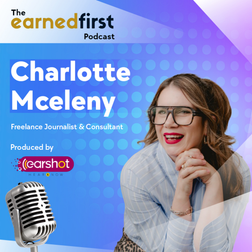
Holding groups, CMOs & Cannes with Charlotte Mceleny
Charlotte Mceleny has seen the PR and marketing industry from both sides, through 15 years as a journalist, then inside a holding group at MediaMonks. In this conversation, she and Arun Sudhaman work through what's actually happening to the holding group model, why PR keeps failing the measurement test, what the CMO role is becoming under CFO pressure, and whether Cannes still means what it once did.
Mazen Nahawi on conflict, communications and courage in the Middle East
Mazen Nahawi, founder and group CEO of CARMA and RAIYN, joins Earned First to assess the communications landscape of the ongoing US-Iran conflict. Drawing on CARMA's media intelligence data, he argues that the largely neutral view of Gulf countries reflects a deficit in terms of incomplete storytelling rather than active hostility, and one that Iran's disciplined communications strategy is effectively exploiting. Nahawi also reflects on building two global holding groups out of the Middle East, the cultural and operational advantages that emerging-market businesses bring to the industry, and why the gap in communications today is less about capability than courage.
AI and the future of women in the workplace
Christine Fellowes, founder of NINEby9, and Jane Morgan, chief client officer at Ashbury Communications, join Earned First to discuss Nineby9's latest research report, AI and the Future of Women in the Workplace. The conversation covers the exposure women face as AI reshapes the workforce, with women overrepresented in the roles most at risk of displacement and underrepresented in the roles being created. Fellowes and Morgan also examine how women's more measured approach to AI adoption, while a genuine organisational asset, can go unrecognised in workplaces that reward speed over outcomes. The episode looks at the structural changes needed in how organisations design learning, align HR and technology functions, and rethink entry-level talent investment, and what individuals can do in parallel.
QI Group's Ramya Chandrasekaran on AI, culture & the evolving role of the CCO
Ramya Chandrasekaran, chief communications officer at QI Group, joins Arun Sudhaman to discuss how AI has moved from experiment to embedded practice inside her team, why geopolitics has fundamentally expanded the scope of the CCO role, and what it takes to build communications that actually land across 17-plus markets. She also shares an honest account of how she won a seat at the table, and why building relationships with the lawyers might matter more than you think.
Mary Njoki on PR transformation in Africa
In this episode, Arun Sudhaman speaks with Mary Njoki, founder and CEO of Glass House PR in Nairobi, about the findings of the State of PR in Africa report — a survey of 54 agencies representing over 6,500 professionals across the continent. The discussion covers AI adoption across the industry, the structural training gaps that are shaping how tools are being used, and the growing challenge of algorithm opacity for practitioners trying to reach targeted audiences. The conversation also explores the broader trajectory of African PR: how the industry has evolved from being conflated with events and press releases into a recognised strategic discipline, and what Njoki is trying to achieve through Africa PR Week — both in terms of building a continental professional community and placing African communications on the global stage.
Stagwell's Margaret Key on why she left Publicis & what comes next for PR networks
Margaret Key, Asia Pacific CEO at Allison Worldwide and executive director at Stagwell, on why she left one of the most successful holding groups in the business, what consolidation is really doing to PR's standing inside holding companies, and why she thinks the next decade will look nothing like the last. She also talks about Korea's underrated role in the regional comms landscape, the unbundling of senior talent into independent and fractional practices, and what still needs to change for women at the top of the industry.
Gil Bashe on the healthcare sector's trust crisis
In this episode of the Earned First podcast, Gil Bashe, chair of health and purpose at Finn Partners, argues that healthcare’s most urgent crisis is no longer innovation or access, but institutional credibility. Speaking during a visit to India, Bashe draws on his new book, Healing the Sick Care System: Why People Matter, to explain how healthcare systems have become optimised for process, compliance, and risk management—often at the expense of patient belief and human connection. The conversation explores increasing scepticism towards healthcare institutions is, how health influencers are filling a trust vacuum left by institutions, and why misinformation has become a symptom of credibility failure. Bashe also addresses the depth of public anger directed at insurers, the global legitimacy gap between institutions and community voices, and what healthcare communicators must unlearn in a low-trust environment.
Kelly Bennett on PR talent, independence & life after Omnicom
In this episode of the Earned First podcast, Kelly Bennett, founder and managing director of New Zealand's One Plus One, explains how he has built and grown an independent PR firm through a prolonged economic downturn. He details the operating choices behind that performance, including disciplined growth, leadership depth and a strong emphasis on qualitative factors such as curiosity, judgment and interpersonal capability over narrow functional or quantitative skills. The conversation also draws on Bennett’s experience inside Omnicom, where he observed multiple cycles of restructuring, consolidation and brand retirements. He discusses how holding-company turbulence affects agency culture and leadership, and what independent founders can learn from watching established network brands expand, contract or disappear altogether.
1 de 3