Driving Mobility

Driving Mobility

por ParkMyFleet
Temporada 3
Transportation Fraud is Worse than Ever. Fleets Must Shift from Recovery to Prevention
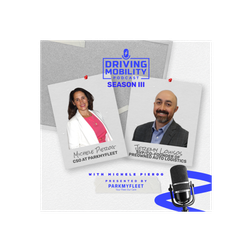
As long as there’s been transportation, there’s been transportation fraud. But the sophisticated and insidious kind we’re seeing today is unlike anything the industry has experienced before. Previously, we dealt with more localized issues -- small disputes here and there. But this fraud has become much more sinister. That’s due to AI, the fact that cars now hold so much valuable and vulnerable data and because bad actors are simply “getting better” at this type of theft. It’s happening at multiple points in the transaction process and is much easier to miss. “It’s very difficult once a vehicle is gone, to get it back in most cases,” Jeremy Louisos, Senior Vice President at Preowned Auto Logistics, told the Driving Mobility podcast. As the issue intensifies, the industry can no longer afford to focus just on recovery. We need collaborative prevention standards across the board. How do we achieve this? In this episode of the Driving Mobility podcast, hosted by Michele Pierog, CSO at ParkMyFleet, we explore what transportation fraud means today, the impacts of privacy and data and how we can come together — as an industry — to effectively combat it.
AI Won’t Replace Auto Jobs. It will Enable Workers to do Their Jobs Better
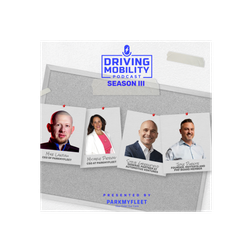
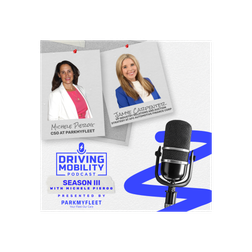
AI is here...and so are the concerns about how this impact the auto workforce. Is there reason to be concerned? Sure. But is there also reason to feel excited and optimistic about its potential? Absolutely. In this episode of the Driving Mobility podcast, ParkMyFleet CSO Michele Pierog sits down with Jamye Carpenter, Co-chair of the IARA Artificial Intelligence Committee, to discuss this very issue. Jamye's take: AI will not reduce the workforce, the human element in auto will always be necessary. But AI tools will enable workers to do their jobs with more efficiency, accuracy and speed, cutting some tasks tasks down to just a few minutes and, eventually, streamlining these processes across the industry. How will this work? Tune in to find out.
Buckle Up: 6 Auto Trends Hitting the Roads in 2026, According to Industry Insiders
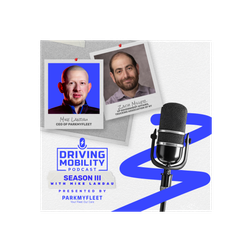
The new year has only just begun and it's already safe to say that the auto industry won't be returning to "precedented" times just yet. Think about it: 2025 centered on the unexpected. There was the emerging, futuristic technology — robotaxis, humanoid robots and flying cars, to name a few. Excitement around electric vehicles cooled. Concern around looming tariffs heated up. Last year was very much defined by shocking headlines, industry headwinds and crisis mitigation. Can we expect more of the same in the coming year or will the auto industry start to stabilize? That's what we'll be exploring in this week's episode of the Driving Mobility podcast. Our hosts, ParkmyFleet Founder and CEO Mike Landau and ParkMyFleet's CSO Michele Pierog, sit down with two savvy and astute industry insiders — Jose Puente, founder of Motiva Ventures, and Steve Greenfield, founder and managing director of Automotive Ventures — and dive into what we can possibly predict in the ever-changing automotive world. Spoiler:
The Truth Behind a $100 Billion Crisis No One’s Talking About
The trucking industry is in crisis. The truck parking shortage — alone — costs the US economy $100 billion every year. There's a freight recession, soaring insurance rates, a lack of technicians and job openings for drivers remain unfilled. At the same time, the industry is also facing unprecedented technological advances and opportunity. Will these innovations help drive pressing and much-needed change? According to Zach Miller, VP of Government Affairs at the Trucking Association of New York, the answer is a resounding yes. "We are long past the days of: 'That's how my grandfather did it, so that's how it's going to be done," Miller said in an interview with Mike Landau, CEO and Founder of ParkMyFleet. How will this play out? There's a lot to unpack and we're exploring it all in the latest episode of the Driving Mobility podcast.
This Portable Microreactor Can Charge EVs, Bring Power to Disaster Zones and Help Colonize Mars
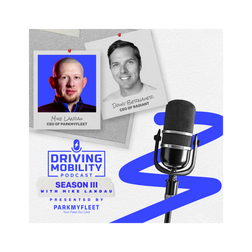
Doug Bernauer never planned on becoming an entrepreneur. He was satisfied working at SpaceX on the projects Elon Musk became “passionate” about. But while working on power systems for a Mars colony, Bernauer realized the mission could not be completed without a reactor that could fly. He realized he was going to be the one to do it. “I made a company because I had to,” Bernauer told Driving Mobility host Mike Landau. That’s when Bernauer got work, building a company called Radiant and developing a nuclear microreactor called a “Kaleido.” It’s the world’s first portable, zero-emissions power source that works anywhere. While the Kaleido will certainly have applications on Mars, it will also offer up incredible potential here on Earth. It can bring power to disaster situations, military installations and refugee camps. In terms of mobility, it has incredible potential to charge up electric vehicles in a clean and efficient way. How exactly can a concept for colonizing mars help to demystify nuclear power and also bring clean energy to planet Earth? Tune into the latest episode of Driving Mobility to find out.
The Auto Industry Was Once a 'Boys Club,' How These Female Leaders Helped Change That
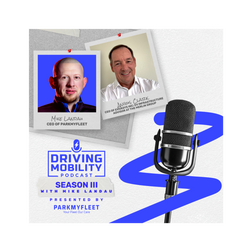
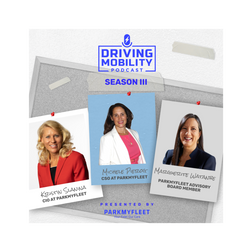
It's no secret that the auto industry remains a male-dominated one. But there's no arguing that we've seen impressive progress, even just over the past two decades. That's due, in large part, to the indefatigable female leaders who have fought to change the landscape. Imagine this: Back in 2002, Michele Pierog, now CSO of ParkMyFleet, wasn't allowed to sell cars in the "lanes" at a local auto auction. None of the women were allowed to. They were expected to work administrative tasks. Eager to make sales, Michele and a female colleague, pushed back on this and demonstrated that they could sell as well, and even outsell, their male counterparts. But where does that leave us today? There are more and more women being welcomed into the auto industry, and into the coveted C-suite roles. But there's still more work to do to ensure that women have the same opportunities and that, one day, we won't even have to have a conversation about gender inequity in this space. How do we get there? That's what our host, Michele Pierog, and guests: Kristin Slanina, CIO at ParkMyFleet, and Marguerite Watanabe, ParkMyFleet Advisory Board Member and President of Connections Insights, will be exploring in this episode of Driving Mobility
This entrepreneur has cracked the code on building profitable and efficient EV charging hubs
The EV charging industry is stuck in a persistent “Catch-22.” Consumers are reluctant to buy EVs because of a lack of EV chargers. But there are a lack of EV charging stations, in part, because consumers have been slow to adopt electric vehicles. In 2024, there were about 61,000 publicly accessible EV charging stations. By 2030, the US will need 28 million charging ports to support the anticipated 33 million EVs on the road. How do we break this cycle? It’s simpler than you might think. The winning formula involves cross-industry collaboration, government grants, savvy real-estate plays, smart spending and more. On this week’s episode of ParkMyFleet’s Driving Mobility podcast, we’re learning all about what it takes to build — and scale — an EV charging hub that’s efficient and profitable. Angus Clark, CEO of EVOASYS Inc and EV infrastructure advisor at the Merlin Group, joins us to share how he managed to accomplish this feat and how the rest of the industry can replicate his blueprint.
Temporada 2
What it will take to clean up the EV industry
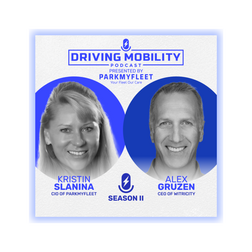
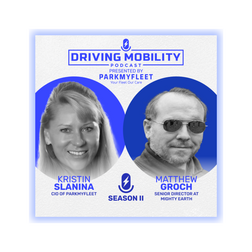
In order to achieve our decarbonization goals, transitioning to EVs is a must. While the EV industry is developing at a rapid and impressive pace, it's still imperfect, far from it. Some of the biggest issues plaguing the industry are related to the supply chain — where and how crucial minerals are mined. We're seeing problems related to deforestation and displacing of indigenous communities. There are also considerable concerns about the emissions involved when building an EV, which can be anywhere from 30% to 50% higher than an ICE vehicle. Addressing these issues now, before the industry grows any further, is imperative, experts say. To put into context: In 2020, less than 600,000 EVs were manufactured. This year, we're seeing nearly 16 million. Yes, expanding this industry is key, but not at the expense of the environment and vulnerable populations. So, what can we do to clean up this industry — and quickly? That is the question we posed in this episode of Driving Mobility to Matthew Groch, Senior Director at Mighty Earth, an advocacy group that's working to protect planet by educating and encouraging industries to decarbonize.
What if you could charge your EV while sitting in your car? This company is making this a reality
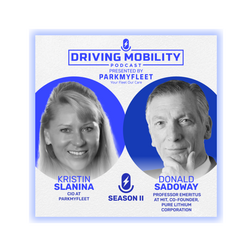
There’s a lot of talk about electric vehicles these days, with a heavy focus on what’s not working. Range anxiety. Faulty chargers. Too few chargers — to name a few. But what’s glaringly missing from the conversation are the “enablers” — the people and the technology that are effectively addressing the biggest pain points and steadily moving us towards mass adoption. One of those enablers, who’s joining this episode of Driving Mobility, is Alex Gruzen, CEO of WiTricity. WiTricity is focusing on developing and scaling wireless EV charging technology, which allows drivers to charge up their EVs on a compatible surface without getting out of their cars. Much like how you might charge a cell phone on your nightstand. The technology is so convenient, 70% of drivers say they’d be more likely to buy an EV if wireless charging were available. But how exactly doe this technology work? What are the associated costs? And what will it take to scale it? We’re addressing those questions and much more during this episode of Driving Mobility.
MIT professor shares how we can move beyond lithium EV batteries
Batteries are everywhere. They’re powering our cell phones, laptops, watches, and now, our electric vehicles.  But while many of these products are ever-evolving, the battery space has remained somewhat stagnant. We’re still relying on the lithium-ion battery, which is dated, heavy, expensive, depends on a limited resource and poses some safety issues. Developing lower-priced and high-performing batteries to power our EVs is crucial to making EVs more affordable and accessible.  Here to discuss how we can move beyond lithium, and what the future holds for EV batteries, is Donald Sadoway, Professor Emeritus at MIT, a co-founder of numerous battery companies and a “firm believer in science in service of society.”
1 de 3