Debt-Free Dreams

Debt-Free Dreams

por Good Vibes
Temporada 2
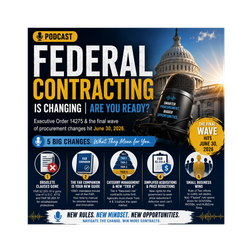
How to Navigate the FAR 2.0 Overhaul Government contracting
IA
The federal contracting landscape is undergoing its most significant transformation in 40 years. In this episode, we break down Executive Order 14275, "Restoring Common Sense to Federal Procurement," and what it means for your business as the final "wave" of changes hits on June 30, 2026. We explore the shift from a mandate-heavy culture to judgment-based procurement and how new rules like the 8(a) "Flipped" follow-on rule are opening doors for SDVOSBs, WOSBs, and HUBZone firms. Key Discussion Points 1. The Death of Obsolete Clauses: What Happened to FAR 52.203-15? The Change: The clause formerly known as "Whistleblower Protections Under the American Recovery and Reinvestment Act of 2009" (52.203-15) has been deleted as obsolete. Why? The 2009 stimulus funding has been expended, making the specific protections tied to those funds unnecessary. What to use now: General whistleblower protections under 41 U.S.C. 4712 and FAR 52.203-17 remain in full effect and are the new standard for contractor employee rights. 2. The FAR Companion: Your New "How-To" Manual The RFO has moved well over 1,000 non-statutory mandates out of the FAR and into the FAR Companion and Strategic Acquisition Guidance (SAG). Strategic Shift: The FAR now only contains what is required by law; the Companion provides the discretionary "best practices" that acquisition officials use to exercise business judgment. Innovation Alerts: The Companion integrates techniques from the Periodic Table of Acquisition Innovations (PTAI), such as oral presentations and phased down-selects. 3. Category Management and the New "Tier 4" The government is doubling down on Category Management to prioritize existing contracts. The Tiers: We discuss the new hierarchy (Tiers 0–4), including the new Tier 4 "Required Use" designation for government-wide contracts or BPAs. Mandatory Sources: Agencies must now follow a strict priority order, checking Tier 4 and Tier 3 (Best-in-Class) vehicles before looking at the open market. 4. Simplified Acquisitions (FAR 52.213-4) & Price Reductions Streamlined Focus: FAR Part 13 now applies only to noncommercial acquisitions. Government Rights: A major update to this clause gives the government an explicit right to seek a price reduction or other consideration if a contractor cannot correct defective work through repair or reperformance [Conversation History]. 5. Small Business Wins: Codifying the "Rule of Two" and Flipping 8(a) Rule of Two: We discuss current legislative efforts to codify the Rule of Two, ensuring set-asides remain a cornerstone of procurement.
New York City Bringing Financial Literacy to Every Public School Student
NYC Financial Literacy: Banking in Schools to Build Generational Wealth New York City is setting a national standard with its "Financial Literacy for Youth" initiative, aiming to ensure every public school student can learn how to save and spend money by 2030. This multi-generational effort directly tackles financial exclusion by bringing critical resources into the school system. 📈 Why This Matters (SEO Keywords: Financial Education, Unbanked, Generational Wealth) Financial literacy is now a crucial skill, especially as students navigate complex issues like digital banking and debt. Tackling the Unbanked Gap: The initiative directly addresses the fact that roughly 7% of NYC households do not have a bank account, a rate higher than the national average. College Access: Research shows that students with access to savings accounts are seven times more likely to attend college. Risk Mitigation: Financial education must counter rising threats; non-credit card fraud resulted in an estimated loss of $63 billion in 2024. 🏦 The In-School Banking & Educator Pilot (SEO Keywords: In-School Banking, DCWP, Financial Educators) The program's core is the in-school banking pilot, launching in 2026, which delivers safe, affordable banking directly to students and their families in school spaces. This pilot is recognized by the FDIC as one of the "most promising frontiers" in developing young people’s financial skills. Dedicated Support: NYC is placing financial educators in every school district to provide free counseling and workshops to over 350,000 students and families in the first five years. Partnerships: The pilot involves 12 financial institutions (including Bank of America, Citizens Bank, M&T Bank, and TD Bank) who will offer services and best banking practices workshops. 🏫 First 15 Pilot Schools (SEO Keywords: NYC Public Schools, Bronx, Queens, Brooklyn, Staten Island) The following public schools will be the first to receive dedicated financial educators and in-school banking services starting in 2026: DistrictSchool Name2Urban Assembly Early College High School of Emergency Medicine3The Urban Assembly School for Green Careers5Mott Hall High School7The Laboratory School of Finance and Technology8Longwood Prep9Bronx High School for Medical Science10Fordham High School for the Arts11Bronx Lab School12East Bronx Academy for the Future14High School for Enterprise, Business and Technology19World Academy for Total Community Health High School21John Dewey High School23Brooklyn Collegiate: A College Board School30Long Island City High School31The Eagle Academy for Young Men of Staten Island
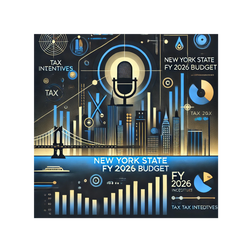
The Future of NY: Hochul’s 233 Billion Budget Explained”
New York’s $233 billion budget is here, and it’s making some bold bets—on tech, infrastructure, and safety. But who wins? Who loses? And what does it mean for you? In this episode, we break down Governor Hochul’s FY 2026 budget, from semiconductor investments to pothole fixes, free community college, and public safety boosts. If you live, work, or do business in New York, this is the breakdown you need. 👉 Listen now and stay ahead of the game. Let me know if you want to tweak it further! 🚀🎙️
Excelsior Jobs Program for College Access Businesses
Episode Summary: In this episode, we dive into the New York State Excelsior Jobs Program and explore how college access businesses can take advantage of its generous tax credits and incentives. Designed to foster economic growth and job creation in strategic industries, the Excelsior Jobs Program offers a unique opportunity for businesses focused on education, workforce development, and community impact. We’ll break down the program’s benefits, eligibility requirements, and application process to help you determine how your organization can qualify and grow in New York State. Key Highlights: What is the Excelsior Jobs Program?A New York State initiative offering refundable tax credits to businesses that create jobs, make investments, and contribute to strategic industries. Ideal for businesses focused on economic development and community impact. Why It Matters for College Access Businesses:Tax credits can offset operating costs, enabling you to reinvest in your mission to support students. Eligibility extends to organizations engaged in software development, workforce development, or educational technology. Available Tax Credits:Excelsior Jobs Tax Credit: Up to 6.85% of wages per net new job (7.5% for green projects). Excelsior Investment Tax Credit: 2-5% of qualified investments, including green projects and childcare services. Excelsior Research & Development Tax Credit: Up to 50% of the federal R&D tax credit for NYS expenditures (up to 6-8%). Excelsior Real Property Tax Credit: Benefits for businesses locating in distressed areas. Excelsior Child Care Services Tax Credit: 6% of expenditures for child care services for employees. Strategic Industries Covered:Scientific research, software development, manufacturing, and life sciences. Businesses in green initiatives, renewable energy, and clean technologies. Green Projects & CHIPS Projects:Enhanced credits for businesses reducing greenhouse gas emissions or supporting clean energy technologies. Eligibility for College Access Businesses:Highlight job creation metrics (e.g., hiring college coaches, developing apps). Document community impact and partnerships with schools or organizations. Showcase investments in educational tools and software. How to Apply:Contact Empire State Development (ESD) for guidance. Submit a Consolidated Funding Application (CFA) with documentation of job creation, investments, and community initiatives. Work with a tax professional to maximize potential benefits. Quotes from the Experts: "The Excelsior Jobs Program encourages businesses to expand in and relocate to New York while maintaining strict accountability standards to guarantee that businesses deliver on job and investment commitments." – Empire State Development "Given your college access program and its focus on creating opportunities and hiring staff: Highlight any software development, educational technology, or workforce development aspects of your business." – Expert Analysis
How to Unlock Interest-Free Funding and Win Big Government Contracts
NYC Returnable Grant Fund & Federal Small Business Contracting: In this high-energy episode, we’re uncovering two game-changing opportunities for organizations of all sizes: NYC Returnable Grant Fund (RGF):Interest-Free, Fee-Free Loans: Cover up to two months of vital program costs such as payroll, rent, and utilities. Streamlined Eligibility & Application: Learn how nonprofits and for-profit providers with New York City contracts can apply under Categories A, B, or C. Hassle-Free Repayment: Discover how repayment is automatically deducted from your City contract budget once registered. Federal Small Business Contracting:Record-Breaking $183 Billion Awarded: Hear how small businesses are crushing it with nearly 29% of all federal contracting dollars. New SBA Tools: From MySBA Certifications to GovCon Match, we’ll explain how these platforms streamline the certification process and help you find the right federal buyers. Biden-Harris Commitment: Understand the push toward equitable contracting goals for small, disadvantaged, and minority-owned businesses. We’ll walk you through practical, step-by-step tips for navigating City and federal contracting, so you can confidently pursue grants, loans, and major government contracts. Whether you’re a nonprofit leader, a small business owner, or an entrepreneur hungry to scale, this episode serves up the strategies you need to secure funding and grow fast.
NYC Foster Care Safety Audit
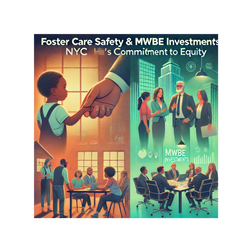
Briefing Doc: NYC Comptroller's Office Reports on Foster Care Safety and MWBE Investments This briefing doc reviews two reports published by the New York City Comptroller’s Office: Audit Report on the Administration for Children’s Services’ Monitoring of the Safety of Children in Foster Care MWBE and Emerging Manager Pension Investments, Fiscal Year 2024 Report 1: Foster Care Safety Main Themes: This audit report examines the effectiveness of the Administration for Children's Services (ACS) in ensuring the safety of children placed in foster care. Key Findings: Generally Adequate Monitoring: The report concludes that ACS's mechanisms for monitoring children in foster care are generally adequate. Downward Trend in Maltreatment, but Persistent Issues: While instances of substantiated neglect and abuse have declined from 4% in 2020 to 3.1% in 2023, the audit identifies over 2,000 cases involving more than 1,600 children during this period. Location of Incidents: Over 76% of substantiated incidents occurred during family visitations, highlighting the complexities and challenges associated with maintaining child safety in these settings. Approximately 24% of incidents occurred within the foster care setting itself. Data Gaps: The report points out that ACS lacks comprehensive data on incidents occurring during court-ordered unsupervised visitations and trial discharges, hindering the agency's ability to identify trends and make informed recommendations to Family Court. Important Quotes: "ACS data shows that between Fiscal Years 2020 and 2023, there were more than 2,000 cases of substantiated neglect and/or abuse involving more than 1,600 children." "Tracking and evaluating this information could help ACS identify trends in the frequency of incidents. Evaluating these should inform future recommendations by ACS to Family Court." Recommendations: The report recommends that ACS improve data collection on specific incident types and strengthen its analysis to inform better decision-making and collaboration with the Family Court. Report 2: MWBE and Emerging Manager Pension Investments Main Themes: This report highlights the New York City Retirement Systems' efforts to increase investments with Minority- and Women-Owned Business Enterprises (MWBE) and Emerging Manager (EM) firms. Key Findings: Significant Increase in MWBE Investments: MWBE assets under management have surged by nearly 40% since Comptroller Lander took office, reaching $23.08 billion, representing 13.3% of actively-managed U.S. assets. Strong Performance: Both EM and MWBE managers have consistently outperformed benchmarks, demonstrating their value and contribution to the Systems' strong overall returns. Commitment to Expansion: The Systems plan to further expand their Emerging Manager programs, aiming to reach 20% allocation to MWBE managers and 10% to Emerging Managers by 2029. Diversity, Equity, and Inclusion (DEI) Due Diligence: The report emphasizes the integration of DEI considerations into the investment manager due diligence process, assessing policies, practices, and workforce diversity.
NYC Money Talk
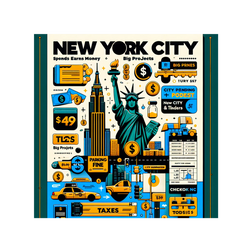
In this episode, we break down how New York City spends and earns money. Here’s what we’ll talk about: Where Money Comes From: Learn about taxes, parking fines, and other ways the city earns cash. Where Money Goes: Find out what the city spends on, like schools, roads, and helping people. Big Projects: See how NYC pays for big things like new buildings and parks. Cool Tools: Discover Checkbook NYC, a website that shows where every dollar goes. Who’s in Charge: Meet the people running NYC and how they plan the budget. It’s like a money map for NYC! Perfect for anyone curious about how the city works. Tune in!
Temporada 1
Beating the Summer Melt: Your Insider Guide to a Successful College Transition
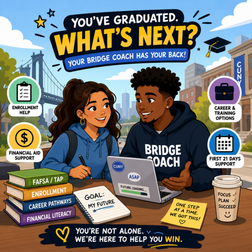
Here are the podcast notes for an episode focused on the NYCPS Bridge Coach program and the transition to postsecondary life. Podcast Show Notes: Beating the Summer Melt & Navigating Your Next Move Episode Overview The gap between high school graduation and the first day of college or a career program is a critical time known as "summer melt"—the period when many students lose momentum because they lack school-based support. In this episode, we dive into how the NYC Public Schools (NYCPS) Bridge Coach program provides every graduate with a near-peer mentor to ensure a successful transition to college, training programs, or the workforce. Key Takeaways from This Episode What is a Bridge Coach? They aren't just advisors; they are NYCPS alumni currently in college (mostly at CUNY) who have been in your shoes and are trained to help you navigate your next steps. How They Support You: From mid-June through early fall (and again during Winter Bridge from November to February), coaches provide 1-1 support via text, email, and video chat. The "Must-Haves" They Help With:Completing enrollment paperwork and registering for classes. Updating and verifying FAFSA/TAP financial aid forms. Navigating special programs like ASAP, CUNY Start, CLIP, SEEK, and EOP. Providing "real talk" about what to expect on campus and connecting you to resources. The Power of 21 Days: Research shows that high-touch advising makes students 7% more likely to enroll in college. Coaches specifically focus on college persistence during your critical first month, especially those first 21 days. Important Links & Action Items Get Connected: To ensure your coach has your most updated contact info, sign up for College and Career Advising Texts here. Find Your Coach: Use this Public Bridge Coach Spreadsheet to see who is assigned to your school. Save the Number: Add (917) 994-9477 to your contacts as “Bridge Coach” so you don't miss important deadline reminders. Join the Community: Be on the lookout for a Discord link from your coach; many teams use it for virtual help sessions and community updates throughout the summer. Quotes to Remember "The small steps you complete now can make a big difference before school starts. Good Vibes is here to help you stay ready, stay connected, and stay supported." Stay tuned to learn how to make your post-graduation transition seamless. You’ve got this! 💪


Mastering your credit report
In this episode of Debt Free Dreams, we dive deep into the world of credit repair and financial wellness. Whether you're a college student or a young entrepreneur, understanding and managing your credit is crucial for achieving financial freedom. Join us as we explore essential strategies and tips to help you take control of your credit and build a solid financial foundation. What You'll Learn: Understanding Credit Reports: Learn how to pull and analyze your credit reports from Experian, TransUnion, and Equifax. Disputing Inaccuracies: Discover how to use the Fair Credit Reporting Act (FCRA) to dispute and remove negative items from your credit report. Advanced Credit Repair Tactics: Get insights into effective methods like the "security freeze trick" and dealing with tax liens and judgments. Legal Rights and Protections: Understand your rights under the Fair Debt Collection Practices Act (FDCPA) and how to handle creditor harassment. Practical Budgeting Tips: Learn about budgeting tools and techniques to manage your finances effectively. Building and Utilizing Credit: Explore strategies for building good credit, including using secured credit cards and becoming an authorized user. Why Listen? Expert Insights: Gain valuable knowledge from financial experts and real-life success stories. Actionable Advice: Get practical tips you can implement immediately to improve your credit and financial health. Empowerment: Feel empowered to take control of your financial future and achieve your debt-free dreams. Tune in to this episode and start your journey towards mastering credit repair and financial wellness. Don't forget to subscribe and leave a review on Apple Podcasts!
Making the right college choice
This document presents the Fall 2024 CUNY freshman admission profiles for both two-year and four-year colleges. Key data includes the average high school GPA of admitted students, broken down by general admission and for students meeting specific income criteria (SEEK/College Discovery). Specific exclusions are noted regarding certain programs and student groups. The data shows that the average GPA for admitted students varies significantly between institutions and admission categories. Overall, the provided averages illustrate the academic profile of the incoming freshman class.
1 de 2