Analyzing Trends

Analyzing Trends

por scenarioDNA
Temporada 5
The Invasion Economy
IA
When Prada draped the Chelsea Hotel in silver and cleared Katz’s tables for a dance floor this June, the filmmaker it hired to design the takeover described the project as satellites invading Manhattan. The experience economy has morphed into an invasion economy, in which a brand re‑skins mythologized addresses, broadcasts the takeover, and lifts off five days later.
The Signal Machine is Not the Thinking Machine

IA
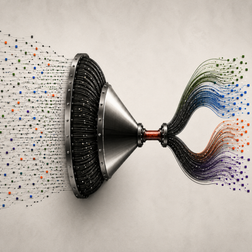
Lately it feels like every organization has built a bigger pair of binoculars. There are dashboards for everything, weekly drops of “emerging signals,” and now AI sitting on top of it all, stitching neat summaries of what is supposed to be happening next. But in the rooms where decisions get made, the conversations still stall in the same place: everyone can point to the spike, nobody agrees on what it means. We keep upgrading the signal machine while leaving the thinking machine more or less where it was.That tension sits at the heart of our new book Story Systems and Cultural Research. If machines are going to handle more of the scanning and clustering, then foresight has to mature on the interpretation side: how we read contested words, map the stories people are rehearsing, and see the codes that make new behaviors feel allowed. It quietly changes the procurement question for organizations. It is no longer only “Which tool listens best?” but “What kinds of meaning-making are our tools smuggling in by default, and what kind of cultural reading practice do we want to build on top of them?”
Story Systems in the Age of Creator Cinema

IA
Hollywood still talks about “discoveries,” even as the hard work now happens in public, long before anyone calls it a film. Worlds are tested in comment sections, passed around as memes, and adjusted in the small edits that keep a clip in people’s feeds for one more loop. By the time a feature arrives, it is one more format a world moves through, not its origin. If you only look at the finished movie, you are looking at the afterimage, not the process that made people care.That process is easy to miss if you only track box office or subscribers. The more useful signal is what people return to: which scenes they quote, redraw, argue about, or quietly maintain. Those are the places where story behaves less like a product and more like a shared habit. Paying attention there is a kind of foresight. It treats shorts, fan edits, and low-budget experiments as evidence that a world already exists, and that the “breakout hit” is simply the moment everyone can see it at once.
Recycling is a Story System
California’s SB 343 “Truth in Recycling” law is interesting partly because it exposes how much the recycling symbol was never really about recycling. The chasing arrows became a civic ritual of the post-recession urban era: rinse the jar, sort the cardboard, participate in the system. In many cities, the blue bin became a quiet social signal tied to sustainability, institutional trust, and the belief that the system underneath everyday life was basically working.What’s changing now is not happening evenly across the country. Some places are moving toward stricter forms of systems accountability while others are drifting toward a politics shaped more by nostalgia, deregulation, and distrust of institutional complexity. After years of supply-chain failures, infrastructure strain, and visible institutional weakness, many people increasingly want visibility into the system beneath the symbol. SB 343 quietly shifts the recycling label from an aspirational gesture into something closer to an audited claim. The arrows now have to answer to infrastructure, not intention.
Temporada 4
When Nostalgia Becomes Culture’s Operating System
IA
Most of what passes as “trend” right now is really about how we route memory. Feeds and platforms teach us to click what we already recognize, so nostalgia quietly becomes a default strategy. It feels safe, but if every brand keeps raiding its own archive, the past stops feeling special and starts feeling like inventory.The next phase of brand work has to focus less on throwbacks and more on continuity: building products, rituals, and experiences people want to return to, not just recognize once. We discuss this needed shift in strategy in our new book Story Systems, which looks at how cultural research can show where people use references for comfort, status, and belonging, and how brands can respond by adding new chapters to culture rather than replaying old scenes.
When Brand Strategy Runs Out of Story

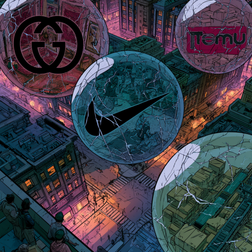
Brands used to assume that if the numbers added up, the story would fall into place. The cases of Gucci, Nike, and Temu show the opposite is now true. Each looked structurally sound on paper, yet their business models began to erode as soon as culture stopped believing the myths that made those models feel legitimate. Heritage no longer guarantees authority, scale no longer guarantees centrality, and price no longer guarantees permission. Strategy can still tell you where value sits and how to pursue it. It cannot tell you whether anyone will still grant you the right to matter. That now depends on whether your narrative system matches the world people actually live in.
Imagining The Spaces We Will Need
Physical spaces are not neutral settings. Our offices, kitchens, parks, malls, movie theaters, and classrooms, all tell us who belongs, what behavior is expected. They are narrative systems, not just built environments. Every layout, threshold, queue, sign, fixture, and seat rehearses a version of the future.This is one of the central arguments of our new book Story Systems and Cultural Research. Culture does not change only through new technologies, policies, or markets. It changes through the stories that organize behavior and make certain futures feel possible. When we learn to read those stories, we design more intentionally. Narrative systems help us move beyond trend language and ask a better question: what should future spaces help people become capable of doing together?I
Machines Don't Yawn
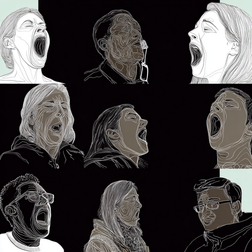
Most of what we call “looking ahead” is really a mirror turned back on ourselves. Companies hire experts, build models, deploy AI to forecast markets and manage risk, but beneath the charts sit unspoken stories about who matters, who is expendable, and what “progress” is supposed to look like. In a time of conspiratorial thinking, wounded publics, and machine generated predictions, those stories harden into priors that shape what leaders even recognise as plausible. Machines don’t yawn. We do. The danger is not that we use probability, but that we mistake it for something neutral, disembodied, and somehow above culture. The work now is to treat intelligence systems as fast instruments for laying out the pieces, while we relearn how to see, question, and rearrange them together as humans who still yawn, hesitate, and change our minds.
Stealing Jester’s Privilege
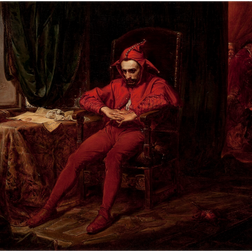
We are living through a moment when “it was just a joke” has become a default way of speaking about serious things, from AI and product launches to corporate apologies and national policy. The old figure of the jester, who once used humor to tell hard truths to power, has been inverted: power now borrows the jester’s stance to float disruptive ideas, test public tolerance, and retreat into irony when challenged. At the same time, ordinary people rely on jokes and memes to cope with systems they no longer trust, turning contradictions into content that is instantly recognized but rarely resolved. The result is not a shortage of insight, but an inability to hold any single insight long enough for it to change how we act, leaving innovation, governance, and public discourse suspended in a loop of continuous exposure without commitment.
When the Iceberg Starts to Drift
The mood of 2026 is friction at the surface. Reforms stall. Institutions grow brittle. Feeds fill with minor ruptures that never quite resolve. People talk about uncertainty, burnout, quiet cracking, but these are not abstract signals buried beneath events. They appear in work chats, neighborhood group texts, mutual-aid spreadsheets, and the steady accumulation of small adaptations. In that kind of world, the reassuring clarity of the iceberg begins to fail. When so much of the deeper story is already visible in the ways people improvise their lives, the task is less to dive for hidden truths than to learn how to read what is already in front of us.That is the working premise behind Story Systems and Cultural Research. In a recent workshop, a conversation about why foresight so often feels detached from culture brought us back to the relationship between Causal Layered Analysis and Culture Mapping: one clarifies how an issue is framed, the other shows where different stories already live and how they move. Taken together, they suggest that culture is not a submerged mass beneath events, but a moving field of narratives circulating across institutions, publics, and subcultures. The book traces how residual, dominant, emergent, and disruptive codes travel across that field, and how some narratives quietly harden into common sense while others register coming fractures. It asks how researchers, designers, and strategists can learn to read those patterns without falling back on trend lists or timeless archetypes.
1 de 9