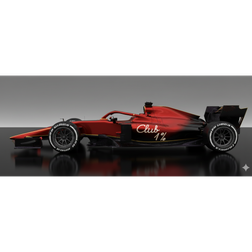
Club 1%

Club 1%

por Veljko Massimo Plavsic
Taming the Chaos of Turbulence
Air rushing over a race car is highly chaotic and turbulent, filled with microscopic eddies and massive swirling vortices. Simulating every single tiny swirl directly—called Direct Numerical Simulation (DNS)—would require sci-fi levels of computing power. To bypass this computational bottleneck, CFD engineers use clever compromises: RANS (Reynolds-Averaged Navier-Stokes): This is the most common industry workhorse. Instead of tracking every temporary swirl, it averages the equations over time. It calculates the average flow and uses additional mathematical models (like the k-epsilon or k-omega models) to estimate the global effect of the turbulence. LES (Large Eddy Simulation): A middle ground. It directly simulates the larger, more impactful vortices while mathematically modeling only the tiniest ones. This is far more accurate than RANS but requires significantly more computing power. A supercomputer doesn't solve a CFD problem in one single giant step. Instead, it plays a massive game of hot-and-cold through an iterative process: Initial Guess: The computer starts with an initial assumption of pressures and velocities. Cell-by-Cell Calculation: It calculates the flow for Cell A, uses that to calculate Cell B, adjusts Cell A based on the new results, and repeats this cycle. Reaching Convergence: This cycle is repeated millions of times. Over time, the difference between consecutive calculations shrinks until it is virtually zero. This state of stability is called convergence.
L'Evoluzione Cromatica della Scuderia Ferrari: Analisi del Rosso Corsa e delle Livree Storiche
L'Identità Cromatica come Fondamento Strategico Per un marchio globale della caratura di Ferrari, la coerenza visiva non rappresenta un semplice esercizio estetico, ma costituisce un pilastro fondamentale dell'identità aziendale e nazionale. In un panorama sportivo dominato da una saturazione di stimoli visivi, la persistenza del colore rosso ha permesso alla Scuderia di trascendere la competizione agonistica per diventare un simbolo universale di eccellenza. Questa stabilità cromatica funge da asset competitivo primario: consolidando la propria immagine, Ferrari ha costruito il palmarès più prestigioso della storia della Formula 1, vantando il record di 16 Titoli Costruttori, un traguardo che trasforma l'identità cromatica in un sigillo di superiorità tecnica e storica .Dal debutto della 125 S nel maggio 1947, Ferrari ha scelto di non deviare dal rosso, cementando un'associazione psicologica immediata tra il marchio e l'Italia. Storicamente, la suddivisione dei colori nazionali nelle competizioni, definita sin dai primi anni del 1900, prevedeva: Italia: Rosso (condiviso inizialmente con Alfa Romeo e Maserati). Francia: Blu (tradizione oggi perpetuata da Alpine). Gran Bretagna: Verde (il celebre British Racing Green, tratto distintivo di Aston Martin). Germania: Bianco.
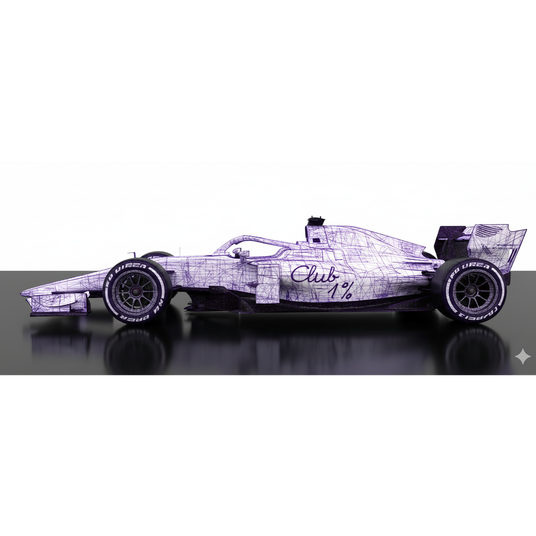

More Than Just Red: 5 Surprising Facts Behind Ferrari’s Iconic Racing Colors
Enzo Ferrari once famously remarked, “Ask a child to draw a car, and he will certainly colour it red.” It is the ultimate litmus test for brand power, a simple observation that captures the pulsating heart of the world’s most recognizable racing team. To the Tifosi, this scarlet hue is more than just a paint choice; it is a 16-time champion’s armor. As the most successful constructor in Formula 1 history, Ferrari’s identity is inextricably linked to "Rosso Corsa." Yet, if one looks past the surface of the Maranello masterpieces, the history of the Scuderia is a vibrant tapestry where the red occasionally vanished to make way for acts of political rebellion, national pride, and technological evolution. The Mandatory Scarlet: Why Ferrari Didn’t Choose Red While red is now the lifeblood of the Maranello factory, its origin was born of mandate rather than aesthetic preference. In the nascent years of motorsport, the governing bodies enforced a strict national color coding system to identify competitors at a glance: France was blue, Great Britain was green, Germany was white (and later silver), and Italy was red. Enzo Ferrari, a man whose soul was stitched into the fabric of his homeland, embraced this Italian identity with fierce loyalty. When the very first Ferrari,the 125 S,roared out of the factory gates in May 1947, it bore the Racing Red required of an Italian challenger.
Progettazione della mazza da golf ideale
IA
Progettazione della Mazza da Golf Ideale: Analisi Tecnica e Guida alla Realizzazione 1. Analisi Evolutiva e Visione Strategica del Design L’evoluzione tecnologica nella progettazione delle mazze da golf rappresenta un passaggio paradigmatico dalla pura artigianalità del XV secolo alla moderna ingegneria dei materiali. Inizialmente, la performance era limitata dalle proprietà meccaniche intrinseche del legno, con teste in faggio e shaft in frassino o acero. Tuttavia, il passaggio strategico ai materiali compositi e alle leghe metalliche avanzate non è stato un semplice aggiornamento estetico, ma una risposta ingegneristica alla necessità di ottimizzare il trasferimento di energia e la precisione balistica. Questa transizione ha permesso di superare i limiti strutturali dei modelli rudimentali (come i "longnoses" o i "fairway woods" in legno), trasformando la mazza in uno strumento di alta precisione. La storia del design ha visto tre innovazioni fondamentali che hanno ridefinito il concetto di "tolleranza" (forgiveness), ovvero la capacità del sistema di compensare impatti decentrati: Shaft in Acciaio (Anni '20): Ha introdotto una costanza e una rigidità torsionale impensabile con il legno hickory, riducendo drasticamente le variabili parassite durante lo swing. Cavità Posteriore (Anni '60): L'introduzione del design "cavity-back" nei ferri ha permesso la redistribuzione perimetrale del peso, aumentando la stabilità torsionale della testa. Materiali Hi-Tech (Era Moderna): L'uso sinergico di titanio e fibra di carbonio ha consentito di progettare teste di grandi dimensioni con masse ridotte, espandendo lo "sweet spot" e massimizzando la velocità iniziale della pallina. Questa eredità tecnologica ci conduce oggi alla necessità imperativa di selezionare materiali d'avanguardia per definire l'architettura della mazza "ideale".
Engineering Speed: The Architecture of Formula One Performance
The Blueprint of Speed: Core Principles of F1 Car Design Introduction: More Than Just an Engine Building a winning Formula 1 car is a complex and continuous balancing act of cutting-edge engineering, strict regulatory compliance, and an unwavering commitment to driver safety. The sport has evolved dramatically from the wooden and steel chassis of its early days, with a revolution in safety protocols following the tragic death of Ayrton Senna in 1994 fundamentally reshaping design priorities. Today, every surface and component is meticulously optimized to gain the smallest fraction of a second on the track. This relentless pursuit of innovation has earned Formula 1 its reputation as 'the fastest laboratory in the world,' setting the stage for the core design principles that drive this incredible technological race. -------------------------------------------------------------------------------- 1. The Invisible Force: Mastering Aerodynamics Aerodynamics is the single most crucial aspect of modern Formula 1 car performance. It is the science of how air moves around the car, and mastering this invisible force is the key to unlocking the grip and stability needed for breathtaking cornering speeds. The entire shape of an F1 car is dictated by its aerodynamic function. 1.1. The Fundamental Goal: Downforce vs. Drag Engineers are locked in a constant battle with two opposing aerodynamic forces: downforce and drag. Force Purpose & Effect Downforce This is the vertical force that pushes the car onto the track. By managing airflow, aerodynamic components generate immense downforce, which dramatically increases the grip of the tires and allows the car to remain stable while cornering at phenomenal speeds. Drag This is the aerodynamic resistance the car faces as it moves through the air. Drag acts as a braking force, limiting the car's top speed on the straights. Designers work tirelessly to minimize drag and make the car as aerodynamically efficient as possible. The primary objective of F1 aerodynamic design is to maximize downforce while minimizing drag, creating a car that is both supremely agile in the corners and ferociously fast on the straights.