
Circa 1945: Breaking the Machine

Circa 1945: Breaking the Machine

por Olivia
Temporada 2
49: From Parables to Witnessing
Welcome back to Circa 1945: Breaking the Machine. A podcast of stories about the Holocaust, and what it would take to build a genocide-proof society. Parables are a valuable tool for making a quick, important point in a relatable way. Still, after just shy of fifty episodes, it's time for our last parable for a while...the story of the light switch, as a metaphor for interacting with complex machines. Then, moving forward, I will introduce you to what I call my "Shoah Chorus."
48. Batman: A Story of Meaning
Welcome back to Circa 1945. A podcast of parables about the Holocaust, and what it would take to build a genocide-proof society. Today’s story isn’t about 1945 directly. It’s about something older and more personal: how suffering becomes purpose — without becoming destiny. It’s also about Batman. Yes… that Batman. Stay with me.
47. One Bowl: A Story of What it Means to Have a Country
Welcome back to Circa 1945. A podcast of parables about the Holocaust, and what it would take to build a genocide-proof society. Most people, on average, never consider what it means to have a country versus being made stateless. We live under a flag and take it for granted. But studying history brings us face to face with what a nation actually is…and what happens when citizenship is taken away. Watch the documentary "Genocide" On Tubi: ⁠https://link.tubi.tv/Jv6nrer42Zb⁠ Or YouTube: ⁠https://m.youtube.com/watch?v=fvJqJVWcrXc⁠ For the firsthand accounts of what I am referencing here. It is one of many groundbreaking documentaries done by Simon Wiesenthal.
46. Being Joyful…Out of Spite!
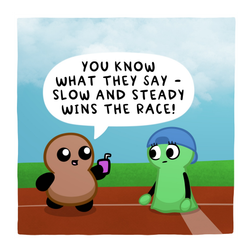
Welcome back to Circa 1945: Breaking the Machine. This podcast asks one question: what would it take to genocide-proof a society? I want to start this episode somewhere unexpected. Not with history. Not with politics. Not even with the news. I want to start with a little cartoon. There’s a character online called Tubby Nugget. He’s round. He’s gentle. He’s deeply earnest. And in one short video, he says something like this: “Oof. I feel awful. My body feels like it’s working against me. So… I’m going to get better. Out of spite.” It’s funny. It’s cute. And it stopped me in my tracks. Because beneath the humor, there’s something very old and very serious being said. Check out Tubby Nugget here: ⁠https://www.tubbynugget.com/
45. When ICE Tries to Freeze Your Heart…Look for the Helpers

Welcome back to Circa 1945. A podcast of parables about the Holocaust, and what it would take to build a genocide-proof society. Today, I want to finally talk about ICE. Immigration and Customs Enforcement, a government department that did not exist until 2003 and has recently expanded its operations in major cities. Demanding the “papers” of ordinary working people and detaining them without trial, simply over their real or suspected immigration status…well, that invites comparisons to the Gestapo even among casual observers. But people are fighting back. And that gives me hope.
44. Alice in Wonderland: Holocaust Fiction Done Wrong, and Done Right

Welcome back to Circa 1945: Breaking the Machine, A podcast about genocide as infrastructure, and the counter-infrastructure we must build to prevent it. This episode, I want to focus on the power of narrative storytelling as genocide prevention infrastructure. There’s a reason so many Holocaust survivors have shared their stories. In autobiographies, in the USC Shoah Database, in hours upon hours of documentaries. To remember is to understand, and to understand means to possibly prevent. In that sense, we owe it to both the past and the future, to get it right. With this in mind, I want to examine two very different examples of children’s fiction about the Shoah. Boy in the Striped Pajamas and Number the Stars. Image Source: ⁠https://www.goodreads.com/book/show/47281.Number_the_Stars
43. The Vacuum Cleaner: A Story of Fear
Welcome back to Circa 1945: Breaking the Machine — the podcast about genocide as infrastructure, and the counter-infrastructure we build to prevent it. Today’s episode begins with something small. Not a historical moment, not a textbook, not a survivor quote. A cat. Well — a cat, and a vacuum cleaner. An inside joke between two friends turned into a metaphor so precise, I realized it might be one of the clearest ways to understand the psychology of authoritarian fear… and what it takes to outgrow that fear. Because sometimes, what looks like a monster is really just a loud machine. And sometimes, the bravest thing we can do is learn where the plug is. So today: A parable about cats, fear, fascism, and how noise can disguise machinery. ⁠https://www.petsradar.com/news/how-to-spring-clean-without-causing-your-cat-anxiety-according-to-an-expert
42. The Meaning of Life: A Story of Impossible Questions

Welcome back to Circa 1945: Breaking the Machine. This podcast usually asks one question: What would it take to genocide-proof a society? But today I want to tackle an even more impossible question. The question people write books about, join cults over, pay therapists to avoid answering, and Google at three in the morning. The question every stoned college freshman thinks they invented: What is the meaning of life? And because this is Episode 42, we have to nod to Douglas Adams and The Hitchhiker’s Guide to the Galaxy, where the answer to the meaning of life, the universe, and everything… is just the number 42. Which is very funny. And also, accidentally, very deep. Because the real joke is: “42” only means anything because we decided it does.
41. The Two Mountains: A Story of Hidden Intentions

Welcome back to Circa 1945: Breaking the Machine, the podcast about genocide as infrastructure, and the counter-infrastructure we build to prevent it. Today we turn our attention to something subtle, something that rarely arrives with warning labels: eliminationist rhetoric. It doesn’t begin with open hatred. It doesn’t begin with violence. It begins with a dream — one that uses all the right words: freedom, liberation, justice, homecoming. But the truth of a dream lies not in its vocabulary but in its engine. And that engine often reveals itself not in what the dream imagines for its own people, but in what it imagines for the people standing next to them. To explore this gently, we begin with a parable. ⁠https://www.tibettour.org/assets/images/tibet-mount/mount-tsari.jpg
40. Thanos and Treblinka, The Myth of Mercy

Welcome back to Circa 1945. Stories to Remember, lessons to resist, blueprints for hope. Every time genocide comes up online, someone eventually says a version of the same thing. "At least Thanos was merciful." They mean it was quick. They mean it was painless. They mean it didn’t single anyone out. Half of everyone. No hatred. No suffering. Just… gone. And I understand why that sounds humane. But today, I want to sit with an uncomfortable question: What if the thing that makes Thanos feel merciful is the same thing that made real-world extermination machines so effective? There was a place built for one purpose only. Not labor. Not punishment. Just disappearance. Its name was Treblinka. Check out this documentary: ⁠https://youtu.be/JZ2E3tcctcw?si=KkGizlaLi9MubzOA⁠ Image Source: ⁠https://www.cbr.com/mcu-character-performed-a-snap/
1 de 5