Chat with Greg Fridman

Chat with Greg Fridman

por Gregory Fridman
Can Plasma Kill Bacteria on Food Packaging? Yes. Its Biggest Competitor Is Nothing.
Next in the "Can Plasma?" series: if plasma is so good at killing bacteria, why do we still have foodborne illnesses from packaged food? Three things: how plasma actually kills microbes, where it's already deployed (including NASA and Campbell's), and why it hasn't taken over the food packaging industry. ⏱️ Chapters 00:00 The question, and the paradox 00:24 3 things to cover: mechanism, deployment, and why it's not everywhere 00:38 What plasma is: highly ionized gas full of reactive species 00:58 ROS and RNS: peroxides, peroxynitrite, ozone, electronically excited oxygen 01:14 Electrons and charged species (catalytic) 01:33 Broad-spectrum UV down into vacuum UV (VUV) 01:43 VUV doesn't travel in air, but it's generated right next to the bacteria 02:02 High electric fields at the tip of every "micro lightning" 02:31 So how plasma actually kills microbes: ROS/RNS poison + high electric fields rupture cell membranes + UV disrupts DNA 02:47 The NASA story 02:52 Spacecraft disinfection work in two directions 03:00 "Sterilization" doesn't have a clean definition (6-log for most, 9-log for NASA) 03:11 NASA wants fewer than a couple of organisms per square meter of spacecraft material 03:26 The high-aspect-ratio (deep hole) problem: reactive species can penetrate 03:55 All mechanisms play a role in that geometry 04:24 In the US, microwave-plasma discharges are already deployed 04:29 A Campbell's Soup factory tour in New Jersey 04:37 A giant microwave system sterilizes pre-made packaged food 04:49 If Campbell's is already doing it, why hasn't this taken over? 05:05 Reason 1: plasma isn't cheap. Cost per tomato has to be way under a penny. 05:30 The biggest competing technology in food disinfection 05:36 The answer: NOTHING. Wash your own produce. 05:49 Farmer's market model: farmers hand off produce, you clean at home 06:11 A note: wash your produce, especially from farmer's markets 06:20 Grocery stores are generally safer than farmer's markets on this 06:33 Reason 2: high voltage. Occupational safety concerns. 06:41 Big plasma for big produce (like a potato) means 100+ kV supplies 06:59 Above 100 kV, electrons hitting surfaces produce Bremsstrahlung radiation 07:19 Which means hard X-rays. Small amounts, but real. 07:26 Extra worker protection is now required. Cost goes up again. 07:55 Package geometry adds constraints: plasma-activated water fog works for some products, not for potato chips (soggy) 08:16 Recap: yes, plasma kills. Deployed in some applications. Regulatory and health/safety keep it from being everywhere. If you're in food safety, packaging engineering, regulatory affairs, or NASA-adjacent sterilization, this is the map episode. 🔔 Subscribe for more in the "Can Plasma?" series: @gregfridman #CanPlasma #PlasmaScience #FoodSafety #FoodPackaging #Sterilization #NASA #Bremsstrahlung #IndustrialEngineering #PlasmaChemistry
Can Plasma Make Hydrogen? A Silent-Tank Story, Off-Grid Farms, and On-Site Generation
Next in the "Can Plasma?" series: can plasma make hydrogen without electrolysis? Yes. From water, methane, ammonia, biological waste, diesel fuel, or a mix of soil and cow manure. Plasma doesn't care about the source. On-site generation is where this gets interesting. ⏱️ Chapters 00:00 The question, plus 3 things to cover 00:18 Point 1: plasma cracks water, methane, ammonia, and other hydrogen-containing feedstocks directly 00:29 Point 2: energy efficiency determines whether it's industrially viable 00:39 Point 3: plasma reactors can be small and cheap, which reshapes logistics 00:57 How it works: feedstock through plasma dissociates hydrogen-containing molecules 01:17 Farm example: convert hydrocarbon waste into hydrogen, feed a fuel cell, generate electricity 01:41 The silent tank story 01:51 Reconnaissance mission at night, tank needs to be quiet 02:02 Radar and coffee makers need electricity (soldiers need coffee to stay awake) 02:19 Old approach: idle a 12-cylinder diesel engine just to power onboard electronics 02:25 12-cylinder diesel = a lot of heat and a lot of noise 02:30 Our project: crack tank diesel through plasma, produce hydrogen, feed a Ceramatec fuel cell 02:55 Tank runs cold and much quieter 03:10 Plasma still makes some noise, but nothing like an idling 12-cylinder diesel 03:21 Plasma doesn't care how dirty the source is 03:33 Take soil mixed with cow manure, make hydrogen 03:38 Compared to electrolysis 03:44 Nuclear plants run electrolyzers at night with excess electricity 04:04 Problem: storing a shit ton of explosive gas next to a nuclear reactor 04:26 Plus transport, storage, and safety costs 04:37 Plasma alternative: much smaller reactor, place it directly where the hydrogen is needed 04:53 Hospital scenario: biological waste (garments, polymers, blood) → plasma → hydrogen → fuel cell → hospital electricity 05:14 No more hazmat waste bill. You've turned a cost into an asset. 05:29 Farm scenario (this is my favorite) 05:33 Prior US administration heavily invested in solar 05:42 Farmers built solar, generate way more than they need, sell it back 06:04 Long transmission distances from farm to city → electricity companies charge huge delivery fees 06:21 Farmers end up selling excess power for pennies on the dollar 06:26 Alternative: use that excess solar to power plasma, produce hydrogen 06:33 Burn it for heat, convert it back to electricity, or fuel farm equipment 06:41 I'm not a big believer in consumer hydrogen vehicles (logistics and highway explosion risk) 07:04 But for a single location (farm, hospital), hydrogen is fantastic 07:10 Off-grid farm with plasma converting trash + solar into hydrogen fuels all equipment 07:39 Recap: yes plasma can crack most hydrogen-containing precursors, efficiency is application-specific, on-site generation is the future If you're in energy, agriculture, hospital operations, defense, or hydrogen logistics, this is the map episode. 🔔 Subscribe for more in the "Can Plasma?" series: @gregfridman #CanPlasma #PlasmaScience #Hydrogen #FuelCell #GreenHydrogen #Agriculture #Defense #EnergyStorage #OffGrid #Sustainability
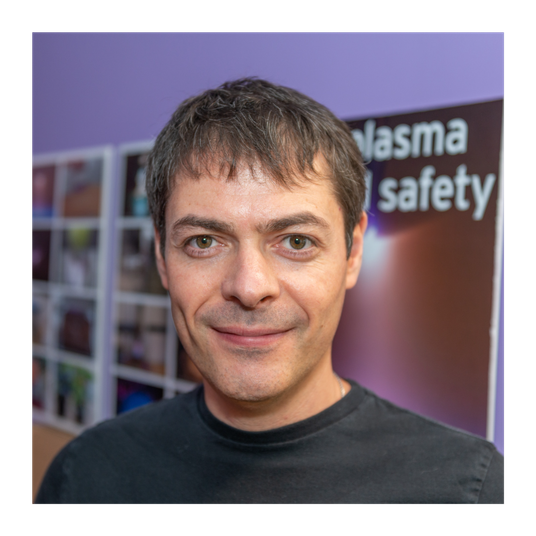
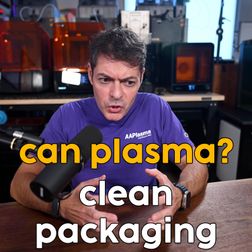
"That's Just What You Believe." Here's Actually How I Decide What I Believe (3 Principles)
Someone recently left a comment on one of my videos: "buddy, that's just what you believe." Yes, sir. Here's exactly how I got there, in three principles, plus two stories about being wrong. ⏱️ Chapters 00:00 The comment: "that's just what you believe" 00:12 Today: my belief system, and how I establish it 00:21 The three principles 00:25 1. Base beliefs on evidence and replication, not authority 00:34 2. Hold conclusions provisionally, always open to new evidence 00:52 3. Distinguish consensus from certainty. Distinguish data from interpretation. 01:10 Principle 1: the paver patio story 01:24 Our contractor put black weed-prevention fabric under the gravel, which is correct 01:49 They also extended it under the new sod, which the manufacturer says not to do 02:04 First check: Google, verify the product, verify the spec 02:24 Contractor was authoritative and dismissive: "I've been doing it like this for years" 03:14 Called two other lawn-care companies, both said no, grass will suffocate 03:41 Authority alone isn't enough. Evidence and replication is. 03:57 Principle 2: hold conclusions provisionally 04:03 The Apple story (embarrassing but instructive) 04:45 I was teaching a class 10+ years ago 04:51 Told my students Apple was actually run by a dozen people, everything else outsourced 05:03 (I have no idea where I picked that up. It sounded true to me.) 05:22 A student raised her hand and said "I work at an Apple store. There are thousands of us. My paycheck says Apple Inc." 05:39 I apologized on the spot 05:51 I said I'd verify and change my conclusion by next class if needed 06:09 Went home, checked, yeah I was massively wrong 06:18 Next class: apologized again, changed my conclusion, held the new one provisionally 06:39 (I'll change it again if Elon Musk turns out to run Apple) 06:44 Principle 3: consensus vs certainty, data vs interpretation 06:53 Consensus is interpretation of data, not data itself 07:03 "Best steakhouse in town" is opinion. To buy that steakhouse, I need the actual numbers. 07:26 Consensus can update. Data updates it. 07:49 To the commenter: yes, that's what I believe. This is how I got there. 08:03 What's your belief system? Comment below. If you're a scientist, engineer, founder, or anyone who's had to update a belief in public, this one's for you. 🔔 Subscribe for more: @gregfridman #Science #Epistemology #CriticalThinking #Research #DecisionMaking #Founders #Beliefs
Can Plasma Clean Cigarette Smoke in Your Apartment? Yes. Radioactive Isotopes Are the Real Problem.
Follow-up to my last smoke and exhaust episode. Two viewer questions in one: why is bread exhaust alcohols, and can plasma clean cigarette smoke in your apartment? Yes to both, but cigarette smoke has a surprise you probably haven't thought about. ⏱️ Chapters 00:00 The two viewer questions in one 00:44 3 topics: VOCs, byproducts, and "some crap plasma can't remove" 01:15 Why bread exhaust is alcohols: yeast eats sugar and produces ethanol 01:40 Plus aldehydes, organic acids, esters (this is why fresh bread smells amazing) 02:14 One loaf smells wonderful. A factory produces clouds. 02:39 VOCs are easy for plasma to oxidize (alcohol burns readily) 02:58 Now cigarette smoke, which is the most studied smoke on earth (tobacco lawsuit funding) 03:22 Cigarette VOCs: easy. Nitrogen oxides from the thermal process: harder. 03:43 NO reacts with plasma-generated ozone to make peroxynitrite (which you also then need to manage) 03:55 The byproduct problem in both cases 04:12 What do you do with the ozone and peroxide plasma itself generates? 04:25 Cigarette smoke also has hydrogen cyanide and ammonia 04:37 Now you're putting an air scrubber in a house with kids in it 04:59 Filtration choices matter a lot 05:08 Point 3: some contaminants plasma just can't remove 05:14 Bread exhaust is mostly clean-able. Cigarette smoke is not. 05:41 The tar problem: particles/droplets are too big for non-equilibrium plasma 05:56 Plasma works one molecule at a time. Tar is thousands of molecules per particle. 06:16 One approach: use plasma to charge droplets, then capture with electrostatic precipitator 06:32 My favorite hidden problem: tobacco plants absorb radioactive isotopes from soil 06:40 Radioactive isotopes are in cigarettes, then in the smoke, then in the air 06:53 Trapping those is its own challenge 07:18 In a home system with children around, this all compounds 07:45 Commercial cigarette-air-cleaning systems use 5-6 filters in series 07:48 Plasma for VOCs, HEPA for particles, activated carbon for what plasma missed, pre-filter for dust, sometimes electrostatic precipitator on top 08:13 So: hire a plasma engineer or consult with one 08:23 Recap 08:34 VOCs from bread and cigarettes are both easy for plasma to remove 08:40 Byproduct management is the real engineering challenge 08:51 There is no magic. Plasma is a strong oxidizer. Some things it can't remove. If you're building an air purification product, working in industrial exhaust, or you were about to buy a "plasma cigarette smoke cleaner" for your apartment, this is the one to watch first. 🔔 Subscribe for more in the "Can Plasma?" series: @gregfridman #CanPlasma #PlasmaScience #AirPurification #IndoorAirQuality #CigaretteSmoke #IndustrialExhaust #Filtration #EnvironmentalEngineering
Can Plasma Clean Without Touching? Yes, at 8 Meters Per Second (Ask Kodak)
Next in the "Can Plasma?" series: can plasma clean a surface without touching it? Yes. Reactive gas-phase species do the work with zero physical contact. Great for organic contamination. Bad for big chunks and metals. Fast enough for Kodak to use on film production at 8 meters per second. ⏱️ Chapters 00:00 The question, and 3 things to cover 00:07 Reactive species vs physical contact 00:20 What plasma can and can't remove 00:25 Why this matters industrially 00:31 Reactive species work one molecule at a time 00:51 Big chunk of contamination? Plasma is not your tool. It'll take forever. 01:06 Where plasma shines: low-level contamination on a surface 01:12 Gas-phase reactive species near the surface, no contact required 01:30 What plasma removes well: organic contaminants 01:37 Dielectric barrier discharges are especially good at this 01:46 Oils, proteins, fingerprints 01:57 What plasma can't remove: metal salts, metals, large chunks 02:14 Any organic contaminant? Plasma is fantastic. 02:20 Industrial case study: my Kodak collaboration 02:33 Engineers from Kodak, the last generation of Kodak film (APS, Advanced Photo Systems) 02:49 That film was made on a web (continuous roll fed through processing) 02:56 Look up "web press" vs "sheet-fed press" if you're curious 03:11 Kodak ran their film through plasma at 8 meters per second 03:31 Two goals: clean the film, and make it hydrophilic so coatings stick better 03:58 Kodak managed all of it at 8 meters per second 04:02 Touchless matters when you're moving material that fast 04:05 No scraping. No physical modification. Gas-phase only. 04:15 Alternative would be spraying chemicals on it 04:22 But chemicals are sticky, and you then need to neutralize them 04:28 Reactive plasma species have sub-second lifetimes, so nothing to neutralize downstream 04:36 Recap 04:41 Reactive species vs physical contact 04:47 Organics yes, metals and chunks no 04:59 Touchless matters at high industrial speeds, and it's a repeatable process If you work in continuous-process manufacturing (film, packaging, textiles, semiconductors) or you've wondered how you clean a surface at meters per second, this is the episode. 🔔 Subscribe for more in the "Can Plasma?" series: @gregfridman #CanPlasma #PlasmaScience #SurfaceCleaning #WebPress #Manufacturing #SemiconductorManufacturing #Kodak #IndustrialEngineering
Can Plasma Clean Smoke and Exhaust? Yes. Soot Is Where It Struggles.
Next in the "Can Plasma?" series: can plasma clean smoke and exhaust? Yes, it's a proven after-treatment technology. Three catches: soot is hard, ozone is a byproduct, and electricity costs more than natural gas. ⏱️ Chapters 00:00 The question, and 3 things to cover 00:10 Non-thermal plasma is a proven exhaust after-treatment technology 00:19 Catch 1: soot and particulate matter 00:29 Catch 2: byproducts (ozone) and electricity cost 00:52 The Campbell Soup / Pepperidge Farm story 01:07 Baking thousands of loaves of bread produces alcohol vapors 01:37 Their current solution: burn off residual smoke with methane flame 01:47 The trap: burning methane uses your CO₂ credits, buys natural gas, adds compressed-gas safety overhead 02:16 Plasma becomes an attractive alternative 02:25 The soot problem: exhaust with unburned diesel or fine particulates 02:37 Non-equilibrium plasma is too slow: breaks down molecules one at a time 02:55 If it's volatile organics only, no problem. Soot changes the game. 03:07 A mentor of mine at MIT commercialized a plasma afterburner for diesel truck exhaust 03:23 The story: idling semi truck outside my student apartment all night 03:36 Loud, smoky, running the AC on the diesel 03:55 Gliding-arc (transitional) plasma is higher power and can actually burn soot 04:06 The trade-off: electricity cost 04:09 Not commercialized for diesel trucks yet because you'd need to carry a battery for the plasma 04:21 Catch 3: ozone byproduct 04:35 The FAA airplane story 04:41 We can plasma-clean airplane cabin air (enclosed environment, people sneezing/coughing) 04:59 But ozone byproduct plus plasma as ignition source with fuel leaks = no-go 05:13 Recap 05:21 Yes, it works. The 3 catches are soot, ozone byproducts, and electricity cost. If you work in emissions control, diesel exhaust after-treatment, industrial ventilation, or aviation, this is the map episode. 🔔 Subscribe for more in the "Can Plasma?" series: @gregfridman #CanPlasma #PlasmaScience #EmissionsControl #ExhaustAfterTreatment #Diesel #IndustrialVentilation #AirQuality #EnvironmentalEngineering
How I Deal With Tangent Projects: A 3-Step Algorithm (Recognize, Delegate, Delete)
A viewer asked how I deal with tangent projects. The ideas that pop up in the middle of what you're actually supposed to be doing. I have a 3-step algorithm I use every day. Here it is. ⏱️ Chapters 00:00 The question: how do you handle tangents? 00:32 The 3-step algorithm: recognize, delegate, delete 01:05 Step 1: recognize which ideas are actually important 01:09 Every intake needs a filter (Slack, meetings, your own head) 01:21 Important for you? The team? The company? Your house? 01:37 My system: Todoist, with a folder called LTS (long-term storage) 02:04 Borrowed the name from Amazon's cloud storage tiers 02:08 Monthly ritual: first Monday or Tuesday, review the LTS list 02:21 Do it, delegate it, delete it, or postpone. But make the decision. 02:44 Anti-example: task was to paint the door, then your house burned down. Delete. 02:53 Step 2: delegate if possible 02:56 You can delegate to your future self, but be careful 02:59 The "record a video" trap: first need to buy a camera, set up mic, monitor, lighting, set up, set up, set up 03:22 Get too sucked in and you never record 03:35 Delegate to future self wisely 03:45 The honey-do list criteria (things the honey needs to do for the wifey) 03:57 Am I technically capable? Am I physically capable? Am I the best choice? 04:10 What does it cost me vs hiring someone? 04:12 Current example: finishing a patio 04:20 Absolutely within my technical capability 04:37 Would consume entire weekends and evenings of physical labor 04:52 Delegate to a paid professional. Even things you could do, sometimes shouldn't. 04:57 Colleagues also have costs (their time and company time) 05:23 Step 3: delete ruthlessly 05:32 Something felt super important at some point in time 05:40 I try to note WHY, so I can revisit the reasoning honestly later 05:46 Todoist lets you attach images and voice notes 05:54 Delete anyway 05:58 A boss I had years ago carried "super important tasks" on a crappy little piece of paper in his shirt pocket 06:10 Things like "go talk to the president" 06:26 One day he showed up gray, said "I lost the piece of paper" 06:39 Then, calmly: "Fuck it. It's important enough, they'll find me." 06:46 Great question to ask yourself before doing something you thought was urgent 06:56 Recognize, delegate, delete. That's the algorithm. If you're a founder, PhD student, engineering lead, or anyone whose inbox is smarter than they are, this one's for you. 🔔 Subscribe for more: @gregfridman #Productivity #Founders #TimeManagement #Todoist #Focus #Delegation #Leadership #Research
Can Plasma Make Nanoparticles? Yes. I Discovered Some By Accident (And My Advisor Told Me to Drop It)
Next in the "Can Plasma?" series: can plasma make nanoparticles? Yes. And a personal story about how I accidentally discovered some in grad school, why my advisor made me drop it, and the focus lesson that stuck with me. ⏱️ Chapters 00:00 The question, and a story to go with it 00:11 The quick technical answer: yes, from many precursors 00:19 Flame and plasma are both good candidates for a reactive synthesis environment 00:31 Oxidize, atomize, condense onto surfaces to grow nanomaterials 00:59 The nano boom era: every proposal we wrote had "nano" in the title 01:06 The chemists laughed because they were working in Angstroms (sub-nanometer) 01:18 So yes, plasma can make nanoparticles 01:23 The real answer depends on which particle, what purity, what reproducibility 01:30 The story starts back in my master's days 01:33 My setup: plasma-treated water droplets, electric-field deposition 01:47 A nanoprinter for proteins and biomolecules (in argon to preserve the biology) 02:19 My chamber was built mostly with acrylic 02:21 When I screwed something up, plasma would arc onto the acrylic 02:29 It built these fine fibrous black ropes between the electrodes 02:44 At the same time I was training on SEM, TEM, XPS 03:02 So I zoomed in on the ropes 03:14 What I found: nanometer-scale triangular shapes 03:27 I got very excited 03:28 Ran to my PhD advisor (one of my seven) 03:42 "God, my system synthesizes these really cool nanoparticles!" 03:48 Advisor: "What's your department?" Bioengineering. 03:54 "What's your project?" Printing biomolecules. 04:02 "And which part of that is nanomaterial synthesis?" 04:08 None. 04:14 The lesson: a PhD is focused study. Easy to get distracted. Nanomaterials are cool. Not my field. 04:37 So I abandoned it. But I still remember those shapes. 04:43 I'll try to dig up a photo and add it here. 04:49 Bottom line: yes, plasma can make nanoparticles. 04:54 Ask me a more specific question and I'll go deeper. The field has advanced very far. If you're a grad student, PI, or anyone who's ever gotten distracted by a shiny side result, this is the episode. 🔔 Subscribe for more in the "Can Plasma?" series: @gregfridman #CanPlasma #PlasmaScience #Nanoparticles #Nanotechnology #PhDLife #Research #MaterialsScience #GradSchool
Can Plasma 3D Print Metal? Yes, Plus 7 Other Roles in Additive Manufacturing
Next in the "Can Plasma?" series: can plasma 3D print metal? Yes. And that's just one of the eight distinct places plasma already shows up in additive manufacturing. Quick tour. ⏱️ Chapters 00:00 The question, and the broader ask 00:20 1. Feedstock production: plasma melts wire and atomizes molten metal into fine droplets 00:35 Control atmosphere to reduce oxygen content 00:41 Blend different wires into plasma for on-the-fly alloy creation 00:54 2. Feedstock conditioning: clean rough particles, spheroidize them, ready for laser sintering 01:19 3. Instead of a laser, use plasma directly: arcs or thermal plasma melting the metal in place 01:37 4. Surface activation and modification for printing (including between layers) 01:49 5. Post-processing: plasma as a heat source to re-melt or polish surface 02:02 6. In-situ diagnostics during laser sintering (the underdiscussed one) 02:10 The laser creates plasma anyway. Use optical emission spectroscopy on it to monitor the print. 02:27 7. Chamber atmosphere control: enrich reactive species, clean impurities 02:47 Same tools used in microelectronics 02:54 8. My favorite: targeted metal deposition via plasma-charged droplets 03:01 I've spent most of my career on droplets and sprays in plasma 03:10 Anything put into atmospheric plasma charges negatively (happy to make a full video on why) 03:25 Once charged, you can steer with an electric field 03:35 Molten metal droplets, plasma-charged, deposited with precision 03:42 Or dispersed to coat whole chamber walls, if that's what you want 03:56 Yes, plasma can 3D print metal, and quite a bit more If you work in additive manufacturing, powder metallurgy, or aerospace, this is the map. 🔔 Subscribe for more in the "Can Plasma?" series: @gregfridman #CanPlasma #PlasmaScience #AdditiveManufacturing #3DPrinting #Metal3DPrinting #Powder #Aerospace #Manufacturing #PlasmaSpray
Why Cold Plasma at Room Temperature Can Also Be Fully Ionized: The 4-Temperatures Answer
Two viewers (one on YouTube, one on LinkedIn) asked closely related questions about the relationship between ionization degree and plasma temperature. Time for a slightly deeper dive than usual. The answer requires realizing there isn't one temperature. There are four. ⏱️ Chapters 00:00 Two questions, closely related, one YouTube, one LinkedIn 00:03 Both about ionization degree and temperature 00:12 The first question: is ionization related to temperature? 00:38 The second question: why do cold atmospheric plasmas stay cold if electrons are at 1 eV? 01:30 What is temperature? Not what you think. 01:34 A molecule has 4 degrees of freedom 01:47 Rotation 01:51 Vibration 01:56 Translation 02:03 Electronic (my favorite) 02:07 The crowded-room analogy setup 02:29 Rotation: standing still and spinning at near light speed. Nobody notices. 02:52 So rotational energy doesn't heat the gas 02:58 Vibration: jumping in place. You bump your neighbors, but that's it. 03:16 So vibration barely heats the gas either 03:30 Translation: running through the room, bumping into everyone 03:45 THIS is what normal people mean by "temperature" 04:13 Electronic: sit calmly and start screaming. Everyone freaks out. 04:26 This is where non-equilibrium plasmas dump most of their energy 04:37 Highly reactive, highly ionized, and still cold 04:48 How we actually measure: optical emission spectroscopy 04:54 Look at electronic excitation, vibration, and translation temperatures separately 05:04 Translation tells you the gas temperature 05:07 If gas is at 300 K, it's cold plasma. Non-equilibrium. Non-thermal. 05:30 The formal definition: two kinds of plasma 05:34 Equilibrium: ion temp = electron temp 05:38 Both at 1 eV ~ 10,000 K = thermal plasma 05:58 Non-equilibrium plasma = "cold" plasma 06:14 Not that cold. Less than about 10,000 Celsius. 06:21 8,000°C is still "cold" in plasma physics. Doesn't sound cold to me either. 06:40 The theoretical extreme: dump ALL energy into electronic degree 06:59 Result: fully ionized plasma at room temperature 07:24 Theoretically possible. Not very practical. 07:33 In practice: cold plasmas are ionized well below 1% 07:57 As ionization rises, ions start flying, translational energy rises with it 08:11 Three temperatures actually matter: vibrational (chemistry), electronic (ionization), translational (gas temp) 08:38 Purely non-thermal plasmas CAN be fully ionized in principle 08:47 In practice, ionization degree is much lower 08:52 Almost a 10-minute video already. Let me know if you want more depth. If you're a physics student, plasma engineer, or you got stuck on why plasma physicists talk about multiple temperatures for the same gas, this is the episode. 🔔 Subscribe for more: @gregfridman #PlasmaScience #PlasmaPhysics #Temperature #Ionization #StatisticalMechanics #Physics #PhysicsEducation
1 de 10