Challenging Colonialism

Challenging Colonialism

por Martin Rizzo-Martinez & Daniel Stonebloom
Temporada 3
s03e05: Interview with Archaeologist Kent Lightfoot
In our previous episode we explored an example of collaborative, Tribal centered archaeology in looking at the Amah Mutsun Summer Archaeology Program, which collaborated between the Amah Mutsun Tribal Band and Archaeology students and professors at the University of Oregon. In this episode we speak with Dr, Kent Lightfoot, recently retired Distinguished Professor Emeritus of Anthropology at the University of California, Berkeley, where he taught and trained dozens of Archaeologists. Dr. Lightfoot is well known for his advocacy for doing Archaeology that aligns with, and is led by Tribal interests, a departure from the colonial approach to archaeology that we explored in Season 2 of our podcast. For further reading: Books: Indians, Missionaries, and Merchants: The Legacy of Colonial Encounters on the California Frontiers, by Kent Lightfoot California Indians and Their Environment: An Introduction, by Kent Lightfoot & Otis Parrish Inclusion, Transformation, and Humility in North American Archaeology: Essays and Other “Great Stuff” Inspired by Kent G. Lightfoot, Edited by Seth Mallios, Sara L. Gonzalez, Michael Grone, Kathleen L. Hull, Peter Nelson, and Stephen W. Silliman Articles: "The Study of Sustained Colonialism: An Example from the Kashaya Pomo Homeland in Northern California," by Kent Lightfoot & Sara L. Gonzalez. "The Study of Indigenous Management Practices in California: An Introduction," by Kent Lightfoot & Amah Mutsun Tribal Chair Valentin Lopez. Recent Collaborative Archeaological Fieldwork on the Santa Cruz Coast, Amah Mutsun Tribal Band website. Archaeology’s Diachronic Dimension, Historical Anthropology, and the Hawaiian-Shirt Renaissance: An Interview with Kent Lightfoot, by Seth Mallios, conducted in 2004.
s03e04: Collaborative Archaeology
In our last season, we explored the problematic colonial roots of the academic fields of Anthropology and Archaeology, "Salvage Anthropology" and legacies of extractive and exploitation of Indigenous communities. In this episode we will share an example of how some contemporary archaeologists are working closely with Tribal members to focus their research on issues that are of interest and helpful for Tribal members. The Amah Mutsun Tribal Band has been working closely with Archaeologists over the last fifteen years, culminating in a Summer Archaeology Program that draws together Archaeology students and Tribal members from the Amah Mutsun and other partnering Tribes, in a collaborative learning and field work project. Speakers: Amah Mutsun Tribal Members, Gabriel Pineida & Elizabeth Rodriguez, Cameron Dakota-Chow Garcia (Chalon Ohlone-Esselen, Zacateco), Amah Mutsun Land Trust Cultural Resources Program Manager, Alec Apodaca, and Gabe Sanchez, Assistant Professor in the Department of Anthropology at the University of Oregon. For further reading / listening: Collaborative Archaeology Field Schools: Perspectives from the Central California Coast, Gabriel Sanchez & Alec Apodaca, 2026. 2025 Summer Internship Program: Collaborative Archaeology, Heritage, and Cultural Landscapes Recent Collaborative Archaeological Fieldwork on the Santa Cruz Coast California Archaeology, Volume 5, Issue 2 (2013) - Special journal examining the collaborative work done by California State Parks, UC Berkeley Archaeology Department, and members of the Amah Mutsun Tribal Band. You can listen to our previous episodes about the historic problems in Archaeology at these links: s02e02: Salvage Anthropology "A Nasty Business" s02e03: The Legacy of Kroeber, Ishi, & UC Berkeley
s03e03: The Scandal of Cal with Tony Platt
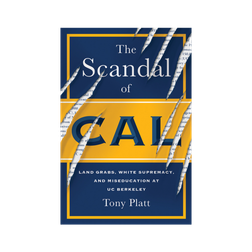
This episode includes an interview with Tony Platt, author of The Scandal of Cal: Land Grabs, White Supremacy, and Miseducation at UC Berkeley. Dr. Platt is the author of thirteen books and 150 essays and articles on race, inequality, and social justice in American history, among them Beyond These Walls: Rethinking Crime and Punishment in the United States; Bloodlines: Recovering Hitler’s Nuremberg Laws, from Patton’s Trophy to Public Memorial; and The Child Savers: The Invention of Delinquency. In this interview he also discusses the book he wrote prior to this one, Grave Matters: The Controversy over Excavating California’s Buried Indigenous Past, which explores the Indigenous led fight to protect burial sites up in Humboldt County in the 1970s and 80s. We encourage you to check out both books. You can find more about Dr. Platt's work on these topics in the following articles: "A Top UC Berkeley Professor Taught With Remains That May Include Dozens of Native Americans," ProPublica, March 5, 2023. The Repatriation Project: The Delayed Return of Native Remains The Repatriation Project: NAGPRA Database For more on the history of UC Berkeley and Alfred Kroeber, give a listen to our podcast episode on these topics: s02e03: The Legacy of Kroeber, Ishi, & UC Berkeley On NAGPRA and Repatriation, listen to: s02e04: "You Have Disturbed Our Ancestors" (NAGPRA p.I) s02e05: "Bury Them with Dignity" (NAGPRA p. II) s02e06: "This Work Has to be Done" (NAGPRA p.III) Audio editing: Daniel Stonebloom Interview: Martin Rizzo-Martinez Music: G. Gonzales "Chumash Uprising" logo artwork: John Jota Leaños
s03e02: Refusing Settler Domesticity by Caitlin Keliiaa
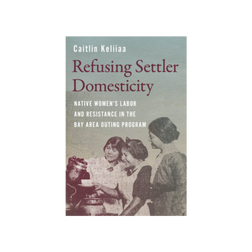
This episode includes an interview with Caitlin Keliiaa about her new book, Refusing Settler Domesticity: Native Women's Labor and Resistance in the Bay Area Outing Program. Dr. Keliiaa's study explores the history of young Native women’s lives and experiences as Bay Area domestic workers through the San Francisco Bay Area Outing Program, connected with the Indian Boarding Schools. You can find more on Dr. Keliiaa's work at her website, or follow her on her instagram. You can purchase her book online with a 40% off discount by using the following link and discount code: tinyurl.com/keliiaa Use the code WASHOE for 40% off If you are based in the SF Bay Area and want to buy the book from a local bookseller, you can find it at Books on B in Hayward and the Oakland Museum of California (OMCA) gift shop. For more on the Indian Boarding Schools, with a focus on California, you can listen to our previous podcast episode, which included Dr. Keliiaa: https://rss.com/podcasts/challengingcolonialism/480178/ Audio editing: Daniel Stonebloom Interview: Martin Rizzo-Martinez Music: G. Gonzales "Chumash Uprising" logo artwork: John Jota Leaños
s03e01: Indigenizing California Mission Art and Architecture By Yve Chavez
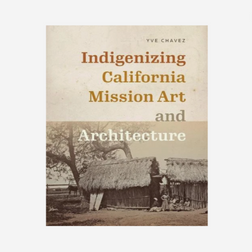
As we resume the Challenging Colonialism podcast after a break, we will be diving into a series of book talks with Indigenous Californian scholars and allies. We are fortunate to be in a time where there are many excellent and important studies being published. We wanted to share these works with our listeners. The first in this series is the new book Indigenizing California Mission Art and Architectur,e, by Dr. Yve Chavez. You can find her work at the following links: Indigenizing California Mission Art and Architecture Visualizing Genocide: Indigenous Interventions in Art, Archives, and Museums “Remembering Our Ancestors: Photographing Mission San Gabriel’s Cemetery," inVisualizing Genocide: Indigenous Interventions in Art, Archives, and Museums, edited by Yve Chavez and Nancy Marie Mithlo, 21-37. Tucson: University of Arizona Press, 2022.https://www.jstor.org/stable/j.ctv3006zsc.7 “Eighteenth-Century Loom and Basket Weaving at the California Missions,” Journal18, Issue 18 Craft (Fall 2024), https://www.journal18.org/7537. “Decolonizing California Mission Art and Architecture Studies.” In The Routledge Companion to Decolonizing Art History, edited by Tatiana E. Flores, Charlene Villaseñor Black, and Florencia San Martin, 286-296. New York: Routledge, 2023. https://doi.org/10.4324/9781003152262 For more from Dr. Yve Chavez, give a listen to our very first episode on the Bell Removal movement, which included an interview with Dr. Chavez: s01e01 Instruments of Colonization Audio editing: Daniel Stonebloom Interview: Martin Rizzo-Martinez Music: G. Gonzales
Temporada 2
s02e10 Museums: Let Them Know We're Still Here (Season 2 Finale)
Our 10th and final episode of Season 2 extends our critique on the history of colonial acquisitions and collections with a focus on the colonial legacies of the institutions of Museums. We focus on the California Indian Museum and Cultural Center, recent movements to 'decolonize' museums as with the Museum of Us in San Diego, and discuss whether it is possible to ultimately decolonize these institutions. Speakers: Dr. Amy Lonetree (enrolled citizen of the Ho-Chunk Nation), Dr. Alírio Karina, Dr. Samuel Redman, Gregg Castro (t'rowt'raahl Salinan / Rumsien & Ramaytush Ohlone), Dr. Cutcha Risling-Baldy (Hupa, Yurok, Karuk), Nicole Lim (Pomo), Dr. Micah Parzen, Dr. Chris Green Audio editing: Daniel Stonebloom Interviews: Martin Rizzo-Martinez Music: G. Gonzales Special advisor on this episode: Kathleen Aston. Links & Further Reading: California Indian Museum & Cultural Center Acorn Bites Decolonizing Museums: Representing Native America in National and Tribal Museums, Amy Lonetree The National Museum of the American Indian: Critical Conversations, Edited by Amy Lonetree and Amanda J. Cobb “Decolonizing Museums, Memorials, and Monuments,” The Public Historian, Vol. 43, No. 4, pp. 21–27 (November 2021), Amy Lonetree Museum of Us “Race: Are we so different?” Exhibit Museum of Us: Colonial Pathways Policy Against and Beyond the Museum, Alírio Karina
s02e09: "The Archive is a Dangerous Place"
Episode 9 explores the ways in which colonialism and colonial collections have impacted the development of archives, and the restrictions of these spaces. We follow the stories of Indigenous scholars who have worked to reclaim Indigenous knowledge, songs, and documents from archival collections. We also explore questions of data sovereignty, digital sovereignty, and intellectual property rights. As discussed throughout Season 2, colonial extraction and collections have resulted in the theft of Indigenous knowledge, Indigenous bodies, and so much more. Previous episodes have explored issues of 'salvage anthropology' and repatriation. This episode shifts the focus to efforts to reclaim Indigenous knowledge, whether that be in the form of songs, wax cylinders, documents, letters, or other forms stored in colonial archives. The speakers in this episode include: Dr. Robin R. R. Gray (Ts’msyen/Cree) Weshoyot Alvitre (Tongva) Carolyn Rodriguez (Amah Mutsun) Sedonna Goeman-Shulsky (Tonawanda Band of Seneca) Links for further reading: "Cahuilla Basket Returns Home," by Emily Clarke, August 12, 2022, in News from Native California. CARE Principles for Indigenous Data Governance GIDA, Global Indigenous Data Alliance: Promoting Indigenous Control of Indigenous Data Collaboratory for Indigenous Data Governance: Research, Policy, and Practice for Indigenous Data Sovereignty "Indigenous Digital Sovereignty: From the Digital Divide to Digital Equity," by Davida Delmar, Jul 19, 2023 "Ts'msyen Revolution: The Poetics and Politics of Reclaiming," Robin R.R. Gray Dissertation. Dr. Robin Gray: “Embodied Heritage: Enactments of Indigenous Sovereignty” (video) "Toypurina: Our Lady of Sorrows," Weshoyot Alvitre, Kickstarter Theft Is Property! Dispossession and Critical Theory, Robert Nichols Challenging Colonialism is produced by Daniel Stonebloom & Martin Rizzo-Martinez. All interviews by Martin, all audio engineering and editing by Daniel. All music by G. Gonzales. The title of this episode comes from Dr. Robin Gray.
s02e08: Ascención Solórzano and the Mutsun Dictionary
Episode 8 features an interview with Marion Martinez and her daughter, Veronica, both of whom are members of the Amah Mutsun Tribal Band. They will be speaking about Marion’s great grandmother, Ascencion Solorsano de Cervantes, and mother, Martha Herrerra. Ascencion, who passed away in 1930, was the last fluent Mutsun speaker and one of the Amah Mutsun Tribal Band’s beloved ancestors. In 1929, Ascencion spent three months with Ethnographer and linguist John Peabody Harrington, who recorded thousands of pages of notes on Mutsun language, culture and history. Today, Marion, Veronica, and many other Amah Mutsun Tribal members draw on these important notes to learn about their ancestors. This season we have featured a series of stories about ’salvage anthropology’ and the damage done by scholars and activists towards Indigenous communities. This story helps show the complexity of this history, and ways in which contemporary Indigenous community members can sometimes draw on these records in important ways. The speakers in this episode are: Veronica Martinez & Marion Martinez, both Amah Mutsun, interviewed by Martin Rizzo-Martinez. Links for further reading: Maria Ascención Solórsano (de Garcia y de Cervantes), Ed Ketchum, Amah Mutsun Tribal Historian (and descendant of Ascención) The Long Journey to Revitalize a Native Language, University of Arizona News, Feb. 16, 2016 Reviving deep-rooted knowledge, Lisa Renner, UCSC NewsCenter, November 23, 2021 The Amah Mutsun's Battle to Preserve, Mark R. Day, ICT News, Sept 13, 2018 The Saint of Gilroy who helped save her culture and language, Robert Eliason, Benito Link, January 23, 2021 A Native American's Last Testament: Opera, Sasha Khokha, NPR Music, March 29, 2008 Ohlone/Costanoan Indians of the San Francisco Peninsula and their Neighbors, Yesterday and Today, Randall Milliken, Laurence H. Shoup, and Beverly R. Ortiz, 2009 Chasing Voices: The Story of John Peabody Harrington (documentary), PBS Challenging Colonialism is produced by Daniel Stonebloom & Martin Rizzo-Martinez. All interviews by Martin, all audio engineering and editing by Daniel. All music by G. Gonzales.
s02e07: Federal Recognition Discussion
Explícito
Episode 7 [1:37:47] explores the complexities of what is known as Federal Recognition, and the Federal Recognition Process, which relate to Indigenous sovereignty and self-determination. This is an extremely complex topic, especially in relation to Native Californian Tribes. Our guests, Dr. Olivia Chilcote (a member of the San Luis Rey Band of Mission Indians), and Dr. Vanessa Esquivido (an enrolled member of the Nor Rel Muk Wintu Nation, who is also Hupa & Xicana), both have expertise in the process as it relates to their Tribes' attempts to achieve Federal Recognition. And yet, this conversation just scratches the surface of this complex topic. In this episode, we depart from our usual format. This episode features a conversation about Federal Recognition between Dr. Chilcote and Dr. Esquivido, facilitated by our co-producer Dr. Martin Rizzo-Martinez and lightly edited by Daniel Stonebloom. Music by G. Gonzales. For additional information on Federal Recognition, please see the following: Dr. Olivia Chilcote's new book Unrecognized in California: Federal Acknowledgment and the San Luis Rey Band of Mission Indians is now available for pre-order! The Process and The People: Federal Recognition in California, Native American Identity, and the San Luis Rey Band of Mission Indians, 2017 Dissertation by Olivia Chilcote “Time Out of Mind”: The San Luis Rey Band of Mission Indians and the Historical Origins of a Struggle for Federal Recognition, by Olivia Chilcote, California History Journal 2019. "Unsettling evidence: an anticolonial archival approach/reproach to Federal Recognition," by María Montenegro, 2019. "The Destruction of Identity: Cultural Genocide and Indigenous Peoples," by Lindsay Kingston, 2015. "Creating the Space to Reimagine and Rematriate Beyond a Settler-Colonial Present: The Importance of Land Rematriation and ‘Land Back’ for Non-Federally Recognized California Native Nations," 2022 Dissertation by Cheyenne Reynoso. "The study of indigenous political economies and colonialism in Native California: Implications for contemporary tribal groups and federal recognition,” by Kent G. Lightfoot, Lee M. Panich, Tsim D. Schneider, Sara L. Gonzalez, Matthew A Russell, Darren Modzelewski, Theresa Molino, and Elliot H. Blair, 2013.
s02e06: "This Work Has to be Done" (NAGPRA p.III)
The final part in this 3-episode series continues our focus on the Native American Graves Protection and Repatriation Act (NAGPRA), where we focus on CalNAGPRA, California’s effort to strengthen NAGPRA, as well as other steps taken to improve and refine this difficult process. But we will also hear about resistance to following through on the promises of NAGPRA as well, and hear a few longer personal narratives than in previous episodes, including all-too-rare success stories of repatriation. As always, thank you to the guests who gave their time and shared their stories: Dr. Brittani Orona Sabine Talaugon Desireé Martinez Dr. Vanessa Esquivido Gregg Castro Cindi Alvitre Alexii Sigona For further reading and more information: The Social Life of Basket Caps: Repatriation Under the Native American Graves Protection and Repatriation Act, in Hopes of Cultural Revitalization, Vanessa Esquivido How to Report on the Repatriation of Native American Remains at Museums and Universities Near You, Pro Publica, February 2023. Righting Historic Wrongs Ceremony memorializes reburial of indigenous people’s remains at Cal State Long Beach, Press Telegram, September 2016. Reburying the Past, September 2016. After 70 Years, UC Berkeley Museum Returns Massacre Remains to Wiyot Tribe, February, 2022. U.S. Army Corps, UC Berkeley Repatriate Human Remains to Wiyot Tribe, North Coast Journal of Politics, People & Art, January 2022. UC Berkeley Anthropology Museum Returns 1860 Massacre Remains To Wiyot Tribe Challenging Colonialism is produced by Daniel Stonebloom & Martin Rizzo-Martinez. All interviews by Martin, all audio engineering and editing by Daniel. All music by G. Gonzales. The title of this episode comes from Dr. Anthony Burris. This podcast is produced with support from California State Parks Foundation
1 de 4